-
Reproductive Health Care in Crises Has Come a Long Way, Says Sandra Krause, But There’s More to Be Done
› There may be more women and girls at risk of maternal health complications in fragile and conflict-affected settings today, but attention to the issue is not new and the international community has made important strides over the last 20 years, says Sandra Krause, program director for reproductive health at Women’s Refugee Commission, in this week’s podcast.
 -
USAID Climate Action Review: 2010-2016 (Report Launch)
›
“Climate work is practical, common-sense, good development,” said Carrie Thompson, deputy assistant administrator at the Bureau for Economic Growth, Education, and Environment at the U.S. Agency for International Development (USAID). “It’s prevention, and we all know that preventative medicine is the best medicine.”
-
Predicting the Geopolitical Landscape of 2035, and a More Holistic Measure for Disaster Risk Assessment
›The world of 2035 will be facing global and regional insecurities that could be “more dangerous than the second half of the Cold War era,” according to a 2016 report from the Atlantic Council. -
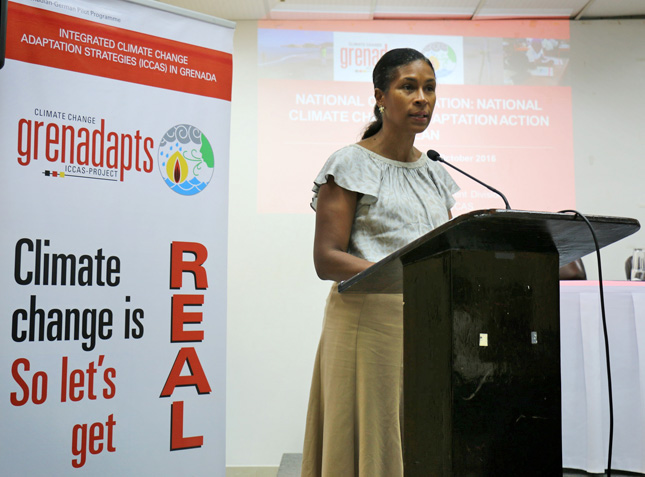
Building a Climate-Resilient Caribbean: Grenada Hosts National Adaptation Planning Workshop
›For island nations already dealing with more frequent and intense extreme weather events, climate change is an imposing burden. But many island states are responding and becoming “incubators of resilience,” as Lynae Bresser recently wrote.
-
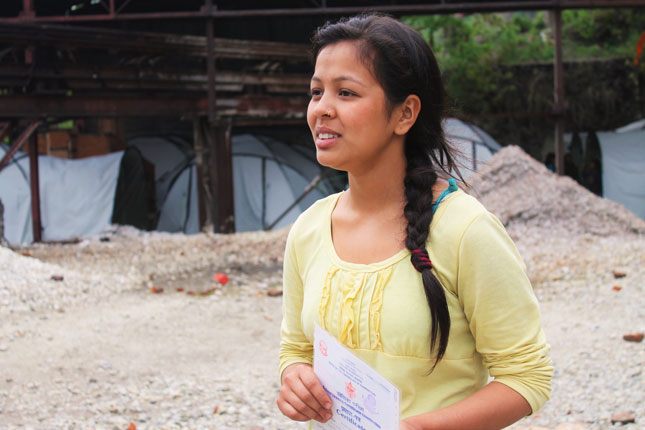
After the Landslide: A Closer Look at Loss and Damage in Nepal
›It had been raining for two full days when the landslide came. Nirjala Adhikari vividly remembers the instant it hit her village in Sindhupalchok District, Nepal. “It was a very scary moment, and I couldn’t think of anything else than grabbing my mobile phone and my school certificate before I ran out of the house,” she recalled. “I secured my certificate because only this will help me establish a bright future.”
-
5 Insights and Recommendations for Loss and Damage at COP-22 and Beyond
›November 10, 2016 // By Roger-Mark De SouzaOver the past four years, I have been a member of the Resilience Academy, an initiative of the United Nations University, International Center for Climate Change and Development, and Munich Re Foundation bringing together thinkers from 29 countries to gather insight on climate change resilience and “loss and damage.” Loss and damage has many definitions, but broadly refers to the impacts of climate change that cannot be addressed via adaptation (adjusting to the effects) or mitigation (preventing them from happening at all).
-
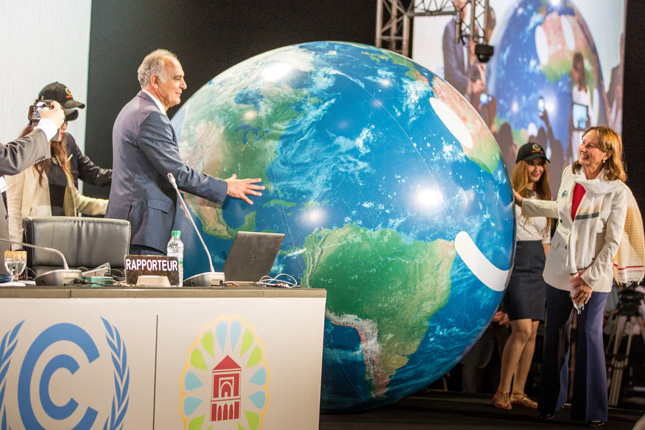
Strategic Ambiguity: How Loss and Damage Became a Part of Global Climate Policy
›As the international community meets in Marrakesh for the climate change negotiations at COP-22, one of the most delicate issues on the table is the review of what’s called the Warsaw International Mechanism for Loss and Damage, or WIM.
-
Climate Change, the U.S. Military, and “the Intersection of Politics and Events”
›November 1, 2016 // By Schuyler NullThere may not have been a single question about climate change in the 2016 presidential debates, but it remains a hotly contested, partisan issue for many in the United States. That climate change is happening and requires a response is not up for debate within the upper echelons of the U.S. military, however.
Showing posts from category disaster relief.
 There may be