-
To Be Young, Libyan, and Female: Alaa Murabit on Building Civil Society After Gaddafi
› In the turbulent days following the 2011 fall of Colonel Muammar Gaddafi’s government, Dr. Alaa Murabit found herself in Libya’s fragile capital, Tripoli, observing exchanges between parliamentarians and civil society over the future of the country. For over 40 years, this kind of discussion was unthinkable – not the least, for a young woman.
 -
The Global Refugee Crisis Has Coarsened Our Politics, Says Wilson Fellow Joseph Cassidy
›Chaotic flows of refugees and migrants – the most since World War II – have challenged leaders in Western Europe and North America. “The reactions to those big flows are undermining our institutions in important ways and degrading our politics,” says Wilson Center Fellow Joseph Cassidy in this week’s podcast. -
How Climate Change May Speed Democratic Turnover, and Beyond a “Naïve” Understanding of Drought and Conflict
›In a recent paper published by Climatic Change, Nick Obradovich conducts the “first-ever” investigation into the relationship between rising global temperatures, electoral returns, and climate change. Using data from more than 1.5 billion votes cast across electoral contests held in 19 countries, he found that when the annual average temperature for a country rose above 70°F, there was a “marked” decrease in the number of votes received by incumbent officeholders. -
5 Focal Points for U.S. Global Water Strategy (And Submit Your Own Too)
›November 3, 2016 // By Ken ConcaHave something to say about the U.S. government’s approach to water around the world? Here’s your chance. The Department of State has issued a public call for comment on its global water strategy. An open session was held in Washington last Friday, but written comments can be submitted until November 12.
For inspiration, here are points made by our own (and American University’s own) Ken Conca, edited for space:
-
Climate Change, the U.S. Military, and “the Intersection of Politics and Events”
›November 1, 2016 // By Schuyler NullThere may not have been a single question about climate change in the 2016 presidential debates, but it remains a hotly contested, partisan issue for many in the United States. That climate change is happening and requires a response is not up for debate within the upper echelons of the U.S. military, however.
-
What’s Next for the Environment at the UN? Bringing Rights to the Fore, Says Ken Conca
›October 13, 2016 // By Schuyler NullThe United Nations has made significant progress since the Stockholm Conference of 1972 in putting the environment on the global agenda. Indeed, the environment plays a major role in two of the largest UN initiatives today: the Paris climate accord and the Sustainable Development Goals. But in a new brief for the Friedrich Ebert Stiftung Foundation, Wilson Center Fellow Ken Conca writes that the traditional approach to environmental issues is running up against its limits.
-
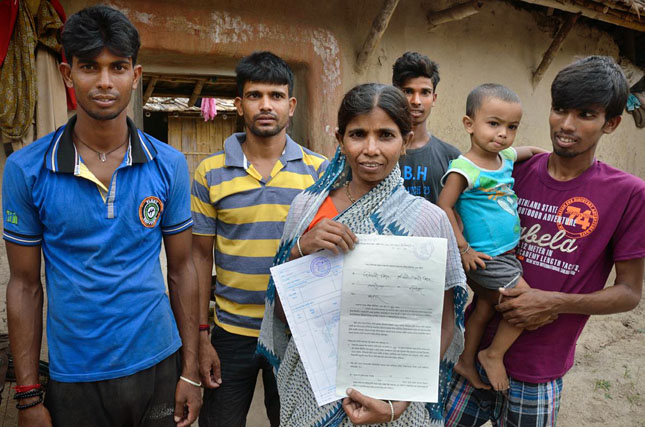
Why Women’s Empowerment Must Start With Land Rights
›Property and citizenship are in many ways what define us, and they interact in fascinating ways.
-
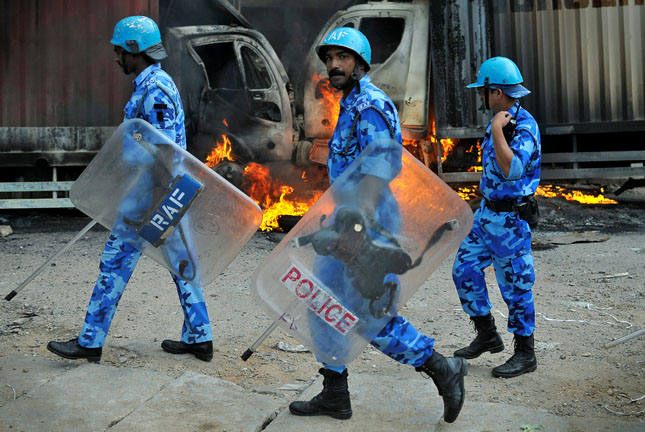
In Drought-Stricken India, Water Tensions Spill Into the Streets
›October 7, 2016 // By Sreya PanugantiAs the remains of nearly 60 buses smoldered at a depot in Bangalore, the “Silicon Valley” of India, protestors chanted, “We will give blood, but not Cauvery!” Downstream, in neighboring Chennai, at least 100 vehicles have been damaged, more than 500 people have been arrested, and a 25-year old died after setting himself on fire in protest.
Showing posts from category democracy and governance.
 In the turbulent days following the 2011 fall of Colonel Muammar Gaddafi’s government, Dr. Alaa Murabit found herself in Libya’s fragile capital, Tripoli, observing exchanges between parliamentarians and civil society over the future of the country. For over 40 years, this kind of discussion was unthinkable – not the least, for a young woman.
 Chaotic flows of refugees and migrants – the most since World War II – have challenged leaders in Western Europe and North America. “The reactions to those big flows are undermining our institutions in important ways and degrading our politics,” says Wilson Center Fellow