-
The MEDEA Legacy: Darkened Data Shed Light on a Changing Planet and Environmental Security
›March 27, 2019 // By Evan Barnard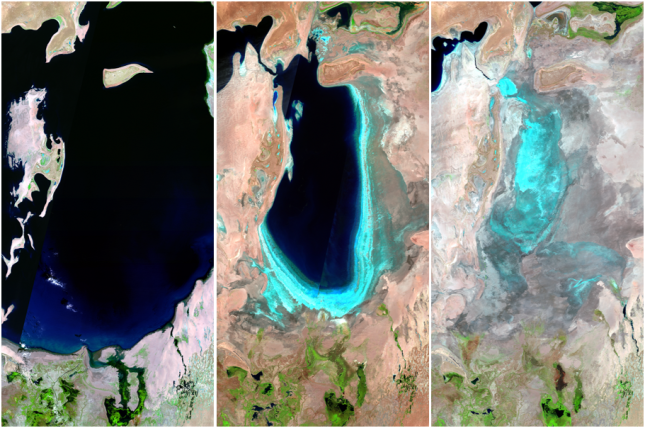
In 2018, California experienced its most destructive wildfires in history. Satellite imagery shared by NASA scientists helped firefighters track fires and map damage by comparing satellite images documenting changes to the Earth’s surface. These types of images existed for decades but were classified for military purposes until the government program MEDEA identified their potential benefit and advocated for public access in the 1990s. According to former National Oceanic and Atmospheric Association (NOAA) Chief Scientist and MEDEA member Richard Spinrad, “the systems that might be used for early detection of a missile launch may work equally well for detection of wildfires.”
-
Lower Mekong Governments and Development Partners Seek to Improve Water Data Sharing
›
In the Mekong region, there is a general push to strengthen water data management and ultimately make evidence-based infrastructure development and water resources management decisions. The efforts of the region’s governments and development partners will ideally help mitigate the cumulative impacts of infrastructure development on water resources; save lives, livelihoods, and property from potentially devastating floods and droughts; and help natural resources be used sustainably. The challenge will involve navigating potential pitfalls related to technical know-how and harmonization of standards as they develop effective water data sharing platforms.
-
Hurricane Maria’s Death Toll: Public Health Researchers Voice Frustration
›Once again, we find ourselves witnessing another calamitous hurricane event in the United States, just weeks after a George Washington University report estimated that nearly 3,000 more people died in the 6 months following last year’s Hurricane Maria than would have without the hurricane. We have been here before, too many times. With each and every major disaster, the scientists who study public health in crises ask ourselves, is what we have learned and shared being taken seriously—or is it just being ignored? The response to Hurricane Maria, which devastated Puerto Rico last year, is just one more example where we have to ask if our work is valued by those who have the political power to improve public health. The staggering number of excess deaths—most of whom died after the storm—point to a deadly lack of prevention and preparedness, particularly in the public health system.
-
The Double Burden of Climate Exposure and State Fragility
›The security implications of climate change emerged as an important area of concern in the mid 2000s in both policy circles and academia. Since then, there has been much research exploring causal pathways between climate phenomena and violent conflict, often with inconclusive or mixed results.
-
Bangladesh and Pakistan: Demographic Twins Grow Apart
›While the World Population Prospects—the UN Population Division’s demographic estimates and projections—will never land on anyone’s non-fiction best-seller list, the latest version holds some noteworthy true stories. And the most remarkable demographic story of all may be Bangladesh’s.
-
Measuring Impact: Building on Lessons Learned to Improve Biodiversity Conservation
›“Functioning natural systems are critical to human survival itself,” said Carrie Thompson, Deputy Assistant Administrator of the Bureau for Economic Growth, Education and Environment at USAID, at a recent Wilson Center event on USAID’s efforts to increase the effectiveness of its biodiversity conservation programs. Measuring Impact was designed to help support USAID’s 2014 Biodiversity Policy, which is “grounded in a recognition that human well-being and progress are dependent on the health of biodiverse systems and [that] durable development gains are not possible unless these systems are valued and safeguarded,” said Cynthia Gill, Director of USAID’s Office of Forestry and Biodiversity.
-
A More Prosperous World: Investing in Family Planning for Sustainable Economic Growth
›“There is a close relationship between fertility rates and health on one hand, and economic growth on the other,” said Peter McPherson, President of the Association of Public Land-Grant Universities and former USAID Administrator, at the final event in a three-part series on the role of population and family planning in supporting economic growth, health, and education.
-
Mapping Climate Security: New Dashboard Tool Visualizes Complex Vulnerability in Asia
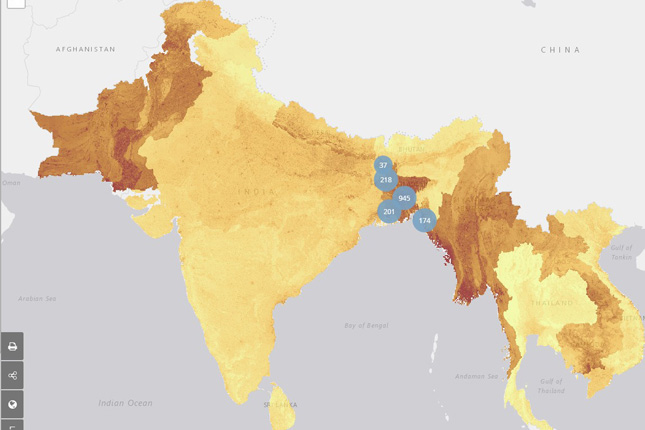
›In many parts of South and Southeast Asia, high population density and vulnerability to climate change combine with low levels of household resilience and poor governance to increase security concerns and the potential for political instability. To help identify risks and hotspots in this critical region, the Complex Emergencies and Political Stability in Asia (CEPSA) program at the University of Texas-Austin recently launched the Complex Emergencies Dashboard, which integrates raw data and modeling with mapping technology, allowing users to visually analyze regional security issues. The project was funded by the Department of Defense’s Minerva Initiative, which also supported similar work by the university’s Climate Change and African Political Stability (CCAPS) program.
Showing posts from category data.