• woodrow wilson center
  • ecsp

New Security Beat

Subscribe:
  • rss
  • mail-to
  • Who We Are
  • Topics
    • Population
    • Environment
    • Security
    • Health
    • Development
  • Columns
    • China Environment Forum
    • Choke Point
    • Dot-Mom
    • Friday Podcasts
    • Navigating the Poles
    • Reading Radar
  • Multimedia
    • Water Stories (Podcast Series)
    • Backdraft (Podcast Series)
    • Tracking the Energy Titans (Interactive)
  • Films
    • Water, Conflict, and Peacebuilding (Animated Short)
    • Paving the Way (Ethiopia)
    • Broken Landscape (India)
    • Scaling the Mountain (Nepal)
    • Healthy People, Healthy Environment (Tanzania)
  • Publications
  • Events
  • Contact Us

NewSecurityBeat

The blog of the Wilson Center's Environmental Change and Security Program
Showing posts from category cooperation.
  • New Approaches to Addressing Gender Inequality in Global Development

    ›
    From the Wilson Center  //  June 15, 2016  //  By Sreya Panuganti
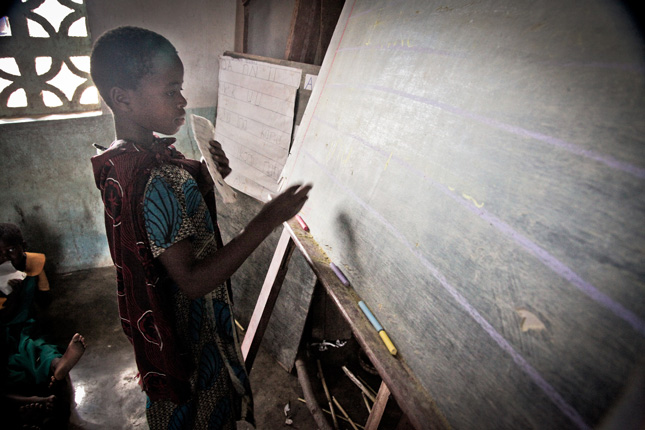
    delali association

    In principle, development organizations and donors have known that gender dynamics affect the success or failure of their efforts for some time. In practice, overturning cultural mores while at the same time improving health outcomes, incomes, or food security can be difficult. [Video Below]

    MORE
  • Peace After Paris: Addressing Climate, Conflict, and Development

    ›
    From the Wilson Center  //  June 1, 2016  //  By Sreya Panuganti
    Burkina-Faso-shelter

    2015 was a historic year for international commitments to sustainable development, climate change action, and new kinds of peacebuilding. For governments and policymakers, now comes the difficult task of living up to those commitments. [Video Below]

    MORE
  • The Case for a Caribbean Carbon Market

    ›
    Guest Contributor  //  May 24, 2016  //  By Gary Clyne
    Trinidad-industry

    In an effort to scale-up climate change mitigation, the largest private sector engagement in the history of the United Nations was drafted to fund clean technology projects in developing countries. Carbon credits were to offset pollution in developed nations and pay for clean energy projects in developing countries. But many developed countries, including the United States, spurned the agreement, preferring to manage greenhouse gas emissions internally and build or retrofit infrastructure in ways that directly benefited their economies. The ambitions of the Kyoto Protocol, which went into effect in 2005, were subsequently stranded and then scrapped.

    MORE
  • We’re At Peak Storytelling – And That’s a Good Thing

    ›
    Guest Contributor  //  May 23, 2016  //  By Sean Peoples
    Michael Miller

    Everywhere you look these days, you find storytellers. I’ve found myself going to fewer concerts after work and more storytelling nights. Podcasts have sprung up dedicated to the craft of narrative. It’s a brand I hear friends use to define themselves: “I’m a storyteller.” If you’re under 30, it’s a natural and ubiquitous part of the milieu.

    MORE
  • Should the UN Security Council Take Up Climate Security Issues? Ken Conca on Institutional Change

    ›
    Friday Podcasts  //  May 20, 2016  //  By Sean Peoples

    Conca-smallAs the dust settles on the newly minted Sustainable Development Goals (SDGs) and Paris climate agreement, countries have begun tackling operational questions aimed at limiting global warming to two degrees Celsius and ensuring peaceful, sustainable development.

    MORE
  • The Future of the Sustainable Development Goals

    ›
    From the Wilson Center  //  May 18, 2016  //  By Gracie Cook

    Iron and Steel giant ISKOR's Vanderbijl Park refinery. Farm land bordering the industrial area.

    “As we go forward, we will discover that 2015 was when we really started getting serious about transdisciplinary challenges inherent in sustainable development,” said Melinda Kimble, senior vice president for programs at the UN Foundation, at the Wilson Center on April 13. [Video Below]

    MORE
  • Ethiopian Drought Response a Sign of How Far We’ve Come and Where We Need to Go

    ›
    Guest Contributor  //  May 17, 2016  //  By Greg Collins
    Ethiopia-food-assistance3

    Drought in Ethiopia, exacerbated by El Niño, has put more than 10 million people in a position of being unsure how long they will have food and where it will come from next. Inevitably, the drought has been compared to the infamous drought of 1983-1984 that led to the worst famine in the country’s history, making millions destitute, and contributing to the deaths of 400,000. But Ethiopia is in a very different place today than it was in 1983.

    MORE
  • Feeding the Future? A Closer Look at U.S. Agricultural Assistance in Tanzania

    ›
    May 11, 2016  //  By Haodan "Heather" Chen
    Tanzania food market

    Between 2010 and 2015, Tanzania received more than $320 million in assistance via the U.S. government’s Feed the Future Initiative – the most of any country. But despite these commitments and an average of six to seven percent annual economic growth since 2000, Tanzania did not meet the first Millennium Development Goal: to reduce hunger and extreme poverty by half by the end of 2015.

    MORE
Newer Posts   Older Posts
View full site

Join the Conversation

  • RSS
  • subscribe
  • facebook
  • G+
  • twitter
  • iTunes
  • podomatic
  • youtube
Tweets by NewSecurityBeat

Trending Stories

  • unfccclogo1
  • Pop at COP: Population and Family Planning at the UN Climate Negotiations

Featured Media

Backdraft Podcast

play Backdraft
Podcasts

More »

What You're Saying

  • Volunteers,At,The,Lagos,Food,Bank,Initiative,Outreach,To,Ikotun, Pan-African Response to COVID-19: New Forms of Environmental Peacebuilding Emerge
    Rashida Salifu: Great piece 👍🏾 Africa as a continent has suffered this unfortunate pandemic.But it has also...
  • A desert road near Kuqa An Unholy Trinity: Xinjiang’s Unhealthy Relationship With Coal, Water, and the Quest for Development
    Ismail: It is more historically accurate to refer to Xinjiang as East Turkistan.
  • shutterstock_1779654803 Leverage COVID-19 Data Collection Networks for Environmental Peacebuilding
    Carsten Pran: Thanks for reading! It will be interesting to see how society adapts to droves of new information in...

What We’re Reading

  • Rising rates of food instability in Latin America threaten women and Venezuelan migrants
  • Treetop sensors help Indonesia eavesdrop on forests to cut logging
  • 'Seat at the table': Women's land rights seen as key to climate fight
  • A Surprise in Africa: Air Pollution Falls as Economies Rise
  • Himalayan glacier disaster highlights climate change risks
More »
  • woodrow
  • ecsp
  • RSS Feed
  • YouTube
  • Twitter
  • Facebook
  • Home
  • Who We Are
  • Publications
  • Events
  • Wilson Center
  • Contact Us
  • Print Friendly Page

© Copyright 2007-2021. Environmental Change and Security Program.

Woodrow Wilson International Center for Scholars. All rights reserved.

Developed by Vico Rock Media

Environmental Change and Security Program

Woodrow Wilson International Center for Scholars

Ronald Reagan Building and International Trade Center

  • One Woodrow Wilson Plaza
  • 1300 Pennsylvania Ave., NW
  • Washington, DC 20004-3027

T 202-691-4000