Showing posts from category conservation.
-
Albert Lotana Lokasola, PHE Champion
Improving Health and Preserving Ecosystems in the Democratic Republic of Congo
›This PHE Champion profile was produced by the BALANCED Project.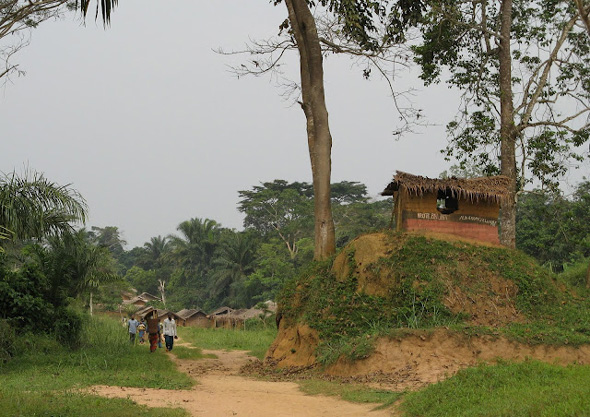
In the remote forests of the Democratic Republic of Congo (DRC), Albert Lotana Lokasola is helping improve livelihoods by bringing much-needed health services to the communities living in and around the Kokolopori Bonobo Reserve. Officially recognized by the DRC government in May 2009, the reserve is a high biodiversity wilderness area covering an area about the size of Rhode Island (4,785 square kilometers).
Located 300 miles southwest of Kisangani, the reserve contains bonobos, a rare and highly endangered great ape species that is as closely related to humans as chimpanzees. In addition, the reserve is highly valued for its biodiversity, including several other flagship species such as leopards, elephants, Congo peafowl, Tshuapa red colobus, and Salonga monkeys.
Lokasola founded a nationally recognized organization called Vie Sauvage, or “Wild Life” in English. He serves as the president of the organization and works with international organizations to foster conservation and rural development in an integrated, holistic approach. As a native of Kokolopori, he believes that “the forest, men, and wildlife live together and should be protected together.”
In partnership with local residents and supported by the Bonobo Conservation Initiative, Lokasola and Vie Sauvage established the first medical clinic in the area in 2006. They garnered support for a doctor, nurses, and supplies from the Indigo Foundation in Australia and the Kokolopori-Falls Church Sister City Partnership.
Before the clinic was founded, community members had to walk or bicycle more than 50 miles to get to the nearest hospital in the territorial capital of Djolu. Now the Kokolopori clinic serves the 8,000 people who live in 30 villages along a 40-mile road in the reserve. One of the clinic’s goals is to help improve women’s health by training and equipping midwives and by providing access to other health services. Malaria and poor nutrition contribute to high maternal and child mortality, and women in Kokolopori do not yet have access to reproductive health services such as family planning.
Vie Sauvage articulates integrated health and conservation messages through their community education projects. They are also working with the community to prevent malnutrition by planting fruit trees in agroforestry fields to produce supplemental food supplies. At the same time, these trees will create corridors for wildlife movement and protect the genetic flow. They also create a sound micro-climate for people, sequester carbon dioxide, and filter the air. Through these efforts, Vie Sauvage and the people of Kokolopori are demonstrating the critical links between human well-being and conservation.
Vie Sauvage has garnered resources and participation from diverse partners (like the Kokolopori-Falls Church Sister City Partnership and the Indigo Foundation, mentioned above) which work together to support the clinic and fund medical staff salaries, training, supplies and equipment, and infrastructure improvements.
According to Lokasola, Vie Sauvage and partners are currently exploring potential partnership opportunities to integrate family planning and reproductive health into existing activities. His hope is that by providing these much-needed services, the community will be healthier and critical ecosystems will be sustainably preserved.
This PHE Champion profile was produced by the BALANCED Project. A PDF version can be downloaded from the PHE Toolkit. PHE Champion profiles highlight people working on the ground to improve health and conservation in areas where biodiversity is critically endangered.
Photo Credit: Building along the road in Kokolopuri village serves as a messsage drum for sending messages from one village to the next, courtesy of Ingrid Schulze and the BALANCED Project. -
ASRI’s Integrated Health and Conservation Programming in Borneo
›If you have a fever in the town of Sukadana in Indonesian Borneo, the locals might suggest you go to the ASRI clinic. It’s in a little house whose front yard is crowded with bicycles and motorbikes. In the waiting room, you examine a whiteboard that explains your payment options. ASRI accepts cash. But it looks like you can also pay with labor in the clinic’s organic garden or its reforestation site. If you own a goat, you can bring in its manure and pay with that. You can even pay with durian tree seeds!
Doctoring both humans and the environment is the raison d’etre of Alam Sehat Lestari (“healthy life everlasting” in Bahasa Indonesia, or ASRI for short), an NGO dedicated to the idea that human health is so intertwined with that of the environment that trying to fix one must include trying to fix the other. Located beside Indonesia’s Gunung Palung National Park, ASRI aims to protect the park’s irreplaceable rainforests by offering health care incentives to local people to stop illegal logging. We’re supported by our sister NGO in the United States, Health in Harmony.
For both people and the forest, the task is urgent. The island of Borneo was once famously covered by rainforest. But now only half of that canopy exists, and less than one-third will remain by 2020. Beginning in the mid-20th century, loggers, palm-oil plantation companies, and farmers logged, burned, and clear-cut their way through the island. Horrifyingly, much of this destruction has taken place in “protected” areas like national parks. The relentless loss of forest has devastated biodiversity in Borneo and severely reduced habitats for many organisms, including one of humanity’s closest relatives, the orangutan – as of 2005, there were about 55,000 left, a tenth of which live in Gunung Palung. Some experts predict the orangutan will be extinct within a few decades. Despite their protected status, Gunung Palung’s forests are continually threatened by illegal logging for valuable hardwood, poor implementation of management practices, and forest fires, many of which are started to clear land for new uses. Over 50,000 hectares of the 90,000-hectare national park’s forest cover are damaged or gone.Contributing is the fact that Borneo’s economy is based largely on extractive industries; there simply aren’t many other job options. An ASRI survey found that in the Gunung Palung area the average cost of an emergency visit to the district or regional hospital was $460 – more than the average annual income. In fact, one-third of interviewees had faced a choice between health care and food. Financial pressures like that are what drive people to illegal logging. A four-meter board can go for R110,000, or about $10 – a little less than the average villager’s monthly income of $13. Working in a rice field, by contrast, pays about a dollar a day.
Sukadana, located so close to Gunung Palung, is a boom town for these industries. It was recently made a seat of the local regency. We watch new buildings go up every week – most of them built using illegal wood chopped straight out of the national park – and workers and money are flowing in.
As forest is converted to plantations, however, pesticides and fertilizers enter the watershed, which damage water and soil quality as well as human health. Watershed destruction from logging and land conversion leads to flooding which makes it harder to raise rice and can increase rates of flood-related diseases. Logging itself is dangerous work, and there are few or no worker protections. As well, seasonal, man-made forest fires, which this ecosystem is not adapted to and which can last for months, devastate both the natural habitat and respiratory health.
Enter ASRI: Our Sukadana clinic offers high-quality, low-cost medical care to all comers, with discounts for people living in villages that do not contribute to illegal logging (which the National Park office determines using air and ground patrols). This incentive system was devised in consultation with local leaders and is intended to take advantage of powerful social ties in this rural area. But given the complexity of the connections between poverty, health, and the environmental degradation here, ASRI also attacks these problems from other angles.
For one, patients and families can pay by eco-friendly, non-cash means – some of which actually end up providing further benefit to the patients. Many choose to do a stint of labor for ASRI in our organic garden. There they learn techniques that they can apply to their own crops. Some farmers have reported making a considerable profit selling their own organic produce with the skills they learned at ASRI, and some have sworn off traditional slash-and-burn agriculture, because as organic farmers they earn more money for less work. Others decide to work at ASRI’s reforestation site, which aims to restore several hectares of burned-over, degraded grassland to its original forested state. Patients can also bring in compost or manure; rainforest seeds and seedlings; or handmade grass mats, which are snapped up by clinic staff and volunteers.
ASRI’s other programs include Goats for Widows, in which impoverished widows receive a goat and give back its organic manure and one kid. Clinic staff teach townspeople and villagers about the links between the environment and health and include information about diseases like tuberculosis during “movie nights,” when they set up a projection screen and show educational videos. Crucially, ASRI also engages in capacity-building through its trained medical volunteers, who serve as consultants for Indonesian staff doctors who are fresh out of medical school.
On the horizon is a new eco-friendly “super-clinic” that will allow us to perform major surgery and house many more inpatients. We hope that as it goes up, people will learn ways to build with less wood, and that by offering even better health care to people living around the national park, we will gain enough leverage to slow or even stop illegal logging. For the community – everyone from the next generation of Sukadanans to the gibbons and durian trees – that would be a healthy change for all.
Jenny Blair, M.D., is a physician, writer, and long-term volunteer at ASRI, along with her husband, Roberto Cipriano, a LEED-accredited professional and architect who is helping to design ASRI’s newest clinic.
Sources: Center for International Forestry Research, Food and Agriculture Organization, Gunung Palung Orangutan Conservation Program, Mongabay.com, Rainforest Action Network, Tropics, World Rainforest Movement, World Wildlife Foundation
Video and Image Credit: “Conservation – Part 1,” courtesy of AlamSehatLestari, and “Ibu Nurdiah,” used with permission, courtesy of Roberto Cipriano. -
Integrated Development in PHE: Updates From Ethiopia and the Philippines
›“All protected areas in Ethiopia are being threatened by population pressure,” said Negash Teklu, executive director of PHE Ethiopia at an event at the Wilson Center co-sponsored by ECSP and the Africa Program. The best way to address this pressure is by implementing integrated population, health, and environment (PHE) programs that combine natural resource management with family planning services, said Teklu. “Without the family planning component, they cannot solve the protected area problems,” he said.
Teklu was joined by Joan Regina Castro, executive vice president at PATH Foundation Philippines, Inc., and Annie Wallace, PHE technical advisor with the USAID Global Health Fellows Program, to compare PHE projects in Ethiopia and the Philippines and identify best practices. [Video Below]
The Population-Climate Connection
To address population growth in areas of high biodiversity, Teklu created PHE Ethiopia, a consortium to coordinate PHE projects in the country and increase awareness of the value added by integrating them.
“The population-climate connection is easily seen in Ethiopia,” said Teklu. The country’s deforestation, loss of biodiversity, poverty, high maternal and child mortality, and vulnerability to climate change are linked to the rapid growth of its population, which is currently 85 million. Building community resilience in this kind of environment is “critical,” he said.
Bridging Gaps: Gender, Youth, and Religion
Wallace, in her assessment of the Packard Foundations’ PHE projects in Ethiopia, found the projects bridged gender gaps. By integrating health and environmental education in PHE youth groups and in outreach by extension workers, the projects increased male involvement in health and family planning (a traditionally female activity) and increased women’s involvement in agriculture and environmental activities (traditionally male). This cross-gender success increased the total number of family planning users, said Wallace.
But for any of this work to succeed, “community ownership and participation are very critical and essential,” said Teklu. Both youth and religious leaders were primary stakeholders in this process. “Youth are the next leaders. By targeting youth you can get them to think about livelihoods and make these connections,” said Wallace.
PHE has proven to “transcend religion,” said Castro. Despite traditional opposition to abortion and family planning, support from Christian and Islamic leaders in Ethiopia and the Philippines was critical in determining a project’s success. “When religious leader buy-in comes in, the community really responds to that,” said Wallace.
In addition, religious leaders understand the population-environment connection. “Our livelihoods are affected when we have too many mouths to feed…family planning and reproductive health makes sense,” an Ethiopian religious leader told Wallace.
Securing Sustainable Support for Scaling Up
IPOPCORM, the PHE initiative in the Philippines, is now “the biggest [PHE] project, modesty aside, in the world,” said Castro, because it has succeeded in working at all levels of government. To scale up its work in the “priority areas” of high biodiversity and rapid population growth, where the “poorest of the poor” live, IPOPCORM first scaled up its advocacy work. To be sustainable, “you have to have a lot of PHE leaders and champions” at all levels, from village to national government, she said.
Ethiopia faces a significant challenge in securing sustainable support and funding from the national government and other sources. “While there is buy-in for the local approach, there isn’t funding,” Wallace said. “A lot of work is donor-driven, whether we like it or not,” she added. “There needs to be a more sustainable strategy” to ensure the survival of these projects, she said, which means garnering national and international support.
But it also means conducting research to provide empirical evidence of PHE’s added value, the speakers agreed. A new paper in the journal Environmental Conservation, coauthored by Castro, uses evidence from IPOPCORM’s projects to conclude that integrating family planning and coastal resource management offers benefits over single-sector approaches. But elsewhere, there is a “big need for monitoring and evaluation” to “strongly gather data to show our success on the ground,” said Teklu.
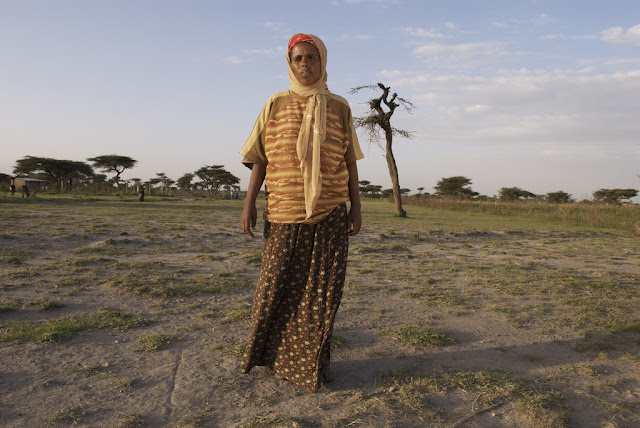
However, communities on the ground “don’t need the empirical evidence,” said Castro. “The community and the people say their lives are linked and so the solutions should be linked,” she said. “The life that they live speaks of integration.”
Photo Credit: “Safia Fungie Hasenna – Climate witness from Ethiopia” by Zeresenay Berhane Mehar courtesy of flickr user Oxfam International -
Minister Izabella Teixeira at the Wilson Center
A Review of Brazil’s Environmental Policies and Challenges Ahead
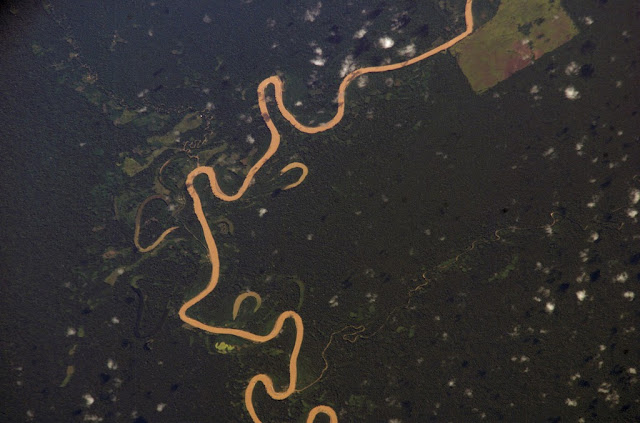
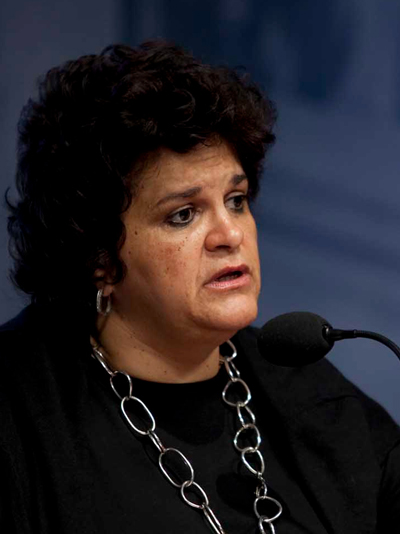
›Stressing the need for concrete, tangible institutional policies, Izabella Teixeira, Brazil’s Minister of the Environment, discussed the challenges and goals of her ministry at the Wilson Center on October 20. Sustainable development, not just conservation, must be the focus, and that requires bringing lots of different players to the table, taking into account not only environmental but also social and economic agendas. To do this, she argued, one must take the rather ephemeral and hypothetical notions of environmental stewardship and put them into the realm of a practicable, institutionalized framework, built on a social pact that engages all sectors of society.The foundation of sustainable development and environmental policy must be biodiversity, according to Teixeira. Central concerns, such as food and energy security and combating climate change, all rely on a diverse array of natural resources. These need to be conserved, but they must also be developed in a responsible, sustainable way. A legal international framework toward this end, covering access to biodiversity and genetic resources, has yet to be implemented. Developing and developed countries need to find a middle ground on allocating the benefits that accrue from the use of genetic resources found in areas such as the Amazon, and this agreement must then be linked into existing political institutions.
Teixeira noted the strides Brazil has made toward protecting its environment – including having set aside the equivalent of 70 percent of all protected areas in the world in 2009 and the establishment of the Amazon Fund. Nevertheless, Brazil must continue to protect and maintain these nature preserves, not just establish them. Creating a program that pragmatically implements international goals in a national context is an ongoing process, and countries like Brazil now need to focus on the “how” of implementing these goals, rather than just the “what.”
Teixeira also highlighted the complexity of formulating environmental policy that integrates all the various points of view that must be taken into consideration. At recent meetings to discuss transitioning to a low-carbon economy, 17 different cabinet ministers had to be present to coordinate government positions and policies. The complexity is due in part to the need to create alternatives, not just to prevent certain activities. For example, one must not only use legal enforcement to stop illicit deforestation, but also create paths to legal, sustainable logging. Once again, attempting to balance environmental, social, and economic concerns is difficult, to say the least, but crucial for long-term effectiveness.
Also a unique challenge for Brazil is the natural diversity that exists within such a large country. While much of the attention paid to the environment goes (rightly so) to the Amazon, there are many other biomes and local environments that must be taken into consideration, Teixeira observed.
The cerrado, Brazil’s enormous savanna, requires a different strategy than the Amazon, which is different than the coastal Atlantic forest. Furthermore, urban areas need their own environmental policies that can take into account issues of human development and population density.
To illustrate the need for an inclusive, well-thought-out policy, Teixeira discussed–rather frankly–the controversy surrounding the recent proposed amendments to the Forest Code. She argued that the proposal makes blanket changes that do not take into consideration differences in biomes, differences between large agribusinesses and family farms, and between historic, settled communities and recent developments. The implications of this proposal, according to the minister, could have enormous social costs. Teixeira said she believes that it would be virtually impossible to enforce the amended Forest Code if it was approved by Congress. She used this example to underscore her role in offering legislative alternatives that seek to provide a more nuanced, and ultimately more effective, institutional framework that can use Brazil’s many natural resources to help its population to the greatest extent possible.
J.C. Hodges is an intern with the Brazil Institute at the Wilson Center; Paulo Sotero is the director of the Brazil Institute.
Photo Credit: “Rio Jurua, Brazil (NASA, International Space Station Science, 05/29/07),” courtesy of flickr user NASA’s Marshall Space Flight Center, and David Hawxhurst/Wilson Center. -
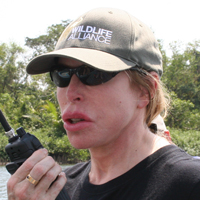
Bringing Cambodia Back from the Brink: An Audio Interview with Suwanna Gauntlett
›December 10, 2010 // By Hannah MarquseeThree decades after the Khmer Rouge regime wiped out an estimated 1.7 million people – one fifth of Cambodia’s total population – the environment and Cambodian people are still feeling the effects.
The Pol Pot regime’s policy of agrarian collectivization dramatically reorganized land ownership and relocated millions from urban to rural areas. The ensuing decades of Vietnamese occupation and civil war further changed Cambodia’s workforce, dislocating millions.The “Khmer Rouge regime increased the destruction of natural resources exponentially,” Suwanna Gauntlett, founder and CEO of Wildlife Alliance, told ECSP in this interview. Today, 78 percent of Cambodia’s 14.5 million people live in rural areas, according to the World Bank, nearly all of whom work as subsistence farmers. These rural households account for almost 90 percent of Cambodia’s poor and 36 percent of the total population in 1997.
“These Forests Were Silent”
When Wildlife Alliance arrived in Cambodia in 2000, “these forests were silent,” Gauntlett said. “You couldn’t hear any birds, you couldn’t hear any wildlife and you could hardly see any signs of wildlife because of the destruction.”
In one village, Chi Phat, Gauntlett noted how years of slash-and-burn agriculture had left a “circle of death” around the village as farmers gradually encroached further into the forest.
Cambodians have compensated by turning from traditional subsistence farming to illegal logging, wildlife trafficking, slash-and-burn agriculture, mining, and other unsustainable development (with significant Chinese investment). This has contributed to food and water insecurity, rapid deforestation, habitat loss, and species extinctions. In 1990, 73 percent of Cambodia’s land was covered by forest. By 2007, that number had dropped to 57 percent. Cambodia’s 146 threatened plant and animal species have also felt the effects of this loss. The Indochinese tiger, native to Cambodia, is now thought to have less than 30 individuals remaining in the entire country.
Integrated Solutions
Focusing on the Cardamom mountain range – Cambodia’s largest remaining intact forest – Wildife Alliance established several community-based agriculture and ecotourism programs to help villagers escape the “vicious circle” of poverty and environmental destruction. Ten years later, “there’s been tremendous progress in the geographic areas of our projects,” said Gauntlett.
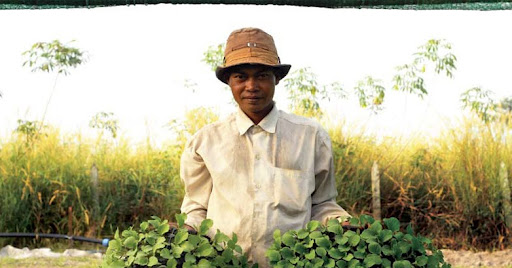
In another village, Sovanna Baitong, Wildlife Alliance’s community agriculture program has raised the incomes of some residents to over $200 a month when the national poverty level is $200 a year, Gauntlett said. Today this village has a school, a clinic that provides health care and family planning, and a micro-credit fund. This is all managed by the community leaders, 30 percent of whom are women.
Ten years ago, “it was a mess,” Gauntlett said. “It’s amazing to see the difference.”
However, in parts of the country where Wildlife Alliance does not operate, deforestation continues at an alarming pace, often fueled by Chinese and other foreign investment. In some parts of the country, “deforestation has led to very severe water shortages,” including villages where people have to walk up to 20 kilometers for water because “there is no more underground water,” said Gauntlett. This has troubling implications for Cambodian security, particularly with aggressive hydrological development of the Upper Mekong continuing in China and Laos.
“I’m afraid that’s what’s going to happen throughout Cambodia – that this water shortage will lead to food shortage [which] will lead to civil unrest,” Gauntlett said.
Sources: BBC, Cambodian Genocide Program, The Washington Post, Wildlife Alliance, World Bank, WWF, UNEP.
Photo Credit: “Farmer at Sovanna Baitong” and “Suwanna Gauntlett” Courtesy of Wildlife Alliance. -
Developing a Blueprint for Addressing Glacier Melt in the Region
Changing Glaciers and Hydrology in Asia
›“Glacier melt is part of larger hydrologic and climate systems, so effective programs will be cross-sectoral and yield co-benefits,” said Elizabeth L. Malone, senior research scientist at the Joint Global Change Research Institute and Pacific Northwest National Laboratory, speaking at the Wilson Center on November 16. “Looking more closely at glacier melt, we come to understand that upstream actions and choices have a potentially huge effect on downstream communities,” added Kristina Yarrow, health advisor at the U.S. Agency for International Development’s Asia and Middle East Bureaus.
Malone and Yarrow were joined by Mary Melnyk, senior advisor for natural resource management at USAID’s Asia and Middle East Bureaus, to discuss the agency’s new report, “Changing Glaciers and Hydrology in Asia: Addressing Vulnerabilities to Glacier Melt Impacts,” prepared by Malone in collaboration with CDM International and TRG. “This report is a move towards mainstreaming climate change across the development portfolio to ensure enduring success of our investments,” Melnyk said.
Mainstreaming Climate Change
Providing information about the science, vulnerabilities, and current efforts to respond to environmental change and glacier melt in Asia, the new report also features a number of practical, cross-sectoral approaches to addressing glacial retreat in Asia that, if implemented well, could produce multiple benefits. The report highlights the complexity of the issues surrounding glacier melt in the region, and the critical need to prepare today for future environmental changes.“Climate change in general, and glacier melt specifically, can potentially impact all sectors: economic growth, governance, and health,” Melnyk said. Because there is a lack of scientific knowledge on glacial retreat in Asia and limited financial and human resources to address these issues, it is critical to maximize results through programs that will provide environmental, health, and development co-benefits.
“The challenge is that, in practice, addressing issues of climate change and other environmental security issues still are not a part of the day-to-day business across sectors,” Melnyk said. This report is a first step in the right direction to raise awareness and action on these issues and “although there is uncertainty, we need to move forward – the time to act is now,” she concluded.
Multiple Sectors, Multiple Benefits
“Cross-sector collaboration and programs, when done correctly, can have a much greater impact than when doing a vertical program within a specific sector,” Yarrow said, stressing the importance of multidisciplinary approaches to address environment, health, and development issues. Understanding the health impacts of climate-related environmental change now can help prepare us to address these specific impacts in the future.“On a global scale, there is indeed a relationship between population growth, environmental change, and development,” Yarrow said. In Asia, stress on water resources due to climate change and rapid population growth will likely exacerbate health problems caused by lack of clean water. Proactively expanding and improving programs that address the causes and effects of diarrheal disease and under-nutrition can help address these vulnerabilities and make communities more resilient.
“Finding innovative ways to improve access to and integrate family planning messages and services into climate adaptation programs will also yield some important co-benefits,” Yarrow said. Family planning can slow population growth, which could help reduce projected demand for water supplies, as well as potentially reduce the amount of water pollution.
Yarrow also added that “population growth affects glacier melt indirectly through the consumption of resources that exacerbate black carbon.” Black carbon, which is produced by cooking and heating with biomass fuels, contributes to regional climate change and severe health problems, including respiratory illness and pneumonia. Accompanied by efforts to promote alternative fuels, family planning could reduce black-carbon emissions, significantly improve health, and strengthen community resilience to climate change.
“Though challenging, integrating across sectors is absolutely essential – we’re not experts yet, but we’re definitely getting better,” Yarrow said. “Understanding and addressing the multiple issues like climate change, poor health, poverty, dependence on natural resources, and governance challenges that these communities are dealing with in a comprehensive and holistic fashion will improve results.”
Responding to Glacier Melt
“We simply do not have the kind of broad-scale knowledge that we would like to have,” Malone said. Current data on glacier melt is scarce and very few direct measurements of glacier volume exist, making calculations of glacier retreat difficult. Moving forward, it is critical to respond to this lack of information by improving regional scientific cooperation on glaciers, snowpack, and water resources in High Asia, and strengthening climate and water monitoring capacity.“Even the smallest amounts of glacier-melt contribution correspond to the regions of the highest population, so any change in water supply has large implications,” Malone said. Glaciers may not be disappearing as fast as had been previously thought, but “climate change is happening in the Himalayas and is having an effect.”
“If systems – both human and ecological – are already stressed, they are less able to be resilient in the face of changes. But the good news is that we can take actions now that will be crucially important to how societies can respond in the future,” Malone said.
Implementing cross-sector projects can help to target places where environmental, economic, health, and even security issues overlap. Focusing on water resource management, ecosystems, and the needs of high-mountain communities, as well as mitigating climate change by reducing emissions of black carbon, can help reduce both direct and indirect vulnerabilities and improve resilience to future changes.
“The results of this report allow USAID and others to grasp the complexity of these issues, understand the critical gaps, and to respond to the changes in the glaciers to come,” Melnyk said. The next step is applying the knowledge gathered in the report to practitioners in the field and in policy discussions.
“A crucial role USAID can play is to link partners in the government and private sectors to build capacity and spark synergies among new initiatives to really integrate new initiatives with concerns about glacier melt,” Malone concluded.
Photo Credit: “Nepal Sagamartha Trek,” courtesy of flickr user mckaysavage. -
Governing the Far North: Assessing Cooperation Between Arctic and Non-Arctic Nations
›November 12, 2010 // By Ken CristDespite fears of an unregulated race for Arctic territory and resources, there is currently considerable international cooperation occurring to address key issues in the Far North, said Betsy Baker of the Vermont Law School at an event hosted by the Canada Institute in collaboration with the Friedrich Ebert Foundation, the Kennan Institute, and the Environmental Change and Security Program. The program provided a timely forum to discuss efforts by Arctic and non-Arctic nations to cooperate on key environmental, security, and economic issues, and foster discussion on pressing Arctic governance questions. The event’s first panel was moderated by Don Newman, former senior parliamentary editor, CBC News.
Assessing Cooperation Among Arctic Nations
The United States, said Baker, is currently engaged in international cooperation in a number of areas including, shipping, emergency response and rescue, science, seabed mapping, and joint military exercises. The majority of U.S. Arctic initiatives are conducted via the Arctic Council, an institution that Secretary of State Hillary Clinton favors strengthening. Baker maintained that the most effective form of Arctic governance would be a “bottom up” approach. Governing structures closest to the end users, she explained, are the most effective means of ensuring economic development and environmental security.
Baker noted that the lack of infrastructure and search and rescue capabilities represent the most pressing security concerns in the Arctic. Until this occurs, the international community will not be able to adequately respond to a potential oil spill or grounded vessel in the region. While some analysts have expressed concern over the militarization of the Arctic, Baker and other panelists downplayed the possibility of military conflict in the Far North as a significant concern. She suggested that science-based diplomacy would be the best means to peacefully resolve disputes in the region.
Danila Bochkarev of the EastWest Institute in Brussels said that the development of sea routes (particularly the Northern Sea Route), border protection, and infrastructure development are among Russia’s top Arctic priorities. Bochkarev noted that the Arctic region has increased in economic importance to Russia and currently represents 11 percent of its GDP and 80 percent of the country’s discovered industrial gas. Aside from economic opportunities, melting Arctic ice has also allowed increased access to Russian territory, which is also viewed as a security concern by Russian officials. Other looming Russian concerns, noted Bochkarev, include the increasing internationalization of Arctic governance, competing claims for the Arctic continental shelf, and challenges to Russia’s sovereignty claim over the Northern Sea Route. He maintained that Russia has committed to following the principles of the UN Convention on the Law of the Sea to peacefully resolve any territorial disputes.
Joël Plouffe of the Université du Québec à Montreal noted that Canada’s recently published “Statement on Canada’s Arctic Foreign Policy” highlights the Harper government’s desire to bolster economic development, protect the environment, strengthen its sovereignty claim, and improve governance in the Far North. Plouffe said that the Arctic policy document also shows Canada’s commitment to foster bilateral relationships among Arctic nations, particularly the United States. He noted that Canada has always promoted international cooperation in the Arctic and was one of the founding members of the Arctic Council. Canada’s Arctic policy, said Plouffe, also serves to fill a security gap in the Far North, an area of particular concern to the United States.
While Canada has demonstrated a willingness to engage coastal Arctic states on key environmental, security, and economic issues in the Far North, the Canadian government’s willingness to work with non-Arctic states is less clear, said Plouffe. Canada, he remarked, has yet to decide whether it would like to create an exclusive neighborhood of Arctic states to resolve governance issues, or if it is willing to include non-Arctic nations in international meetings and Arctic forums.
The Perspective of Non-Arctic Nations
“[W]e cannot be indifferent to a region whose melting ice sheet, volumes of water, and temperatures have a direct impact on Germany and Europe,” said Franz Thönnes, SPD Member of the German Bundestag. He explained that Germany and the European Union’s interest in the Arctic stem in part from the importance the EU places on the principles of stability and sustainability. EU interests in the Arctic also extend to the economic realm. Of particular interest, said Thönnes, are untapped Arctic oil and gas reserves and potential new shipping routes. He noted that the shipping route from Hamburg to Shanghai would be cut from 25,200 km to 17,000 km should the Northwest Passage become accessible. Given that Germany operates the world’s largest container fleet, access to such routes would be of major importance to Germany and other European maritime countries.
Ted McDorman of the University of Victoria stated that from an international law perspective, the Arctic Ocean is legally no different than any other ocean. Like other oceans, noted McDorman, there are significant gaps in governance that will require international cooperation to address. These include setting standards for shipping vessels passing through Arctic water and waterways, collaboration on marine science, and how to manage the Arctic marine ecosystem sustainably. According to McDorman, while some aspects of Arctic oil and gas development, such as drilling, will fall under domestic jurisdictions, international standards will still need to be negotiated to address potential oil spills or other environmental repercussions that may affect other countries. McDorman questioned whether an international treaty modeled after the Antarctic treaty would make sense for the Arctic region and he echoed comments by others that the idea is not supported by key Arctic players and is unlikely to move forward.
The Scandanavian countries vary in their level of Arctic engagement, said Timo Koivurova of Finland’s University of Lapland. Finland is currently developing a new Arctic strategy, and Iceland remains adamantly opposed to an exclusive Arctic Five governance structure while supporting active EU involvement in Arctic affairs. On the other hand, Sweden remains relatively inactive on the Arctic policy front. Koivurova noted that there are a growing number of non-Arctic nations – including China, South Korea, and Japan – that are seeking to become a part of the Arctic Council.
Koivurova closed by asking whether the Arctic Council could be reformed in a manner that allowed Arctic nations to retain their status while allowing greater representation for non-Arctic nations. Such reform, said Koivurova, may be necessary given the increasing desire and number of countries vying for a voice on Arctic governance.
Ken Crist is program associate with the Canada Institute at the Woodrow Wilson Center.
Photo Credit: “Arctic Sunrise,” courtesy of flickr user drurydrama (Len Radin). -
Blue Ventures’ Integrated PHE Initiative in Madagascar
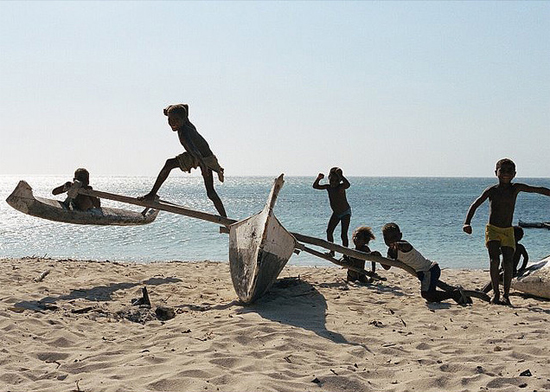
›In the small coastal village of Andavadoaka, Madagascar, the village elders offer a bottle of rum and two cigarettes to their ancestors before the men and their sons launch their wooden dugout canoes into the sea. Leaning over the side, their masked faces scour the water for their prey.
Meanwhile, the women – with babies on back and spears in hand – set out on foot into the shallow waters. One probes a small hole with her spear, and a tentacle reaches out to grapple with it. After careful coaxing, she pulls out an octopus, kills it, and adds it to her collection, which she tows on a string behind her.
In total, more than 1,850 pounds of octopus are collected on the opening day of the octopus harvest, a seasonal occurrence in Velondriake, the Indian Ocean’s first locally managed marine area.
Velondriake, which means “to live with the sea,” stretches along more than 40 km of southwestern Madagascar’s coast. The region encompasses 25 villages and is home to more than 8,000 people of the Vezo ethnic group, who are almost entirely dependent on marine resources, such as octopus, fish, and mangrove forests, for subsistence and income. But these resources are quickly disappearing due in large part to over-harvesting.
Blue Ventures Conservation – the London-based NGO I work for – has been working in the area since 2003 to protect the region’s coral reefs and mangroves, as well as their biological diversity, sustainability, and productivity, while also improving the quality of life of the local community.
To this end, Blue Ventures helped the community create a series of coastal marine reserves. Several permanent reserves protect the biodiversity of the coral reefs and mangroves, and help fish populations recover; while nearly 50 temporary reserves have increased the productivity of the octopus and crab fisheries. Octopuses reproduce quickly and juveniles grow at a nearly exponential rate, so a brief harvesting hiatus can lead to significant increases in yield. Increased yields translate to increased profits – something greatly welcomed by the people of this impoverished region.
The people of the region are also reproducing quickly: the average total fertility rate in Velondriake is 6.7 children per woman, according to our data. On average women are only 15 years old when they first conceive. To compound this problem, a majority of the population is under the age of 15 – at or approaching reproductive age. At the current growth rate, the local population will double in only 10 to 15 years. The local food sources, already heavily depleted, barely feed the current population, let alone twice that amount. Without enabling these coastal communities to stabilize their population growth, efforts to improve the state of marine resources and the community’s food security are considerably hindered.
In August 2007, Blue Ventures launched its Population, Health, & Environment (PHE) program as a weekly family planning clinic in Andavadoaka, which provided access to ingestible and injectable birth control options, as well as condoms. The clinic increased the village’s contraceptive prevalence rate (CPR) from 9.4 percent to 36.3 percent, and the Velondriake region’s CPR from 11.0 percent to 15.1 percent, in its first two years. (CPR data for the third year is not yet available, but should be notably higher, especially at the regional level.)
In 2009, Blue Ventures opened two more clinics and began holding quarterly outreach clinics in all Velondriake villages. We started offering long-acting, reversible contraceptive options, including Implanon and IUDs. Most recently, we have implemented a community-based distributor (CBD) program to provide wider access to contraceptives around the region, particularly for villagers that could not easily reach one of the clinic sites. These expansions paid dividends: the number of patients increased almost four-fold between the second and third years, with a cumulative total for all three years of just under 1,700 patients.
Recently, the PHE program began a partnership with the UN Population Fund (UNFPA), becoming the first PHE project to receive support from the UNFPA within Madagascar. The UNFPA funds will allow us to add new regional clinics; launch a behavior change campaign, including a regional theater tour and educational events; and further develop the CBD program.
UNFPA’s support of this initiative represents an important endorsement of Blue Ventures’ integrated approach to the challenges of marine sustainability, food security, reproductive health, and population growth. Funding applications to focus on improving maternal and infant health and to conduct a full health-needs assessment of the Velondriake region are pending.
In taking a population, health, and environment approach, Blue Ventures creates synergies that allow for the more effective achievement of health and conservation outcomes. Through providing family planning and health options – services the community really wants – Blue Ventures generates more support for all of its other initiatives, such as conservation and aquaculture programs.
This integrated multi-pronged approach also helps speed up the move towards a more sustainable future. By empowering and enabling couples to take control of their fertility, couples are able to have the size family they want. The use of family planning helps lower the population growth rate, and lower growth rates decrease pressures on natural resources. Decreased pressures on natural resources lead to healthier ecosystems; healthier ecosystems mean more natural resources available; and more resources lead to healthier families.
Through recognizing this inextricable link between communities, their health, and the environment they live in, Blue Ventures hopes to preserve not just the local coral reefs and mangroves, but the Vezo seafaring lifestyle. This way, the sons on the boats and the babies on the women’s backs may still have enough octopus and fish to harvest when they take their own children out to sea.
Matthew Erdman is the PHE coordinator for Blue Ventures. For more information about Blue Ventures’ PHE activities, please contact phe@blueventures.org, or visit their website at www.blueventures.org.
Photo Credit: Adapted from “07,” courtesy of Blue Ventures.