-
Frank Carini, ecoRI News
7 Billion and Counting: Roger-Mark on Global Population Concerns at Future of Nature Forum
›June 10, 2014 // By Wilson Center Staff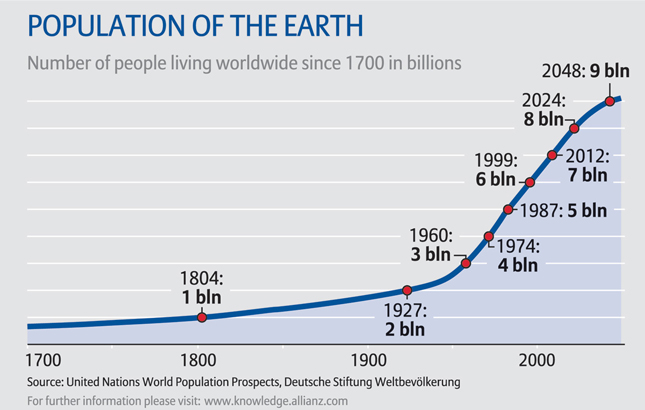
Since the start of the Industrial Revolution some 250 years ago, the widespread use of chemical fertilizers and pesticides that began about a century and a half later and the atomic half-life of the past seven decades, humans have developed and doused land and dammed and diverted water. These practices have left a wound that continues to fester as the human population swells.
-
CNN Profiles the Work of Conservation Through Public Health in Uganda
›
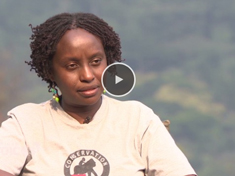
Reporting on long-term, complex human-environment interactions can be daunting. As the saying goes, “if it bleeds, it leads,” and slow, sometimes-distant changes rarely make headlines. Yet, earlier this year CNN International’s African Voices program took a stab at it, diving into the world of integrated development in a three-part profile of Conservation Through Public Health (CTPH), a Ugandan NGO that is working to preserve one of Central Africa’s most important biodiversity hotspots while strengthening the health and wellbeing of nearby communities.
-
Melanie Nakagawa on Integrating Gender Into REDD+ at the Department of State and USAID
›
A central tenet of John Kerry’s time as Secretary of State has been an emphasis on climate change. In a speech in Indonesia this year, he compared the threat of changing climate conditions to terrorism and weapons of mass destruction. Though the United States has been slow to enact major climate legislation, the Department of State has developed a “road map” for responding in its own way. The REDD+ program could play a major role in this response, says Melanie Nakagawa of the department’s policy planning staff in this week’s podcast.
-
Surf and Turf: The Environmental Impacts of China’s Growing Appetite for Pork and Seafood
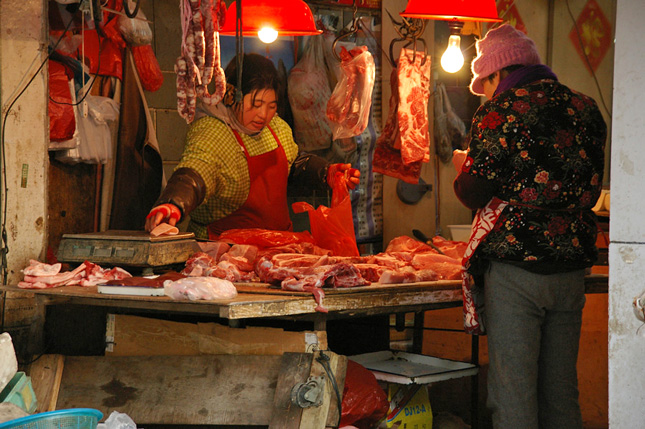
›Half the world’s pigs – 476 million – reside in China. Increasingly prosperous consumers are eating fewer grains and demanding a more protein-rich diet, ballooning the pork industry to 15 times its 1960s-era size. In the last 30 years, Chinese demand for meat has quadrupled and China is now the largest consumer of seafood in the world.
-
Roger-Mark De Souza: Integrated Development Shows Health, Population Dynamics Crucial for Resilience
›
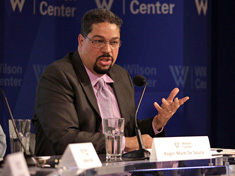
Resilience means different things to different people. For many in the international development and humanitarian communities, building resilience means responding to growing climate risks through disaster mitigation and planning. But for people like Birhani Fakadi, a 39-year old mother of 11 in rural Ethiopia, it also means access to reproductive health and family planning services, says ECSP’s Roger-Mark De Souza in this week’s podcast.
-
Why They Care: Reproductive Health Champions Spotlight Personal Connections to Development, Environment, More
›“Saving the planet depends on women achieving full human rights, and that begins with reproductive rights,” writes the Natural Resources Defense Council’s Frances Beinecke in a new set of essays on reproductive health published by the United Nations Foundation and the Aspen Institute.
-
Not There Yet: Burma’s Fragile Ecosystems Show Challenges for Continued Progress
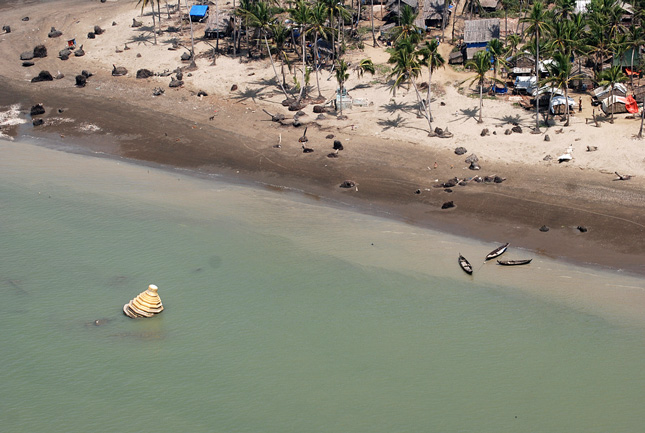
›Political and economic changes in Burma have been as rapid as they are surprising. In just three years, the country has gone from an isolated military dictatorship to a largely open country that is at least semi-democratic and has formally adopted a market economy. Both the European Union and the United States have eased economic sanctions, and dozens of foreign firms have moved in. Foreign direct investment increased by 160 percent in 2013 alone.
-
Forests on Film: New Stories From Nepal and the Congo Basin
›Given growing awareness about environmental change and how it affects human life, it is perhaps not surprising there is also a growing audience for environmental filmmaking. At the 2014 Environmental Film Festival in the Nation’s Capital on March 25, the Wilson Center premiered ECSP’s latest documentary, Scaling the Mountain: Protecting Forests for Families in Nepal. Together with Heart of Iron, a recent film on mining in the Congo Basin, the event took viewers into some of the world’s most remote forests to see how their inhabitants are adapting to rapid changes in the natural resources on which they depend.
Showing posts from category conservation.