-
New Network Links Madagascar’s Environment and Health Sectors
›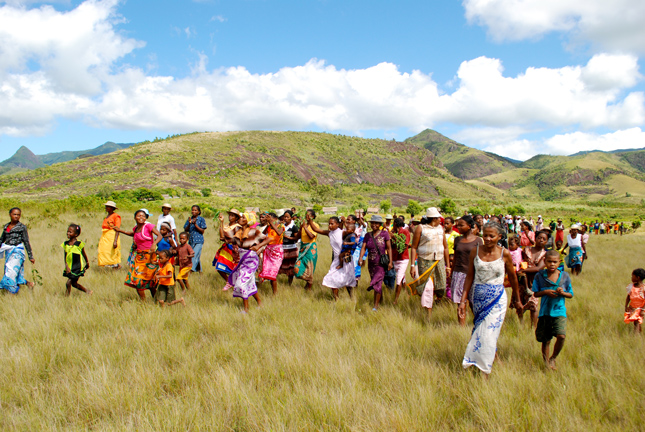
As the international community seeks to articulate a collective vision for sustainable development following the Millennium Development Goals, a vibrant new network has emerged in Madagascar to advance integrated population, health and environment (PHE) initiatives across this island nation.
-
Effective Conservation Efforts Must Recognize Livelihoods, Participatory Decision-Making, Research Finds
› A new report from the International Institute for Environment and Development seeks to understand why Uganda’s Bwindi Impenetrable National Park continues to be exploited despite park officials’ implementation of “integrated conservation and development” (ICD) efforts. The study finds that local people’s perceptions of the benefits of the integrated conservation and development vary depending on five primary factors: age, level of education, homestead distance to the national park, quality of life, and wealth.
 -
Jacob Glass, PassBlue
New Investment Law in Peru Undermines Rights of Indigenous Women
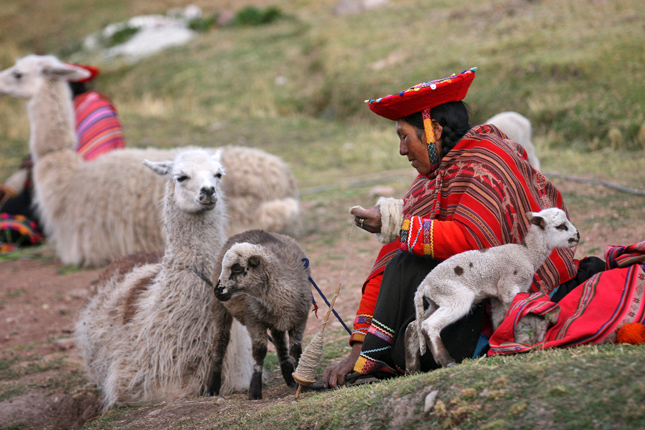
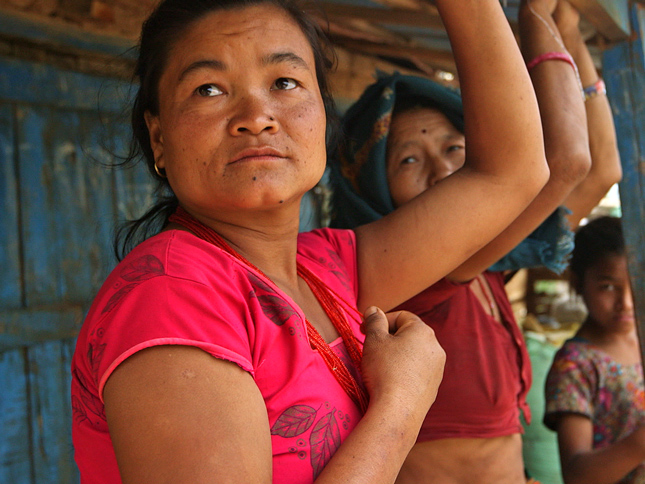
›August 22, 2014 // By Wilson Center StaffA new law in Peru encouraging investment in the country’s extractive industries has reignited debate on the lack of power indigenous women have in the mostly rural societies where they often live. The International Indigenous Women’s Forum, which drew more than 60 native women from across the world to Peru last month, highlighted this important issue.
-
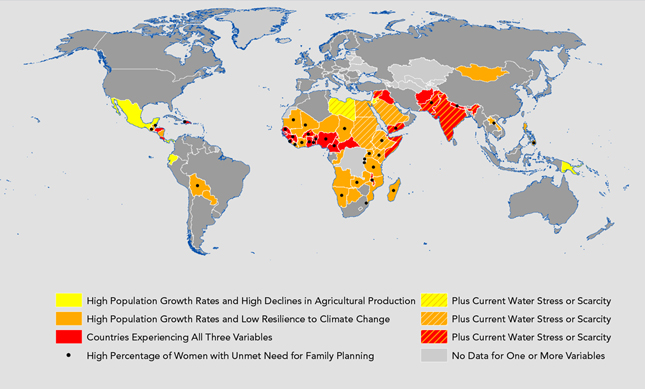
Family Planning and Environmental Sustainability Assessment Aims to Shed Light on Pop-Environment Link
›As global environmental change accelerates, understanding how population dynamics affect the environment is more important than ever. It seems obvious that human-caused climate change has at least something to do with the quadrupling of world population over the last 100 years.
-
Alice Thomas: For Refugees, Environmental Recovery Critical for Return to Normalcy
›
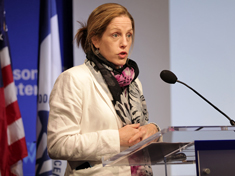
There are now well over 16 million refugees worldwide and 65 million people internally displaced by conflict and disasters, according to recent estimates. As more and more people are uprooted from their homes, mounting environmental pressures threaten to reinforce cycles of poverty and displacement if left unaddressed, says Alice Thomas in this week’s podcast.
-
From the PHE Conference in Addis Ababa, a Progress Report on Integrated Development
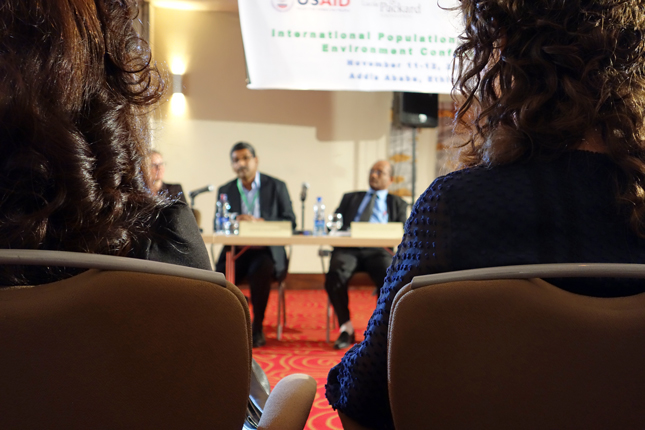
›My grandmother was pleased when I told her I was heading to Ethiopia last November for an international conference focused on population, health, and the environment.
-
No REDD+ Program Is an Island: Integrating Gender Into Forest Conservation Efforts
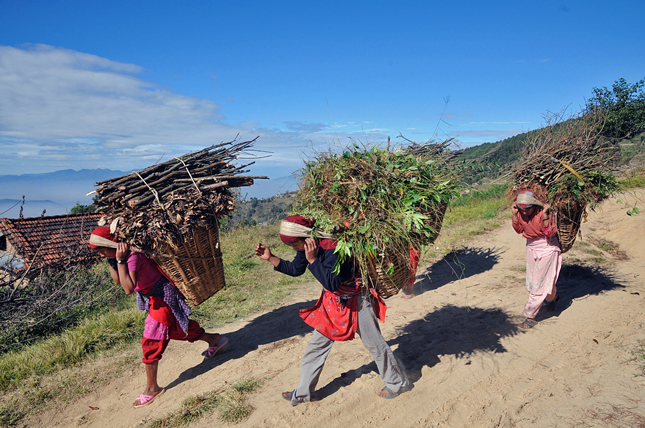
›Since 2005, the Reducing Emissions from Deforestation and Forest Degradation program (REDD+) has functioned as a mechanism to financially incentivize the preservation of forestlands in order to reduce greenhouse gas emissions. But beyond its original use, some organizations have also started exploring ways it can help with other development initiatives, like women’s empowerment. [Video Below] -
Partnering on Climate Change Adaptation, Peacebuilding, and Population in Africa
›June 12, 2014 // By Lauren Herzer RisiRapid population growth can be a contributing factor to climate change vulnerability and should be considered in climate adaptation and peacebuilding efforts, said the Wilson Center’s Roger-Mark De Souza at a workshop on climate change adaptation and peacebuilding hosted by the Institute for Security Studies (ISS) in Addis Ababa.
Showing posts from category conservation.
 Since 2005, the