• woodrow wilson center
  • ecsp

New Security Beat

Subscribe:
  • rss
  • mail-to
  • Who We Are
  • Topics
    • Population
    • Environment
    • Security
    • Health
    • Development
  • Columns
    • China Environment Forum
    • Choke Point
    • Dot-Mom
    • Friday Podcasts
    • Navigating the Poles
    • Reading Radar
  • Multimedia
    • Water Stories (Podcast Series)
    • Backdraft (Podcast Series)
    • Tracking the Energy Titans (Interactive)
  • Films
    • Water, Conflict, and Peacebuilding (Animated Short)
    • Paving the Way (Ethiopia)
    • Broken Landscape (India)
    • Scaling the Mountain (Nepal)
    • Healthy People, Healthy Environment (Tanzania)
  • Publications
  • Events
  • Contact Us

NewSecurityBeat

The blog of the Wilson Center's Environmental Change and Security Program
Showing posts from category Congress.
  • Africa’s Trifecta: Food Security, Resilience, and Demographics at the U.S.-Africa Leaders Summit

    ›
    August 5, 2014  //  By Roger-Mark De Souza
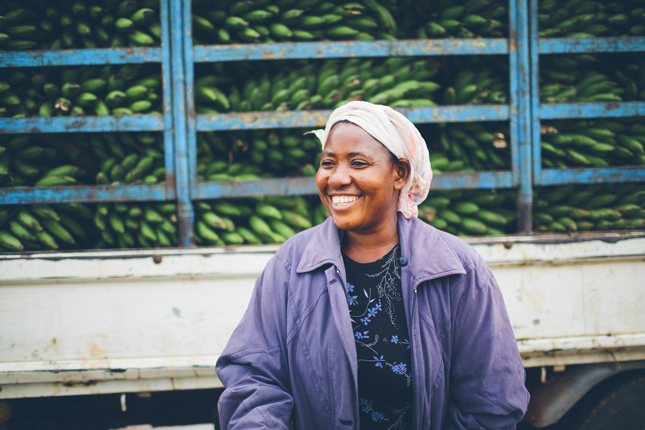
    bananas

    “You can’t build a peaceful world on an empty stomach,” Secretary of State John Kerry said yesterday at a high-level working session on resilience and food security, quoting Norman Borlaug, the father of last century’s “Green Revolution.”

    MORE
  • Why They Care: Reproductive Health Champions Spotlight Personal Connections to Development, Environment, More

    ›
    On the Beat  //  April 29, 2014  //  By Schuyler Null

    “Saving the planet depends on women achieving full human rights, and that begins with reproductive rights,” writes the Natural Resources Defense Council’s Frances Beinecke in a new set of essays on reproductive health published by the United Nations Foundation and the Aspen Institute.

    MORE
  • What Could Sequestration Mean for U.S. Development and Diplomacy?

    ›
    February 28, 2013  //  By Schuyler Null

    Newly minted Secretary of State John Kerry would probably prefer his first few months on the job to be a little quieter. But – in addition to everything else – sequestration is bearing down on Washington this week, and the U.S. government is beginning to seriously take stock of what automated cuts might mean. The Department of State and the U.S. Agency for International Development (USAID) are not spared. Kerry sent a letter earlier this month to Senate Appropriations Committee Chairwoman Barbara Mikulski (D-MD) outlining the projected effects for his charges if the March 1st deadline should pass without action.

    MORE
  • Debts, Deficits, and Development

    ›
    From the Wilson Center  //  September 13, 2011  //  By Erica Pincus
    The debates surrounding the U.S. national debt and deficit bring with them implications for both overall U.S. development policy and the budgets of USAID and the Department of State. These implications were the focus of the Wilson Center on the Hill event that took place on August 2, “Debts, Deficits, and Development,” moderated by Wilson Center Senior Scholar John Sewell. Sewell said that Congressional action on deficit reduction could potentially reduce funding for development-related initiatives just as the U.S. government “for the first time…is taking development and the notion of development very seriously.”

    After an introduction from Sewell, Gordon Adams, distinguished fellow at the Henry L. Stimson Center, began by talking about the lack of attention that international affairs and the civilian side of U.S. international engagement usually receive in the government budget. He noted the growth in personnel and funding at USAID and the Department of State over the past ten years as a success, adding that a fair amount of this growth was related to the conflicts in Iraq and Afghanistan and the global effort against terrorist organizations.

    “Foreign policy, development, foreign assistance, [and] diplomacy have increasingly been viewed as a key part of a broadly defined security budget,” said Adams. The first Quadrennial Diplomacy and Development Review had the potential to restructure the Department of State and USAID in line with these goals, he said, but lacked the force to prioritize programs and allocate funds effectively.

    In post-conflict environments, Adams emphasized the need to build the capacity to govern effectively, efficiently, and accountably first. “Where we fall down,” added George Ingram, co-chair of the Modernizing Foreign Assistance Network, “is in rushing too much money in right as the conflict ends for two or three years and then getting distracted by other crises from year five to ten; when the country’s built up a capacity and probably could use the assistance, our interest falls off.” In his opinion, that sequencing should be reversed.

    Focus on Priorities

    Adams continued to emphasize the need for goals and priorities when he addressed the topic of belt-tightening at USAID or the Department of State. According to Adams, the four categories to consider in allocating resources are: security assistance; the individual priorities of foreign assistance and development funds; conflict prevention and resolution; and better preparation and training of personnel. He lauded the military’s commitment to training its servicemen and women throughout their careers and suggested a similar program for members of the Foreign Service. To coordinate these priorities, however, a coherent U.S. development strategy (currently lacking) is essential, said Ingram.

    Focusing on how the current budget environment is impacting development, Ingram said that the decade of growth in the international affairs budget for development may have just hit a brick wall. He described the FY 2012 budget as “skewed heavily toward reducing the development accounts and protecting the security accounts,” resulting in an 11 percent overall cut from 2011 levels and some development accounts being reduced by 20 or 30 percent.

    Ingram noted that USAID’s overall operating expenses were cut by 27 percent from FY 2011 levels. This operating expense reduction will likely halt planned increases in USAID staff and may ultimately lead to staff cuts. The failure to build up staff at USAID will reduce its ability to manage key development programs and slow the Department of Defense’s efforts to shift responsibilities for development work to civilian hands.

    Adams added that in light of shrinking resources, legislators will probably ask supporters of development about the tangible outcomes of investment in development and about the link between development and American interests, so they should be prepared with answers. Ingram cited the successes of U.S. aid over the last decades – such as the Green Revolution and oral rehydration – and noted how they benefited from a long-term perspective rather than approaching development on a project-by-project basis.

    Given the tumult in the Middle East since the start of the Arab Spring, the need for expertise in governance is high, said Adams. “The problem of governance in failing, fragile, weak, brittle authoritarian states,” he said, “is a great risk to stability.”

    Event Resources:
    • Photo gallery
    • Video
    Erica Pincus is an intern at the Wilson Center’s Program on America and the Global Economy.

    Image Credit: “Foreign Aid Spending,” courtesy of visual.ly user maggie, published by USAID.
    MORE
  • Congressional Hearing: Clean Water Access Is a Global Crisis, Human Right, and National Security Issue

    ›
    March 17, 2011  //  By Hannah Marqusee
    Unsafe drinking water causes nearly 1.8 million deaths each year from diarrhea, “a number that dwarfs the casualties associated with violent conflict,” said U.S. Representative James McGovern at a congressional human rights commission hearing earlier this month on water as a basic right. Nearly all of these deaths are children under the age of five, he said. “This is a war against families, children, and women on an ongoing basis,” said Representative Earl Blumenauer, also speaking at the hearing, titled “Realizing the Right to Safe Water and Sanitation.”

    There are currently 884 million people in the world without access to safe drinking water, according to UNICEF, and 2.6 billion without improved sanitation. As population growth and climate change place added stress on fresh-water systems, by 2025, two thirds of the world’s population will live in water-stressed conditions, according to the Food and Agriculture Organization. “This is a severe global crisis,” said McGovern.

    “A Human Right”

    With 2011 World Water Day only weeks away, the hearing harkened back to Secretary Clinton’s widely quoted statement from World Water Day 2010, marking a commitment by the Obama administration to address global water issues:
    It’s not every day you find an issue where effective diplomacy and development will allow you to save millions of lives, feed the hungry, empower women, advance our national security interests, protect the environment, and demonstrate to billions of people that the United States cares. Water is that issue.
    Four months after that statement, the UN passed a resolution to make access to water and sanitation a human right, not just a development priority. Said Catarina de Albuquerque, a UN independent expert who testified at this month’s congressional hearing, the resolution stipulates that water must be “available, accessible, affordable, acceptable and safe.” A “right to water” is an important “sign of political will,” that will place increased obligations on governments to improve access to water and sanitation, she said. But in the meantime, for the millions without access to safe water, “there is no change.”

    According to the UN, the world is on track to meet the Millennium Development Goal target of halving the number of people without access to an improved water source by 2015. But de Albuquerque noted that the reality is not quite so optimistic. On a UN fact-finding mission, she encountered at least one family who by UN definitions had access to an “improved drinking water source,” yet their tap water was literally black. “Water quality is not being monitored” and for many of the people who do have access, it is simply “undrinkable,” she said.

    In developed countries as well, there are significant barriers to access, especially for marginalized communities. On a recent mission to the United States, de Albuquerque found that America’s “voiceless” – people of color, Native Americans, and the homeless – face significant discrimination in access to water. “Society closes its eyes to them,” she said. Thirteen percent of Native Americans lack access to safe water, in comparison to 0.6 percent of non-native Americans, she said in a statement to the press releasing her findings. And in Boston, “for every one percent increase in the city ward’s percentage of people of color, the number of threatened cut-offs increases by four percent.” To make the necessary improvements to fill these gaps in America’s aging water infrastructure would cost $4 to $6 billion annually, she said.

    A National Security Issue

    Water “is a security issue as well as a human development issue,” said Blumenauer. Since, according to UNEP, 40 percent of the world relies on river basins that share two or more political boundaries, water management has enormous potential for both conflict and cooperation. Echoing Clinton’s World Water Day statement, McGovern championed the cross-cutting nature of water:
    The right to water is inextricably linked with other basic rights…including the right to food, the right to health, and the right to education.
    The burden of collecting water in underdeveloped countries often creates a gender gap and exposes women and girls to violence and rape, he said. And it “has been the basis for many territorial and violent disputes between various peoples and even nations.”

    Last month, a staff report by the Senate Foreign Relations Committee expressed a similar sentiment with the publication of their report, Avoiding Water Wars: Water Scarcity and Central Asia’s Growing Importance for Stability in Afghanistan and Pakistan. The report commends the Obama administration for recognizing the importance of water: “For the first time, senior government officials are recognizing the critical role that sound water management must play in achieving our foreign policy goals and in protecting our national security.” However, by exclusively focusing on Pakistan and Afghanistan’s water issues and “neglecting the interconnectivity of water issues between Central and South Asia, the U.S. approach could exacerbate regional tensions,” the report says.

    To be more strategic about water assistance, the report recommends the United States: (1) provide technical support in data collection to better manage water; (2) help increase water efficiency and reduce demand for water; (3) recognize the transboundary nature of water issues and “provide holistic solutions;” and (4) “safeguard institutions against shocks to water supply and demand.”

    Moving Forward

    The Obama administration’s commitment to water issues, the UN’s recognition of water as a human right, and the 2005 Water for the Poor Act have all been important steps towards fulfilling the pledge of making access to safe water a human right. “We’ve come a long way,” Blumenauer (who authored the Water for the Poor Act) said at the hearing, but there is still significant work ahead.

    “We’re going to have to be more strategic moving forward” in order to meet global water shortages, said Aaron Salzberg, special coordinator for water resources for the U.S. Department of State who testified at the hearing. Salzberg recommended that the U.S. government take steps to integrate water management with the food and health sectors; build political will; mobilize financial support; promote science and technology; and form partnerships with other governments and aid organizations. The United States must also “be smarter” about allocating funds based on the dual criteria of “need” and “opportunity.” Balancing efforts with partners to find out which countries have the greatest need and the least resources will allow limited U.S. funds to make the deepest impact, he said.

    John Oldfield, managing director of the WASH Advocacy Initiative, urged Congress to increase funding for foreign assistance, continue appropriations for the Water for the Poor Act, and improve the effectiveness of existing water, sanitation, and hygiene (WASH) assistance. “Each dollar invested in water and sanitation leads to an 8:1 return from reduced healthcare costs and time savings,” he said. “The world does not need to bury millions more of its children in the coming years when we know how to prevent waterborne disease today.”

    Sources: FAO, UNEP, UNICEF, United Nations, WHO.

    Image Credit: Adapted from “School girl drinks water from new handpump,” courtesy of flickr user waterdotorg.
    MORE
  • Congressional Report on Avoiding “Water Wars” in Afghanistan and Pakistan

    ›
    March 15, 2011  //  By Schuyler Null
    “Water plays an increasingly important role in our diplomatic and national security interests in [Central and South Asia], and we must ensure that our approach is carefully considered and coordinated across the interagency,” begins a new staff briefing, Avoiding Waters Wars: Water Scarcity and Central Asia’s Growing Importance for Stability in Afghanistan and Pakistan, prepared for the Senate Foreign Relations Committee. “As water demand for food production and electricity generation increases, in part as a result of the quickening pace of climate change, so too must our efforts to provide water security,” write the authors.

    The report focuses mainly on Afghanistan and Pakistan but also considers “the interests in the shared waters by India and the neighboring five Central Asian countries – Uzbekistan, Tajikistan, Kazakhstan, Kyrgyzstan, and Turkmenistan.”

    ECSP is cited twice in the report, both from “Water Can Be a Pathway to Peace, Not War,” in ECSP Report 13:
    The Navigating Peace Initiative’s Water Conflict and Cooperation Working Group correctly summarized the current state of water use by saying, “water use is shifting to less-traditional sources such as deep fossil aquifers and wastewater reclamation. Conflict, too, is becoming less traditional, driven increasingly by internal or local pressures or, more subtly, by poverty and instability. These changes suggest that tomorrow’s water disputes may look very different from today’s.”
    And again in breaking down the notion of impending water wars:
    Given the important role water plays in Central and South Asia as a primary driver of human insecurity, it is important to recognize that for the most part, the looming threat of so-called “water wars” has not yet come to fruition. Instead, many regions threatened by water scarcity have avoided violent clashes through discussion, compromise, and agreements. This is because “[w]ater – being international, indispensable, and emotional – can serve as a cornerstone for confidence building and a potential entry point for peace.”
    USAID’s “Changing Glaciers and Hydrology in Asia: Addressing Vulnerabilities to Glacier Melt Impacts,” which was launched here at the Wilson Center last fall, also made an appearance:
    Central Asia and India face critical challenges in monitoring glaciers and tracking changes, particularly differences from year to year. As USAID’s report “Changing Glaciers and Hydrology in Asia: Addressing Vulnerabilities to Glacier Melt Impacts” noted, “[t]he review of scientific information about glacier melt in High Asia revealed, first and foremost, a lack of data and information, a lack that hampers attempts to project likely impacts and take action to adapt to changed conditions.” The United States should engage in collaborative glacier monitoring programs and those that develop local or sub-national water monitoring capacity.
    The report concludes that “water scarcity, coupled with how governments address these challenges,” can either exacerbate conflict or promote cooperation in the region. It’s also worth noting that the authors specifically mention the links between increased water use and growing populations in the region, specifically with regard to India and Pakistan:
    With a population already exceeding 1.1 billion people and forecasts indicating continued growth to over 1.5 billion by 2035, India’s demand for water is rising at unprecedented rates.
    The drive to meet energy and development demands from both countries has led to plans for extensive hydrological projects that could spark tensions between the two over the Indus Waters Treaty (which has withstood four Indo-Pakistani wars).

    The authors praise the attention given to the matter thus far by the Obama administration, but they also write that “although it is still too early to determine the impacts of our efforts in the broader region, now is the time to begin evaluating water-related trends” at a more systematic level.

    Sources: U.S. Senate Committee on Foreign Relations.
    MORE
  • Watch: Geoff Dabelko and John Sewell on Integrating Environment, Development, and Security and the QDDR

    ›
    From the Wilson Center  //  February 18, 2011  //  By Christina Daggett
    “We all must check our stereotypes of the other communities at the door…we’re not talking about hugging trees and hugging pandas,” said Geoff Dabelko, director of the Wilson Center’s Environmental Change and Security Program, in a panel discussion on Foreign Policy Challenges in the 112th Congress as part of the Wilson Center on the Hill series. Dabelko argued for a more multi-dimensional and integrated approach to addressing environmental issues.

    “To tackle these problems, these connections between, say, natural resources, development, and security, it really does require that we have an integrated approach to our analysis [and] an integrated approach to our responses,” Dabelko said.

    In dealing with climate change, for example, “a more diversified view would be one where we spend more time trying to understand adaptation,” said Dabelko. “How are we going to deal with the expected impacts of these problems?” he asked.

    Dabelko called on policymakers to seek “triple bottom lines,” pointing out that “if you’re worried about climate change, or you’re worried about development, or you’re worried about fragile states, some of the same governance interventions and strong institutions in these fragile or weak states are going be the ones that will get you benefits in these multiple sectors.”

    The Political Space

    Fortunately, the current political environment is one in which “there is political space for integration,” said Dabelko, as demonstrated by, for example, the Quadrennial Diplomacy and Development Review (QDDR), which Wilson Center Senior Scholar John Sewell addressed in his remarks.

    “All of you who are directly or indirectly engaged in Congress are going to be faced with a very important opportunity in the next 12 to 24 months,” Sewell said, “to focus both diplomacy and development on the major challenges that are going to face all of us in the first half of the century.”

    Calling the QDDR a “major rethink of both American diplomacy and American development,” Sewell applauded its conceptual alignment, but cautioned that the review leaves many questions unanswered about its implementation.

    “The QDDR sets no criteria,” said Sewell. “Are we going to continue to put large sums of money into countries that aren’t developing? Are we going to follow the choice of issues – food, environment, and so on and so forth? It’s a question that is not answered in any of these documents.”

    Sewell also pointed to potential clashes over budgeting, USAID/State leadership, and the lack of coordination with other large development agencies, like the World Bank and International Monetary Fund.

    For more on Sewell’s analysis of the QDDR, see his recent blog post “Reading the QDDR: Is the Glass Half Full or Half Empty?”
    MORE
  • Women, Water and Conflict as Development Priorities Plus Some Geoengineering Context

    ›
    September 24, 2010  //  By Geoffrey D. Dabelko
    Here are some useful links to environment, population, and security work that recently crossed my desk.

    • NYU’s Richard Gowan dissects UK development minister Andrew Mitchell’s encouraging speech identifying conflict-affected states as special DFID priorities. Gowan pulls out highlights from the speech and parses NGO reaction to it on Global Dashboard.

    • Council on Foreign Relations’ Isobel Coleman provides five practical suggestions for tapping into women as the “new global growth engine,” on Forbes.

    • The Aspen Institute announced its Global Leaders Council for Reproductive Health this week. Their goal: meeting unmet demand for family planning services by 2015 on the MDG schedule. That is over 200,000,000 women who want services but do not have access.

    • I’m heartened to see the U.S. Senate pass the Senator Paul Simon Water for the World Act. Hoping the House will follow suit. Last time Congress passed legislation on water, sanitation, and health priorities, the 2005 Senator Paul Simon Water for the Poor Act enjoyed overwhelming bipartisan support.

    • Colby historian Jim Fleming, writing in Slate, puts the increasing fascination with geoengineering as a climate response “option” in some sobering historical context. “Weather as a Weapon: The Troubling History of Geoengineering” is the short read. Tune in to hear Jim present the book length version, Fixing the Sky, at the Wilson Center, October 6th at 10:30 am EST.

    Follow Geoff Dabelko (@geoffdabelko) and The New Security Beat (@NewSecurityBeat) on Twitter for more population, health, environment, and security updates.
    MORE
Newer Posts   Older Posts
View full site

Join the Conversation

  • RSS
  • subscribe
  • facebook
  • G+
  • twitter
  • iTunes
  • podomatic
  • youtube
Tweets by NewSecurityBeat

Trending Stories

  • unfccclogo1
  • Pop at COP: Population and Family Planning at the UN Climate Negotiations

Featured Media

Backdraft Podcast

play Backdraft
Podcasts

More »

What You're Saying

  • Volunteers,At,The,Lagos,Food,Bank,Initiative,Outreach,To,Ikotun, Pan-African Response to COVID-19: New Forms of Environmental Peacebuilding Emerge
    Rashida Salifu: Great piece 👍🏾 Africa as a continent has suffered this unfortunate pandemic.But it has also...
  • A desert road near Kuqa An Unholy Trinity: Xinjiang’s Unhealthy Relationship With Coal, Water, and the Quest for Development
    Ismail: It is more historically accurate to refer to Xinjiang as East Turkistan.
  • shutterstock_1779654803 Leverage COVID-19 Data Collection Networks for Environmental Peacebuilding
    Carsten Pran: Thanks for reading! It will be interesting to see how society adapts to droves of new information in...

What We’re Reading

  • Rising rates of food instability in Latin America threaten women and Venezuelan migrants
  • Treetop sensors help Indonesia eavesdrop on forests to cut logging
  • 'Seat at the table': Women's land rights seen as key to climate fight
  • A Surprise in Africa: Air Pollution Falls as Economies Rise
  • Himalayan glacier disaster highlights climate change risks
More »
  • woodrow
  • ecsp
  • RSS Feed
  • YouTube
  • Twitter
  • Facebook
  • Home
  • Who We Are
  • Publications
  • Events
  • Wilson Center
  • Contact Us
  • Print Friendly Page

© Copyright 2007-2021. Environmental Change and Security Program.

Woodrow Wilson International Center for Scholars. All rights reserved.

Developed by Vico Rock Media

Environmental Change and Security Program

Woodrow Wilson International Center for Scholars

Ronald Reagan Building and International Trade Center

  • One Woodrow Wilson Plaza
  • 1300 Pennsylvania Ave., NW
  • Washington, DC 20004-3027

T 202-691-4000