• woodrow wilson center
  • ecsp

New Security Beat

Subscribe:
  • rss
  • mail-to
  • Who We Are
  • Topics
    • Population
    • Environment
    • Security
    • Health
    • Development
  • Columns
    • China Environment Forum
    • Choke Point
    • Dot-Mom
    • Friday Podcasts
    • Navigating the Poles
    • Reading Radar
  • Multimedia
    • Water Stories (Podcast Series)
    • Backdraft (Podcast Series)
    • Tracking the Energy Titans (Interactive)
  • Films
    • Water, Conflict, and Peacebuilding (Animated Short)
    • Paving the Way (Ethiopia)
    • Broken Landscape (India)
    • Scaling the Mountain (Nepal)
    • Healthy People, Healthy Environment (Tanzania)
  • Publications
  • Events
  • Contact Us

NewSecurityBeat

The blog of the Wilson Center's Environmental Change and Security Program
Showing posts from category conflict.
  • Youth Bulge, Public Policy, and Peace in Pakistan

    ›
    October 26, 2012  //  By Payal Chandiramani

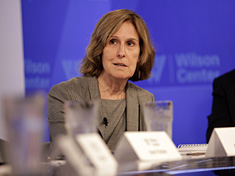
    While Pakistan’s demographic challenges are perhaps well known – two-thirds of the population of 180 million is under 30 years old – increasing security concerns have prompted discussions about exactly how much the country’s youthfulness is affecting its prospects for peace. On October 10, the U.S. Institute of Peace and George Mason University’s School of Public Policy hosted a day-long conference on “Youth Bulge, Public Policy, and Peace in Pakistan” to tackle this question.

    MORE
  • Michael Kugelman, Global Times

    Repairs Could Stifle South Asia’s Water War

    ›
    October 19, 2012  //  By Wilson Center Staff

    The original version of this article, by Michael Kugelman, appeared on Global Times.

    In recent weeks, militants in Pakistan have escalated their hostile rhetoric toward India. The subject of their ire is water. Hafiz Saeed, the head of militant Islamist group Jamaat-ud-Dawa, has warned that India plans “to make Pakistan barren” by preventing the waters of the Indus Basin from flowing downstream to Pakistan. 

    MORE
  • Maria Godoy, The Salt

    Can Riots Be Predicted? Experts Watch Food Prices

    ›
    October 19, 2012  //  By Wilson Center Staff

    The original version of this article, by Maria Godoy, appeared on NPR’s food blog, The Salt.

    When French peasants stormed the Bastille on July 14, 1789, they weren’t just revolting against the monarchy’s policies. They were also hungry.

    MORE
  • Manipadma Jena, Inter Press Service

    A Lake of Hope and Conflict

    ›
    October 4, 2012  //  By Wilson Center Staff

    The original version of this article, by Manipadma Jena, appeared on Inter Press Service.

    Parvez Ahmad Dar climbs three hours to reach the hilltop, generator-equipped tourist center in Ajaf village, 35 kilometers from Srinagar, to recharge his mobile phone.

    The 46-year-old president of the Wular Valley People’s Welfare Forum is in high demand as an activist and organizer – he cannot allow the long power outages in northern India’s Kashmir Valley to cut off communication with his constituency.

    MORE
  • Immediate Action Needed for Gaza to be Livable in 2020, Says UN Report

    ›
    October 3, 2012  //  By Kate Diamond

    Eight years from now, the Gaza Strip will have “virtually no reliable access to sources of safe drinking water, standards of healthcare and education will have continued to decline, and the vision of affordable and reliable electricity for all will have become a distant memory for most,” according to a United Nations report released last month. The bleak assessment concludes that without immediate action to address immense and interconnected economic, demographic, environmental, infrastructure, and social challenges facing Gazans, “the already high number of poor, marginalized and food-insecure people depending on assistance will not have changed, and in all likelihood will have increased.”

    MORE
  • Water and Land Conflict in Kenya in the Wake of Climate Change

    ›
    Guest Contributor  //  September 28, 2012  //  By Jeremiah Asaka

    Earlier this month, there was a flurry of stories about brutal mass killings in clashes between the Pokomo and Orma communities over water and land in southeast Kenya’s Tana River County. The Kenyan media reported that about 30 people, including eight security personnel, had been killed and scores wounded, and reports on the death toll since last month are more than 100.

    MORE
  • The Role of Renewable Natural Resources and Gender in Conflict

    ›
    Reading Radar  //  September 28, 2012  //  By Carolyn Lamere

    Devesh Kapur, Kishore Gawande, and Shanker Satyanath open their Center for Global Development working paper, “Renewable Resource Shocks and Conflict in India’s Maoist Belt,” with a crucial question: “Is there a causal relationship between shocks to renewable natural resources, such as agricultural and forest lands, and the intensity of conflict?” While the connection between the environment and conflict has been the focus of much study, Kapur et al. say that previous attempts have been plagued with “failure to address reverse causality and a failure to systematically control for alternative explanations for conflict.” Their report analyzes the relationship between the availability of resources and conflict by measuring rainfall, vegetation prevalence, and deaths due to the Maoist conflict in India. They find “a strong and substantively large relationship between adverse renewable resource shocks and the intensity of conflict,” and conclude that protecting the livelihoods of residents of the Maoist belt can help reduce violence. “Giving tribals greater access to forests and a range of forest products, whose consumption is the only available option during times of distress, can provide them with a critical self-insurance mechanism.”

    MORE
  • Michael Klare on the Race for What’s Left

    ›
    Eye On  //  September 27, 2012  //  By Carolyn Lamere

    Around the world, as the most easily accessible natural resources are depleted, states are beginning to turn to more remote reserves to meet their needs and the shift may spark international tensions or even conflict, said Hampshire College professor Michael Klare in a recent interview with ECSP. “I worry very much about this growing global competition for the remaining resources in those parts of the world,” he said.

    MORE
Newer Posts   Older Posts
View full site

Join the Conversation

  • RSS
  • subscribe
  • facebook
  • G+
  • twitter
  • iTunes
  • podomatic
  • youtube
Tweets by NewSecurityBeat

Trending Stories

  • unfccclogo1
  • Pop at COP: Population and Family Planning at the UN Climate Negotiations

Featured Media

Backdraft Podcast

play Backdraft
Podcasts

More »

What You're Saying

  • Volunteers,At,The,Lagos,Food,Bank,Initiative,Outreach,To,Ikotun, Pan-African Response to COVID-19: New Forms of Environmental Peacebuilding Emerge
    Rashida Salifu: Great piece 👍🏾 Africa as a continent has suffered this unfortunate pandemic.But it has also...
  • A desert road near Kuqa An Unholy Trinity: Xinjiang’s Unhealthy Relationship With Coal, Water, and the Quest for Development
    Ismail: It is more historically accurate to refer to Xinjiang as East Turkistan.
  • shutterstock_1779654803 Leverage COVID-19 Data Collection Networks for Environmental Peacebuilding
    Carsten Pran: Thanks for reading! It will be interesting to see how society adapts to droves of new information in...

What We’re Reading

  • Rising rates of food instability in Latin America threaten women and Venezuelan migrants
  • Treetop sensors help Indonesia eavesdrop on forests to cut logging
  • 'Seat at the table': Women's land rights seen as key to climate fight
  • A Surprise in Africa: Air Pollution Falls as Economies Rise
  • Himalayan glacier disaster highlights climate change risks
More »
  • woodrow
  • ecsp
  • RSS Feed
  • YouTube
  • Twitter
  • Facebook
  • Home
  • Who We Are
  • Publications
  • Events
  • Wilson Center
  • Contact Us
  • Print Friendly Page

© Copyright 2007-2021. Environmental Change and Security Program.

Woodrow Wilson International Center for Scholars. All rights reserved.

Developed by Vico Rock Media

Environmental Change and Security Program

Woodrow Wilson International Center for Scholars

Ronald Reagan Building and International Trade Center

  • One Woodrow Wilson Plaza
  • 1300 Pennsylvania Ave., NW
  • Washington, DC 20004-3027

T 202-691-4000