-
Environmental Peacebuilding: The Year in Review and the Year Ahead
›
As 2025 marches into its third month, the governance challenges that accompany rising demand for natural resources are not only on the front burner—they are proliferating—and becoming entangled with the drivers of conflict and cooperation.
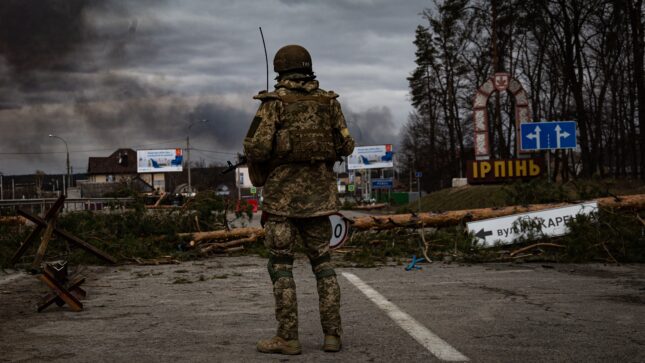
The heated competition for resources has bubbled up in a proposed billion-dollar deal for Ukrainian minerals now making global headlines. The view that critical minerals like lithium, manganese, and others could become bargaining chips in potential peace talks demonstrates how central they’ve become to global competition—and to the economic and political future of countries around the world.
-
ECSP Weekly Watch | February 24 – 28
›
A window into what we’re reading at the Wilson Center’s Environmental Change and Security Program
EU Parliament Suspends Rwandan Critical Mineral Pact Over Links to DRC Conflict (Mongabay)
Rwanda and the DRC both have large reserves of critical minerals essential to the clean energy transition. Yet the EU has voted to suspend a cooperation agreement on mineral extraction in the region after the Rwandan-backed rebel group M23 seized key areas in the DRC’s eastern provinces.
-
Q&A: Dr. Ashok Swain on Misinformation, Changing Borders, and the Role of the UN in his New Book, Climate Security
›Dr. Ashok Swain is a professor of peace and conflict research at Uppsala University in Sweden and founding Editor-in-Chief of the journal, Environment and Security. An expert on environment, development, and security issues, Swain has long had an eye for recognizing emerging security challenges. In his new book, Climate Security, Swain explores climate change’s connection to some of the key issues driving today’s security discourse, including the role of misinformation in hindering climate action, climate’s role in the growing displacement crisis, and how climate-driven shifts in territory and resources are reshaping geopolitics. Swain gave us a sneak peak of the book’s key insights, including the potential for a new international governance framework to address climate-related security risks.
-
Conflict in Sudan: Widespread Sexual Violence
›This article originally appeared on Enheduanna, a blog of the Wilson Center’s Middle East Women’s Initiative.
Only a few years ago, the world celebrated the women-led revolution in Sudan that ousted the former dictator Omer El-Basher after 30 years in power. Women were fed up with his government. Those who used to live in the urban areas experienced the humiliating public order laws: they were arrested and flogged for wearing trousers or walking around with no headscarves.
-
ECSP Weekly Watch | January 13 – 17
›A window into what we’re reading at the Wilson Center’s Environmental Change and Security Program
The Success of Community-based Conservation in Africa (Yale 360)
Across Africa, herders once seen as threats to wildlife have now become vital conservationists. In a transformative shift from “fortress conservation” to community stewardship, they are protecting iconic species like elephants and lions as they coexist with their livestock.
-
Classic Geopolitics and Today’s Nexus of Conflict and Climate
›In recent weeks, users of the social network Bluesky were able to watch a compelling video featuring Jessica Newberry Le Vey—a Climate Change and Health Policy Fellow at Imperial College’s Climate Cares Centre. The video begins with Le Vey’s direct-to-camera assertion that the climate crisis is a health crisis affecting people around the world. Then Le Vey’s image disappears—yet we hear her (or someone who sounds eerily like her) speak over a compendium of combat footage that includes video of ATACAM missiles being fired and larger strategic missiles on the move. Climate is important, declares the speaker, but there are more serious problems that threaten our security.
-
The Traumas of Unplanned Decarbonization in Fragile States
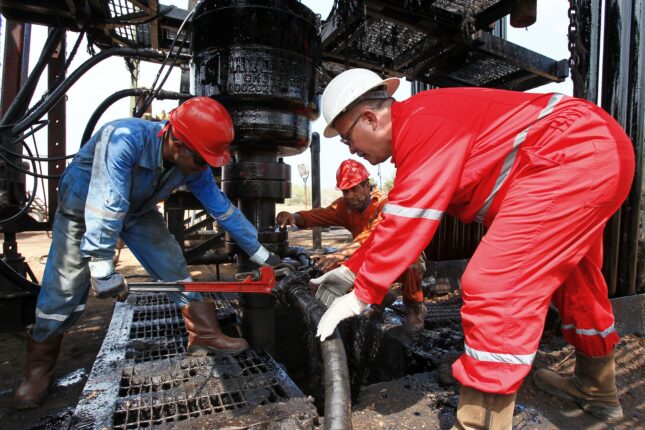
›It is widely recognized that oil states are rarely democratic, and often conflict-prone. As these governments wind down their dependence on this toxic resource as part of broader global efforts to decarbonize, one might imagine that the end of oil will spell a better future for the citizens of oil-producing countries. Sadly, a look at the cases of fragile fossil fuel producing states (FFFPs) suggests that this may not be the case.
-
ECSP Weekly Watch | December 16 – 20
›A window into what we’re reading at the Wilson Center’s Environmental Change and Security Program
Humanitarians Highlight the Climate-Conflict Nexus (The New Humanitarian)
Climate change’s disproportionate impacts on vulnerable populations exacerbate socioeconomic inequalities and conflict, particularly during natural disasters. This vexed connection has led humanitarians and peacebuilders increasingly to address climate and conflict challenges together in order to provide integrated relief, recovery, and aid.
Showing posts from category conflict.