

Showing posts from category conflict.
-
Climate Change and Conflict
›Climate Change and Security in Africa: A Study for the Nordic-African Foreign Ministers Meeting, a collaboration between the International Institute for Sustainable Development and the Institute for Security Studies, examines the spectrum of literature devoted to the security implications of climate change in Africa. In particular, the study focuses on the economic sectors and regions most susceptible to climate change’s threat multiplier effects. It concludes that “climate change presents very real development challenges which, under certain circumstances, may contribute to the emergence and longevity of conflict.” The International Institute for Sustainable Development’s Rising Temperatures, Rising Tensions: Climate Change and the Risk of Violent Conflict in the Middle East determines that “climate change—by redrawing the maps of water availability, food security, disease prevalence, population distribution and coastal boundaries—may hold serious implications for [the Middle East’s] regional security.” The report identifies the Middle East’s history of conflict as a significant challenge to the region’s ability to cope with climate change’s threats of water scarcity, food insecurity, and volatile migration. Rising Temperatures, Rising Tensions also discusses strategies to advance both adaptation and peacemaking in the region.Using the coinciding outbreaks of regional drought and inter-communal violence in Kenya in 2009 as an illustration, Climate Change and Conflict: Lessons from Community Conservancies in Northern Kenya Conservation Development examines climate change’s potential to act as a threat multiplier in Northern Kenya. The study, jointly produced by the Saferworld, concludes “that the threat of increased conflict in northern Kenya as a result of climate change is real” and “that resource scarcity is already contributing to heightened insecurity and conflict in these areas.” The study also provides recommendations for responding to climate change, managing natural resources, and preventing conflict and ensuring security.
 -
Oli Brown on Climate Security and Environmental Peacebuilding
›January 28, 2010 // By Sajid Anwar“Climate change seems to be eclipsing all other environment and security issues, but those issues haven’t gone away,” says Oli Brown, program manager at the International Institute for Sustainable Development (IISD). “There are still problems with illegal timber, still problems with mining, there are still problems with diamonds, there are still problems over land, water, and so on. Climate change encompasses a lot of those issues and makes some of them more difficult and more pressing.”
IISD is working with the United Nations Environment Programme on ensuring that these issues are addressed in UN peacekeeping missions. “What we do with UNEP is to coordinate a group of experts that help to advise the UN family on ways that it should do conflict prevention, post conflict reconstruction, peacekeeping, peace negotiations and peacebuilding more effectively,” says Brown. -
Peace Through Parks on Israel’s Borders – Dream or Reality?
›In areas fraught with conflict, is it possible to advance conflict resolution through environmental discourse? A recent conference hosted by Tel Aviv University’s Porter School of Environmental Studies explored this question through an examination of existing peace parks, as well as possible future preserves.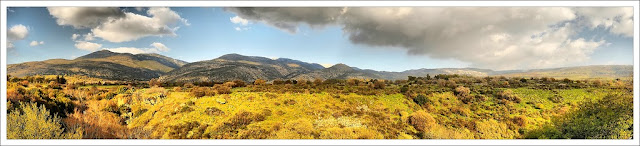
The wide-ranging discussion sought to apply theories of conflict resolution and environmental peacemaking to local conflict in the Middle East. Touching on conservation, conflict resolution, local history, geography, ecology, and diplomacy, the participants underscored the importance of restoration efforts, local environmental maintenance, and the pursuit of peace through environmental cooperation.
For more, watch these presentations on YouTube (in English; with Timestamps):
Event Part One:
0:15:50
“Conservation to Conflict Resolution: Understanding the Theory and Practice of Peace Parks”
Dr. Saleem Ali, Rubenstein School of Environment and Natural Resources, University of Vermont
1:36:28
“Peace Parks on Israel’s Borders: Lessons from South Sinai”
Dr. Dan Rabinowitz, Department of Sociology and Anthropology, Tel Aviv University
1:55:49
“The Jordan River Peace Park: Post-conflict environmental peacebuilding between Israel and Jordan”
Gidon Bromberg, Israeli Director, Friends of the Earth Middle East
Event Part Two:
0:01:12
“The Golan Heights – A critical habitat with global significance”
Dr. Tamar Ron, Ecologist, biodiversity conservation consultant
2:11:01
Session Response:
Valerie Brachya, Director, Environmental Policy Center Jerusalem Institute for Israel Studies
Photo: Golan Heights Panorama, Courtesy Flickr User Vad_Levin. -
Collier and Birdsall: Plunder or Peace
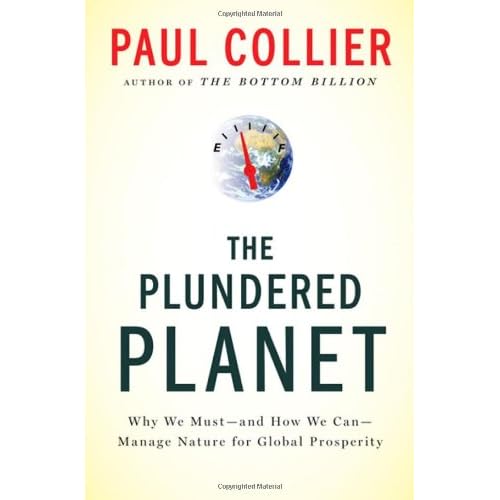
›January 22, 2010 // By Julien KatchinoffIn a preview of his new book The Plundered Planet: Why We Must – and How We Can – Manage Nature for Global Prosperity, Paul Collier dispelled the common perception that Africa’s indentified resource reserves are the world’s largest. In actuality, it is estimated that up to four-fifths of the value of subsoil assets in the African continent are yet to be discovered. “That is the big story,” Collier remarked. “Here are assets which could finance transformation….but historically haven’t.” Instead, these resources have been plundered.
In a recent event hosted by the U.S. Institute of Peace, Paul Collier, professor of economics and director of the Center for the Study of African Economies at Oxford University, and Nancy Birdsall, president of the Center for Global Development, discussed how resource-rich environments in developing countries have been traditionally misused. The two also proposed strategies to disrupt these processes and transform resource “curses” into deeply needed support for peace and stable development.
Conflict and instability in countries whose economies are heavily invested in natural resource have often hindered local development and security. Many of these countries—including Cambodia, Angola, Indonesia, and DRC—have suffered from one of two forms of plunder:
Types of Natural Resources Plunder:
1. Where the few steal from the many:
Natural assets are, by definition, without natural owners, and therefore lie as easily taken common goods. “This process of expropriation opens up a whole array of dysfunctional variants, many of which are violent,” Collier noted.
2. Where the present steals from the future:
Intertemporal mismanagement is a possibility, as unlike man-made assets, natural assets belong to all generations.
Operating from a worldview of weak sustainability, where profits from natural assets are reinvested for the benefit of future generations, Collier suggested that natural resource rights are more akin to “rights of stewardship” than traditional property rights. “We may well transform that value into something that is more productive, but if we pull up natural assets from the ground, we should leave to the future something that is equivalently valuable.”
Collier argued that the successful harnessing of natural resources for stable and sustainable development depends on the application of a tenuous decision chain:
Natural Resources Decision Chain:
1. Discovery Process:
Failure in this phase stems from poor property rights, and the time consistency problem—uncertainty that conditions and regulations that make expensive upfront investments profitable today will remain in place in the future.
2. Appropriate Taxation:
Currently, as a result of poor negotiations or limited information regarding the status of resources, governments are unable to craft tax regimes which effectively capture resource rent.
3. Avoiding the Delta:
Sustainable management any discovered subsoil assets must avoid a local “Nigerian Delta” catastrophe. Clearly designating the government as the sole responsible agent for resource rents may limit such failures.
4. Saving the money:
To avoid plunder of the future by the present, Collier suggested that, though politically difficult, a proportion of revenue streams must be delineated from general accounts.
5. Building the capacity to invest in the country:
Collier deemed the inability of resource-rich countries to attract diversified investment as the “killer link.” Governments must use returns from subsoil assets to fund “investment in investment”—directing public capital toward transportation and utility infrastructure, education, health, and other short-term projects. Once in place, such projects encourage future public and private investments, thereby multiplying long-term returns.
As with many complex systems, Collier warned that the chain is only as strong as its weakest link. If one link fails, “the chain won’t pull the country from poverty to prosperity.” On the other hand, if each link holds, the value is tremendous. ”[Y]ou really can pull the country from poverty to prosperity over the course of a generation. There are no fixes in economics that are faster than that.”
Ultimately, Collier and Birdsall emphasized that success depends upon the development of an informed and competent “critical mass” of people. Even the strongest decision chain will fail if it is not underwritten by a majority of the population. Birdsall reiterated the need for public participation in the process, possibly through direct income distribution or responsible interventions by non-vested third parties.
Photo: Courtesy of Oxford University Press. -
Water, Conflict, and Cooperation: Practical Concerns for Water Development Projects
›“Water disputes that can start at the local level—little things—have the potential, in extreme cases, to burgeon into something much bigger,” warned Ken Hackett, president of Catholic Relief Services (CRS), during a discussion at the Woodrow Wilson Center (Webcast) for the launch of CRS’ new publication, Water and Conflict: Incorporating Peacebuilding into Water Development. The report provides guidance to water development practitioners, civil society members, and others striving to incorporate water and peacebuilding into their project frameworks.
In recognition of water’s potential to drive conflict, Hackett—part of a panel featuring Jason Gehrig, Water and Conflict‘s primary author; William Hall, professor of conflict resolution at Georgetown University; and Tjip Walker, team leader of USAID’s conflict management and mitigation office‘s warning and analysis unit—urged those working on water to focus attention on identifying and diffusing areas of emerging disagreement while they are still manageable. “We must, in a proactive way, incorporate peacebuilding methodologies in water and sanitation work,” said Hackett.
Looking Beyond Tubes and TanksPrior to witnessing violent protests within the Altiplano region of Bolivia, Jason Gehrig assumed that the primary obstacles to successful water development efforts would be found in the technical phase of designing or building delivery systems. Local political developments, however, demonstrated that “we can’t just be looking at development without also looking at the structural issues at play,” said Gherig.
Emphasis on “social infrastructure” and the inclusion of peacebuilding paradigms allows for conflict transformation and the mitigation of future violence through heightened conflict sensitivity by local practitioners. Such understanding and sensitivity to local conflicts and structures, Gehrig asserted, can only be achieved by “listening, winning hearts and minds (beginning with our own) by getting close to the people so that their struggle for life, for dignity, for peace, becomes our own.”
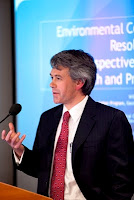
Defining the Role of Environmental Conflict ResolutionWilliam Hall noted that conflict sensitive practices apply several elements of environmental conflict resolution (ECR), such as in-depth social participation, context analysis, stakeholder involvement, and the use of neutral parties.
For Hall, the goal of ECR is not only conflict resolution, but “also how people will be involved.” Adapting a framework design from the International Association for Public Participation, Hall reminded the audience that decision-makers must clearly communicate both the goals of their intervention as well as the degree of public involvement required and desired. These issues are sensitive; Hall emphasized that, once a commitment has been made, it is extremely important “to be true to [one’s promises.]”
In situations such as those included in the CRS report, successful peacebuilding efforts—which result in high-quality agreements and improved working relationships between the affected parties—must include effective engagement of appropriate stakeholders, proper mediation, and high-quality information. While many of these factors may be seen as additional procedural complications and expenses, Hall countered that recent research has shown that, compared to standard methods, agreements reached within an ECR context grant economic and environmental benefits beyond those afforded by alternative processes.
Peacefully Managing the CommonsTjip Walker noted that effective governance of water and other common pool resources, often magnets for mismanagement and contention, should be a pivotal concern for peacebuilders in fragile states. Drawing on research on governance and conflict, Walker explained that countries that are more democratic, and allow for greater social participation, are at a lower risk for violent conflict.
With regard to threats posed by common pool resources, Walker reminded the forum that Elinor Ostrom’s work demonstrates it is possible—providing a “enabling environment” for governance—to manage such resources without exposure to dire consequences. In many cases, however, Ostrom’s requirements for sustainable management are unfortunately difficult to achieve and are further complicated by pre-existing challenges stemming from economic dependencies and political arrangements.
Referring to previous trans-boundary river conflict projects, Walker noted that “most of them have been positive…[which] seems to suggest that we are all in this together.” Successes such as these grant hope for the future, yet also demonstrate a need for negotiated agreements across political boundaries. “Under the right circumstances,” Walker concluded, “we do have the ability to manage these resources effectively in ways that are perceived as generally being effective and legitimate.”
For more information about water, conflict and cooperation, as well as other events and publications under ECSP’s Navigating Peace Initiative, please visit www.wilsoncenter.org/water.
Photo: Courtesy David Hawxhurst, Woodrow Wilson Center.
-
Walker’s World: From Warming to Warring: A Review of Cleo Paskal’s New Book
›January 15, 2010 // By Wilson Center StaffWilson Center Senior Scholar Martin Walker recently reviewed Global Warring: How Environmental, Economic, and Political Crises Will Redraw the World Map by Cleo Paskal, for his UPI column, “Walker’s World.”
Excerpts:The Copenhagen summit showed that climate change is as much about geopolitics and power as it is about the weather. China‘s blunt refusal to accept any binding limits on its carbon emissions, despite the agonized pleas of small island governments facing extinction, demonstrated that this new aspect of the game of nations is going to be played as hardball.
And yet, as Cleo Paskal argues in her pioneering new book “Global Warring,” China is also powering ahead on every aspect of climate change. While protecting its right to pollute (because it depends heavily on coal as its main homegrown energy source), China is using state subsidies to seize the lead in solar power manufacturing….But perhaps Paskal’s most striking story is the way that China is also seeking to become a major player in the arctic. China has acquired an icebreaker, a seat with observer status on the Arctic Council and its own arctic research base at Svalbard. (China also has two research bases in the Antarctic.) …
Paskal’s book is full of such vignettes, illustrating the way that climate change and the intensifying competition for resources is starting to change the nature of power politics. Paskal, a Canadian who is a fellow of London’s prestigious Chatham House think tank and a consultant for the U.S. Department of Energy, has been a pioneering scholar of the new terrain where climate change confronts national security, where geopolitics, geoeconomics and global warming all collide. It is not just rivalry for oil and gas supplies and water, but also for fishing rights and undersea mining and mineral rights that may well be up for grabs when some of the lowest-lying Pacific island countries disappear under the rising waves. …
“We need to start thinking about the legal and economic implications of these developments now, before we have to start tackling them in the middle of a crisis or a humanitarian emergency,” Paskal told a seminar at Washington’s Woodrow Wilson Center Friday. …
Paskal sees China and Russia taking these issues more seriously that the United States and Europe, and her book is not just a wakeup call for Western leaders but is also an arresting and original work on climate change, probably the most important book on the environment to be published this year.
“As pressure is put on food, water supplies and national boundaries, famine and war may become more frequent,” Paskal concludes. “This instability may make populations more tolerant of autocratic governments, especially nationalistic capitalist ones where the political, economic and military sectors combine to protect existing resources and aggressively try to secure new ones. China and Russia already have a head start on this model.” -
Alec Crawford on Climate Change and Conflict in Africa and the Middle East
›January 14, 2010 // By Sajid Anwar“Climate change certainly does pose a risk to the world in terms of violent conflict, but there’s a lot of nuance to that argument and a lot of attention and care has to be put into making that case,” says Alec Crawford, project officer at the International Institute for Sustainable Development (IISD) in this video interview with ECSP Director Geoff Dabelko.
According to Crawford, the argument that climate change will lead directly to violent conflict is overly simplistic, but climate could be one of conflict’s many drivers in both Africa and the Middle East. A recent IISD report discusses the potential security challenges of climate change and how to prevent them. -
An Island of Peace in a Sea of Conflict: The Jordan River Peace Park
›Saleem Ali filmed this video on his visit to the “peace island” between Jordan and Israel, which Friends of the Earth Middle East (FOEME) is working to convert into an international peace park.
FOEME co-Director Gidon Bromberg will be at the Wilson Center today to discuss the peace park and other FOEME water cooperation initiatives in more detail as a panelist participating in “Pathways to Peace: Stories of Environment, Health, and Conflict,” an event discussing field-based lessons for addressing environment, health, development, and conflict.
Video: Filmed by Saleem H. Ali (University of Vermont, editor of the MIT Press book Peace Parks: Conservation and Conflict Resolution) with commentary by Elizabeth Ya’ari (FOEME), January 2010.


 “Water disputes that can start at the local level—little things—have the potential, in extreme cases, to burgeon into something much bigger,” warned Ken Hackett, president of
  Prior to witnessing violent protests within the Altiplano region of Bolivia, Jason Gehrig assumed that the primary obstacles to successful water development efforts would be found in the technical phase of designing or building delivery systems. Local political developments, however, demonstrated that “we can’t just be looking at development without also looking at the structural issues at play,” said Gherig.
 William Hall noted that conflict sensitive practices apply several elements of environmental conflict resolution (
 Tjip Walker noted that effective governance of water and other common pool resources, often magnets for mismanagement and contention, should be a pivotal concern for peacebuilders in fragile states. Drawing on research on governance and conflict, Walker explained that countries that are more democratic, and allow for greater social participation, are at a lower risk for violent conflict.
 The
The 

