• woodrow wilson center
  • ecsp

New Security Beat

Subscribe:
  • rss
  • mail-to
  • Who We Are
  • Topics
    • Population
    • Environment
    • Security
    • Health
    • Development
  • Columns
    • China Environment Forum
    • Choke Point
    • Dot-Mom
    • Friday Podcasts
    • Navigating the Poles
    • Reading Radar
  • Multimedia
    • Water Stories (Podcast Series)
    • Backdraft (Podcast Series)
    • Tracking the Energy Titans (Interactive)
  • Films
    • Water, Conflict, and Peacebuilding (Animated Short)
    • Paving the Way (Ethiopia)
    • Broken Landscape (India)
    • Scaling the Mountain (Nepal)
    • Healthy People, Healthy Environment (Tanzania)
  • Publications
  • Events
  • Contact Us

NewSecurityBeat

The blog of the Wilson Center's Environmental Change and Security Program
Showing posts from category community-based.
  • New Network Links Madagascar’s Environment and Health Sectors

    ›
    Guest Contributor  //  October 7, 2014  //  By Laura Robson
    PHE-Network1

    As the international community seeks to articulate a collective vision for sustainable development following the Millennium Development Goals, a vibrant new network has emerged in Madagascar to advance integrated population, health and environment (PHE) initiatives across this island nation.

    MORE
  • Short Films on Cuba, France, Australia Reminders of Immediacy of Climate Challenge

    ›
    Eye On  //  September 30, 2014  //  By Schuyler Null
    australia

    Much of the time, discussion about climate change is focused on the future – How bad will it be? Will it lead to more conflict? Who will be most vulnerable? But it is in fact a current phenomenon. The climate system is already, for all intents and purposes, irrevocably changed and millions of lives have been changed along with it.

    MORE
  • High Poverty: Medicinal Plants Offer Way Forward for Nepal’s Mountain Communities

    ›
    Guest Contributor  //  September 29, 2014  //  By Andrew Taber & Meeta S. Pradhan
    Chepuawa Villge Sankhuwasa

    In a tiny village called Chepuwa in the Sankhuwasabha district of Nepal, high in the Himalayas and almost four days’ trek from the nearest road, Mikmar Bhote has been growing and selling medicinal and aromatic plants for five years.

    MORE
  • Paola Adriázola and Stephan Wolters, ECC Platform

    Investing in Collaboration to Manage Natural Resource Conflict

    ›
    September 25, 2014  //  By Wilson Center Staff
    lake_victoria

    The original version of this article, by Paola Adriázola and Stephan Wolters, appeared on the Environment, Conflict, and Cooperation (ECC) Platform.

    Conflict over environmental resources endangers rural people’s livelihoods and can increase the risk of broader social conflict. Yet joint action to sustain shared resources can also be a powerful means for community building. The Strengthening Aquatic Resource Governance (STARGO) project demonstrated this in three ecoregions: Lake Victoria, with a focus on Uganda; Lake Kariba, with a focus on Zambia; and Tonle Sap Lake in Cambodia. The results of the project were released at an event in Berlin in early July 2014.

    MORE
  • Roger-Mark De Souza et al., Outreach

    Re-Framing Islands as Champions of Resilience

    ›
    September 10, 2014  //  By Wilson Center Staff
    ocean-houses

    The original version of this article, by Karen E McNamara, Sarah Henly-Shepard, Roger-Mark De Souza, Nishara Fernando, appeared in Outreach.

    Island communities, particularly those from small island developing states, are often reported in policy documents, academic papers and mainstream media as being “most vulnerable” to climate change and disasters. While such a classification might serve to raise awareness of their plight, or be used as impetus for global action, this approach can also result in unintended (and damaging) attitudes and consequences. This is well-illustrated by recent off-the-record discussions with several donors and policy-makers who have inappropriately implied it is “too late” to “save the islands,” given their vulnerability to current and impending climate change impacts.

    MORE
  • Proven and Promising Solutions to Strengthening Maternal Health Supply Chains

    ›
    Dot-Mom  //  Reading Radar  //  August 28, 2014  //  By Katrina Braxton

    supplychain-frontIn 2012, as part of the Every Women Every Child movement, 13 vital health commodities were identified by a UN panel that could save the lives of more than 6 million women and children over the course of five years. There are often significant cultural and behavioral barriers to these commodities reaching people in low- and middle-income countries, but physical logistics is also a major problem.

    MORE
  • Book Review: ‘Oil Sparks in the Amazon: Local Conflicts, Indigenous Populations, and Natural Resources’

    ›
    August 18, 2014  //  By Roger-Mark De Souza
    amazon_oil

    The original version of this article appeared on Americas Quarterly.

    Since the early 1990s, the rising price of crude oil and other key natural resources – and the resulting drive by governments and private companies to extract those resources – has led to sharp conflicts in Latin America. At the core of these disputes is the clash between national economic interest and the rights of indigenous people inhabiting the land where most natural resources are located.

    MORE
  • From the PHE Conference in Addis Ababa, a Progress Report on Integrated Development

    ›
    Guest Contributor  //  July 7, 2014  //  By Kristen P. Patterson
    PHE_conference1

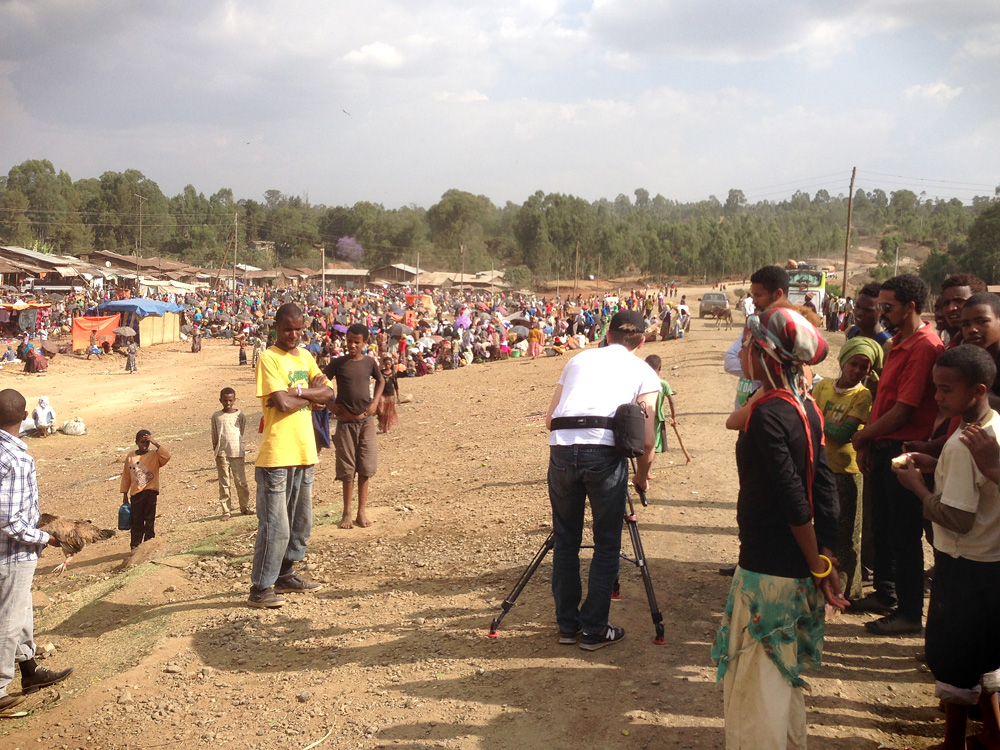
    My grandmother was pleased when I told her I was heading to Ethiopia last November for an international conference focused on population, health, and the environment.

    MORE
Newer Posts   Older Posts
View full site

Join the Conversation

  • RSS
  • subscribe
  • facebook
  • G+
  • twitter
  • iTunes
  • podomatic
  • youtube
Tweets by NewSecurityBeat

Trending Stories

  • unfccclogo1
  • Pop at COP: Population and Family Planning at the UN Climate Negotiations

Featured Media

Backdraft Podcast

play Backdraft
Podcasts

More »

What You're Saying

  • Volunteers,At,The,Lagos,Food,Bank,Initiative,Outreach,To,Ikotun, Pan-African Response to COVID-19: New Forms of Environmental Peacebuilding Emerge
    Rashida Salifu: Great piece 👍🏾 Africa as a continent has suffered this unfortunate pandemic.But it has also...
  • A desert road near Kuqa An Unholy Trinity: Xinjiang’s Unhealthy Relationship With Coal, Water, and the Quest for Development
    Ismail: It is more historically accurate to refer to Xinjiang as East Turkistan.
  • shutterstock_1779654803 Leverage COVID-19 Data Collection Networks for Environmental Peacebuilding
    Carsten Pran: Thanks for reading! It will be interesting to see how society adapts to droves of new information in...

What We’re Reading

  • Rising rates of food instability in Latin America threaten women and Venezuelan migrants
  • Treetop sensors help Indonesia eavesdrop on forests to cut logging
  • 'Seat at the table': Women's land rights seen as key to climate fight
  • A Surprise in Africa: Air Pollution Falls as Economies Rise
  • Himalayan glacier disaster highlights climate change risks
More »
  • woodrow
  • ecsp
  • RSS Feed
  • YouTube
  • Twitter
  • Facebook
  • Home
  • Who We Are
  • Publications
  • Events
  • Wilson Center
  • Contact Us
  • Print Friendly Page

© Copyright 2007-2021. Environmental Change and Security Program.

Woodrow Wilson International Center for Scholars. All rights reserved.

Developed by Vico Rock Media

Environmental Change and Security Program

Woodrow Wilson International Center for Scholars

Ronald Reagan Building and International Trade Center

  • One Woodrow Wilson Plaza
  • 1300 Pennsylvania Ave., NW
  • Washington, DC 20004-3027

T 202-691-4000