

-
Classic Geopolitics and Today’s Nexus of Conflict and Climate
›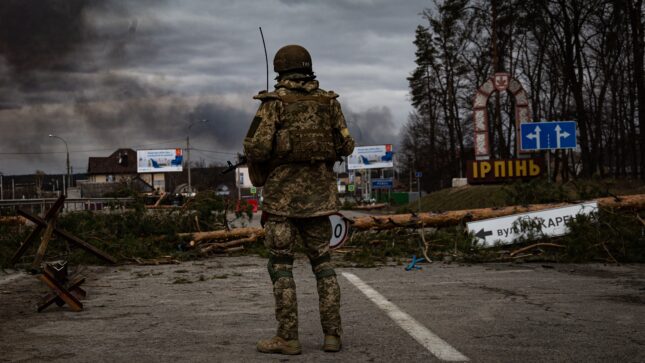
In recent weeks, users of the social network Bluesky were able to watch a compelling video featuring Jessica Newberry Le Vey—a Climate Change and Health Policy Fellow at Imperial College’s Climate Cares Centre. The video begins with Le Vey’s direct-to-camera assertion that the climate crisis is a health crisis affecting people around the world. Then Le Vey’s image disappears—yet we hear her (or someone who sounds eerily like her) speak over a compendium of combat footage that includes video of ATACAM missiles being fired and larger strategic missiles on the move. Climate is important, declares the speaker, but there are more serious problems that threaten our security.
-
ECSP Weekly Watch | January 6 – 10
›
A window into what we’re reading at the Wilson Center’s Environmental Change and Security Program
Room for Justice in Vietnam’s Energy Transition? (The Diplomat)
Vietnam’s crackdown on environmental leaders such as Hoàng Thị Minh Hồng on disputed charges raises significant concerns about human rights, transparency, and civil society’s role in its energy transition. These arrests have garnered international attention, but Vietnam’s government argues that they had nothing to do with environmental work. And while Hoàng and other activists have been released, their work remains curtailed. The message is clear: you’re not welcome here.
-
Charged Up: China Driving Thailand’s EV Industry
›China and the Global Energy Transition // China Environment Forum // Guest Contributor // January 9, 2025 // By Nayan SethIn April 2024, Thai government officials traveled to the Chinese provinces of Fujian and Guangdong with a single-point agenda – convincing the leading Chinese electric vehicle (EV) battery makers to invest in their country. Two months later, the global leader in the EV battery industry, China’s Contemporary Amperex Technology Limited (CATL), announced an initial investment of over $100 million to set up an assembly plant in collaboration with a local Thai state-owned company.
-
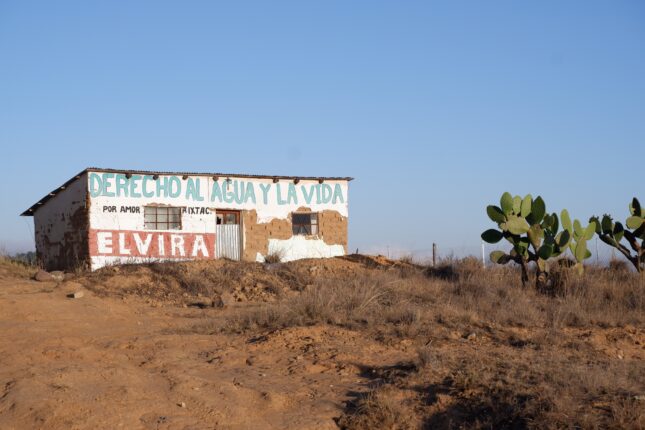
Low-Carbon Transitions: A Spur (and a Solution) to Colonial Violence?
›At the recent G20 meeting in June 2024 in Rio de Janeiro, United Nations Secretary General António Guterres gave an ominous warning: “Unless we limit global temperature rise to 1.5 degrees Celsius, spiraling disasters will devastate every economy.” Guterres implored governments to “speed-up the just transition from fossil fuels to renewables,” and declared that “the end of the fossil fuel age is inevitable.”
-
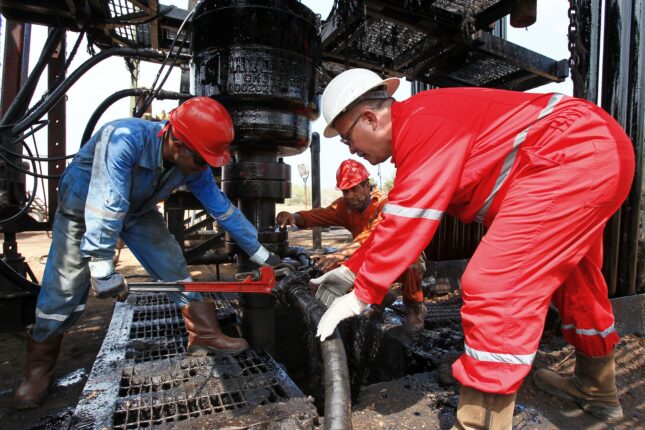
The Traumas of Unplanned Decarbonization in Fragile States
›It is widely recognized that oil states are rarely democratic, and often conflict-prone. As these governments wind down their dependence on this toxic resource as part of broader global efforts to decarbonize, one might imagine that the end of oil will spell a better future for the citizens of oil-producing countries. Sadly, a look at the cases of fragile fossil fuel producing states (FFFPs) suggests that this may not be the case.
-
ECSP Weekly Watch | December 16 – 20
›A window into what we’re reading at the Wilson Center’s Environmental Change and Security Program
Humanitarians Highlight the Climate-Conflict Nexus (The New Humanitarian)
Climate change’s disproportionate impacts on vulnerable populations exacerbate socioeconomic inequalities and conflict, particularly during natural disasters. This vexed connection has led humanitarians and peacebuilders increasingly to address climate and conflict challenges together in order to provide integrated relief, recovery, and aid.
-
ECSP Weekly Watch | December 9 – 13
›A window into what we’re reading at the Wilson Center’s Environmental Change and Security Program
Mekong River Development Faces Public Outcry (Mongabay)
The Mekong River flows through China, Myanmar, Laos, Thailand, Cambodia, and Vietnam—and a new development on this waterway near the downstream Thailand-Laos border has triggered protests in Thailand. The Pak Beng hydropower development is a joint project of China Datang Overseas Investment and Thailand-based Gulf Energy Development which is estimated to generate 912 megawatts of power to be sold to Thailand’s state energy company.
-
The Arc | Inclusive Green Energy: Accelerating Just Transitions
›In today’s episode of The Arc, we are featuring a panel discussion on how to accelerate just energy transitions around the globe from the Forum on Advancing Inclusive Climate Action in Foreign Policy and Development, hosted by the Wilson Center in collaboration with the White House and USAID’s Bureau for Humanitarian Assistance, with support from the USAID Climate Adaptation Support Activity.
Showing posts from category climate change.



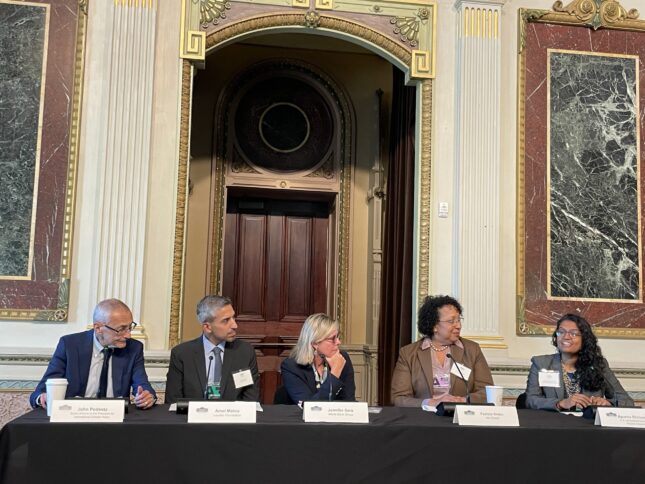 In today’s episode of The Arc, we are featuring a panel discussion on how to accelerate just energy transitions around the globe from the Forum on Advancing Inclusive Climate Action in Foreign Policy and Development, hosted by the Wilson Center in collaboration with the White House and USAID’s Bureau for Humanitarian Assistance, with support from the USAID Climate Adaptation Support Activity.

