-
From Communities to Landscapes: Multi-Scale Approaches to Climate Adaptation in Nepal
›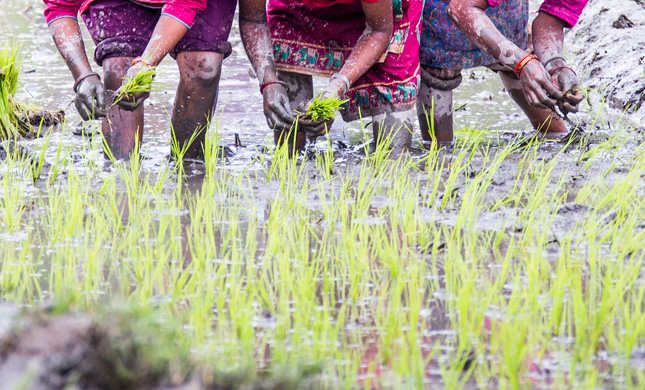
“Some people are more vulnerable than others” to climate change, said Judy Oglethorpe, senior director of Multilateral Program Development of the World Wildlife Fund-US (WWF) at a recent event on climate change, biodiversity, and livelihoods. Oglethorpe is the chief of party for the Hariyo Ban (Green Forests) Program, which seeks to increase ecological and community resilience to climate change in two biodiverse landscapes in Nepal. Taking a “multi-scale approach let[s] us focus on the most vulnerable people,” said Oglethorpe, and “work at different scales and across different disciplines…to reduce people’s vulnerability.”
-
Women on the Front Lines of Change: Empowerment in the Face of Climate and Displacement
›
With a swiftly changing climate comes rapidly rising sea levels, more frequent storms, and rising inequality. Slow yet consistent events like sea-level rise, as well as extreme events like hurricanes and other climate disasters, can force women and families from their homes. As the climate continues to change, adaptation will become more difficult, spurring some to leave home in search of safer ground. In the face of climate-induced instability, women are not just on the frontline of impacts, but also at the forefront of solutions.
-
The Role of Water Stress in Instability and Conflict
›“The demand for water will not be linear,” said Vice Admiral Lee Gunn (USN-Ret,), currently vice chairman of the CNA Military Advisory Board, at a recent Wilson Center event on water and security. As people’s quality of life improves, “the demand for water will increase as well. And so the stresses that we already see around the world—the arguments over basin rights for water, the depletion of water in major cities around the world—we think will aggravate problems that already are beginning to manifest themselves,” he said.
-
Panacea for the Pacific? Evaluating Community-Based Climate Change Adaptation
›Guest Contributor // February 22, 2018 // By Rachel Clissold, Tahlia Clark, Benjamin Priebbenow & Karen McNamaraThe Australian government’s recent Foreign Policy White Paper has been criticized for its underwhelming climate change section. Penny Wong, the current opposition leader in the Australian Senate, said that its acknowledgement of the need to support a more resilient Pacific region “rings hollow in light of the Abbott/Turnbull Government’s massive aid cuts.” But despite these criticisms, the Australian government continues to support a range of climate change initiatives in the Pacific. Increasingly, Australian Aid and its fellow donors, including USAID, JICA and GIZ, take a community-based approach to climate adaptation. Germany’s GIZ, for example, carries out community-level adaptation activities for all beneficiaries in the Pacific; and USAID has highlighted its community-level projects as important models. Our recent evaluation of some of these community-level adaptation programs in Vanuatu and Kiribati found that they provide some development benefits, including increased awareness, empowerment, cooperation, and self-esteem, but that it is too soon to tell whether this approach can reduce long-term vulnerability to climate change.
-
On Streetlights and Stereotypes: Selection Bias in the Climate-Conflict Literature
›Scholarly attention to the links between climate change and conflict has increased. But which places are analyzed most frequently by researchers, and what are the implications of their choices?
-
Climate Change Will Further Complicate the Politics of U.S. Military Bases
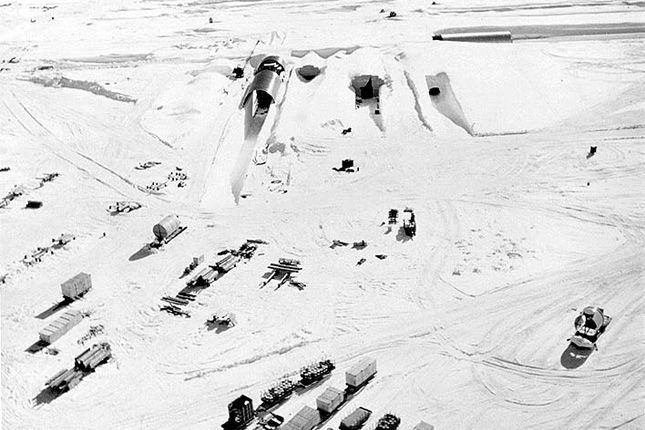
›The effects of climate change on an abandoned U.S. nuclear project in Greenland could create not just environmental problems, but also disrupt military politics and spur diplomatic conflicts. My new article in Global Environmental Politics finds that climate change will eventually expose toxic waste, long immobilized by ice, at Camp Century, which the U.S. military left in the 1960s. This situation—which has already spurred the dismissal of Greenland’s foreign minister—could be the canary in the coalmine signaling that climate change will further complicate the already contentious politics of military bases.
-
Drying Out: Climate Change and Economic Growth Drive Water Scarcity in the Third Pole
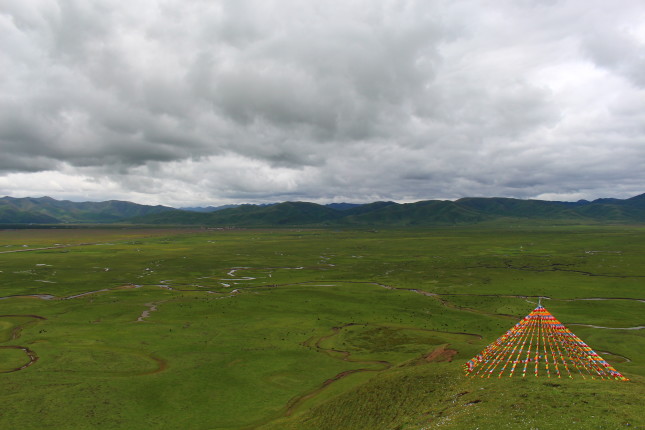
›I pulled my horse to a stop along the banks of a little stream, which was wedged between two grassy hills speckled with wildflowers and pika holes, to admire the view of the Tibetan-Qinghai Plateau’s rolling hills evolving into snowcapped mountains.
-
The Role of Water Stress in Instability and Conflict
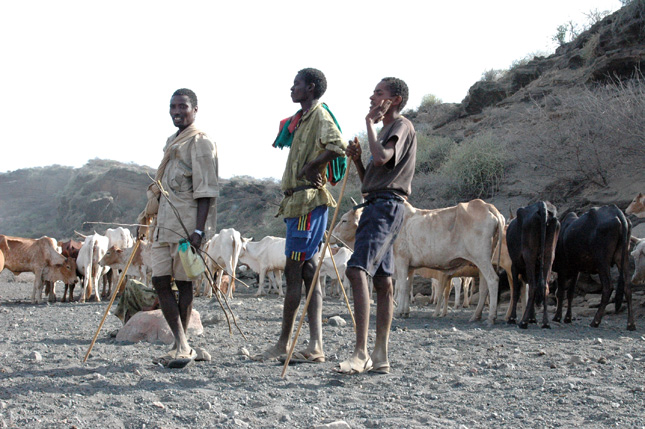
›As senior military officers, we see water stress—the lack of adequate fresh water—as a growing factor in the world’s hotspots and conflict areas, many of vital interest to the United States. Our earlier reports have identified a nexus among climate, water, energy, and U.S. national security. We have previously shown how emerging resource scarcity across this nexus can be a threat multiplier and an accelerant of instability. With escalating global population and the impact of a changing climate, we see the challenges of water stress rising with time. It is in this context that we now seek to provide a better understanding of the mechanisms through which water factors into violence and conflict.
Showing posts from category climate change.