-
Redefining Geopolitics in the Age of Electric Vehicles
›
Oil has played a pivotal role in shaping geopolitics for more than a century. But the rise of electric vehicles and shift toward cleaner fuels means that the world’s dependence on oil could begin to shrink, with both expected and unexpected consequences.
-
Environmental Security Risks: How to Plan for Disasters in the Face of Uncertainty
› How do we plan for disasters that have never occurred before? One million species are at risk of extinction in the near future from environmental changes. The frequency of historic tropical storms is increasing. The rapidly melting permafrost in the Arctic is placing unprecedented pressures on northern infrastructure. Given the overwhelming and unpredictable nature of new disaster risks, it is not clear what the appropriate responses should be. Our book, Disaster Security: Using Military and Intelligence Planning for Energy and Environmental Risks, addresses how to assess unique environmental hazards and disaster risks, based on tools used by the U.S. intelligence and military communities. The book draws on lessons learned from developing, applying, and translating scenarios and simulations (or wargames) to plan for future environmental security risks.
 -
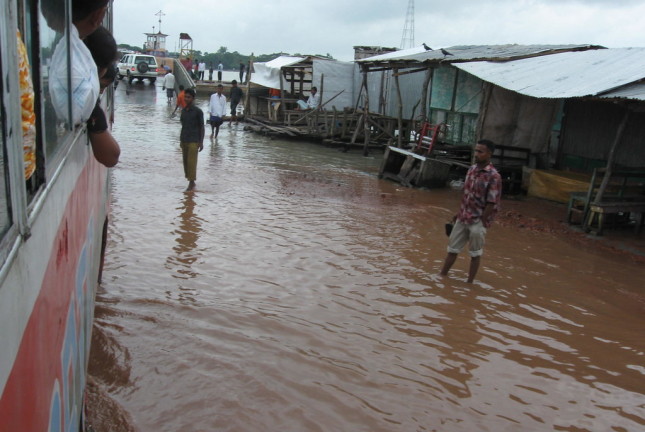
Climate and Conflict: Where Environment, Ethnicity, and Socioeconomic Power Intersect
›As researchers investigate the connection between climate change and conflict, the relative power of communities and individuals attempting to cope with climate change has become a recurring theme. While climate change may not directly cause conflict, it may be inextricably woven into pre-existing conflicts of power, ethnicity, and economic interest. -
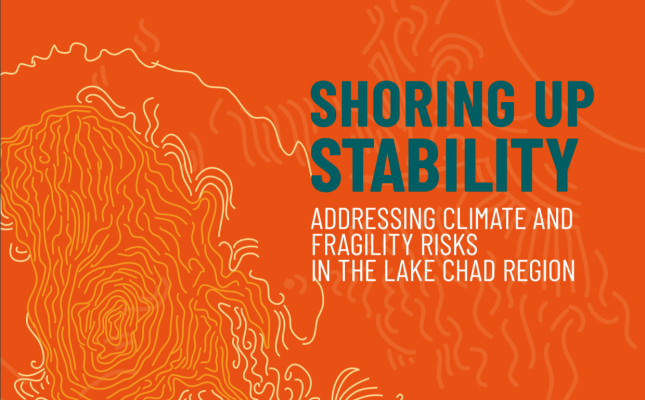
New Report Addresses Climate and Fragility Risks in the Lake Chad Region
›May 15, 2019 // By Truett SparkmanContrary to popular belief, Lake Chad is not shrinking, according to Shoring up Stability: Addressing Climate and Fragility Risks in the Lake Chad Region, a new report from adelphi. This finding has profound implications for how the governments of countries bordering Lake Chad (Nigeria, Niger, Chad, and Cameroon) as well as the international community should address the conflict trap in which the people of the region are caught. “Supporting the people of the basin,” write the authors, “is not a function of saving Lake Chad from desiccation.”
-
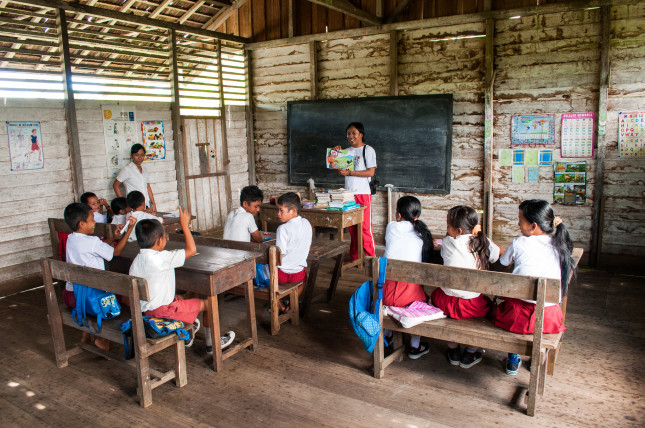
Climate Change May Weaken Children’s Education in the Tropics
›In parts of the tropics, exposure to extreme temperature or rainfall in early life is associated with fewer years of schooling in later childhood. This finding comes from my new article in the Proceedings of the National Academy of Sciences, with coauthor Clark Gray. As climate change leads to increasingly severe heat waves, floods, droughts, and hurricanes, it is important to understand how extreme weather impacts kids’ education in different parts of the world. This will help decisionmakers develop solutions to keep children in school in a world of increasing climate variability.
-
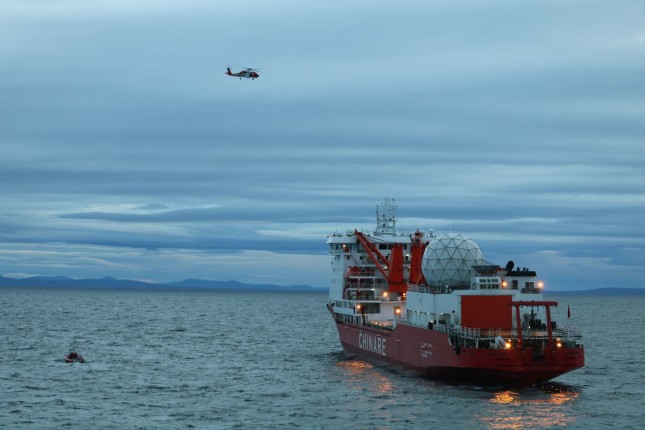
A Warmer Arctic Presents Challenges and Opportunities
›As Arctic ice melts, we can physically see glaciers retreating. But what we can’t yet see is the exact effect climate change will have on the environment, humans, economies, and national security. Less ice for longer periods each year will likely bring opportunities and related challenges as Arctic and non-Arctic states jockey for position.
-
To Mitigate Climate-Fragility Risks, Build Preventative Capacity in Fragile States
›“When states face fragility and climate risks simultaneously, the risks and challenges are compounded,” according to The Intersection of Global Fragility and Climate Risks, a new global report commissioned by USAID, which was presented during a recent USAID Adaptation Community Meeting webcast. States facing major climate hazards, such as flooding, drought, and sea level rise, will be forced to contend with the cost of humanitarian and adaptation responses to mitigate the physical and livelihood risks threatening their populations. Fragile states struggling with issues of legitimacy in the social, economic, political, and security spheres may become overwhelmed by the process and cost of redirecting limited resources to address climate-induced disasters.
-
To Reach Global Climate Targets, Wildlife and Nature Must Be Protected, Report Warns
›April 22, 2019 // By Amanda KingThe Paris Agreement in December 2015 set targets to limit global climate change. To prevent average global temperatures from rising 2°C above preindustrial levels, it recommends limiting the temperature increase to 1.5°C above preindustrial levels. “But the Paris Agreement is only a half-deal; it will not alone save the diversity of life on Earth or conserve ecosystem services upon which humanity depends,” say the authors of a new article published in Science Advances. Their article proposes a Global Deal for Nature (GDN), a time-bound, science-driven plan to save the diversity and abundance of life on Earth.
Showing posts from category climate change.
 How do we plan for disasters that have never occurred before?
  As researchers investigate the connection between climate change and conflict, the relative power of communities and individuals attempting to cope with climate change has become a recurring theme. While climate change may not directly cause conflict, it may be inextricably woven into pre-existing conflicts of power, ethnicity, and economic interest.