• woodrow wilson center
  • ecsp

New Security Beat

Subscribe:
  • rss
  • mail-to
  • Who We Are
  • Topics
    • Population
    • Environment
    • Security
    • Health
    • Development
  • Columns
    • China Environment Forum
    • Choke Point
    • Dot-Mom
    • Friday Podcasts
    • Navigating the Poles
    • Reading Radar
  • Multimedia
    • Water Stories (Podcast Series)
    • Backdraft (Podcast Series)
    • Tracking the Energy Titans (Interactive)
  • Films
    • Water, Conflict, and Peacebuilding (Animated Short)
    • Paving the Way (Ethiopia)
    • Broken Landscape (India)
    • Scaling the Mountain (Nepal)
    • Healthy People, Healthy Environment (Tanzania)
  • Publications
  • Events
  • Contact Us

NewSecurityBeat

The blog of the Wilson Center's Environmental Change and Security Program
Showing posts from category climate change.
  • How Infrastructure Helps Determine the Risk of Violence Following Drought

    ›
    Guest Contributor  //  July 25, 2016  //  By Adrien Detges
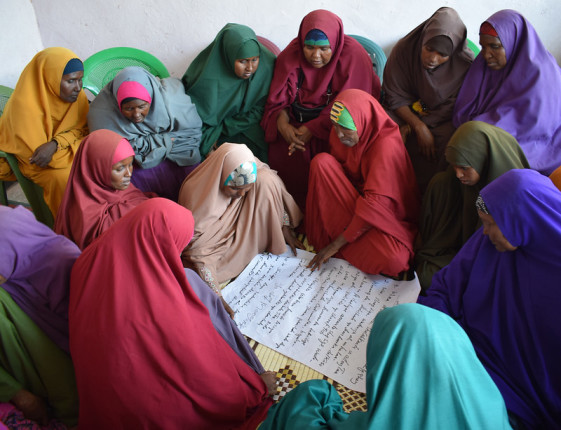
    Somalia IDP

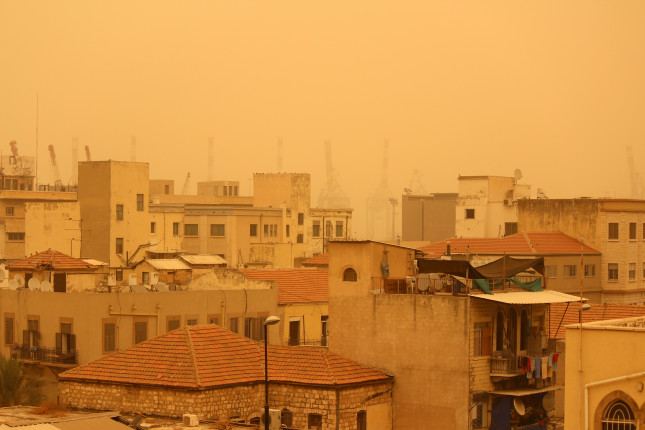
    One fear of climate change is that more variable weather conditions will lead to violence and chaos in some places. But looking at it methodically, do erratic weather conditions actually lead to violent conflict and political instability? Not necessarily.

    MORE
  • Geoffrey Dabelko, The Cipher Brief

    Sorting Through the “Water Wars” Rhetoric in South Asia

    ›
    July 22, 2016  //  By Wilson Center Staff
    pakistan-relief

    The original version of this article, by Geoffrey Dabelko, appeared on The Cipher Brief.

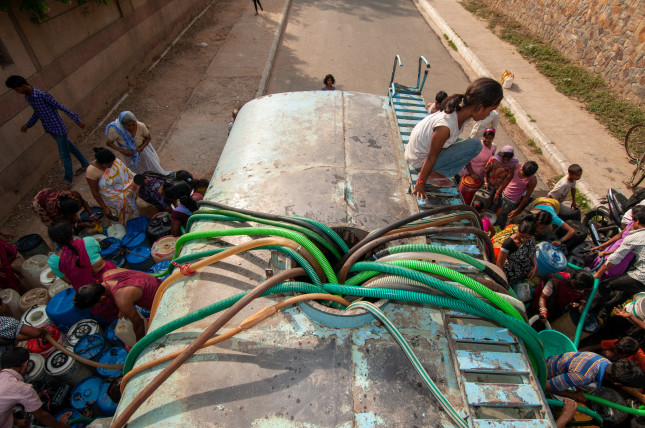
    The eye catching headlines are familiar. “Water Wars” are imminent or already underway in the latest drought or dam-building hotspot. Such “wars” often extend to farmers battling over irrigation diversions, but at times countries are the players. Senior leaders are often quoted suggesting transboundary water theft constitutes a casus belli. Security officials are obliged to investigate.

    MORE
  • Ruth Greenspan Bell, The Daily Climate

    Who Wins, Who Loses? Why We Need to Ask the Hard Questions on a Carbon Tax

    ›
    July 21, 2016  //  By Wilson Center Staff
    plant-implosion

    The original version of this article, by Ruth Greenspan Bell, appeared on The Daily Climate.

    As bad news continues to roll in regarding the accelerating impacts of greenhouse gases accumulating in the atmosphere, there is increasing discussion about imposing a carbon tax. Economists across the political spectrum support it, from Irwin Seltzer’s camp that remains “uncertain as to whether there is a global warming phenomenon” to William Nordhaus, who unequivocally views climate change as a threat.

    MORE
  • Inside a Data-Driven Attempt to Fight Spoilage in U.S. Food Aid

    ›
    Guest Contributor  //  July 19, 2016  //  By Mark Brennan
    mark2-food-aid

    Today, as El Niño-related droughts impact communities across East and Southern Africa, food aid shipment and distribution networks have shifted into high gear. From the U.S. Agency for International Development to the United Nations World Food Program and NGOs like CARE and Save the Children, food aid providers are stocking port warehouses in Djibouti and South Africa, as well as inland warehouses in countries like Ethiopia, Zimbabwe, and Lesotho.

    MORE
  • Family Planning and Environmental Sustainability: Assessing the Evidence

    ›
    From the Wilson Center  //  July 18, 2016  //  By Cara Thuringer
    fp-and-environment

    “There are truly global-scale environmental challenges, and they need to be dealt with by thinking of solutions at the same scale,” said Thomas Lovejoy, a senior fellow at the United Nations Foundation, at the Wilson Center on June 29. The interaction between human population and environmental degradation is one of these challenges. [Video Below]

    MORE
  • Human Rights and the Environment: How Do We Do Better?

    ›
    From the Wilson Center  //  July 13, 2016  //  By Adrienne Bober
    berta protest

    2015 was a deadly year for environmental activism. According to Global Witness, 185 activists were killed, a 60 percent increase from 2014. Of the victims, 40 percent were indigenous people, like Berta Cáceres, who spoke at the Wilson Center last year and was shot and killed in her home in Honduras this March. [Video Below]

    MORE
  • HoPE for Sustainable Development: Results From an Integrated Approach in East Africa

    ›
    From the Wilson Center  //  July 11, 2016  //  By Sreya Panuganti
    fishing

    The Sustainable Development Goals (SDGs) are an ambitious framework for reducing poverty and improving the lives of billions of people. They were agreed to last year by governments at the United Nations and cover developing and developed countries alike. But how will governments, NGOs, and other organizations go about actually accomplishing them over the next 15 years? [Video Below]

    MORE
  • Finding Resilience in the Aftermath of Cyclone Roanu in Bangladesh

    ›
    Guest Contributor  //  July 7, 2016  //  By Mickael De Souza
    Reeds

    In 1970, Cyclone Bhola slammed into East Pakistan – present day Bangladesh – with sustained winds of 150 miles per hour, killing as many as half a million people. In 2007, Cyclone Sidr killed 3,406 people in Bangladesh. This year, Cyclone Roanu killed just 30. What’s behind this huge decline in mortality? What has Bangladesh done differently?

    MORE
Newer Posts   Older Posts
View full site

Join the Conversation

  • RSS
  • subscribe
  • facebook
  • G+
  • twitter
  • iTunes
  • podomatic
  • youtube
Tweets by NewSecurityBeat

Trending Stories

  • unfccclogo1
  • Pop at COP: Population and Family Planning at the UN Climate Negotiations

Featured Media

Backdraft Podcast

play Backdraft
Podcasts

More »

What You're Saying

  • Volunteers,At,The,Lagos,Food,Bank,Initiative,Outreach,To,Ikotun, Pan-African Response to COVID-19: New Forms of Environmental Peacebuilding Emerge
    Rashida Salifu: Great piece 👍🏾 Africa as a continent has suffered this unfortunate pandemic.But it has also...
  • A desert road near Kuqa An Unholy Trinity: Xinjiang’s Unhealthy Relationship With Coal, Water, and the Quest for Development
    Ismail: It is more historically accurate to refer to Xinjiang as East Turkistan.
  • shutterstock_1779654803 Leverage COVID-19 Data Collection Networks for Environmental Peacebuilding
    Carsten Pran: Thanks for reading! It will be interesting to see how society adapts to droves of new information in...

What We’re Reading

  • Rising rates of food instability in Latin America threaten women and Venezuelan migrants
  • Treetop sensors help Indonesia eavesdrop on forests to cut logging
  • 'Seat at the table': Women's land rights seen as key to climate fight
  • A Surprise in Africa: Air Pollution Falls as Economies Rise
  • Himalayan glacier disaster highlights climate change risks
More »
  • woodrow
  • ecsp
  • RSS Feed
  • YouTube
  • Twitter
  • Facebook
  • Home
  • Who We Are
  • Publications
  • Events
  • Wilson Center
  • Contact Us
  • Print Friendly Page

© Copyright 2007-2021. Environmental Change and Security Program.

Woodrow Wilson International Center for Scholars. All rights reserved.

Developed by Vico Rock Media

Environmental Change and Security Program

Woodrow Wilson International Center for Scholars

Ronald Reagan Building and International Trade Center

  • One Woodrow Wilson Plaza
  • 1300 Pennsylvania Ave., NW
  • Washington, DC 20004-3027

T 202-691-4000