• woodrow wilson center
  • ecsp

New Security Beat

Subscribe:
  • rss
  • mail-to
  • Who We Are
  • Topics
    • Population
    • Environment
    • Security
    • Health
    • Development
  • Columns
    • China Environment Forum
    • Choke Point
    • Dot-Mom
    • Friday Podcasts
    • Navigating the Poles
    • Reading Radar
  • Multimedia
    • Water Stories (Podcast Series)
    • Backdraft (Podcast Series)
    • Tracking the Energy Titans (Interactive)
  • Films
    • Water, Conflict, and Peacebuilding (Animated Short)
    • Paving the Way (Ethiopia)
    • Broken Landscape (India)
    • Scaling the Mountain (Nepal)
    • Healthy People, Healthy Environment (Tanzania)
  • Publications
  • Events
  • Contact Us

NewSecurityBeat

The blog of the Wilson Center's Environmental Change and Security Program
Showing posts from category climate change.

  • “Multilateralism is Back!” Climate Change, Equity, and 21st Century Diplomacy

    ›
    From the Wilson Center  //  December 23, 2020  //  By Amanda King
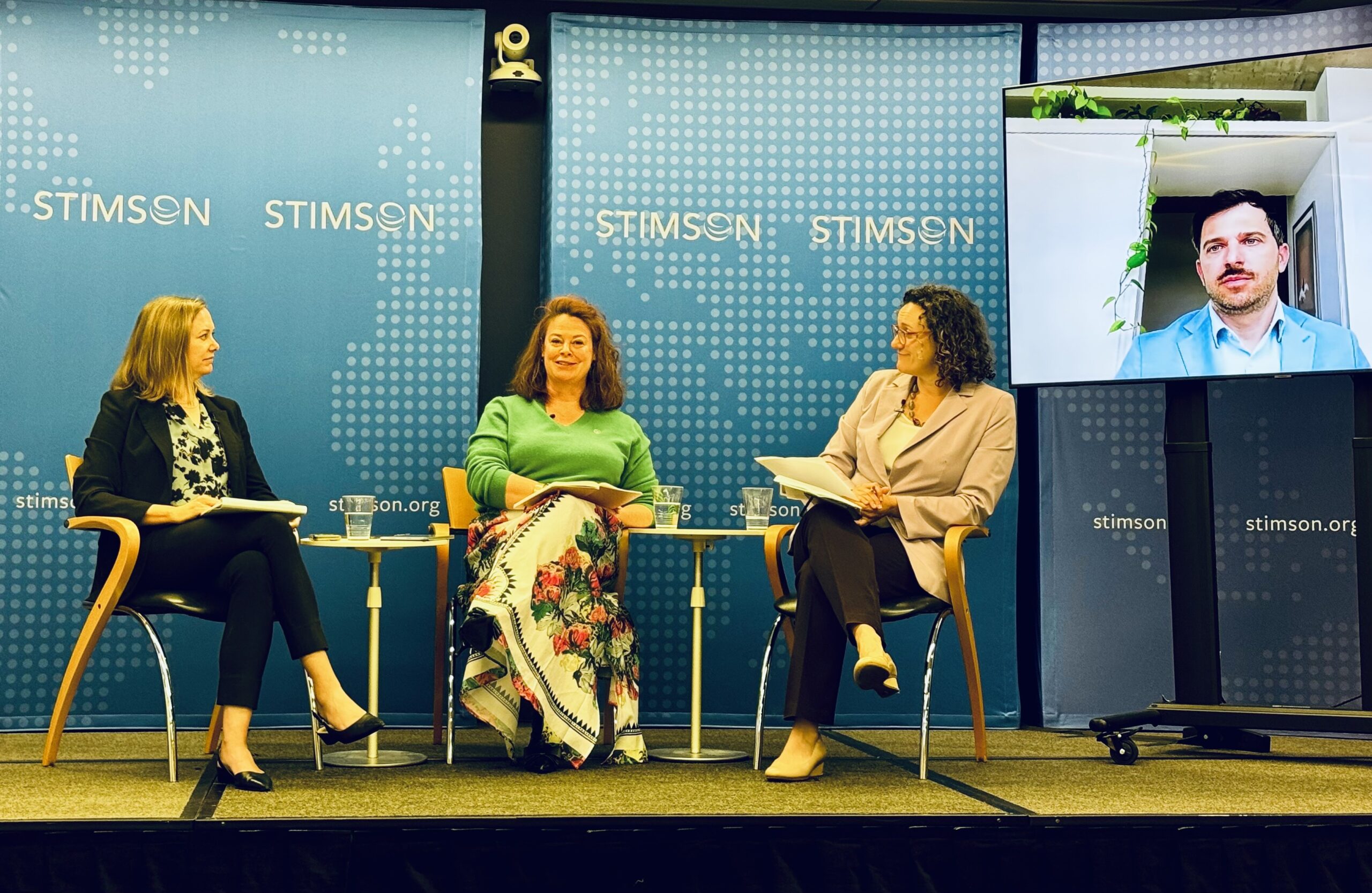
    12-16 panelists

    “Climate change will upend the 21st century world order. From financial systems, migration patterns, and great power competition, to the potential unintended consequences of climate responses, and issues of inequity and the future of democracy, climate change will penetrate our systems, our relationships, and our lives in ways that we have yet to fully understand,” said Lauren Risi, Director of the Wilson Center’s Environmental Change and Security Program, at a recent event co-hosted by the Wilson Center and adelphi. The panel discussion focused on two topics addressed in the recently launched 21st Century Diplomacy project—how efforts to address climate change will engage new modes of multilateralism and how to incorporate the increasingly urgent calls for a more equitable and just world.

    MORE
  • Climate Change Will Make the Brazilian Military’s Role More Difficult, Finds New Report

    ›
    On the Beat  //  December 21, 2020  //  By Matthew Gallagher
    shutterstock_1761641690

    “It is in Brazil’s interest to climate-proof the nation,” said Wilson Center Senior Fellow Sherri Goodman during a recent International Military Council on Climate and Security (IMCCS) event. Referencing a new IMCCS  report, Climate and Security in Brazil, Goodman, who is also Secretary General for the IMCCS, said that Brazilian leaders ought to develop counter-deforestation and climate plans as critical elements of the national security agenda.

    MORE
  • “Climate is the Multilateral Challenge of the Moment”: Highlights from a Conversation on Climate Change, Multilateralism, and Equity

    ›
    Friday Podcasts  //  December 18, 2020  //  By Matthew Gallagher

    12-16 Event Podcast Photo“After a period of populist nationalism…multilateralism is back, and climate is the multilateral challenge of the moment,” said David Lammy, a member of Parliament for Tottenham in the United Kingdom and Shadow Secretary of State for Justice, in a recent 21st Century Diplomacy event, co-hosted by the Wilson Center and adelphi. The election of Joe Biden and Kamala Harris is not a “reset,” but rather a catalytic moment for the international community precisely because of the pandemic and consequences for the global economy, he said. When you look at who has been left behind in countries like the United States and United Kingdom, and globally, who is at risk climate impacts, it is “black and brown people suffering all over the planet, and that is a call to arms,” said Lammy.

    MORE
  • How U.S. Arctic Policy and Posture Could Change Under President-elect Biden

    ›
    From the Wilson Center  //  Navigating the Poles  //  December 15, 2020  //  By Olivia Popp
    shutterstock_1153631344

    Truth, trust, and transparency are key aspects to sound and sustainable governance of the Arctic, said Ulf Sverdrup, Director of the Norwegian Institute of International Affairs. He was one of a panel of experts who spoke on Nov. 30 at “The Arctic in a Post-Election World,” the first event in a two-part series sponsored by the Wilson Center’s Polar Institute.

    MORE
  • Vanessa Nakate on Giving Weight to the Voices of Those Most Affected by Climate Change

    ›
    Friday Podcasts  //  December 11, 2020  //  By Matthew Gallagher

    Vanessa Nakate_podcast image“We need to give more weight to the voices of people who are most affected by climate change,” says Vanessa Nakate, a prominent Ugandan climate activist, in this week’s Friday Podcast. At the local, regional, and global levels, Nakate’s work sheds light on the imperative for policymakers to value the lived experiences of oft-overlooked groups such as women, youths, and citizens of developing nations. “When I talk about climate justice, it is not something that I want for the future—it is something that I want right now, because our present is catastrophic,” she says.

    MORE
  • “An Idea Born of Desperation”: Simon Nicholson on Solar Radiation Management

    ›
    Friday Podcasts  //  December 4, 2020  //  By Cindy Zhou

    Nicholson&Dabelko Podcast Image Thumbnail (1)“If solar radiation management were done well—that is, the science is right, the engineering is right, and the policy and governance frameworks around all of the stuff work—then solar radiation management could be a really important, positive contribution to humanity’s responding to climate change,” says Simon Nicholson, associate professor at American University’s School of International Service and co-founder of the Forum for Climate Engineering Assessment in this week’s Friday Podcast interview with ECSP senior advisor and Ohio University professor, Geoff Dabelko. “But, there are all kinds of risks associated with this endeavor.”

    MORE
  • Interdisciplinary Solutions Will Improve Alaska Native Maternal Health (Part 2 of 2)

    ›
    Dot-Mom  //  Navigating the Poles  //  November 18, 2020  //  By Deekshita Ramanarayanan, Michaela Stith, Marisol Maddox & Bethany Johnson
    Part 2 image

    The United States is in the midst of a maternal health crisis. Indigenous and Alaska Native peoples are 2.3 times more likely to die from pregnancy-related complications than their white counterparts. In Alaska, unequal socio-economic status, lack of access to hospitals and quality health services, systemic racism, and a history of colonization drive these disparities in maternal health outcomes. “Weathering”—the deterioration of communal health outcomes caused by persistent socio-economic disadvantages—contributes to many poor maternal health outcomes for Alaska Native women. On top of these systemic problems, climate change impacts threaten to widen the existing disparities for Alaskan Native women.

    MORE
  • Largest Polar Expedition Ever Seeks to Explain Shrinking Arctic Sea Ice

    ›
    Navigating the Poles  //  On the Beat  //  November 17, 2020  //  By Michaela Stith & Olivia Popp

    Matthew Shupe drives a snowmobile over a bridge towards MET City.

    “If you’re a sea ice person, MOSAiC is the kind of experiment that you just live for,” said Don Perovich, a Dartmouth College researcher with the Multidisciplinary drifting Observatory for the Study of Arctic Climate. “It’s the kind of experiment you dream about. It’s an opportunity to spend a whole year on the ice, just watching how a floe evolves over time.” He spoke at a recent event sponsored by IARPC Collaborations, an Interagency Arctic Research Policy Committee (IARPC) member space where scientists and others involved in Arctic research share knowledge and resources. The researchers on the expedition, said Perovich, aimed to collect data that would shed light on the causes and consequences of the evolving and diminished Arctic sea ice cover. MOSAiC’s mission was to facilitate a breakthrough in understanding the Arctic climate system and improve the world’s climate and weather forecasting models.

    MORE
Newer Posts   Older Posts
View full site

Join the Conversation

  • RSS
  • subscribe
  • facebook
  • G+
  • twitter
  • iTunes
  • podomatic
  • youtube
Tweets by NewSecurityBeat

Trending Stories

  • unfccclogo1
  • Pop at COP: Population and Family Planning at the UN Climate Negotiations

Featured Media

Backdraft Podcast

play Backdraft
Podcasts

More »

What You're Saying

  • Volunteers,At,The,Lagos,Food,Bank,Initiative,Outreach,To,Ikotun, Pan-African Response to COVID-19: New Forms of Environmental Peacebuilding Emerge
    Rashida Salifu: Great piece 👍🏾 Africa as a continent has suffered this unfortunate pandemic.But it has also...
  • A desert road near Kuqa An Unholy Trinity: Xinjiang’s Unhealthy Relationship With Coal, Water, and the Quest for Development
    Ismail: It is more historically accurate to refer to Xinjiang as East Turkistan.
  • shutterstock_1779654803 Leverage COVID-19 Data Collection Networks for Environmental Peacebuilding
    Carsten Pran: Thanks for reading! It will be interesting to see how society adapts to droves of new information in...

What We’re Reading

  • Rising rates of food instability in Latin America threaten women and Venezuelan migrants
  • Treetop sensors help Indonesia eavesdrop on forests to cut logging
  • 'Seat at the table': Women's land rights seen as key to climate fight
  • A Surprise in Africa: Air Pollution Falls as Economies Rise
  • Himalayan glacier disaster highlights climate change risks
More »
  • woodrow
  • ecsp
  • RSS Feed
  • YouTube
  • Twitter
  • Facebook
  • Home
  • Who We Are
  • Publications
  • Events
  • Wilson Center
  • Contact Us
  • Print Friendly Page

© Copyright 2007-2021. Environmental Change and Security Program.

Woodrow Wilson International Center for Scholars. All rights reserved.

Developed by Vico Rock Media

Environmental Change and Security Program

Woodrow Wilson International Center for Scholars

Ronald Reagan Building and International Trade Center

  • One Woodrow Wilson Plaza
  • 1300 Pennsylvania Ave., NW
  • Washington, DC 20004-3027

T 202-691-4000