-
USAID’s New Climate Strategy Outlines Adaptation, Mitigation Priorities, Places Heavy Emphasis on Integration
›February 29, 2012 // By Kathleen MogelgaardIn January, the U.S. Agency for International Development released its long-awaited climate change strategy. Climate Change & Development: Clean Resilient Growth provides a blueprint for addressing climate change through development assistance programs and operations. In addition to objectives around mitigation and adaptation, the strategy also outlines a third objective: improving overall operational integration.
The five-year strategy has a clear, succinct goal: “to enable countries to accelerate their transition to climate-resilient low emission sustainable economic development.” Developed by a USAID task force with input from multiple U.S. agencies and NGOs, the document paints a picture of the threats climate change poses for development – calling it “among the greatest global challenges of our generation” – and commits the agency to addressing both the causes of climate change and the impacts it will have on communities in countries around the world.
These statements are noteworthy in a fiscal climate that has put development assistance under renewed scrutiny and in a political environment where progress on climate change legislation seems unlikely.
Not Just Challenges, But Opportunities
To make the case for prioritizing action on climate change, the strategy cites climate change’s likely impact on agricultural productivity and fisheries, which will threaten USAID’s food security goals. It also illustrates the ways in which climate change could exacerbate humanitarian crises and notes work done by the U.S. military and intelligence community in identifying climate change as a “threat multiplier” (or “accelerant of instability” as the Quadrennial Defense Review puts it) with implications for national security.
Targeted efforts to address climate change, though, could consolidate development gains and result in technology “leap-frogging” that will support broader development goals. And, noting that aggregate emissions from developing countries are now larger than those from developed countries, the strategy asserts that assisting the development and deployment of clean technologies “greatly expands opportunities to export U.S. technology and creates ‘green jobs.’”
In addition to providing a rationale for action, the strategy provides new insights on how USAID will prioritize its efforts on climate change mitigation and adaptation. It provides a clear directive for the integration of climate change into the agency’s broader development work in areas such as food security, good governance, and global health– a strong and encouraging signal for those interested in cross-sectoral planning and programs.
Priorities Outlined, Tough Choices Ahead
President Obama’s Global Climate Change Initiative, revealed in 2010, focuses efforts around three pillars: clean energy, sustainable landscapes, and adaptation. USAID’s climate strategy fleshes out these three areas, identifying “intermediate results” and indicators of success – such as the development of Low Emission Development Strategies in 20 partner countries, greenhouse gas sequestration through improved ecosystem management, and increasing the number of institutions capable of adaptation planning and response.
In laying out ambitious objectives, however, the authors of the strategy acknowledge constrained fiscal realities. The strategy stops short of identifying an ideal budget to support the activities it describes, though it does refer to the U.S. pledge to join other developed countries in providing $30 billion in “fast start financing” in the period of 2010 to 2012 and, for those USAID country missions that will be receiving adaptation and mitigation funding, establishes “floors” of $3 million and $5 million, respectively.
The final section of the strategy lists over thirty countries and regions that have already been prioritized for programs, including Bangladesh, India, Kenya, Malawi, and Peru. But “we are unable to work in every country at risk from climate change impacts or with the potential for low carbon sustainable growth,” the strategy asserts. An annex includes selection criteria to guide further funding decisions, including emission reduction potential, high exposure to physical climate change impacts, a suitable enabling environment, coordination with other donors, and diplomatic and geographic considerations.
“Integration” Central to Strategy
The concept of integration figures prominently throughout the 27-page document. For those of us working in the large and growing space where the global challenges of climate change, food security, health, livelihoods, and governance overlap, this attention is heartening. While it may sometimes seem simply fashionable to pay lip service to the idea of “breaking out of stovepipes,” the strategy identifies concrete ways to incentivize integration.
“Integration of climate change into USAID’s development portfolio will not happen organically,” the strategy says. “Rather, it requires leadership, knowledge and incentives to encourage agency employees to seek innovative ways to integrate climate change into programs with other goals and to become more flexible in use of funding streams and administrative processes.”
To this end, USAID plans to launch a group of pilot activities. USAID missions must submit pilot program proposals, and selected programs will emphasize integration of top priorities within the agency’s development portfolio (including Feed the Future and the Global Health Initiative). Among other criteria, pilots must demonstrate buy-in from multiple levels of leadership, and will be selected based on their potential to generate integration lessons and tools over the next several years.
This kind of integration – the blending of key priorities from multiple sectors, the value of documented lessons and tools, the important role of champions in fostering an enabling environment – mirrors work carried out by USAID’s own population, health, and environment (PHE) portfolio. To date, USAID’s PHE programs have not been designed to address climate challenges specifically, and perhaps not surprisingly they aren’t named specifically in the strategy. But those preparing and evaluating integration pilot proposals may gain useful insights on cross-sectoral integration from a closer look at the accumulated knowledge of more than 10 years of PHE experience.
Population Dynamics Recognized, But Opportunities Not Considered
Though not a focus of the strategy, population growth is acknowledged as a stressor – alongside unplanned urbanization, environmental degradation, resource depletion, and poverty – that exacerbates growing challenges in disaster risk reduction and efforts to secure a safe and sufficient water supply.
Research has shown that different global population growth scenarios will have significant implications for emissions growth. New analysis indicates that the fastest growing populations are among the most vulnerable to climate change and that in these areas, there is frequently high unmet need for family planning. And we have also clearly seen that in many parts of the world, women’s health and well-being are increasingly intertwined with the effects of changing climate and access to reproductive health services.
In its limited mention of population as a challenge, however, the strategy misses the chance to identify it also as an opportunity. Addressing the linked challenges of population growth and climate change offers an opportunity to recommit the resources required to assist of the hundreds of millions of women around the world with ongoing unmet need for family planning.
The strategy’s emphasis on integration would seem to be an open door to such opportunities.
Integrated, cross-sectoral collaboration that truly fosters a transition to climate-resilient, low-emission sustainable economic development will acknowledge both the challenge presented by rapid population growth and the opportunities that can emerge from expanding family planning access to women worldwide. But for this to happen, cross-sectoral communication will need to become more commonplace. Demographers and reproductive health specialists will need to engage in dialogues on climate change, and climate specialists will need both opportunities and incentives to listen. USAID’s new climate change integration pilots could provide a new platform for this rare but powerful cross-sectoral action.
Kathleen Mogelgaard is a writer and analyst on population and the environment, and a consultant for the Environmental Change and Security Program.
Sources: FastStartFinance.org, International Energy Agency, Maplecroft, Population Action International, The White House, U.S. Department of Defense, USAID.
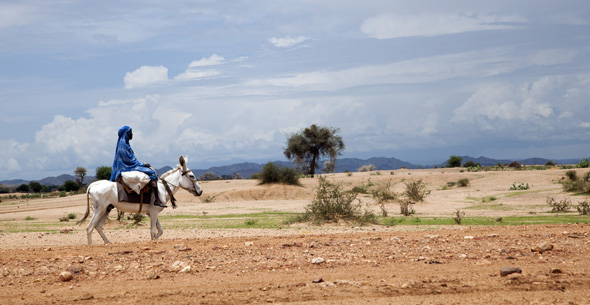
Photo Credit: “Displaced Darfuris Farm in Rainy Season,” courtesy of United Nations Photo. -
The Sahel’s Complex Vulnerability to Food Crises
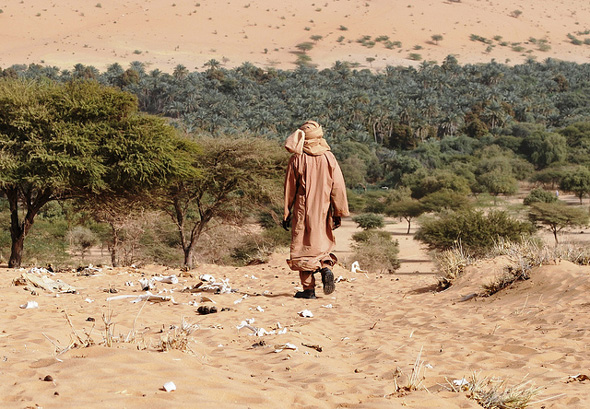
›February 24, 2012 // By Stuart Kent“Across the Sahel region of western Africa, a combination of drought, poverty, high grain prices, environmental degradation, and chronic underdevelopment is expected to plunge millions of people into a new food and nutrition crisis this year,” according to a UN Office for the Coordination of Humanitarian Affairs (OCHA) statement from February 10. The coming “lean season” is predicted to be the third food crisis in less than a decade and highlights a set of glaring vulnerabilities in a region facing severe long-term threats to health, livelihoods, and security. However, as international agencies call for funding to mount yet another emergency response, serious concerns are being raised about what is (or isn’t) being done to address the root causes of vulnerability.
-
Integration, Communication Across Sectors a Must, Say Speakers at 2012 NCSE Environment and Security Conference (Updated)
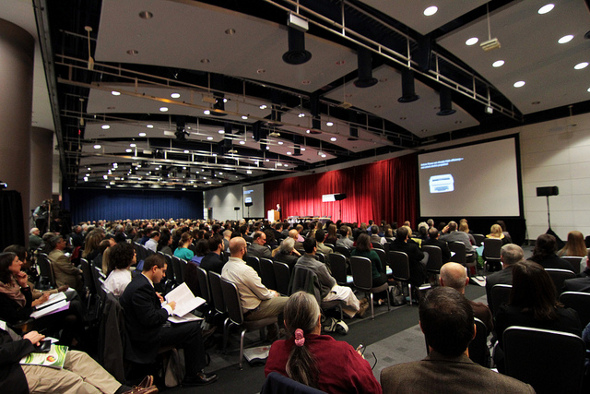
›February 23, 2012 // By Wilson Center StaffECSP staff were among the more than 1,000 attendees discussing non-traditional security issues at the 12th National Conference on Science, Policy, and the Environment last month at the Ronald Reagan Building. Our own Geoff Dabelko spoke on the opening plenary (above) and we collected other excerpts below, though they’re only a small slice of the conference. Find our full coverage by following the NCSE tag, see the full agenda on environmentalsecurity.org, and follow the conversation on Twitter (#NCSEconf).
Climate, Energy, Food, Water, and Health
At the conference’s lead-off plenary, Jeff Seabright (Vice President, The Coca-Cola Company), Daniel Gerstein (Deputy Under Secretary for Science and Technology, U.S. Department of Homeland Security), Rosamond Naylor (Director, Stanford’s Center on Food Security and Environment), and our ECSP’s Geoff Dabelko highlighted the challenges and opportunities of addressing the diverse yet interconnected issues of climate, energy, food, water, and health.
“We need to embrace diversity regardless of the complexity,” said Dabelko, and “abandon our stereotypes and get out of our stovepipes.” Government agencies, academics, and NGOs must be open to using different tools and work together to capture synergies. “If we know everyone in the room, we are not getting out enough,” he said.
“We have to be concerned with every level – national, state, tribal, regional, down to the individual,” said Gerstein. DHS recognizes that climate change affects all of its efforts, and has established three main areas of focus: Arctic impacts; severe weather; and critical infrastructure and key resources.
For Coca-Cola, “managing the complex relationship among [food, water, and energy] is going to be the challenge of the 21st century, said Seabright, who noted that the business community is “seeing a steady increase in the internalization of these issues into business,” including as part of companies’ competitive advantages and strategies.
Similarly, we must offer opportunities and not just threats, said Dabelko, such as exploring climate adaptation’s potential as a tool for peacebuilding rather than simply focusing on climate’s links to conflict. We need to “find ways to define and measure success that embrace the connections among climate, water, and energy, and does not try to pretend they aren’t connected in the real world,” he said.
Communicating Across Sectors: Difficult But Necessary
Next, Sherri Goodman (Executive Director, CNA Military Advisory Board), Nancy Sutley (Chair, White House Council on Environmental Quality), Rear Admiral Neil Morisetti (Climate and Energy Security Envoy, UK Ministry of Defence), and Susan Avery (Director, Woods Hole Oceanographic Institute) called on governments, militaries, and institutions to move away from traditional, vertically segmented responsibilities to address today’s environmental and security challenges.
“We live in an interdependent, connected world,” Morisetti said, but communicating that is a challenge. Militaries are likely to have new, broader missions, including conflict prevention, he said, which makes communications all the more important.
Science is moving from reductive to integrated outlooks to better address larger, systems-wide challenges, said Avery, but communicating results of this research to the public, and across and between disciplines, is difficult.
Confronting these communication and education challenges, particularly the difficulties of conveying the probability of various risks, is a key focus of the Council on Environmental Quality, said Sutley. “We confront the challenge of risk communication every day and it’s not limited to climate change,” she said.Challenging Conventional Wisdom on Climate and Conflict
The common argument is that climate change will lead to scarcity – less arable land, water, rain, etc. – and scarcity will lead to conflict, said Kate Marvel (Lawrence Livermore National Lab). But the link between scarcity and conflict is not that clear. It’s “very important to treat models as tools, not as magic balls,” she said. Developing better diagnostics to test models will help researchers and observers sort out which ones are best.
Kaitlin Shilling (Stanford University) called on the environmental security community to move beyond simple causal pathways towards finding solutions. After all, rolling back climate change is not an option at this point, she said; to find solutions, therefore, we need more detailed analysis of the pathways to violence.
The most common types of climate-conflict correlations are not likely to directly involve the state, said Cullen Hendrix (College of William and Mary). Traditional inter-state wars (think “water wars”) or even civil wars are much less likely than threats to human security (e.g., post-elections violence in Kenya) and community security (e.g., tribal raiding in South Sudan). For this reason, the biggest breakthroughs in understanding climate and conflict links will likely come from better interactions between social and physical scientists, he said.
Because the many unique factors leading to conflict vary from place to place, a better way to assess climate-conflict risk might be mapping human vulnerability to climate change rather than predicting conflict risk in a given place, said Justin Mankin (Stanford University). While human reactions are very difficult to predict, vulnerability is easier to quantify.
Yu Hongyuan (Shanghai Institute for International Studies) compared the concerns of U.S. and Chinese officials on climate change. Polling results, he said, show Chinese officials are most concerned with maintaining access to resources, while American policymakers focus on climate change’s effects on global governance and how it will impact responses to natural disasters, new conflicts, and humanitarian crises. Given the centrality of these two countries to international climate negotiations, Yu said he hoped the “same issues, different values” gulf might be bridged by better understanding each side’s priorities.
Schuyler Null, Lauren Herzer, and Meaghan Parker contributed to this article.
Video Credit: Lyle Birkey/NCSE; photo credit: Sean Peoples/Wilson Center. -
The U.S. Military, Climate Change, and Maritime Boundaries
›The Defense Science Board, which advices the U.S. military on scientific and technical matters, writes in a recent task force report that the most immediate and destabilizing effects of climate change will impact U.S. security indirectly, through American reliance on already-vulnerable states that are “vital” sources of fuel and minerals or key partners in combatting terrorism. The report singles out three specific themes as particularly important to responding to near-term climate-driven threats and adapting to climate change’s long-term impacts: providing “better and more credible information [about climate change] to decision makers,” improving water management, and building better local adaptation capacity, particularly in African nations. Ultimately, the report concludes that the most effective, most efficient way the United States can respond to climate change is not militarily but “through anticipatory and preventative actions using primarily indigenous resources.”In “Maritime Boundary Disputes in East Asia: Lessons for the Arctic,” published in International Studies Perspectives, James Manicom writes that as climate change makes access and exploration easier, there are lessons to be learned from East Asian states’ handling of maritime disputes for Arctic nations. Manicom finds that simply because a state may be party to the UN Convention on the Law of the Sea (UNCLOS), disputes over boundaries and “over the methods used to settle disputes” persist. Domestic identity politics also can and do affect the extent to which a state attempts to exert influence over disputed areas – a noteworthy conclusion given growing rhetoric in Arctic states over the national importance of disputed territories. Finally, Manicom points out that, while “high expectations of resource wealth” may fuel disputes and “political tension,” those expectations do not inevitably doom competing states to conflict over resources. -
Kaitlin Shilling: Climate Conflict and Export Crops in Sub-Saharan Africa
›“There’s been a tremendous amount of work done on looking for a climate signal for civil conflict, particularly in sub-Saharan Africa, and a lot of this work draws a very clear and simple path – if it rains more, or if it rains less, there will be more or less conflict,” says Stanford University’s Kaitlin Shilling in this short video interview. Unfortunately, that straightforward research does little in the way of helping policymakers: “the only way to change the agricultural outputs due to climate change is to change climate change, reduce climate change, or stop it,” she says, “and we’re not really good at that part.”
Shilling moderated a panel at last month’s National Conference on Science, Policy, and the Environment on climate-conflict research. Agricultural export crops – cotton, coffee, cocoa, tea, vanilla – represent one area where policymakers might be able to intervene to prevent climate-driven conflict, says Shilling. Though not as important from a food security perspective, “these crops are really important” for sub-Saharan economies, as well as for “government revenues, which [are] closely related to government capacity.”
But “the effects of climate change on those crops are less well understood,” Shilling says. How they relate to “government revenues and how those relate to civil conflict is an area that I spend a lot of time doing research on.”
By “understand[ing] the mechanisms that underlie the potential relationship between climate and conflict, we can start identifying interventions that make sense to reduce the vulnerability of people to conflict and help them to adapt to the coming climate change.” -
The Ramsar Convention: A New Window for Environmental Diplomacy?
›In seeking ways to connect conservation with peacemaking, the Institute for Environmental Diplomacy and Security (IEDS) has released a study that examines an expanded role for the international wetlands treaty, the Ramsar Convention.
The Ramsar Convention: A New Window for Environmental Diplomacy? describes the wetlands convention, its place within the international environmental treaty world, and its potential to enhance environmental security during this dynamic time of increasingly insecure water supplies and climate change. With more than 40 years of work, the treaty has been quietly and effectively conserving wetlands and increasing recognition of the need to build international cooperation around them. The treaty has also helped define wetlands within greater biogeographic regions and led to formal identification of transboundary wetlands.
In the article, we set out to combine information from the convention’s 234 listed wetlands (13 of which have formal transboundary plans) with the Global Peace Index, which ranks countries using 23 indicators, such as number of conflicts, conflict deaths, military expenditures, and relations with neighboring countries. The result is a prioritized list of countries most in need of tools of conflict resolution.
Working within the framework of the convention builds capacity between high-conflict-risk nations and has potential to develop otherwise-difficult-to-establish trust because the process is transparent and all stakeholder voices are heard. This can be important even when the existing conflict has nothing to do with international wetlands.
The convention is active in many countries with ongoing conflicts, such as Afghanistan, the Democratic Republic of the Congo, Iran, Iraq, and Sudan, and efforts there may help inform the ongoing debate as to the efficacy of conservation as a tool for peacemaking.
As environmental conditions continue to evolve rapidly, the need for institutions that can work in the transboundary environment will increase. The established international infrastructure of the convention has the potential to be a greater force in peacemaking. Further research may help focus on the strengths and weaknesses of the current system and reveal ways for more effective peacemaking efforts.
Suggestions for ways to enhance the convention’s role in environmental diplomacy include working more closely with researchers and practitioners directly involved in the environmental peacemaking field, increased focus on developing capacity for increased flexibility to react to dynamic conditions, and more active promotion of formal transboundary agreements.
Pamela Griffin is an independent scholar at IEDS where she focuses on the diplomatic potential of transboundary wetlands. -
Taking a Livelihoods Approach to Understanding Environmental Security
›February 17, 2012 // By Kate DiamondSince the concept of “environmental security” first gained traction in the early 1990s, research on the issue has been overwhelmingly focused on how environmental change impacts state security. That has been to the detriment of policymakers trying to preempt instability and conflict, according to the University of Toronto’s Tom Deligiannis in his article, “The Evolution of Environment-Conflict Research: Toward a Livelihood Framework,” published in February’s Global Environmental Politics.
-
‘Dialogue TV’ With Sharon Burke, Neil Morisetti, and Geoff Dabelko: Climate, Energy, and the Military
›We are entering “an emerging security environment” where “what constitutes a ‘threat’ and what constitutes a ‘challenge’” requires a broader understanding of security than has often been the norm, according to Sharon Burke, Assistant Secretary of Defense for Operational Energy Plans and Programs. Burke was joined by the UK’s Climate and Energy Security Envoy Rear Admiral Neil Morisetti and ECSP’s Geoff Dabelko on a new installment of Dialogue TV. They debated what climate change and energy security mean for the world’s militaries.
Showing posts from category climate change.