Showing posts from category climate change.
-
In Building Resilience for a Changing World, Reproductive Health Is Key
›April 20, 2012 // By Laurie Mazur
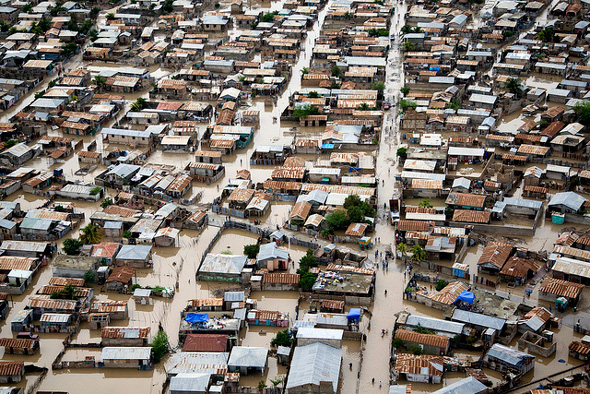
Change is a constant in human (and natural) history. But today, we have entered an era in which the pace, scale, and impact of change may surpass anything our species has previously confronted.
-
‘Earth Focus’ Talks to PAI About Bringing Out Women’s Voices on Climate Change
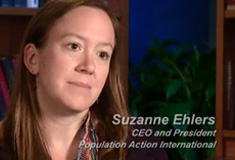
›“We have got to build an increased desire for [and] interest in what happens outside of the United States,” said Suzanne Ehlers, CEO of Population Action International (PAI). She was joined by Vice President of Research, Roger-Mark De Souza, in an episode of Link TV’s Earth Focus, “Women and the Changing Environment,” to discuss the interconnections between women’s reproductive health and climate change.
The episode, built around PAI’s Weathering Change documentary, draws together footage from Ethiopia, Peru, and Nepal to construct messages about the role that reproductive health services can play in responding to the burden that climate change places upon women in the developing world.
“Women are at the forefront of climate change impacts [and] they are disproportionately affected by the negative impacts,” said De Souza. Empowering women by increasing access to voluntary family planning services that allow them to make choices about the timing and the spacing of their births is a way to help ensure that women have the resilience required to react to climate impacts, he continued.
“I want the American people to get out of their borders more often,” said Ehlers. “The U.S. is an unbelievable global leader on reproductive health,” but fluctuations in funding due to domestic politics have sometimes “forced closures of clinics throughout the world.” By listening to those voices that are too often marginalized in international decision making, especially women, we can build a desire for international engagement, she suggests.
“It’s got to be something that the American people see as development…how it links to diplomacy and it absolutely supports defense – that those three D’s are interchangeable,” she said. -
Georgina Mace on Planetary Stewardship in a Globalized Age: Risks, Obstacles, and Opportunities
›April 18, 2012 // By Stuart Kent“The goal, ultimately, is just to manage our world better,” to have an “integrated system for the environment that is driven by what local communities want and need,” said Professor Georgina Mace, director of the NERC Centre for Population Biology at Imperial College London. Mace spoke to ECSP on the sidelines of the 2012 Planet Under Pressure conference.
The environmental challenges of humanity are “really twofold,” she said. First, “human societies have grown up at what we now call the local scale…traditionally using the area in which they live.” Communities have always exerted pressures on their local environment but population growth “means those pressures on local landscapes are much greater than they use to be,” said Mace. “We can’t do everything all in the same place,” without the needs of different groups sometimes conflicting.
Second, “there are connections between societies that are sometimes good but quite often they’re damaging.” For example, the increasingly globalized nature of how we utilize natural resources means that “overuse by one community may affect local people in ways that they have no way of responding to.”
Taking apart the first of these challenges, Mace explained that “the population growth issue is really a population growth and demographic change [issue].” In places with mature age structures, such as North America, Europe, Russia, South Korea, and Japan, “the concern is about the number of old people dependent on a reducing number of producers in their society,” while in many poorer regions of the globe the concern is about the “many young people who still have to go through their reproductive years.”
This latter case “looks a horrible problem from the environment point of view,” said Mace, because the areas growing fastest are areas that are “already overused in many ways.” If countries “don’t worry too much about international migration [and] we’re able to accommodate that,” this “demographic divide” could actually be helpful, as countries with growing populations could provide a young, energetic workforce to those that are aging.
Mace made policy recommendations on different scales, from the local to the planetary. At the local level she encouraged making sure that climate interventions “are actually in concert with what’s going on in the environment.” “Let’s take advantage of ecological resilience, biological adaptation – all the things that nature has provided us with that give us mechanisms for coping,” she said.
On a broader scale, she recommended intervening to counteract the “damaging drivers of environmental change,” by using geoengineering and better land use planning, “which is essentially gardening the planet.”
“Both of those offer solutions that are actually incredibly efficient. They also have costs, risks, and obstacles to do with governance, to do with different people being winners and losers, and to do with the fact that we tend to organize our world around nation states and these solutions mostly transcend international boundaries.”
“That’s a major obstacle,” Mace said, but in the end we need “to have a fully integrated planning system that is not top down but has an overall strategy that seeks to optimize all the things that people want and allows a way for local communities to connect.”
“I think that’s the big challenge for us – how to get there.” -
Neil Adger: Embrace Community Identities To Improve Climate Adaptation
›April 16, 2012 // By Stuart Kent“On an individual basis, people care about things in their back garden and they also care about global icons of climate change…cultural heritage and natural heritage are two really important things that tie people to place and where the impacts of climate change are really going to be felt,” said Neil Adger, professor of environmental economics at the University of East Anglia and the Tyndall Centre for Climate Change Research.
Speaking at the Wilson Center, Adger explained that if policymakers don’t think seriously about the cultural dimensions of climate change adaptation they risk implementing measures that significantly, and negatively, impact people’s sense of community and identity.
“For more than a decade we have been looking at the economic costs, and the infrastructure, and the things that policymakers really focus on whenever they think about the impacts of climate change,” said Adger. In doing so “we realized that that doesn’t necessary motivate people in terms of what they believe the impacts of climate change are.”
Drawing from work on adaption in Australian agriculture, Adger explained that culture can be a barrier to effective adaptation where governments and policymakers fail to engage communities on a cultural basis.
More detailed information is needed to identify what people care about, how people construct perceptions of climate risk, and the best ways to engage people locally.
This is not easy, however. “I think the difficulty of looking at the cultural impacts of climate change is that they are very place specific,” Adger said.
But there is a significant payoff from the investment. “The cultural embedded-ness of our relationship with climate is also potentially a huge motivation for action and for change,” he said. This motivation can extend beyond adaptation to actually encourage people to decarbonize the economy, to mitigate the potential for negative climate change impacts in the first place, and to act as “citizens rather than as consumers.” -
Responses to JPR Climate and Conflict Special Issue: John O’Loughlin, Andrew M. Linke, Frank Witmer (University of Colorado, Boulder)
›
Complexity, in terms of economic, cultural, institutional, and ecological characteristics, weighs heavily on contemporary attempts to unravel the climate change/variability and conflict nexus. The view that local-level complexity can be “controlled away” by technical fixes or adding variables in quantitative analysis does not sit well with many geographers (though some do try to adopt a middle ground position).
-
Impressions of London’s Global Change Conference
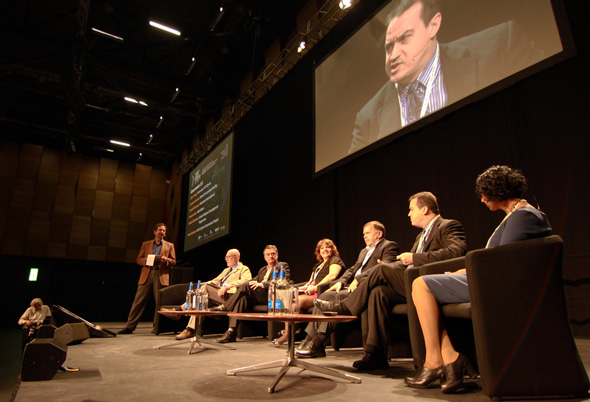
›April 11, 2012 // By Wilson Center StaffThe ECSP delegation to the 2012 Planet Under Pressure conference in London kept a keen eye on discussions of population and demographic dynamics during plenary and breakout sessions. And while the European frame of these topics resembles a much more open discussion of population pressures, presentations repeatedly looked at a broad suite of development challenges, avoiding the urge to elevate one challenge over another.
Out of the hundreds of panels during the week, we counted four that explicitly addressed population (one was hidden in the “Climate Compatible Development” program).
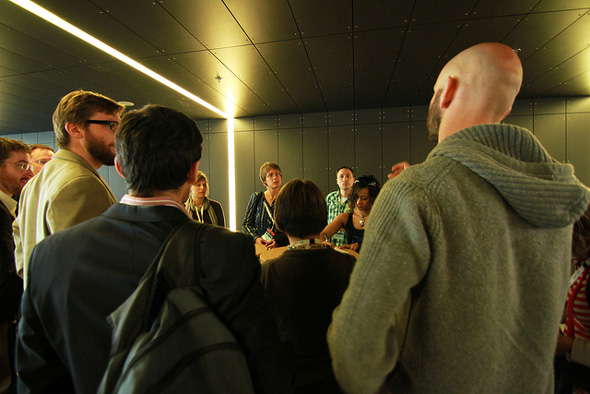
We polled a few participants on their take-aways from the conference, including Bishnu Upretti of the Swiss National Centre of Competence in Research (above). Upretti’s focus is on South Asia, where water and food insecurity, poverty, population, and political tensions – all of which fit under the conference’s broad “global change” heading – are major issues. He came away with an overall positive impression, particularly in the conference’s potential as input for the upcoming Rio+20 UN Conference on Sustainable Development.
But some were not so optimistic about the overall global picture. “It’s all been a bit of a failure really,” said Chris Rapley of University College London on environmental change (below). “Humanity has proved itself incapable either of believing it, or even…getting a grip on the impact that it’s having on the planet.”
Though upbeat about progress in the natural sciences, Rapley argued that without better defining and communicating the consequences, threats, and risks at play, other political and economic concerns will continue to trump the climate and environment concerns.
“We can talk…in very general terms, but to both people and politicians and business people – all three parts of society that have to work together…really coherently to solve this problem – that sort of rather vague ‘gosh it looks a bit gloomy down there but we can’t tell you precisely what’s going to happen’ doesn’t cut the ice,” he lamented.
A Bridge Too Far?
At a conference like this, where topics are wildly diverse and overwhelming, distilling an easy narrative is difficult. Planet Under Pressure was a dizzying collection of natural scientists, inventors, students, journalists, professors, social scientists, and more. Collecting a group like this can shed light on dynamic and innovative work, not to mention foster collaboration on a tangible scale. However, finding grand solutions to the sheer number of challenges, or pressures, placed on the planet isn’t easy.
Yes, the planet is under pressure and this means the international community needs to talk about sustainability, climate change, and overall development in order to ensure a healthy planet for future generations, but nuanced discussion of difficult topics like population dynamics and human health are still a periphery part of the conversation.
The Planet Under Pressure Declaration – the collaborative statement intended to reflect the key messages emerging from the conference – leaves a lot to be desired in this regard. Sarah Fisher, a research and communications officer at the Population and Sustainability Network, suggested text for the declaration that included mention of population dynamics, including growth, urbanization, aging, and migration, in its framing of sustainable development, as well as explicit reference to the importance of human health and wellbeing.
But the final draft of the declaration was largely devoid of these issues, instead focusing more narrowly on environmental degradation and straightforward natural resource management.
For those looking to bridge the gap between the social and natural sciences, then, the focus shifts to the upcoming Rio+20 summit. The specter of the Earth Summit was tangible throughout the conference. From panels to informal discussions, the message was clear: there’s a lot more to be done.
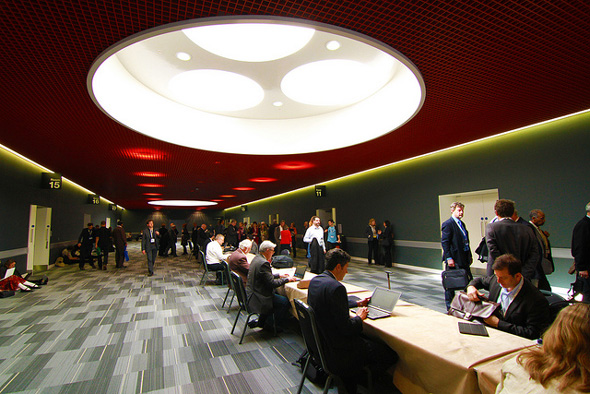
For full population-related coverage from the conference, see our “Planet 2012 tag”. You can also join the conversation on Twitter (#Planet2012). Pictures from the event are available on our Facebook and Flickr pages – enjoy a few below.Photo and Video Credit: Sean Peoples/Wilson Center. -
Reproductive Health an Essential Part of Climate Compatible Development
›April 11, 2012 // By Sandeep BathalaECSP was at London’s 2012 Planet Under Pressure conference following all of the most pertinent population, health, and security events.
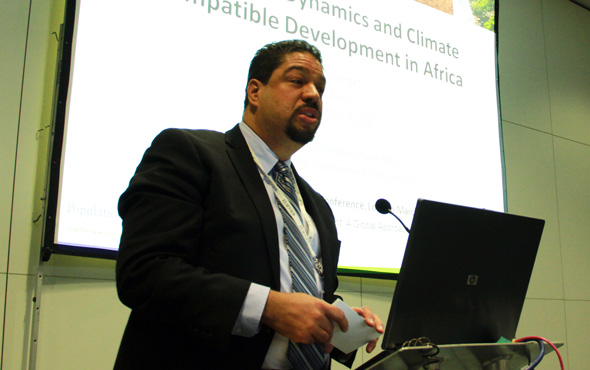
At a panel on “climate compatible development” at this year’s Planet Under Pressure global change conference, Population Action International’s Roger-Mark De Souza was the lone voice to speak about demographics. He presented a detailed analysis of population trends, based on collaboration with the Kenya-based African Institute for Development Policy.
“The link between population dynamics and sustainable development is strong and inseparable – as is the link between population dynamics, reproductive health, and gender equality,” said De Souza. These linkages were emphasized by the UN at the International Conference on Population and Development, held in Cairo in 1994, as well as during the original Rio Conference on Environment and Development in 1992.
“Climate compatible development” is a novel development paradigm being developed by the Climate and Development Knowledge Network and defined as “development that minimizes the harm caused by climate impacts, while maximizing the many human development opportunities presented by a low emissions more resilient future.”The key tenet of this development framework is an emphasis on climate strategies that embrace development goals and integrate opportunities alongside the threats of a changing climate. In this respect, climate compatible development is seen as moving beyond the traditional separation of adaptation, mitigation, and development strategies. It challenges policymakers to consider “triple win” strategies that result in lower emissions, better resilience, and development – simultaneously.
Although developed nations are historically the major contributors of greenhouse gases due to comparatively high levels of consumption, developing countries are the most vulnerable to consequences of climate change. Emerging evidence shows that rapid population growth in developing countries exacerbates this vulnerability and undermines resilience to the effects of climate change, said De Souza. Socioeconomic improvement will also increase the levels of consumption and emissions from developing countries.
“Meeting women and their partners’ needs for family planning can yield the ‘triple win’ strategy envisaged in the climate development framework,” De Souza said. “Meeting unmet family planning needs would help build resilience and strengthen household and community resilience to climate change; slow the growth of greenhouse gases; and enhance development outcomes by improving and expanding health, schooling, and economic opportunities.”
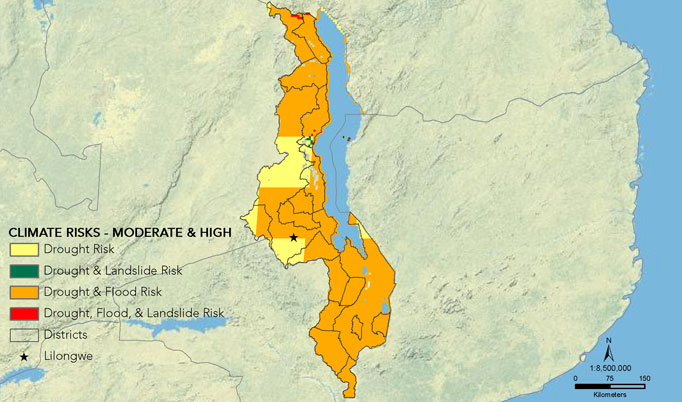
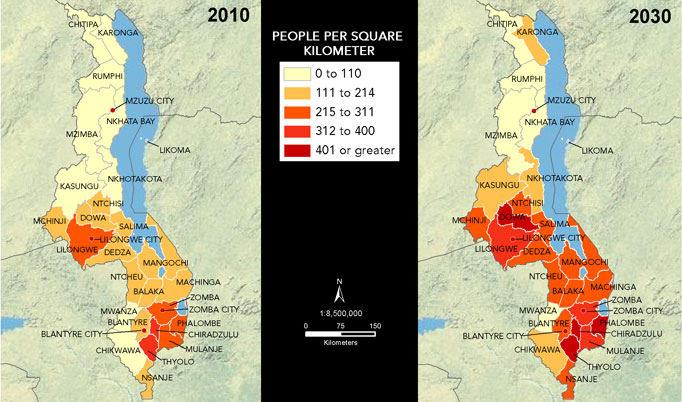
Decision makers engaged in climate change policy planning and implementation at local, national, and international levels should have access to evidence on population trends and their implications on efforts to adapt to climate change as well as the overall development process, De Souza said.He presented new maps and analysis for Africa, particularly Malawi and Kenya, developed by PAI, building on earlier mapping work which identified 26 global population and climate change hotspots – countries that are experiencing rapid population growth, low resilience to climate change, and high projected declines in agricultural production.
“PAI’s work is a clear demonstration of how better decision making can be informed by the right analysis, in the right format, at the right time,” said Natasha Grist, head of research at the Climate Knowledge and Development Network.
“Most of the hotspot countries have high levels of fertility partly because of the inability of women and their partners to access and use contraception,” said De Souza. He continued:Investing in voluntary health programs that meet family planning needs could, therefore, slow population growth and reduce vulnerability to climate change impacts. This is especially important because women, especially those who live in poverty, are likely to be most affected by the negative effects of climate change and also bear the disproportionate burden of having unplanned children due to lack of contraception.
In conclusion, said De Souza, “global institutions and frameworks that support and promote climate compatible development can enhance the impact of their work by recognizing and incorporating population dynamics and reproductive health in their adaptation and development strategies.”
For full population-related coverage from the conference, see our “Planet 2012 tag.” Pictures from the event are available on our Facebook and Flickr pages, and you can join the conversation on Twitter (#Planet2012).
Sources: Climate and Development Knowledge Network, IPCC, Population Action International.
Photo Credit: Sean Peoples/Wilson Center; Maps: Population Action International. -
A New Land Security Agenda to Enable Sustainable, Equitable Development
›The recent news that overseas investors have acquired over 10 percent of Australia’s farmland and 9 percent of water entitlements in its agriculture sector has struck a political chord in the country. Large grain-producing nations like Brazil and Argentina have passed laws to restrict the foreign ownership of land. In other global grain hubs, like Ukraine and Russia, compromised harvests due to droughts could result in export restrictions. In a globalized economy, the combination of scarcity, market and population pressures, and weather volatility will make fertile land an increasingly precious resource.
A shift is underway in global financial markets, where global investors perceive that owning what grows on the land – or better still, owning the land itself – may be a hedge against the risks of more volatile financial markets. A surge in farmland investments is expected to grow over the next decade is due to a number of combined pressures: a growing global demand for commodities, rising commodity prices, ecological limits, and the fact that farmland is a “real asset” that offers diversification to the portfolios of investors at a time of market volatility.
The need to increase food production against the backdrop of resource limits, social vulnerability, and population growth, puts the question of land at the center of a new security agenda.
In sub-Saharan Africa large-scale acquisitions of land that neglect local livelihoods and resource scarcity, commonly referred to as “land grabs,” put the region’s future in the balance. Not all land investments have negative consequences, but given the lower levels of land tenure by communities and the fragility of human security in sub-Saharan Africa, regulating land investments with foresight is an urgent issue. Population growth and climate change underpin this agenda. A worse-than-average drought, exacerbated by climate change, may be all that is needed in certain places to realize the political, humanitarian, and ecological risks that are slowly building momentum.
From Land Grabs to Land Stewardship
Progress now depends on moving from a land grabs debate to land stewardship solutions. This shift, which the Earth Security Initiative summarized in a report published this month, The Land Security Agenda: How Investor Risks in Farmland Create Opportunities for Sustainability, requires an improved understanding by investors and political leaders of three priorities: managing land degradation, protecting human rights by focusing on food security and land ownership, and keeping economies within ecological – especially water – limits.
The agenda we have developed discusses why these issues form part of a new risk management agenda for investors as well as for countries seeking to attract foreign capital, whose economic competitiveness and political stability may be compromised by these trends. But managing these risks, we argue, will require making human rights and ecological limits a central feature of a new investment paradigm.
A range of international investors is already searching for solutions to engage practically with this debate. Among those with whom we have engaged throughout the study are individual investment funds, people seeking change within the financial sector, and investor networks such as the UN-backed Principles of Responsible Investment. Recently, governments, international organizations and civil society groups have also agreed on a set of voluntary guidelines for land governance under the auspices of the Committee on World Food Security. These developments are positive steps, but their voluntary nature remains problematic. The focus must now be placed on operationalizing their recommendations to ensure real accountability and creating political incentives in host countries to regulate their land to ensure long-term and equitable prosperity.
A Call to Action
In The Land Security Agenda we call on investors to turn their attention to their land and commodities portfolios, as well as the investments currently under due diligence, and begin to ask how soil resilience, the prosperity of local people, and freshwater limits are being considered. We recommend beginning to assess the risks of countries according to how well their governments are managing these issues.
We similarly call on heads of state in countries seeking to attract large investments in land to become more aware that these risks may undermine their country’s wealth, their stability, and economic competitiveness. Political leadership is needed to champion and enforce regulations that will encourage investments and modernization while protecting a country’s social and natural capital.
Some of the recommendations we have developed, which would help set the tone for investors and governments to move from voluntary principles to action, include:- Define land security parameters: Establish a set of verifiable measures that allows stakeholders to distinguish those land investments that advance equitable and sustainable prosperity from those that do not. Based on these criteria, which we suggest must consider people, water, and soil, it is possible to advance their integration into three important areas of the investment cycle: the identification of investment opportunities that build positive value, the due diligence process, and the performance reviews of fund managers.
- Build better country risk profiles: If the population of a given country is dependent on agriculture for livelihoods, shouldn’t issues like soil erosion, water availability and lack of recognition for people’s land rights increase that country’s sovereign risk? We think so and now seek to develop a “land security index” to help investors and host country governments assimilate these trends into their decisions as well as increase the advocacy capacity of local civil society.
- Advance the formal recognition of land rights on a large scale: The universal call for the prior and informed consent of communities must be supported, but will be of little practical value if communities do not hold the legal rights to their land or are not well informed about their rights and the commercial opportunities available to them. Civil society groups working to advance good governance, land titling, and capacity building – many of whom we have spoken to during this study – are in a position to help create a “land security partnership” that builds technical and political momentum for the formal recognition of land rights on a large scale, as well as the resourcing and oversight that government agencies will require to implement them.
Alejandro Litovsky is the founder and director of the Earth Security Initiative and lead author of the report. The Land Security Agenda can be downloaded here.
Sources: DGC Asset Management, Land Commodities Asset Management, Telegraph.
Image Credit: Cover of the The Land Security Agenda.