-
Latin America’s Future: Emerging Trends in Economic Growth and Environmental Protection
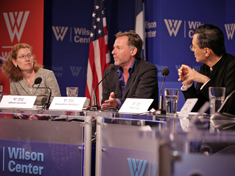
›Economic development and environmental sustainability in Latin America and the Caribbean are intrinsically connected, as evidenced by a seminar this summer organized by the Woodrow Wilson Center’s Brazil Institute (on behalf of the Latin American Program), and co-sponsored by the U.S. Agency for International Development (USAID). The seminar — the culmination of six workshops and a regional meeting in Panama — presented the new Wilson Center report Emerging Trends in Environment and Economic Growth in Latin America and the Caribbean (also available in Portuguese and Spanish), which identifies key trends likely to shape the economy and natural environment in Latin America and the Caribbean over the next 10 years.
Janet Ballantyne, acting deputy assistant administrator of USAID’s Latin America and the Caribbean Bureau, stated that Latin America is “not our backyard, it’s our front yard.” It’s time that we “open the front door,” she claimed, and address the issues facing Latin America — issues that have long-term consequences for not only the region, but the United States and the world as well.
A Broad Range of Challenges
Christine Pendzich, principal author of the report and technical adviser on climate change and clean energy to USAID, covered the five interrelated economic and environmental trends that the report discusses: climate change, clean energy, indigenous and minority issues, challenges facing small economies, and urban issues. To capitalize on the Latin American demographic transition that will soon result in a large number of working age adults, Pendzich argued that the region needs to increase skilled job creation, educate workers to fill those positions, and maintain economic stability. She also declared that recent climate change trends are a “game changer,” which can fundamentally alter development paths.
While closer economic ties with China have contributed to Latin America’s above-average recovery from the global economic downturn, Pendzich argued that this economic relationship could add to the social and environmental problems facing the region. She added that insufficient innovation could lead to the continuation of the region’s dependence on commodity exports, while also noting that the inadequate economic integration and educational opportunities for indigenous and minority groups “drags everyone down.”
In terms of the regional economic trends, Eric Olson, co-author of the report and senior associate of the Mexico Institute, highlighted six challenges and opportunities for Latin America and the Caribbean. Olson claimed that the recovery of the global economy will hurt net importers of fossil fuels, especially in Central America and the Caribbean; have a negative impact on the environment; increase natural resource exploitation that may exacerbate inequality and social conflict; increase demand for primary products that will decrease the incentive to diversify Latin American economies; provide opportunities to promote environmentally friendly growth; and allow for increased utilization of existing trade benefits and intra- and sub-regional trade opportunities.
Recognizing the Need for an Integrated Response
Three of the 77 participants involved in the formation of the report explored in greater depth what Geoffrey Dabelko with the Environmental Change and Security Program described as the “integration and interconnectivity” of the five trends discussed in the report. Blair Ruble, chair of the Comparative Urban Studies Project, noted that with 78 percent of the Latin American population living in urban areas, “cities and urban life create a context in which there are opportunities for solutions to problems,” opportunities that can be used to further innovation, encourage social equality, and promote good governance.
Meanwhile, working with rural indigenous communities and minority groups can also provide valuable opportunities for change, specifically in the area of climate change, according to Judith Morrison, senior adviser at the Inter-American Development Bank’s Gender and Diversity Unit. Morrison argued that indigenous populations are the ones most affected by climate change, but also the most able to improve environmental stewardship as a result of their unique knowledge of the local geography.
Maria Carmen Lemos, associate professor at the University of Michigan, highlighted that vulnerability to climate change depends on two sets of factors: geographical location and socioeconomic factors. As a result, Lemos asserted that climate-change adaption measures must focus on poverty reduction as well as the vulnerability of specific geographic locations.
Julie L. Kunen, senior adviser to the Bureau of Policy, Planning, and Learning at USAID, applauded the report for its cross-trend analysis and called the development community to work together to address these trends in the Latin American and Caribbean region. The next step, Kunen claimed, must be to develop an ambitious strategy and “convene everyone who cares about the issues and rally them around the agenda.”
Elizabeth Pierson is an intern with the Brazil Institute at the Woodrow Wilson Center.
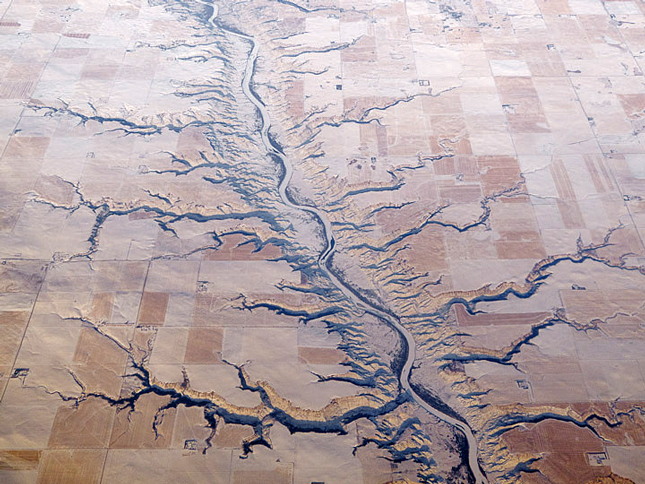
Photo Credit: “The River Runs Through the Andes,” courtesy of flickr user Stuck in Customs. -
The Effects of Climate Change on Water in South Africa and Tibet
›From Hydrology and Earth System Sciences Discussions, “Uncertainty in Water Resources Availability in the Okavango River Basin as a Result of Climate Change,” by D.A. Hughes, D.G. Kingston, and M.C. Todd, explores the effects of a two degrees Celsius global warming scenario on the Okavango River Basin, a “major natural resource for human water supply” shared by Angola, Botswana, and Namibia. The authors conclude that “there is a relatively high probability of large changes to the extent and duration of inundation within the delta wetland system during the 21st century,” and recommend multi-annual to decadal ecological assessments of assumed low rainfall and river flow to guide integrated river basin water management plans.
“Climate Change and Environmental Degradation in Tibet: Implications for Environmental Security in South Asia,” by P.K. Gautam in Strategic Analysis, argues for Tibet’s designation as a regional – if not global – common, for the sake of South Asian security. Tibet faces significant risk of ecological degradation due to climate change. Further degradation of its water supply would significantly affect India, China, and Southeast Asia. According to Gautam, establishing Tibetan autonomy would ensure greater ecological preservation, contrary to the rapid development model pursued by China. -
Women, Water and Conflict as Development Priorities Plus Some Geoengineering Context
›September 24, 2010 // By Geoffrey D. DabelkoHere are some useful links to environment, population, and security work that recently crossed my desk.
• NYU’s Richard Gowan dissects UK development minister Andrew Mitchell’s encouraging speech identifying conflict-affected states as special DFID priorities. Gowan pulls out highlights from the speech and parses NGO reaction to it on Global Dashboard.
• Council on Foreign Relations’ Isobel Coleman provides five practical suggestions for tapping into women as the “new global growth engine,” on Forbes.
• The Aspen Institute announced its Global Leaders Council for Reproductive Health this week. Their goal: meeting unmet demand for family planning services by 2015 on the MDG schedule. That is over 200,000,000 women who want services but do not have access.
• I’m heartened to see the U.S. Senate pass the Senator Paul Simon Water for the World Act. Hoping the House will follow suit. Last time Congress passed legislation on water, sanitation, and health priorities, the 2005 Senator Paul Simon Water for the Poor Act enjoyed overwhelming bipartisan support.
• Colby historian Jim Fleming, writing in Slate, puts the increasing fascination with geoengineering as a climate response “option” in some sobering historical context. “Weather as a Weapon: The Troubling History of Geoengineering” is the short read. Tune in to hear Jim present the book length version, Fixing the Sky, at the Wilson Center, October 6th at 10:30 am EST.
Follow Geoff Dabelko (@geoffdabelko) and The New Security Beat (@NewSecurityBeat) on Twitter for more population, health, environment, and security updates. -
U.S. v. China: The Global Battle for Hearts, Minds, and Resources
›September 22, 2010 // By Schuyler NullThis summer, Secretary Clinton gave a speech at the Association of Southeast Asian Nations (ASEAN) summit in Hanoi that Chinese Foreign Minister Yang Jiechi called “in effect an attack on China.” What did Clinton say that prompted such a direct response? She called for negotiations over the rights to resource extraction in the South China Sea to be multilateral rather than bilateral:
-
Environmental Disaster or Impetus for Cooperation?
Iraq: Steve Lonergan on the Southern Marshes
›September 21, 2010 // By Schuyler NullIraq’s Southern Marshes, once the Middle East’s largest and most ecologically diverse wetlands, have survived the Iran-Iraq war, systematic drainage by Saddam Hussein, American invasion, and record-breaking drought. Today, however, the prospects for survival are dimming, as water consumption across the region continues to increase and security remains unsettled. Despite these challenges, the marshes’ location along the Iranian border and their reliance on flow from Turkey upstream offers unique potential for environmental peacemaking in this troubled region.
-
A Blueprint for Action on the U.S.-Mexico Border
›September 17, 2010 // By Robert DonnellyAt the U.S.-Mexico border, environmental degradation is a chief concern affecting both countries’ shared watersheds, “airsheds,” and greater ecosystems. At the same time, continuing population stresses in the U.S. Southwest are further aggravating the area’s perennially acute water needs, while climate change is threatening to make the region even hotter and drier.
Compounding these ecological challenges and their consequent health risks is the fact that the poverty on both sides of the border appears largely intractable, at least in the short-to-medium term. Yet the region and its shared challenges also present unique opportunities for enhanced U.S.-Mexico collaboration, particularly in the areas of joint environmental management, cross-border emergency response, and renewable energy development.
Earlier this summer, the Woodrow Wilson Center’s Mexico Institute looked to address these challenges and opportunities by co-sponsoring an event with the Good Neighbor Environmental Board (GNEB), an independent federal advisory committee (coordinated by the Environmental Protection Agency) that advises the U.S. government on border environmental practices. The event revolved around the release of the board’s new report, A Blueprint for Action on the U.S.-Mexico Border.
Initiatives Show Promise
Chief among the report’s 63 policy recommendations is the need for better coordination among and between federal, state, and local agencies at the border. GNEB Chair Paul Ganster cited the report’s support of a transboundary environmental impact assessment (TEIA) process “to address transnational (environmental) impacts, and encourage transborder cooperation on environmental infrastructure projects.” The report suggests that the trilateral Commission on Environmental Cooperation (CEC)—comprising Mexico, Canada, and the United States—“explore such an agreement.”
Ganster added that U.S. border communities require dedicated focus from the government in ways that non-border communities might not because of their unique and poverty-aggravated environmental challenges.
Michelle DePass, an assistant administrator at the Environmental Protection Agency’s Office of International and Tribal Affairs, said that the board’s findings would be used in the search for solutions to border-region environmental challenges. She acknowledged recent advances in tackling such challenges, such as EPA-coordinated efforts to reduce the serious environmental threat posed by heaps of tires scattered throughout the region.
DePass also described the EPA’s U.S.-Mexico Environmental Program, known as Border 2012, highlighting its successful involvement in efforts to clean up the Metales y Derivados industrial waste site in Baja California.
Nancy Sutley, chair of the White House Council on Environmental Quality, said that the border region is poised to become part of a “clean energy revolution” because of its supply of renewable resources. She lauded the report for encouraging clean-energy collaboration with Mexico, and said the report’s recommendations have a special significance because they are issued by individuals who actually live and work in the border region.
Bilateral collaboration is necessary to mitigate the adverse effects of climate change and to resolve shared environmental problems at the border, said Enrique Escorza, an official with the Political Affairs Section of the Mexican Embassy in Washington, D.C. Escorza said the need for collaboration has finally eclipsed prior impediments, such as concerns about violations of national sovereignty.
“The border throws us together,” Escorza said, adding that Mexico has a new understanding about shared resources. “It’s not about ‘our’ water,” he declared. “It’s about shared watersheds and our working as partners.”
A Federal, State, and Local Stakeholder Perspective
Duncan Wood, acting chair of the Department of International Relations at the Instituto Tecnólogico Autónomo de México (ITAM), noted that the border region presents enormous opportunities in the area of renewable energy investment. The border is a unique region, he added, since ecosystems overlap rather than respect national boundaries. He drew linkages between the report’s policy options for improving the border and two pillars of U.S.-Mexico security cooperation policy: the development of a 21st century border where security and trade concerns complement one another, and the construction of resilient border communities.
Russell Frisbie, the Washington liaison for the International Boundary and Water Commission (IBWC), and John Wood, a county commissioner in Cameron County, Texas, both discussed the need for a bilateral federal-to-federal memorandum of understanding on cross-border emergency-management response. The development of such a protocol could help first responders in both countries more easily cross the border to provide relief in the event of natural disasters, such as floods or wildfires.
Allyson Siwik, executive director with New Mexico’s Gila Resources Information Project, seconded the report’s recommendation for a successful Transboundary Aquifer Assessment Program, which would, according to the GNEB report, “scientifically characterize aquifers that underlie the international boundary and encourage other efforts to improve data gathering and accessibility for border water resources, such as harmonization of standards.” Ann Marie A. Wolf, president of the Sonora Environmental Research Institute (Arizona), called for upgrades to water and wastewater systems in border sister cities, some of which suffer regular overflows from flooding.
Siwik also stressed an ongoing need to assess the environmental impact of security fencing along the border, which Wood said prevented the natural movement of animal species, while not effectively deterring unauthorized migration.
Robert Donnelly is a program associate with the Mexico Institute at the Woodrow Wilson Center.
Photo credit: “U.S.-Mexico border fence at Nogales, Arizona,” courtesy of flickr user jim.greenhill. -
Joseph Speidel on Population, the Environment, and Growth
›
“If we could do something about unintended pregnancies – which are about 80 million a year – we could dramatically reduce population growth,” and reduce pressure on the environment, says Joseph Speidel in this short analysis from the Environmental Change and Security Program. Speidel discusses the connections between population, health, and environment issues, and offers solutions for the way forward.
The “Pop Audio” series offers brief clips from ECSP’s conversations with experts around the world, sharing analysis and promoting dialogue on population-related issues. Also available on iTunes. -
Climate Science, Military and Gender Roles, and the Tibetan Plateau
›September 14, 2010 // By Geoffrey D. DabelkoHere are some useful links to environment, population, and security work that recently crossed my desk.
• Need a break from the raging debate set off by Halvard Buhaug’s Proceedings of the National Academy of Sciences quantitative-based critique of climate and African civil war linkages (or lack thereof)? Check out some of the correlations Cullen Hendrix and Idean Salehyan of University of North Texas find in their piece “After the Rain: Rainfall Variability, Hydro-Meteorological Disasters, and Social Conflict in Africa.”
• A German military think tank report worries about the economic and political implications of peak oil over a relatively short time frame.
• Militaries’ humanitarian responses to extreme weather events rather than actual shooting wars are the focus of “The Coming Conflicts of Climate Change,” by U.S. Navy Foreign Area Officer Michael Baker. Baker is writing for the Council on Foreign Relations as one of their International Affairs Fellows.
• Oxfam America and IUCN staff experts call for greater consideration of different gender roles in addressing climate change. UN climate institutions are targeted in the IPS story.
• Journalist Steve Solomon highlights the high politics of transboundary water in Asia with a piece in Forbes. China’s control of the Tibetan water tower with massive dam building amps up the pressure in South and Southeast Asia.
• Canadian scholar Eric Kaufmann’s book, Shall the Religious Inherit the Earth? breaks down relative population growth rates between the religious and the secular. One is high, one is below replacement level. So far the book is only published in Europe but you can get it from Amazon UK.
• The highly respected science journal Nature editorializes against the rising tide of loud anti-science demagoguery. Strong words on the U.S. political context.
Follow Geoff Dabelko (@geoffdabelko) and The New Security Beat (@NewSecurityBeat) on Twitter for more population, health, environment, and security updates.
Showing posts from category climate change.