• woodrow wilson center
  • ecsp

New Security Beat

Subscribe:
  • rss
  • mail-to
  • Who We Are
  • Topics
    • Population
    • Environment
    • Security
    • Health
    • Development
  • Columns
    • China Environment Forum
    • Choke Point
    • Dot-Mom
    • Friday Podcasts
    • Navigating the Poles
    • Reading Radar
  • Multimedia
    • Water Stories (Podcast Series)
    • Backdraft (Podcast Series)
    • Tracking the Energy Titans (Interactive)
  • Films
    • Water, Conflict, and Peacebuilding (Animated Short)
    • Paving the Way (Ethiopia)
    • Broken Landscape (India)
    • Scaling the Mountain (Nepal)
    • Healthy People, Healthy Environment (Tanzania)
  • Publications
  • Events
  • Contact Us

NewSecurityBeat

The blog of the Wilson Center's Environmental Change and Security Program
Showing posts from category climate change.
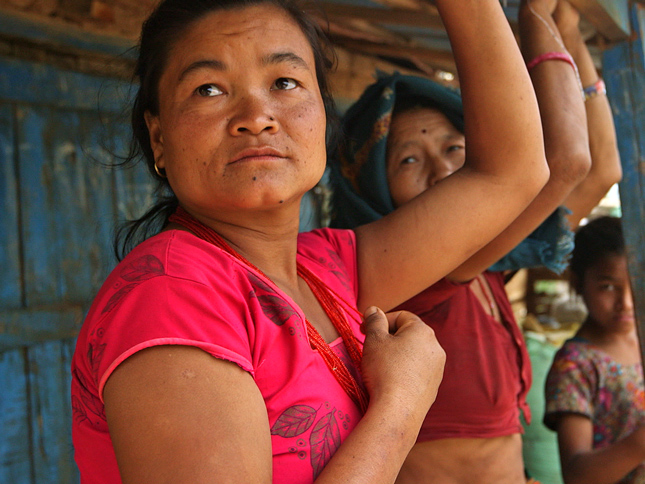
  • Youth on Fire at UN Climate Talks in Tianjin

    ›
    Guest Contributor  //  October 14, 2010  //  By Alex Stark
    For the past week, as part of the Adopt a Negotiator program, I got the chance to observe many of the negotiations of the latest UN Framework Convention on Climate Change (UNFCCC) intersessional meeting that took place in Tianjin, China. In many ways it was rather humdrum. I observed as negotiators debated changing agendas and the mandate of contact groups rather than the issues themselves, and made many of the same, tired position speeches again and gain.

    When controversial issues did rise to the fore, they felt like more of the same old, same old: arguments between China and the United States about who is doing more to stall the talks and who should make legally binding emissions cuts; developed countries carving enormous loopholes into the LULUCF; the greenhouse gas inventory sector covering emissions and removals of greenhouse gases resulting from land use. But the dry nature of the talks concealed the more important truth – that the negotiators are not just discussing acronyms, but human lives, which could be catastrophically altered due to the effects of climate change.

    The Adopt a Negotiator program is supported by the Global Campaign for Climate Action, a group of young people from countries around the world who come to the UNFCCC meetings to track the delegations from their own countries and share what is happening at the negotiations through social networking tools (be sure to check out our blogs).

    If the UN climate talks fail, and if countries cannot muster the political will to make substantial economy-wide changes and greenhouse gas emissions continue unabated, the results for the poorest and most vulnerable people on the planet will be catastrophic.

    Last week was the first time that I have ever experienced any kind of UN negotiation first hand, and some of what I saw was incredibly depressing. Mitigation efforts are especially in danger, as disagreements primarily between the United States and China about who should agree to emissions cuts and international reporting and verification requirements sharpened and intensified.

    But there were many bright spots as well. Negotiators are very close to making the final decisions about an international architecture for technology transfer to help the most vulnerable and poorest countries adapt to the effects of climate change and mitigate greenhouse gas emissions. They also spent the week narrowing and refining draft text with regards to climate finance and an international architecture to disburse “Green Funds,” and hopefully will be able to make final decisions at COP-16 in Cancun this November 29th through December 10th. These steps are small examples of potential good news for the people who will suffer, and are most likely already suffering, from climate change’s global impacts.

    Unfortunately, negotiators are already in agreement that the only bright spots that we are likely to see at COP-16 are small items such as these. Almost no one believes that there is any chance that countries will agree on a final, legally binding text to reduce carbon emissions, and negotiators have instead pushed off this decision until the next Conference of the Parties (COP) in South Africa in 2011. Instead, the near-universal buzz at the conference was about a “balanced package.” Although the phrase in reality means something slightly different to everyone who uses it, it is generally understood to refer to a set of decisions on issues like climate finance, technology transfer, initiatives to cut back on deforestation, and putting some of the decisions made under the Copenhagen Accord into legally binding text, like “fast start” finance measures to the developing world.

    In many ways the Tianjin session was itself a “balanced package” – a set of interactions and experiences that was both deeply discouraging and incredibly uplifting. One of the personally uplifting moments for me was having the honor of delivering a short intervention on the first day of the opening plenary on behalf of youth NGOs around the world (known as YOUNGOs). In the words I read, which had been drafted by a group of Chinese youth, all the particulars of policy were stripped away and the only thing that remained was the frustration – and also the hopes – of young people around the world (those who will actually experience the effects of climate change well within their lifetimes if UNFCCC negotiators don’t work harder to reach a consensus).

    Through the disappointments of Copenhagen to the slow-moving intersessionals throughout this year, many pundits have cynically declared the UNFCCC process dead. This is certainly not the case. But if they are truly serious about saving the planet from climate change’s most serious impacts, negotiators will certainly have to work harder in Cancun.

    Alex Stark is a Program Assistant at the Friends Committee on National Legislation, working on the Peaceful Prevention of Deadly Conflict Program. She attended the Tianjin negotiations as part of the Adopt a Negotiator team.

    Photo Credit: Adapted from “COP11_lo,” courtesy of Neil Palmer and flickr user CIAT – International Center for Tropical Agricultu.
    MORE
  • Admiral Mullen and the “Strategic Imperative” of Energy Security

    ›
    October 13, 2010  //  By Geoffrey D. Dabelko
    Top American military brass weighed in this morning on energy security with an emphasis on conservation, efficiency, and alternatives. A little climate change even crept into the discussion as well.

    The occasion was a Department of Defense conference titled “Empowering Defense Through Energy Security” sponsored by the Office of the Under Secretary of Defense for Acquisition, Technology & Logistics and the United States Air Force, Army, Navy and Marine Corps leadership. The new Office of Operational Energy Plans and Programs was on point.

    Starting at the top, Chairman of the Joint Chiefs of Staff Admiral Mike Mullen set the tone:
    My friend and columnist Tom Friedman has spoken eloquently of the growing need – and awareness – to rethink our views on energy – and minimize our dependence on overseas energy sources that fuel regimes that do not always share our interests and values, while not further damaging a world that is already becoming overheated, overpolluted, and overstretched.

    We in the Defense Department have a role to play here – not solely because we should be good stewards of our environment and our scarce resources but also because there is a strategic imperative for us to reduce risk, improve efficiencies, and preserve our freedom of action whenever we can. …

    So, to start with, let’s agree that our concept of energy must change. Rather than look at energy as a commodity or a means to an end, we need to see it as an integral part of a system … a system that recognizes the linkages between consumption and our ability to pursue enduring interests.

    When we find reliable and renewable sources of energy, we will see benefit to our infrastructure, our environment, our bottom line … and I believe most of all … our people. And the benefits from “sustainability” won’t just apply to the military.
    The wider context of climate change and its security implications also found a place in Admiral Mullen’s remarks:
    Beyond these immediate benefits, we may even be able to help stem the tide of strategic security issues related to climate change.

    This is no small matter. In addition to the newly developing waterways near the polar icecaps, in 2008, the National Intelligence Council identified twenty of our bases that are physically at risk as a result of the rising level of the ocean.

    And regardless of what the cause of these changes is – the impacts around the world could be sobering – and far-reaching.

    As glaciers melt and shrink at a faster rate, water supplies have been diminishing in parts of Asia.

    Rising sea levels could lead to mass migration and displacement similar to what we have seen in Pakistan’s flood … and climate shifts could drastically reduce the arable land needed to feed a burgeoning population as we have seen in Africa.

    This scarcity of – and potential competition for – resources like water, food, and space – compounded by an influx of refugees if coastal lands are lost … could not only create a humanitarian crisis, but create conditions of hopelessness that could lead to failed states … and make populations vulnerable to radicalization.

    These challenges highlight the systemic implications – and multiple-order effects – inherent in energy security and climate change.
    Admiral Mullen then gave way to General Norton A. Schwartz, chief of staff of the U.S. Air Force; General Peter W. Chiarelli, vice chief of the U.S. Army; Aneesh Chopra, the federal chief technology officer; and Secretary of the Navy Ray Mabus, with Sharon Burke, director of operational energy plans and programs, running the show.

    And while the brass met inside, clean energy companies exhibited their wares in the Pentagon’s inside courtyard.

    Photo Credit: “the Pentagon from above,” courtesy of flickr user susansimon.
    MORE
  • Welcome Back, Roger-Mark: A Powerful Voice Returns to PHE

    ›
    October 13, 2010  //  By Geoffrey D. Dabelko
    “I’m thrilled to be back.” That was the sentiment that Roger-Mark De Souza relayed to me, in his famous lilting baritone, about becoming the new vice president of research and director of the climate program at Population Action International (PAI). De Souza has long been a leading voice on integrated development programs that feature population, health, and environmental (PHE) dimensions. But three years as the Sierra Club’s director of foundations and corporate relations took him away from day-to-day work on these issues.

    In his new posts, Roger-Mark will lead PAI’s research team in establishing a strong evidence base and engaging new allies in the effort to support healthier women and families, according to PAI. “Roger-Mark’s diverse research experience makes him an ideal fit for PAI as we undertake critical projects on reproductive health, population and environment issues,” said PAI President and CEO Suzanne Ehlers in a press release.

    PAI is a research-based advocacy NGO long known for innovative work connecting demographic considerations with other key development realms: mainly environment, security, and poverty. PAI’s policy-friendly briefs on population’s links with water, forests, and biodiversity provide practical meta-analysis of these complex and evolving connections. The organization’s more recent work on demographic security has been instrumental in advancing research and policy in that largely neglected arena.

    De Souza captured his insights last year for our Focus series, in his brief, “The Integration Imperative – How to Improve Development Programs by Linking Population, Health, and Environment” (see also his follow-up interview on NSB). He combines lessons learned from community-based development efforts in Southeast Asia and East Africa with a savvy sense of the policy debates among donors and recipient countries alike.

    This move reunites De Souza with Kathleen Mogelgaard, with whom he made key contributions to the PHE field as colleagues at Population Reference Bureau earlier this decade, and who is now Senior Advisor for Population, Gender, and Climate at PAI.

    De Souza returns to his former focus on PHE issues at a time when the field is collectively searching for the best ways to respond to the challenges of climate mitigation and adaptation, as well as ongoing hurdles such as scaling up, sustainability, and labeling.
    MORE
  • Youth Delegation Makes a Splash at UNFCCC

    ›
    October 11, 2010  //  By Wilson Center Staff
    This weekend wrapped up an intercessional meeting of the UN Framework Convention on Climate Change (UNFCCC) in Tianjin, China – one of the last before this December’s big follow-up to Copenhagen in Cancun (COP-16).

    Alex Starks, formerly of CNAS’s Natural Security and now shadowing the U.S. climate delegation with the Adopt a Negotiator Project, got a chance to make a brief speech on behalf of a coalition of youth-orientated NGOs, and according to onlookers the speech made quite a stir amongst the assembly. Karl Burkart of tcktcktck.org wrote:
    Normally these 2 minute NGO speeches are politely tolerated by UN negotiators waiting to get on with the day’s business, but in this case Alex’s talk had ripple effects. The LCA (Long-term Cooperative Agreement) chair took the time to formally comment on her remarks, and later in the day the chief EU negotiator said, “If you need a reminder about what we’re up against, listen to the youth delegate’s statement.”
    The full text of Alex’s speech is worth a read. Stay tuned for more on the UNFCCC and the lead-up to Cancun, as Alex has promised a guest contribution to The New Security Beat in the coming days!

    Photo Credit: Adapted from “IMG_2474,” courtesy of flickr user benkamorvan.
    MORE
  • What You’re Saying: Uncommon Discourse on Climate-Security Linkages

    ›
    October 8, 2010  //  By Wilson Center Staff
    Marc Levy’s response to Halvard Buhaug’s much ballyhooed paper, “Climate not to blame for African civil wars,” has drawn a number of thoughtful, interesting responses from our readers.

    Idean Salehyan, of PRIO and the University of North Texas, defends Halvard’s paper and points out that Marshall Burke and his colleagues (see “Warming increases the risk of civil war in Africa”) are guilty of similar immodesty:
    I think Halvard would agree with all of this (I was a discussant on a previous version of this paper). His analysis simply points out problems with the Burke et al paper’s model specification. Buhaug’s is a modest contribution about model specification and appropriate data; it should be read as a response to an earlier paper rather than as a definitive statement about climate change and conflict. The headline is certainly provocative and unfortunate. However, he makes a useful corrective to overly simplistic causal claims, which typically dominate the popular literature on climate change and conflict. Yes, he could have been a little more modest with the title and with the conclusions, but then again, so could Burke and his colleagues.
    Cullen Hendrix, of the Climate Change and African Political Stability team and also of the University of North Texas, highlights the complexity of the many degrees of conflict:
    Marc’s assessment is spot-on, so I won’t belabor the point other than to reiterate that Halvard is making a limited point about specific empirical relationships and causal pathways.

    In addition to the issues raised by Idean, I would add that there’s an unfortunate tendency to think about social conflict only through the lens of civil war. The environment and conflict literature is dominated by such studies. While civil war is undoubtedly an important subject of inquiry, there are many types of social conflict that could be related to climate change, warming, and environmental shocks. We need to pay increasing attention to conflict that doesn’t fit neatly into either the interstate or intrastate war paradigm.
    And Halvard himself chimes in as well:
    I believe we’re all pretty much on the same page here. My article has little to do with climate change per se; instead is focuses on short-term climate variability and the extent to which it affects the risk of intrastate armed conflict. Yet, as climate change is expected to bring about more variability and less predictability in future weather patterns, knowing how past climatic shocks or anomalies relate to armed conflict is relevant.

    I absolutely agree that breaking out of the state-centered understanding of conflict is an important next step. Similarly, as Marc points to, more research is needed on possible scope conditions and longer-term indirect causal links that might connect climate with violent behavior. That said, we should not ignore established, robust correlates of conflict. Climate change is not likely to bring about conflict and war in well-functioning societies, so improving the quality of governance and creating opportunities for sustainable economic growth, regardless of the specific role of climate in all of this, are likely to remain key policy priorities.
    To follow the full conversation or respond yourself, see Marc Levy’s post, “On the Beat: Climate-Security Linkages Lost in Translation.”

    Photo Credit: “Symposium scene,” courtesy of flickr user Ian W Scott.
    MORE
  • Google Data Maps Development Indicators

    ›
    Eye On  //  October 5, 2010  //  By Schuyler Null
    If you have not had the (purely wonky) pleasure of playing with Google’s Public Data Explorer, do yourself a favor and direct your browser there now.

    Born from Hans Rosling’s Gapminder, Google’s data explorer currently allows the user to choose from 24 different data sets, including information from the World Bank, U.S. Census Bureau, Eurostat, and Energy Information Agency. Users can then customize the dataset’s variables, save their work, and even embed the resulting chart, “unveiling the beauty of statistics for a fact-based world view,” as the Gapminder site puts it.

    The example dataset above uses development indicators from the World Bank to show areas of the world where high fertility rate and heavy reliance on subsistence agriculture have persisted over time. It’s worth noting that many of the countries in the upper right of the graph are also where we find persistent conflict, and, if one accepts the predictions that Africa will see some of the most profound effects of climate change, they also face real risk of continuing instability as declining crop yields threaten livelihoods and population growth continues.
    MORE
  • Jon Barnett on Climate Change, Small Island States, and Migration

    ›
    Friday Podcasts  //  September 30, 2010  //  By Wilson Center Staff
    jon-barnett_web

    Contrary to the iconic image of lapping waves submerging low-lying countries, few Pacific islanders are emigrating from their homes due to climate change, according to Australian geographer Jon Barnett of the University of Melbourne.

    MORE
  • Scarcity, Climate, Population, and Natural Resources

    Integrated Analysis for Development and Security Policymakers

    ›
    From the Wilson Center  //  September 29, 2010  //  By Schuyler Null
    Development, population, security, scarcity, climate, and natural resources: Increasingly, policymakers are realizing that the issues in this laundry list are inextricably linked. But how do policymakers break out of their institutional stovepipes to address these connections in an integrated way?

    In an event hosted by the Environmental Change and Security Program on September 2, 2010, Alex Evans of New York University and Global Dashboard and Mathew Burrows of the National Intelligence Council (NIC) focused on the current state of integrated scarcity issues in the policymaking world.

    A Developing Problem

    “Why should we be worried with scarcity issues in the first place?” asked Evans. The crux of the problem, he said, is that people are simply consuming more across the board – particularly more energy, water, and food. In addition to general population growth, higher demand is driven by an expanding global middle class that is shifting to more Western-style diets and consuming more energy.

    Globally, demand in key resources is outpacing supply:
    • Demand for oil is rising by a percentage point each year, and the International Energy Association has warned that investment is not keeping up;
    • Demand for water will increase 32 percent by 2025, but one of the first impacts of climate change is expected to be less available water; and
    • Demand for food will increase 50 percent by 2030, but food supplies are only growing by one percent annually.
    You can’t address one of these scarcity issues without affecting another, argued Evans. In Haiti, for example, deforestation led to soil loss and erosion, thus degrading agricultural land. Deforestation also changed the country’s precipitation patterns. Together, these effects reduced food supplies even before the earthquake. Today, the UN estimates that more than 2.4 million people in Haiti are food-insecure.

    Evans recommended that these concerns be better integrated into current development and aid efforts, focusing on five areas:
    • Establishing land tenure and renewable resources;
    • Exploring the overlaps between resilience and peacebuilding;
    • Empowering women and stabilizing population growth;
    • Improving agricultural investment; and
    • Increasing general investment in the energy sector.
    A New International System

    In addition to the physical dangers of scarcity, Evans pointed out that the perception of scarcity can drive what he sees as dangerous behavioral dynamics such as protectionism.

    “Look at the way 30-plus countries slapped export restrictions on their exports of food in 2008,” said Evans. “It’s perceptions of scarcity driving irrational behavior, it’s fertile ground for panic and we need to factor that into our policymaking.” He called for a mechanism similar to NAFTA, which restricts sudden price changes, to help the global trade system become more resilient to changes in energy and food supplies.

    Burrows pointed out that a big reason for the rising disparity between food, water, and energy demand and supply is the large “middle class” of emerging powers. “You are seeing this phenomenal change going on on the resource side, but at the same time, the international system is in great flux,” he said.

    Scarcity will also affect the international legal system as well. “Of the world’s 263 transboundary river systems, 158 lack any kind of cooperative management framework,” said Evans, asking if they could be peacefully managed during times of scarcity. He offered another example: How will the U.N. Convention on the Law of the Sea handle coastlines that change with the climate? “We haven’t really begun to ‘stress test’ existing legal infrastructure, to look for these kinds of instances,” said Evans.

    The biggest elephant in the “international room,” however, is how to settle the issue of carbon sharing, without which there can be little global cooperation on these issues that does not end in a zero-sum game, Evans said:
    For me the jury is still very much out on whether there are limits on growth per se, as a result of scarcity – I’m not convinced of that yet. But I think it is clear that there are obviously limits to how much carbon we can put in the atmosphere, how much oil there is, how much land and water is available, and so on. We can do a huge amount with efficiencies and new technologies, but I think we’re kidding ourselves if we think that efficiencies and new technologies get us off the hook all together from having to face up to the distributional questions, the questions of fair shares that arise in a world of limits.
    Is Integrated Policymaking Possible?

    Government has come a long way towards addressing scarcity, said Burrows, but serious structural issues remain because there are too many established, vested interests at stake. Often, the tactical takes priority over the strategic: “A lot of these issues, by their very nature, are long-range in character,” he said. “In my experience there are more policymakers that are simply focused on the tactical [and] fewer that take these longer-range perspectives.” In addition, he pointed out that the divide between government and the scientific community continues to impede policymakers’ understanding of the technological options available.

    On the positive side, Burrows highlighted improved work by government planning offices, particularly in the intelligence community and the military. “If you compare Global Trends 2020 and Global Trends 2025…you’ll see a huge difference in terms of how we dealt with climate change, environment, and the resource issues,” said Burrows of the NIC’s reports. He said that the intelligence community is performing more long-range analyses, and that other countries like China are now starting similar global trends analyses.

    Despite the silo problem, the best solution may not be in creating new government agencies and closing down others, said Evans. “I think instead perhaps we need to see the challenge as more creating shared awareness, common analysis; a common sense of objectives among existing institutional configurations. I think we may find we get better rates of return on that,” he said.

    While U.S. and other governments are only beginning to grasp these issues, Burrows praised NGOs and think tanks, which “have played such a big part… in creating those sorts of networks and inter-relationships” that have raised the profile of scarcity issues.

    While the political space for dealing with these issues is not there yet, Evans argued that it will eventually emerge – most likely after some kind of shock, because “after sudden-onset crises, people are often, for a short time, prepared to think the unthinkable.”

    An adequate response requires readying integrated approaches to address the integrated problem of scarcity. “It’s necessary to have the solutions, so when the crisis hits, you can have some action, and I think we are doing that legwork,” said Burrows.

    Sources: International Energy Agency, MSNBC, UN.
    MORE
Newer Posts   Older Posts
View full site

Join the Conversation

  • RSS
  • subscribe
  • facebook
  • G+
  • twitter
  • iTunes
  • podomatic
  • youtube
Tweets by NewSecurityBeat

Trending Stories

  • unfccclogo1
  • Pop at COP: Population and Family Planning at the UN Climate Negotiations

Featured Media

Backdraft Podcast

play Backdraft
Podcasts

More »

What You're Saying

  • Volunteers,At,The,Lagos,Food,Bank,Initiative,Outreach,To,Ikotun, Pan-African Response to COVID-19: New Forms of Environmental Peacebuilding Emerge
    Rashida Salifu: Great piece 👍🏾 Africa as a continent has suffered this unfortunate pandemic.But it has also...
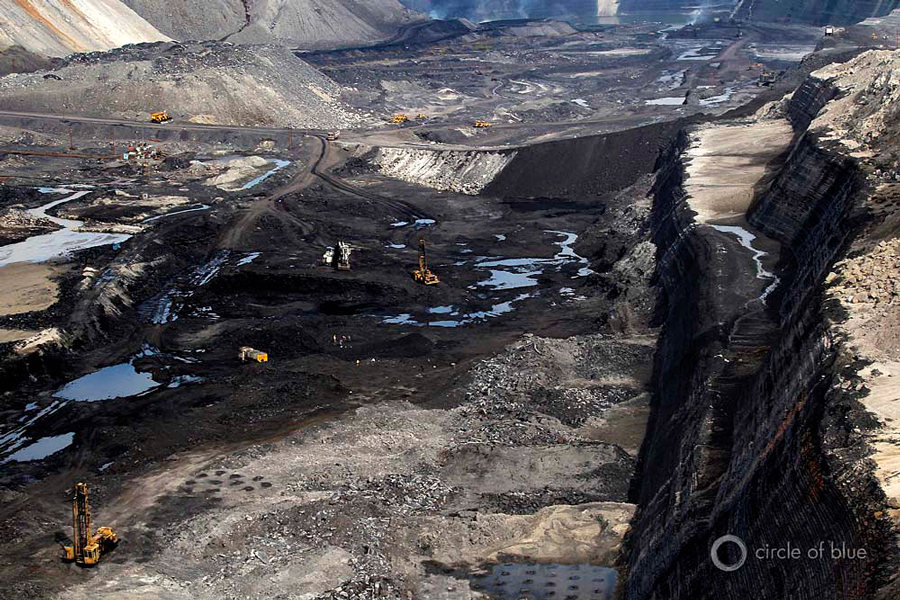
  • A desert road near Kuqa An Unholy Trinity: Xinjiang’s Unhealthy Relationship With Coal, Water, and the Quest for Development
    Ismail: It is more historically accurate to refer to Xinjiang as East Turkistan.
  • shutterstock_1779654803 Leverage COVID-19 Data Collection Networks for Environmental Peacebuilding
    Carsten Pran: Thanks for reading! It will be interesting to see how society adapts to droves of new information in...

What We’re Reading

  • Rising rates of food instability in Latin America threaten women and Venezuelan migrants
  • Treetop sensors help Indonesia eavesdrop on forests to cut logging
  • 'Seat at the table': Women's land rights seen as key to climate fight
  • A Surprise in Africa: Air Pollution Falls as Economies Rise
  • Himalayan glacier disaster highlights climate change risks
More »
  • woodrow
  • ecsp
  • RSS Feed
  • YouTube
  • Twitter
  • Facebook
  • Home
  • Who We Are
  • Publications
  • Events
  • Wilson Center
  • Contact Us
  • Print Friendly Page

© Copyright 2007-2021. Environmental Change and Security Program.

Woodrow Wilson International Center for Scholars. All rights reserved.

Developed by Vico Rock Media

Environmental Change and Security Program

Woodrow Wilson International Center for Scholars

Ronald Reagan Building and International Trade Center

  • One Woodrow Wilson Plaza
  • 1300 Pennsylvania Ave., NW
  • Washington, DC 20004-3027

T 202-691-4000