• woodrow wilson center
  • ecsp

New Security Beat

Subscribe:
  • rss
  • mail-to
  • Who We Are
  • Topics
    • Population
    • Environment
    • Security
    • Health
    • Development
  • Columns
    • China Environment Forum
    • Choke Point
    • Dot-Mom
    • Friday Podcasts
    • Navigating the Poles
    • Reading Radar
  • Multimedia
    • Water Stories (Podcast Series)
    • Backdraft (Podcast Series)
    • Tracking the Energy Titans (Interactive)
  • Films
    • Water, Conflict, and Peacebuilding (Animated Short)
    • Paving the Way (Ethiopia)
    • Broken Landscape (India)
    • Scaling the Mountain (Nepal)
    • Healthy People, Healthy Environment (Tanzania)
  • Publications
  • Events
  • Contact Us

NewSecurityBeat

The blog of the Wilson Center's Environmental Change and Security Program
Showing posts from category climate change.
  • Climate-Induced Migration: Catastrophe or Adaptation Strategy?

    ›
    February 11, 2011  //  By Kayly Ober
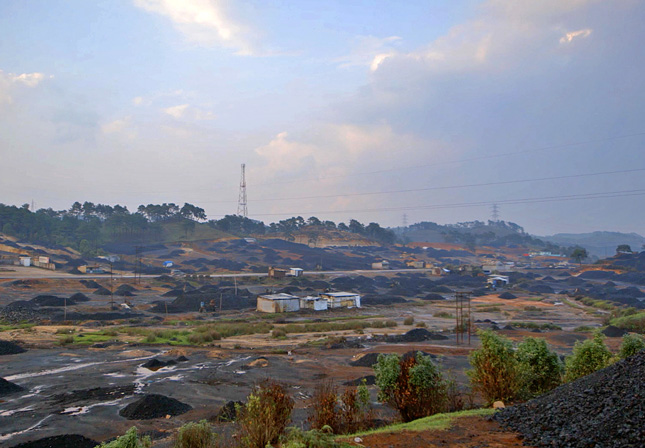
    The claims on climate change-induced migration have often been hyperbolic: “one billion people will be displaced from now until 2050”, “200 million people overtaken by…monsoon systems…droughts…sea-level rise and coastal flooding”, “500 million people are at extreme risk” from sea-level rise. However, hard data is difficult to come by or underdeveloped. The International Institute of Environment and Development (IIED) have set out to fill this gap with their newest publication, “Not Only Climate Change: Mobility, Vulnerability and Socio-Economic Transformations in Environmentally Fragile Areas of Bolivia, Senegal and Tanzania.” As the title suggests, the author, Cecilia Tacoli, traveled to Bolivia, Senegal, and Tanzania in order to see how environmental change affects migration patterns in real world case studies. What she found was a bit more nuanced than the headlines.

    Case Studies: Bolivia, Senegal, and Tanzania

    Despite existing predictions of doom and gloom, the report found that there has been no dramatic change in mobilization in each community, even in the face of recurring droughts. Instead, those who rely heavily on agriculture for subsistence have turned to seasonal or temporary migration. While previously considered a last resort, moving locally from rural to urban areas has become more common. The motivation for following this option, however, seems to be couched more in socio-economic concerns and only marginally exacerbated by the environment.

    “All the case study locations,” writes Tacoli, “are in areas affected by long-term environmental change (desertification, soil degradation, deforestation) rather than extreme weather events. However, in the majority of locations residents identify a precipitating event – a particularly severe drought, an epidemic of livestock disease, the unintended impact of infrastructure – as the tipping point that results in drastic changes in local livelihoods. In all cases, socio-economic factors are what make these precipitating environmental events so catastrophic.”

    Practical Policy Prescriptions

    Although the report finds that the environment wasn’t currently the main driver of migration in Bolivia, Senegal, or Tanzania, it acknowledges that it may play a larger role in the future: “Environmental change undoubtedly increases the number of people mobile,” Tacoli told BBC News. “But catastrophe like droughts and floods tend to overlap with social and structural upheaval, like the closure of other sources of local employment that might have protected people against total dependence on the land.”

    As such, Tacoli suggests treating migration as a practical adaptation strategy rather than a problem. “The concentration of population in both large and small urban centers has the potential to reduce pressure on natural resources for domestic and productive uses,” she writes.

    For example, Tacoli argues that the resulting remittances and investments from migrants in urban centers fuel “a crucial engine of economic growth” in smaller towns where land prices are cheaper. This, in turn, creates further employment opportunities.

    The report also encourages policymakers to focus on local interventions, such as ensuring more equitable access to land, promoting the sustainable management of natural resources to reduce vulnerability, and investing in education, access to roads, and transportation to markets. These programs would help diversify and bolster non-agricultural livelihoods, thus reducing to the risks of climate variability.

    “Local non-farm activities,” writes Tacoli, “can be an important part of adaptation to climate change for the poorer groups, and the nature of the activities can contribute to a relative reduction in local environmental change.”

    Avoiding Backlash

    Tacoli points out that “by downplaying political and socio-economic factors in favor of an emphasis on environmental ones, alarmist predictions of climate change-induced migration can result in inappropriate policies, for example forced resettlement programmes, that will do little to protect the rights of those vulnerable to environmental change.”

    However, Tacoli is careful not to over-extend her policy prescriptions. In an email to the New Security Beat she emphasized that the case studies were not intended to be representative:
    The emphasis is on the need to have a detailed understanding of the local context – socio-economic, cultural and political – to understand the impacts of climate change on migration and mobility…Generalizations are not usually helpful for policy-making, and a grounded understanding of the local factors that influence livelihood responses (of which mobility and migration are one aspect) is certainly a better starting point. The aim of the report is to contribute to the building of collective knowledge on these issues, rather than provide a definitive account.

    Sources: BBC News, Christian Aid, Commission on Climate Change and Development, Global Humanitarian Forum, Organization for Security and Co-operation in Europe.

    Photo Credit: “Villager in Tanzania,” courtesy of flickr user vredeseilanden.
    MORE
  • A Dialogue on Managing the Planet

    ›
    From the Wilson Center  //  February 10, 2011  //  By Hannah Marqusee
    “Collectively, the impact of humanity on the way the planet works is enormous and headed in disturbing directions,” said George Mason University professor Thomas Lovejoy in January at the first in a monthly series, “Managing the Planet,” led jointly by George Mason University and the Woodrow Wilson Center. The series will focus on how to take “environmental management to the scale of the entire planet,” as climate change, increasing energy consumption, and population growth place increasing stress on natural resources. We need to “chart a better course for the human future,” said Lovejoy.

    Joining Lovejoy at the kickoff meeting were Dennis Dimick, executive environment editor at National Geographic, and Professor Molly Jahn of the University of Wisconsin-Madison. [Video Below]

    Signs From Earth

    “The entire human enterprise is based on the assumption of a stable climate,” said Lovejoy. The “most dramatic part of the story” in recent decades has been the melting of ice in the Arctic and in the mountain ranges of tropical zones. At current rates, tropical glaciers will completely disappear within the next 15 years. Though scientists predicted it would last until at least 2015, Bolivia’s Chacaltaya glacier – once renowned as the world’s highest elevation ski area – was reduced to a “few lumps of ice” in 2009, according to the BBC.

    Glacial melt has raised water temperatures, altered species migrations, and threatened water supplies, coastal ecosystems, and the communities that depend on them, said Lovejoy. Higher ocean temperatures also cause the “fundamental partnership” between coral reefs and algae to break down, and “the Technicolor world essentially goes black and white,” he said.

    Ocean acidification, fresh water shortages, melting glaciers, pollution, forest fires, and a “vast whipsaw” of temperature and weather extremes are just some of the effects human consumption has had on the planet, said Dimick. “It’s a sign from the Earth. It is telling us, ‘not all is well.’”


    Finding Balance

    As the world’s population nears seven billion this year, “we have one planet, yet we live like we live on four,” said Dimick. National Geographic’s new series “Population 7 Billion” seeks to answer the questions, he said, of “how do we find balance? How do we find ways to lower the intensity of our demands on an Earth that is telling us it is strained?”

    Finding solutions to these challenges will require us to “look forward and confront the future,” said Dimick. “We need to rethink our whole global energy system,” he said, and “rethink our basic premise about what we need, as opposed to what we want.”
    The global emissions limit of 450 parts per million (ppm) of carbon – the level needed to achieve the two-degree warming limit agreed upon at Cancun and Copenhagen – “is probably too high,” said Lovejoy. Most scientists agree that 350 ppm is a safer level; however, the world is already at “390 and climbing,” he noted, and global temperatures are projected to rise two degrees Celsius by 2035. If we want global warming to stop at two degrees, carbon emissions will need to stop growing by 2016, he said.

    Figuring Out “Plan B”

    “We have a problem that is presenting itself in a whole host of ways, with urgency that cannot be denied or dismissed,” said Jahn. “The way we do agriculture is a very significant contributor” to that problem, she said. Today, in the United States, “we waste 40 percent of the food we grow,” she said.

    “Plan A…was about maximizing productivity at all costs,” said Jahn. “It looks like we may need another plan.” But figuring out “Plan B” will require steps by both policy and science communities. “We still have enormous gaps in our understanding towards even the basic science platform upon which these very important decisions about ways forward lie,” she said.

    Managing the planet must begin with managing data so that we can “transition between data, information, and knowledge, and march this information out to…those making decisions that matter,” said Jahn. The information management structure that developed in the medical sciences and led to the creation of the National Library of Medicine is a useful model for managing the planet, she argued. “Personalized medicine” for the planet would allow people to use data to make better decisions about who should be doing what and where.

    Using and expanding the knowledge base is a crucial step towards bringing together the science and policy communities on an international scale in search of solutions to managing the planet. “If we work together, we can change the world,” said Dimick.

    Sources: 350 Science, BBC, Earth System Research Laboratory, United Nations Environment Program, United Nations Framework Convention on Climate Change.

    Photo Credit: “Sun Over Earth (NASA, International Space Station, 07/21/03),” courtesy of flickr user NASA’s Marshall Space Flight Center.
    MORE
  • First Steps on Human Security and Emerging Risks

    ›
    Guest Contributor  //  February 7, 2011  //  By Chad M. Briggs

    The 2010 Quadrennial Development and Diplomacy Review (QDDR), the first of its kind, was recently released by the State Department and USAID in an attempt to redefine the scope and mission of U.S. foreign policy in the 21st century. Breaking away from the Cold War structures of hard international security and an exclusive focus on state-level diplomacy, the QDDR recognizes that U.S. interests are best served by a more comprehensive approach to international relations. The men and women who already work with the U.S. government possess valuable expertise that should be leveraged to tackle emerging threats and opportunities.

    MORE
  • Book Preview: ‘The Future Faces of War: Population and National Security’

    ›
    February 3, 2011  //  By Christina Daggett
    The word “population” doesn’t come up too often in national security debates, yet, a shift may be coming, as global population reaches the seven billion mark this year, youth-led unrest rocks the Middle East, and questions of aging enter the lexicon of policymakers from Japan and South Korea to Europe and the United States. What does a population of nine billion (the UN medium-variant projection for 2050) mean for global security? How will shrinking populations in Europe affect Western military alliances and operations? Is demography destiny?

    The latter question has plagued demographers, policymakers, and academics for centuries, resulting in heated debate and dire warnings. Jennifer Dabbs Sciubba continues this debate in her new book, The Future Faces of War: Population and National Security, but with a decidedly more measured and optimistic tone (full disclosure: Sciubba was one of my professors). The book is targeted at policymakers but is accessible to anyone with an interest in the field of demography and national security. She will launch her book at an event hosted by the Wilson Center on March 14.

    Turning Challenge Into Opportunity

    The main themes of The Future Faces of War are challenge and opportunity. Yes, national security will be tested by a series of evolving demographic trends in the decades ahead, but with proper insight and preparation, states can turn these challenges into opportunities for growth and betterment. Sciubba writes, “How a state deals with its demographic situation – or any other situation for that matter – is more important than the trends themselves” (p.125).

    Part of turning these population challenges into opportunity is understanding long-term trends – a daunting task given the range and number of trends to consider. Drawing on her own experiences in the defense community, Sciubba writes how policymakers were “receptive” to the idea of population influencing national security, but that the “overwhelming number of ways demography seemed to matter” made them hesitant to act (p.3). With the publication of this book, which clearly and concisely outlines the basics of each population trend with demonstrative examples, hopefully that hesitation will be turned into action.

    Youth and Conflict

    The first population trend Sciubba highlights is perhaps the one of most immediate concern to national security policymakers given recent world events. In the chapter “Youth and Youthful Age Structures,” Sciubba discusses the security implications of those countries (in particular those in Africa, the Middle East, and Central Asia) with a majority of their population under the age of 29. She writes, “Most important for national security, countries with youthful age structures are generally the least developed and least democratic in the world, and tend to have the highest risk of civil conflict” (p. 18). In fact, between 1970 and 1999 countries with very young and youthful age structures were two to four times more likely to experience civil conflict than countries with more mature age structures.

    The risks of very young and youthful populations are well documented (Sciubba cites the examples of Somali piracy, religious extremism, and child soldiers in Africa), but what has not been as widely discussed are the opportunities. Youthful states have a large pool of potential recruits for their armies, plenty of workers to drive economic development, and even an opportunity to grow democratically through social protest. Sciubba writes, “Youth can also be a force for positive political change as they demand representation and inclusion in the political process… social protest is not always a bad thing, even if it does threaten a country’s stability, because it may lead to more representative governance or other benefits” (p. 23). (For more on youth and the transition to democracy, see “Half a Chance: Youth Bulges and Transition to Democracy,” by Richard Cincotta, and his recent blog post about the Jasmine Revolution in Tunisia).

    Graying of the Great Powers

    At the other end of the demographic transition is population aging. Sciubba points out that the countries with the highest proportions of people aged 60 and older are also “some of the world’s most powerful and economically or politically strategic states” (p. 42). Europe, Japan, and the United States are all getting older (though the United States to a slightly lesser extent), and Sciubba states that the “graying” of these countries has the potential to greatly limit military preparedness, size, and funding. She points out that the number of recruits available will be much smaller and more money will have to be spent on pensions and health care for the growing number of elderly persons.

    To counteract these challenges, Sciubba recommends that aging states seek out alliances with each other and countries with younger populations. She writes, “As part of strong alliances, states have strength in numbers, even if they are individually weakened by aging” (p. 47). Another alternative would be to improve military technology and efficiency to compensate for the drop in personnel.

    Migration and Security: A “Unique” Relationship

    Migration, the third pillar of demographic change after fertility and mortality, has what Sciubba calls a “unique relationship to national security” (p.83). Migration “is the only population driver that can change the composition of a state or a community within months, weeks, or even days” (p. 83). Mass migrations (such as those caused by a natural disaster or violent conflict) are the best examples of this trend. Some of the security challenges Sciubba highlights about migration are refugee militarization, competition for resources, and identity struggles among the native and migrant populations.

    However, Sciubba also argues that both migrants and receiving countries can benefit. Origin states release pressure on their crowded labor markets and earn income from remittances, while receiving countries increase their labor market and mitigate population decline (a key component of U.S. growth).

    Much of this has been studied before, but two new developments in migration trends that Sciubba calls to our attention are what she calls the “feminization of migration” (the increasing number of women who are likely to move for economic reasons) and migration as a result of climate change. Both are intriguing new areas of inquiry that deserve further study, but only get a passing mention in the book.

    Making Her Case

    The basic trends outlined above are only a small sampling of the wealth of information to be found in The Future Faces of War. Other noteworthy topics include a discussion on transitional age structures, urbanization, gender imbalances, HIV/AIDS, differential growth among ethnic groups, and many more. The topics are varied and wide-ranging and yet, Sciubba manages to connect them and makes her case convincingly for their inclusion in the broader national security dialogue. Sciubba has briefly written about many of these topics before, but this is the first time she (or anyone else, for that matter) has brought them together in one comprehensive book with such a focus on national security.

    Christina Daggett is an intern with ECSP and a former student of Jennifer Dabbs Sciubba’s at Rhodes College.

    Sources: Population Action International.

    Photo Credits: “Children at IDP Camp Playful During UNAMID Patrol,” courtesy of flickr user United Nations Photo. Book cover image provided by, and used with the permission of, Jennifer Dabbs Sciubba and ABC-CLIO.
    MORE
  • Shannon O’Lear, University of Kansas

    Book Preview: ‘Environmental Politics: Scale and Power’

    ›
    February 1, 2011  //  By Shannon O’Lear
    The cover of my book, Environmental Politics: Scale and Power, shows two cows casually rummaging through piles of garbage on the streets of a city somewhere in India. It’s a colorful, but disturbing, image. Why not show cows in their “natural” setting, say, in a Kansas pasture? Who let them into the street? Why are they eating garbage? The image is symbolic of what the book aims to achieve: to get us out of our comfort zones in thinking about environmental issues and challenge us to reconsider how we think about issues like climate change, energy, food security, garbage, toxins, and resource conflicts.

    The book draws from my experience teaching environmental policy, environmental geopolitics, international conflict, and human geography. It starts by asking some fundamental questions: What exactly is “the environment” anyway? Is there any part of the world that is completely untouched by human actions? How do different forms of power selectively shape our understanding of particular environmental issues (while obscuring other issues from our view)?

    The book draws on the idea of the “Anthropocene” – a new geologic era characterized by irreversible, human-induced changes to the planet. Because these changes (which in large part have already occurred) are irreversible, Anthropocene-subscribers argue we should focus our efforts on mitigation, adaptation, and coming to terms with the realities of the environment as it is, rather than something that must be returned to some previous or “normal” state.

    Our understanding of environmental issues is shaped by various types of power – economic, political, ideological, and military – and therefore tends to be limited in terms of spatial scale. Why do we tend to think of climate change as a global phenomenon instead of something we might experience (and contend with) locally? Is food security something we should be mindful of when we make individual choices about food? We tend not to discuss what happens to our garbage, but everyone knows about recycling, right?

    Environmental Politics: Scale and Power offers non-geographers an appreciation of how and why geographers think spatially to solve problems. Commonly accepted views of environmental issues tend to get trapped at particular spatial scales, creating a few dominant narratives. When we combine a spatial perspective with an inquiry into the dynamics of power that have influenced our understanding of environmental issues, we can more clearly appreciate the complexity of human-environment relations and come to terms with adapting to and living in the Anthropocene era.

    Today’s environmental challenges can sometimes appear distant and immense, but this book aims to show how decisions we make in our day-to-day lives – from buying bottled water and microwave popcorn to diamond jewelry – have already had an effect on a grand scale.

    Shannon O’Lear is a professor of geography at the University of Kansas and the author of Environmental Politics: Scale and Power. She has recently completed a research project examining why we do not see widespread or sustained environmental resource-related conflict in Azerbaijan, as literature on resource conflict would suggest.

    Image Credit:
    Environmental Politics: Scale and Power, courtesy of Justin Riley and Cambridge University Press.
    MORE
  • Elizabeth Malone on Climate Change and Glacial Melt in High Asia

    ›
    Friday Podcasts  //  January 21, 2011  //  By Wilson Center Staff
    “There’s nothing more iconic, I think, about the climate change issue than glaciers,” says Elizabeth Malone, senior research scientist at the Joint Global Change Research Institute and Pacific Northwest National Laboratory. Malone served as the technical lead on “Changing Glaciers and Hydrology in Asia: Addressing Vulnerability to Glacier Melt Impacts,” a USAID report released in late 2010 that explores the linkages between climate change, demographic change, and glacier melt in the Himalayas and other nearby mountain systems.

    Describing glaciers as “transboundary in the largest sense,” Malone points out that meltwater from High Asian glaciers feeds many of the region’s largest rivers, including the Indus, Ganges, Tsangpo-Brahmaputra, and Mekong. While glacial melt does not necessarily constitute a large percentage of those rivers’ downstream flow volume, concern persists that continued rapid glacial melt induced by climate change could eventually impact water availability and food security in densely populated areas of South and East Asia.

    Rapid demographic change has potentially factored into accelerated glacial melt, even though the connection may not be a direct one, Malone adds.

    Atmospheric pollution generated by growing populations contributes to global warming, while black carbon emissions from cooking and home heating can eventually settle on glacial ice fields, accelerating melt rates. Given such cause-and-effect relationships, Malone says that rapid population growth and the continued retreat of High Asian glaciers are “two problems that seem distant,” yet “are indeed very related.”

    The “Pop Audio” series is also available as podcasts on iTunes.
    MORE
  • National Geographic’s Population Seven Billion

    ›
    On the Beat  //  January 20, 2011  //  By Ramona Godbole
    The short feature above and accompanying cover article in the January 2011 issue launch National Geographic’s seven-part year-long series examining global population. The world is set to hit seven billion this year, according to current UN projections, and may reach nine billion by 2045.

    The authors point out that today, 13 percent of people don’t have access to clean water globally and 38 percent lack adequate sanitation. Nearly one billion people have inadequate nutrition. Natural resources are strained. Is reducing population growth the key to addressing these problems?

    Not according to Robert Kuznig, author of National Geographic’s lead article, who writes that “fixating on population numbers is not the best way to confront the future…the problem that needs solving is poverty and lack of infrastructure, not overpopulation.”

    “The most aggressive population control program imaginable will not save Bangladesh from sea-level rise, Rwanda from another genocide, or all of us from our enormous environmental problems,” writes Kuznig. Speaking on NPR’s Talk of the Nation last week, he reiterated this message, saying global problems “have to be tackled whether we’re eight billion people on Earth, or seven, or nine, and the scale for them is large in any case.”

    Instead, the challenge is simultaneously addressing poverty, health, and education while reducing our environmental impact, says Kuznig.

    “You don’t have to impose prescriptive policies for population growth, but basically if you can help people develop a nice, comfortable lifestyle and give them the access to medical care and so on, they can do it themselves,” said Richard Harris, a science correspondent for NPR, speaking with Kuznig on Talk of the Nation.

    Kuznig’s article highlights the Indian state of Kerala, where thanks to state investments in health and education, 90 percent of women in the state can read (the highest rate in India) and the fertility rate has dropped to 1.7 births per woman. One reason for this is that educated girls have children later and are more open to and aware of contraceptive options.

    Whither Family Planning?

    In a post on Kuznig’s piece, Andrew Revkin, of The New York Times’ Dot Earth blog, points to The New Security Beat’s recent interview with Joel E. Cohen about the crucial role of education in reducing the impact of population growth. Cohen asks: “Is it too many people or is it too few people? The truth is, both are real problems, and the fortunate thing is that we have enough information to do much better in addressing both of those problems than we are doing – we may not have silver bullets, but we’re not using the knowledge we have.”

    Although the National Geographic article and video emphasize the connections between poverty reduction, health, education, and population growth, both give short shrift to family planning. It’s true that fertility is shrinking in many places, and global average fertility will likely reach replacement levels by 2030, but parts of the world – like essentially all of sub-Saharan Africa for example – still have very high rates of fertility (over five) and a high unmet demand for family planning. Globally, it is estimated that 215 million women in developing countries want to avoid pregnancy but are not using effective contraception.

    Development should help reduce these levels in time, but without continued funding for reproductive health services and family planning supplies, the declining trends that Kurznig cites, which are based on some potentially problematic assumptions, are unlikely to continue.

    As Kuznig told NPR, “you need birth-control methods to be available, and you need the people to have the mindset that allows them to want to use them.”

    At ECSP’s “Dialogue on Managing the Planet” session yesterday at the Wilson Center, National Geographic Executive Editor Dennis Dimick urged the audience to “stay tuned – you can’t comprehensively address an issue as global and as huge as this in one article, and within this series later in the year we will talk about [family planning] very specifically.” Needless to say, I look forward to seeing it, as addressing the unmet need for family planning is a crucial part of any comprehensive effort to reduce population growth and improve environmental, social, and health outcomes.

    Sources: Center for Global Development, Dot Earth, NPR, Population Reference Bureau, World Bank.

    Video Credit: “7 Billion, National Geographic Magazine,” courtesy of National Geographic.
    MORE
  • How Population Growth Is Straining the World’s Most Vital Resource

    Turning Up the Water Pressure [Part Two]

    ›
    January 19, 2011  //  By Russell Sticklor
    This article by Russell Sticklor appeared originally in the Fall 2010 issue of the Izaak Walton League’s Outdoor America magazine. Read part one here.

    As concerns over water resources have grown around the globe, so too have proposed solutions, which range from common sense to absurd. Towing icebergs into the Persian Gulf or floating giant bags of fresh water across oceans to water-scarce countries are among the non-starters. But more moderate versions of those ideas are already being put into practice. These solutions showcase the power of human ingenuity — and reveal just how desperate some nations have become to secure water.

    For example, India is doing business with a company out of tiny Sitka, Alaska, laying the framework for a water-export deal that could see huge volumes of water shipped via supertankers from the water-rich state of Alaska to a depot south of Mumbai. Depending on the success of this arrangement, moving bulk water via ship could theoretically become as commonplace as transoceanic oil shipments are today.

    There is far greater potential, however, in harnessing the water supply of the world’s oceans. Perhaps more than any other technological breakthrough, desalination offers the best chance to ease our population-driven water crunch, because it can bolster supply. Although current desalination technology is not perfect, Eric Hoke, an associate professor of environmental engineering at the University of California-Los Angeles, told me via email, it is already capable of converting practically any water source into water that is acceptable for use in households, agriculture, or industrial production. Distances between supply and demand would be relatively short, considering that 40 percent of the world’s population — some 2.7 billion people — live within 60 miles of a coastline.

    The Lure of Desalination

    Although desalination plants are already up and running from Florida to Australia, the jury is still out on the role desalination can play in mitigating the world’s fresh water crisis. Concerns persist over the environmental impact seawater-intake pipes have on marine life and delicate coastal ecosystems. Another question is cost: Desalination plants consume enormous amounts of electricity, which makes them prohibitively expensive in most parts of the world. Desalination technology may not be able to produce water in sufficient scale — or cheaply enough — to accommodate the growing need for agricultural water. “Desalination is more and more effective [in producing] large quantities of water,” notes Laval University Professor Frédéric Lasserre in an interview. “But the capital needed is huge, and the water cost, now about 75 cents per cubic meter, is far too expensive for agriculture.” Although desalination might be “a good solution for cities and industries that can afford such water,” Lasserre predicts it “will never be a solution for agricultural uses.”

    Nevertheless, desalination’s promise of easing future water crunches in populous coastal regions gives the technology game-changing potential at the global level. “Desalination technology,” Columbia University’s Upmanu Lall told said in an email, “will improve to the point that [water scarcity] will not be an issue for coastal areas.”

    A Glass Half Full

    With world population projected to grow by at least 2 billion during the next 40 years, water will likely remain a chief source of global anxiety deep into the 21st century. Because water plays such a fundamental role in everyday life across every society on earth, its shared stewardship may become an absolute necessity.

    Take India and Pakistan’s landmark Indus Waters Treaty of 1960, which is still in effect today. The agreement — signed by two countries that otherwise can’t stand each other — shows that when crafted appropriately and with enough patience, international water-sharing pacts can help defuse tensions over water access before those tensions escalate into violence. Similar collaboration on managing shared waters in other areas of the world — a process that can be a bit bumpy at times — has proven successful to date.

    Meanwhile, more widespread distribution of reliable family planning tools and services across Latin America, sub-Saharan Africa, and Asia will also be needed if the international community hopes to meaningfully address water scarcity concerns. Better access to healthcare and family planning tools would empower women to take greater control over their reproductive health and potentially elevate living standards in crowded parts of the developing world. Smaller family sizes would help decelerate population growth over time, easing the burden on water and soil resources in many areas. The key is ensuring such efforts have adequate funding. The United States recently pledged $63 billion over the next six years through its Global Health Initiative to help partner countries improve health outcomes through strengthened health systems, with a particular focus on improving the health of women and children.

    Putting a dent in the global population growth rate will be important, but it must be accompanied by a sustained push for conservation — nowhere more so than in agriculture. Investing in the repair of a leaky irrigation infrastructure could help save water that might otherwise literally slip through the cracks. Attention to maintaining healthy soil quality — by practicing regular crop rotation, for example — could also help boost the efficiency of irrigation water.

    Setting a Fair Price

    The most enduring changes to current water-use practices may have to come in the form of pricing. In most parts of the world, including parts of the United States, groundwater removal is conducted with virtually zero oversight, allowing farmers to withdraw water as if sitting atop a bottomless resource. But as groundwater tables approach exhaustion, the equation changes; as Ben Franklin famously pointed out, “when the well’s dry, we know the worth of water.”

    The key, then, is to establish the worth of water before this comes to pass. Smart pricing could encourage conservation by making it less economical to grow water-intensive crops, particularly those ill-suited to a particular climate. “Some crops being grown should not be grown . . . once the true cost of water is factored in,” Nirvikar Singh, a University of California-Santa Cruz economics professor who focuses on water issues, told me via email. Pricing would also provide a revenue stream for modernizing irrigation infrastructures and maintaining sewage systems and water treatment centers, further bolstering water efficiency and quality both in the United States and around the globe.

    To be sure, implementing a pricing scheme for water resources — which have been essentially free throughout history — will be unpopular in many parts of the world. It’s natural to expect some pushback from the public as water managers and governments take steps to address the 21st century water crunch. But given the resource’s undeniable and universal value on an ever-more crowded planet, few options exist aside from using the power of the purse to push for more efficient water use.

    In the end, however, water pricing must be combined with greater public value on water conservation — we must not flush water down our drains before using it to its full potential. Whether that involves improving the water transportation infrastructure, recycling wastewater, taking shorter showers, or turning to less water-intensive plants and crops, steps big and small need to be taken to better conserve and more equitably divide the world’s water to irrigate our farms, grow our economies, and sustain future generations.

    Sources: Columbia Water Center, National Geographic, Population Reference Bureau, White House.

    Photo Credits: “Juhu Beach Crowded,” courtesy of flickr user la_imagen, and “Irrigation (China),” courtesy of flickr user spavaai.
    MORE
Newer Posts   Older Posts
View full site

Join the Conversation

  • RSS
  • subscribe
  • facebook
  • G+
  • twitter
  • iTunes
  • podomatic
  • youtube
Tweets by NewSecurityBeat

Trending Stories

  • unfccclogo1
  • Pop at COP: Population and Family Planning at the UN Climate Negotiations

Featured Media

Backdraft Podcast

play Backdraft
Podcasts

More »

What You're Saying

  • Volunteers,At,The,Lagos,Food,Bank,Initiative,Outreach,To,Ikotun, Pan-African Response to COVID-19: New Forms of Environmental Peacebuilding Emerge
    Rashida Salifu: Great piece 👍🏾 Africa as a continent has suffered this unfortunate pandemic.But it has also...
  • A desert road near Kuqa An Unholy Trinity: Xinjiang’s Unhealthy Relationship With Coal, Water, and the Quest for Development
    Ismail: It is more historically accurate to refer to Xinjiang as East Turkistan.
  • shutterstock_1779654803 Leverage COVID-19 Data Collection Networks for Environmental Peacebuilding
    Carsten Pran: Thanks for reading! It will be interesting to see how society adapts to droves of new information in...

What We’re Reading

  • Rising rates of food instability in Latin America threaten women and Venezuelan migrants
  • Treetop sensors help Indonesia eavesdrop on forests to cut logging
  • 'Seat at the table': Women's land rights seen as key to climate fight
  • A Surprise in Africa: Air Pollution Falls as Economies Rise
  • Himalayan glacier disaster highlights climate change risks
More »
  • woodrow
  • ecsp
  • RSS Feed
  • YouTube
  • Twitter
  • Facebook
  • Home
  • Who We Are
  • Publications
  • Events
  • Wilson Center
  • Contact Us
  • Print Friendly Page

© Copyright 2007-2021. Environmental Change and Security Program.

Woodrow Wilson International Center for Scholars. All rights reserved.

Developed by Vico Rock Media

Environmental Change and Security Program

Woodrow Wilson International Center for Scholars

Ronald Reagan Building and International Trade Center

  • One Woodrow Wilson Plaza
  • 1300 Pennsylvania Ave., NW
  • Washington, DC 20004-3027

T 202-691-4000