• woodrow wilson center
  • ecsp

New Security Beat

Subscribe:
  • rss
  • mail-to
  • Who We Are
  • Topics
    • Population
    • Environment
    • Security
    • Health
    • Development
  • Columns
    • China Environment Forum
    • Choke Point
    • Dot-Mom
    • Friday Podcasts
    • Navigating the Poles
    • Reading Radar
  • Multimedia
    • Water Stories (Podcast Series)
    • Backdraft (Podcast Series)
    • Tracking the Energy Titans (Interactive)
  • Films
    • Water, Conflict, and Peacebuilding (Animated Short)
    • Paving the Way (Ethiopia)
    • Broken Landscape (India)
    • Scaling the Mountain (Nepal)
    • Healthy People, Healthy Environment (Tanzania)
  • Publications
  • Events
  • Contact Us

NewSecurityBeat

The blog of the Wilson Center's Environmental Change and Security Program
Showing posts from category climate change.
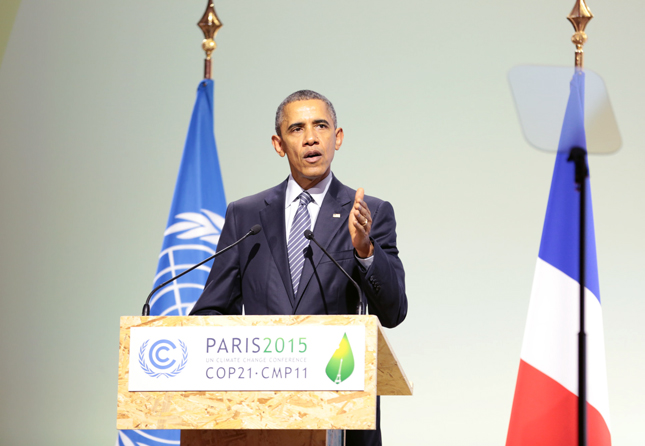
  • Is This What Climate Change Feels Like? Geoff Dabelko on ‘CONTEXT’

    ›
    From the Wilson Center  //  August 7, 2012  //  By Kate Diamond

    “I think that the conditions that we’re experience now are ones that track with what we expect to see more of; so dry places getting drier, wet places getting wetter, and more extremes in terms of variability of the weather,” said ECSP Director Geoff Dabelko in the latest installment of CONTEXT, a weekly Wilson Center interview series. While it’s difficult to link the current drought – or any one weather or climate event – directly to man-made climate change, Dabelko said that “the warming trends that we’re seeing and anticipating with climate change suggests that this is a preview of what may be to come.”

    MORE
  • From Youth Bulge to Food and Family Planning, Los Angeles Times’ ‘Beyond 7 Billion’ Series Synthesizes Population Challenges

    ›
    On the Beat  //  August 3, 2012  //  By Kate Diamond
    Over the next 40 years, the world is set to add 2.3 billion people. Millions more will join the middle class, pushing consumption upwards and further straining the world’s natural resources. Variables like climate change and political instability will exacerbate that strain and complicate efforts to bolster peaceful and stable development. Los Angeles Times correspondent Kenneth Weiss and photographer Rick Loomis examine these numerous and interconnected challenges in a five-part series on population growth and consumption dynamics.

    Speaking to demographic and health experts (including a number of New Security Beat regulars, like Richard Cincotta, Jon Foley, and Dr. Joan Castro), Weiss provides a thorough, astute, and compelling assessment of population dynamics in a rapidly changing world. The series starts with a basic introduction to population, climate, and consumption dynamics and progresses through to discuss political demography, global food security, and detailed looks at two important case studies, China and the Philippines.

    Part One: A Population Primer

    Population growth alone poses a number of challenges as cities become more crowded and demand for basic resources like water and food outpaces supply. Climate change and the unpredictable and sometimes extreme weather that is its hallmark “will make all of these challenges more daunting,” writes Weiss. And “population will rise most rapidly in places least able to handle it.” Africa, the Middle East, and South Asia, already expected to bear the brunt of climate change with rising sea levels, shorter growing seasons, and increasingly variable weather patterns, will also have to support the bulk of the world’s population growth by mid-century. Populations in Europe, North America, and East Asia are expected to stay stable or decline in numbers.


    The magnitude of growth in Africa, the Middle East, and South Asia, however, is uncertain. What happens from here “hinges on the cumulative decisions of hundreds of millions of young people around the globe,” Weiss writes. And yet, “population growth has all but vanished from public discourse.” Family planning in particular remains hamstrung by “erratic funding and unpredictable crosscurrents.” The result, he writes, is that even “under the best conditions, it’s hard to get contraceptives into the hands of impoverished women who want them.”

    Part Two: The Arc of Instability

    Drawing on work from demographer Richard Cincotta, George Mason University’s Jack Goldstone, Population Action International, and others, part two of Weiss’ series examines youth bulges and the so-called “arc of instability,” stretching across the disproportionately youthful countries of Africa, the Middle East, and South Asia.

    When a large youth population is mixed with other societal conditions, like “religious and ethnic friction, political rivalries, economic disparities, or food shortages,” youth can be “the kindling” for a spark that ignites simmering tensions, writes Weiss. Afghanistan is a case in point, where unemployed young men are often turning to the Taliban not out of extremist fervor, but out of a desperate need to support themselves and their families. “It’s too hard to employ this many people and too easy to recruit them into violence,” Cincotta told Weiss.

    And Afghanistan is just the beginning, according to Goldstone. “We are literally going to see one billion young people come into the populations in the arc of instability over the next two decades,” he said. “We can’t fight them. We have to figure a better way to help them.”

    Part Three: Feeding a Growing Population

    Jon Foley on how to feed nine billion and keep the planet
    As the world’s population continues to grow, and as more families join the middle class, world food production will have to double by mid-century in order to meet future demand. “What that actually means,” says World Wildlife Fund’s Jason Clay, an agriculture specialist, “is that in the next 40 years we need to produce as much food as we have in the last 8,000.”

    Weiss presents the Horn of Africa and Punjab as microcosms of the problems facing global food production in the 21st century. Desertification and urbanization are eating away at potential cropland, while harmful farming techniques leech essential nutrients from soil, rendering it useless for future use. Insufficient infrastructure means that food spoils as it’s shipped from where it’s produced to where it’s needed, while extreme and widespread poverty means that those most in need can’t afford enough to feed their families.

    Stuck between growing demand and restricted supply, the University of Minnesota’s Jonathan Foley said the challenge of the century is straightforward: “How will we feed nine billion people without destroying the planet?”

    Part Four: Population and Consumption in China

    China has “a greater collective appetite – and a greater ecological impact – than any other country,” writes Weiss, making it a prime example of “how rising consumption and even modest rates of population growth magnify each other’s impact on the planet.”

    The country’s one-child policy slowed population growth rapidly, cutting fertility almost in half in less than a decade. Over time, a large working-age cohort with few dependents emerged, and helped China reap a demographic dividend. The resulting economic prosperity has come at a cost, however, as rising incomes and increasing consumption, spread across 1.3 billion people, have wreaked havoc on the country’s environment on a scale not seen anywhere else in the world.

    Because of that scale, what happens in China will have global repercussions. Climate scientists “say that in order to avoid a potentially catastrophic rise in global temperatures, worldwide carbon dioxide emissions must be cut in half by 2050,” Weiss writes. “For that to happen, China’s emissions would have to peak by 2020” – 15 years earlier than official government projections. The government remains opposed to further limits on emissions, arguing that such limits would “cripple” economic growth – an unfair impediment considering that developed countries were able to “pollute their way to prosperity, their argument goes.”

    Part Five: Family Planning in the Philippines

    Weiss ends the series with an in-depth look at family planning in the Philippines – a country at the forefront of the global debate over access to contraception. Lawmakers in the 80-percent-Catholic country have steadfastly refused to fund family planning services, while support from the international community all but vanished when USAID, “the major donor of contraceptives to the Philippines,” said in 2008 that it would end its contraceptive program.

    Joan Castro on population-environment programing in the Philippines
    Today, half of all pregnancies in the Philippines are unintended. Lawmakers are considering a “reproductive health bill…call[ing] for public education about contraceptives and government subsidies to make them available to everyone,” but a powerful opposition, including Church leadership, has stalled the bill for 14 years, Weiss writes.

    Public officials, including the former Manila mayor who ended the city’s contraceptive program 12 years ago, portray unbridled population growth as an economic asset, saying that “when you have more people, you have a bigger labor force.” For the millions of Filipinos who live in poverty, however, the lack of affordable family planning services leaves them with little control over family size and puts the Philippines on track to grow from 96.4 million people today to 154.9 million by mid-century. At that rate, the Philippines would be Asia’s third fastest growing country, behind Timor Leste and Afghanistan.


    Not everything in the series is dire – there are side columns highlighting population, health, and environment programming in Uganda, Iran’s successful family planning program, and Dr. Joan Castro’s family planning and marine conservation work in the Philippines. But Weiss is not naïve about the challenges ahead. Under any of the United Nation’s population projections, “living conditions are likely to be bleak for much of humanity,” he writes. “Water, food, and arable land will be more scarce, cities more crowded, and hunger more widespread.”

    “Even under optimistic assumptions, the toll on people and the planet will be severe.”

    But while the population challenges facing the world are many, Weiss, like many before him, makes one argument clear: providing family planning services to the 222 million women who want to control the number of children they have but cannot would go a long way towards minimizing future strain.

    Be sure to check out the photo and video features accompanying the “Beyond 7 Billion” series on the feature site.

    Note: The sentence beginning with “When a large youth population…” was corrected.

    Sources: Los Angeles Times, UN Population Division.

    Video Credit: “The Challenge Ahead,” used with permission courtesy of the Los Angeles Times; Photo: “Dharavi,” used with permission courtesy of Rick Loomis/Los Angeles Times; Jon Foley video: TEDx.
    MORE
  • PBS ‘NewsHour’ Reports on Reasons for Optimism Amid Niger’s Cyclical Food Crises

    ›
    On the Beat  //  July 30, 2012  //  By Kate Diamond

    Set in the middle of the arid region between the Sahara desert and the equatorial savannas of Africa known as the Sahel, Niger is no stranger to drought. In recent years, however, droughts have hit more often, started earlier in the season, and lasted longer, creating a cycle of food insecurity that is becoming more difficult to break.

    MORE
  • Chaotic Climate Change and Adaptation in Fragile States

    ›
    Reading Radar  //  July 27, 2012  //  By Carolyn Lamere
    In “Chaotic Climate Change and Security,” published in the June issue of International Political Sociology, Maximilian Mayer traces the transformation of climate change from a long-term problem to something that has taken on a new urgency in recent years. Understanding the non-linear nature of climate change – the “abrupt changes” that can come as environmental thresholds are crossed – has led to the securitization of the environment, writes Mayer. Unfortunately, the “doomsday rhetoric of scientists and campaigners about ‘tipping points’ has apparently failed to spur governments toward negotiating a meaningful agreement.” Climate change skepticism still exists, he points out, and even those who are convinced of the potential negative impacts of environmental change on state security have failed to reverse detrimental actions, choosing instead to focus on ameliorating the effects of change on their individual states. As a replacement for these failed frameworks, Mayer suggests that actor-network theory should be used as it better accounts for the interconnected nature of climate change.

    Katherine Houghton discusses the relationship between climate change and resilience in her article “Climate Change in Fragile States: Adaptation as Reinforcement of the Fabric of the State,” published in a collection of articles written by members of the United Nations University Summer Academy. Houghton writes that in fragile states, environmental issues can be “compounded by armed conflict and institutional failure,” which further destabilizes the country. She mentions cases in which the state lacks the authority to properly assist its citizens following natural disasters, like the flooding of the Indus Valley in Pakistan’s Federally Administered Tribal Areas. In these cases, failure of the government to meet citizens’ needs “fuels instability and fragility rather than fosters resilience.” Any action to reduce the effects of climate change on residents of vulnerable areas must thus begin with the state, she writes. “Without effective action to strengthen the state and thereby enable adaptation, climate-induced adverse effects and extreme events may lead to the further destabilization of already fragile states.”
    MORE
  • Urbanization and the Global Climate Dilemma

    ›
    Guest Contributor  //  July 26, 2012  //  By Will Rogers

    The original version of this article by Will Rogers appeared on the National Intelligence Council’s Global Trends 2030 Blog.

    Urbanization and climate change may be the two most important trends to shape global development in the decades ahead. On the one hand, urban cities have the potential to serve as engines of change, driving economic growth in some of the world’s least developed countries and pulling more people out of poverty than at any other time in history. On the other hand, climate change could undercut all of this by exacerbating resource scarcity and putting vulnerable communities at risk from sea level rise and more frequent and intense storms.

    MORE
  • Tobias Feakin on the Debate in Europe About Climate Change and the Military

    ›
    Eye On  //  July 24, 2012  //  By Keenan Dillard
    “We established [the Climate Change Security Program] as a methodology of exposing the defense community in the U.K. and Europe to some of the more nuanced security debates that are going on around climate change, environmental change, and resource shortages,” said Tobias Feakin, senior research fellow at the Royal United Services Institute for Defense and Security Studies (RUSI) in an interview with ECSP.

    What they found when they first approached the U.K. defense establishment in 2006, was surprising. “They opened [that] door wide open and said, ‘actually, you know what, we’ve been looking at this, we’ve been concerned about this for a long time, and we’ve already started including it in our long-term planning and strategic thinking.’”

    “One of the reasons that the defense community has been looking at this issue is that they have a longer-term vision, if you like, than other departments,” Feakin said. “They have to think about procurement decisions which are going to be stretching out…up to 30 years into the future, so there are bigger demands on them to be thinking about these kinds of strategic issues.”

    Feakin co-authored International Dimensions of Climate Change, a 2011 report for the British government which highlights the security threats and challenges, both internal and external, that the U.K. will face as result of climate change.

    While the defense community acknowledged the need to include climate change in their planning processes, members of the policymaking community expressed concern that they did not, “have enough detailed understanding of what this [climate change] is going to mean in a security paradigm,” said Feakin. To meet that need, RUSI has been conducting regional and country-based studies in order to determine how things might play out.

    Dialogue on the issue has transcended Great Britain and is now taking place among member states of the European Union, although Feakin notes that, “there’s perhaps more hesitancy in terms of framing the debate in the security paradigm and perhaps a slight perception that it might be leading us down the wrong path when mitigation efforts should be at the top of the order of play.”

    Despite these ongoing debates, Feakin believes that the security aspect of climate change helps to “make a comprehensive case that we have a situation that does have to be dealt with and there are going to be multiple players in that.” Efforts to address climate change will be civilian-led, but the defense community will play an important supporting role in the future, he said.

    “It’s something we have to plan for and we will be part of the response.”
    MORE
  • In Mongolia, Climate Change and Mining Boom Threaten National Identity

    ›
    July 23, 2012  //  By Kate Diamond

    Mongolia, a vast, sparsely populated country almost as large as Western Europe, is at once strikingly poor and strikingly rich. Its GDP per capita falls just below that of war-torn Iraq, and Ulan Bator has some of the worst air pollution ever recorded in a capital city. At the same time, Mongolia sits atop some of the world’s largest mineral reserves, worth trillions of dollars, and its economy, already one of the world’s fastest growing, could expand by a factor of six by the end of the decade as those reserves are developed.

    MORE
  • Visualizing Complex Vulnerability in Africa: The CCAPS Climate-Conflict Mapping Tool

    ›
    Eye On  //  July 20, 2012  //  By Lauren Herzer Risi
    “Every crisis is complex, and the Sahel is no exception,” wrote USAID Assistant Administrator Nancy Lindborg in a recent Huffington Post article that called for “smarter programming and a coordivenated response” to chronic crises. “A regional drought has been overlaid with instability stemming from the coup in Mali and conflict in the northern part of that country where armed militant groups have forced the suspension of critical relief operations” and led to refugee movement into neighboring countries simultaneously challenged by drought and crop infestation. Understanding the complexity of this type of crisis, let alone visualizing the multiple factors that come into play, is a growing challenge for policymakers and analysts.

    Enter version 2.0 of a mapping tool created by the Climate Change and African Political Stability Program (CCAPS) housed in the Robert S. Strauss Center for International Security and Law, based at the University of Texas, Austin.

    In collaboration with the College of William and Mary, Trinity College, and the University of North Texas, and with funding by the U.S. Department of Defense’s Minerva Initiative, CCAPS originally launched the mapping tool in March of this year. The map is powered by mapping and data tools from Esri and allows users to view any combination of datasets on international development projects, national governance indicators, incidences of conflict, and climate vulnerability data.

    With an intuitive interface and compelling visuals, the mapping tool is a valuable resource for policy analysts and researchers to assess the complex interactions that take place among these environmental, political, and social factors. Advanced filters allow the user to identify a subset of conflicts and aid projects and there are nine base map styles from which to choose.

    The mapping tool is anything but static. The team is constantly working to refine and enhance it through the inclusion of additional indicators and improvement of the interface. The updated version now includes CCAP’s new Social Conflict in Africa Database, which tracks a broad range of social and political unrest, and their partners’ real-time conflict dataset, the Armed Conflict Location and Event Dataset (ACLED), which tracks real-time conflict data. Impressively, the ACLED data will be updated weekly.

    I asked CCAPS program manager Ashley Moran to clarify how the governance indicators work in the model. She explained:
    The national governance indicators are included in one of four baskets that make up the climate vulnerability model…and represent four potential sources of vulnerability: physical exposure to climate-related hazards, population density, household and community resilience, and governance and political violence. They used the term “basket” since most include several indicators that reflect the full dimensions of that source of vulnerability. The fourth basket includes five national governance indicators and one indicator of political violence.
    Moran also shared plans to add more detailed national governance data to the map:
    We are developing a mapping tool specifically for the climate vulnerability model, which will allow users to see the component parts of the model. It will allow users to re-weight the baskets (e.g. if a user thought governance should have more weight within the model since the government response to climate hazards is key), and it will also allow users to examine an area’s vulnerability to just one or two baskets of the user’s particular interest (instead of all four baskets combined as the tool does now). When we launch this, a user will essentially be able to see the vulnerability model disaggregated into its component parts, so they’ll be able to map just the governance data in the model, if they want.
    In the coming months, the CCAPS team will add more detailed historical and projected data on climate vulnerability, data on disaster response capacity, as well as international aid projects coded for climate relevance.

    Each of these datasets on their own are a wealth of vital information, but understanding how they intersect and the potential impact of their interactions is crucial to improving our understanding of them individually and collectively and creating responses that are timely and long-lasting.

    If you’re in the San Diego area next week, check out Ashley Moran’s presentation of the mapping tool at the Esri International User Conference and the Worldwide Human Geography Data Working Group.

    Sources: The Climate Change and African Political Stability Program, The Huffington Post.

    Image Credit: CCAPS
    MORE
Newer Posts   Older Posts
View full site

Join the Conversation

  • RSS
  • subscribe
  • facebook
  • G+
  • twitter
  • iTunes
  • podomatic
  • youtube
Tweets by NewSecurityBeat

Trending Stories

  • unfccclogo1
  • Pop at COP: Population and Family Planning at the UN Climate Negotiations

Featured Media

Backdraft Podcast

play Backdraft
Podcasts

More »

What You're Saying

  • Volunteers,At,The,Lagos,Food,Bank,Initiative,Outreach,To,Ikotun, Pan-African Response to COVID-19: New Forms of Environmental Peacebuilding Emerge
    Rashida Salifu: Great piece 👍🏾 Africa as a continent has suffered this unfortunate pandemic.But it has also...
  • A desert road near Kuqa An Unholy Trinity: Xinjiang’s Unhealthy Relationship With Coal, Water, and the Quest for Development
    Ismail: It is more historically accurate to refer to Xinjiang as East Turkistan.
  • shutterstock_1779654803 Leverage COVID-19 Data Collection Networks for Environmental Peacebuilding
    Carsten Pran: Thanks for reading! It will be interesting to see how society adapts to droves of new information in...

What We’re Reading

  • Rising rates of food instability in Latin America threaten women and Venezuelan migrants
  • Treetop sensors help Indonesia eavesdrop on forests to cut logging
  • 'Seat at the table': Women's land rights seen as key to climate fight
  • A Surprise in Africa: Air Pollution Falls as Economies Rise
  • Himalayan glacier disaster highlights climate change risks
More »
  • woodrow
  • ecsp
  • RSS Feed
  • YouTube
  • Twitter
  • Facebook
  • Home
  • Who We Are
  • Publications
  • Events
  • Wilson Center
  • Contact Us
  • Print Friendly Page

© Copyright 2007-2021. Environmental Change and Security Program.

Woodrow Wilson International Center for Scholars. All rights reserved.

Developed by Vico Rock Media

Environmental Change and Security Program

Woodrow Wilson International Center for Scholars

Ronald Reagan Building and International Trade Center

  • One Woodrow Wilson Plaza
  • 1300 Pennsylvania Ave., NW
  • Washington, DC 20004-3027

T 202-691-4000