Showing posts from category *Blog Columns.
-
Weekly Reading
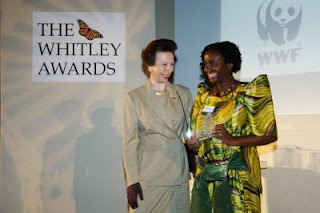
›Focus author Gladys Kalema-Zikusoka, who founded and directs the Ugandan NGO Conservation Through Public Health, won the Whitley Gold Award (see video of her work) for her efforts to protect the endangered mountain gorillas while improving local communities’ quality of life. The other five finalists were also seeking to reduce human-wildlife conflict in diverse contexts.
In Seed magazine, seven experts—including Peter Gleick and Mark Zeitoun—weigh in on whether “water wars” are a serious menace or an improbable threat, inflated by breathless media coverage of water shortages.
A major report on managing the health effects of climate change, co-authored by University College London and The Lancet, claims that climate change is the biggest health threat of the 21st century.
On his blog, Signs From Earth, National Geographic editor Dennis Dimick has collected a variety of resources about the possibility of “climate refugees.”
It’s not news that the U.S. and U.K. militaries are studying climate change’s potential security impacts, or seeking to increase energy efficiency on bases and in combat zones. But Geoffrey Lean, the environment editor of the Independent, is surprised that legendary Vietnamese General Vo Nguyen Giap has come out against bauxite mining in Vietnam’s central highlands, which he says “will cause serious consequences on the environment, society and national defense.”
Photo: Gladys Kalema-Zikusoka receives the Whitley Gold Award from Her Royal Highness The Princess Royal. Courtesy of the Whitley Fund for Nature. -
Weekly Reading
›In Conservation magazine, David Malakoff examines how cellulosic ethanol may threaten biodiversity around the world.
A Comprehensive Approach to Congo’s Conflict Minerals, a report by the Enough Project, argues that ending resource-related violence in the DRC will require:- Making the consumer-electronics supply chain transparent;
- Pinpointing and securing strategic mines;
- Reforming and expanding governance; and
- Providing miners with economic opportunities.
The New Agriculturalist describes how some African farmers are adapting to climate change.
Worldchanging features an interview with Wangari Maathai, founder of the Green Belt Movement and recipient of the 2004 Nobel Peace Prize. -
Weekly Reading
›How Do Recent Population Trends Matter To Climate Change?, from Population Action International, offers the latest research from this constantly changing area of inquiry.
U.S. Global Health and National Security Policy, a timely report by the Center for Strategic and International Studies, examines major threats to human health and international stability, including HIV/AIDS, SARS, pandemic influenza, and bioterrorism.
In the coming decades, Russia will confront “accelerated population decrease; a dwindling of the working-age population; the general ageing of the population; the drop in number of potential mothers; a large immigrant influx; and a possible rise in emigration rates,” warns a new report from the UN Development Programme.
In The National Interest and the Law of the Sea, the Council on Foreign Relations’ Scott Borgerson argues that ratifying the Law of the Sea Convention is vital to protecting the United States’ national security, economic, and environmental interests.
David Sullivan of Enough debates Harrison Mitchell and Nicolas Garrett of Resource Consulting Services (RCS) on the links between conflict and mining in the Democratic Republic of the Congo (DRC). RCS recently published a report arguing that mineral extraction is key to DRC’s development and not the primary cause of conflict in North Kivu.
Responding to the ubiquitous Monsanto ads that ask, “9 billion people to feed. A changing climate. Now what?,” Tod Preston of Population Action International responds, “family planning and empowering women, that’s what!”
Water and War, a publication of the International Committee of the Red Cross (ICRC), outlines how the ICRC provides access to clean water during conflict and humanitarian disasters. -
Pakistan’s Daunting—and Deteriorating—Demographic Challenge
›Every day it seems the headlines bring new worries about the future of Pakistan. But among the many challenges confronting the nation—including a growing Taliban insurgency—one significant problem remains largely undiscussed: its rapidly expanding population.
Consider this: Pakistan’s population nearly quadrupled from 50 million in 1960 to 180 million today. It’s expected to add another 66 million people—nearly the entire population of Iran—in the next 15 years. UN projections predict that by the late 2030s, Pakistan will become the fourth most populous country in the world, behind India, China, and the United States.
And believe it or not, the demographic outlook for Pakistan got bleaker in recent weeks. The new medium-range UN projections for Pakistan’s total population have been raised to 335 million for 2050—45 million higher than the UN projection just two years ago. Why the change? Because birth rates aren’t falling as had been predicted—women in Pakistan have an average of four children—and unmet need for family planning remains high.
The case of education provides a snapshot of how these demographics affect Pakistan, from basic quality-of-life issues to the country’s overall stability. Even though the official literacy rate in Pakistan has increased from about 18 percent to 50 percent since 1970, the number of illiterate people has simultaneously jumped from 28 million to 48 million. The literacy rate for women stands at a shockingly low 35 percent.
As public schools have become increasingly overcrowded, more parents have turned to madrasas in an attempt to educate their children—or at least their sons. It’s no secret that some of Pakistan’s madrasas have ties to radical religious and terrorist-affiliated organizations.
So what does this portend for the future?
Even assuming large infusions of assistance from the United States, Pakistan’s public school system will become even more overwhelmed in the years ahead. Building enough schools and hiring enough teachers would be daunting in any country, let alone one facing as many challenges as Pakistan. It seems likely that enrollments in madrasas will swell, and more children will face a future with no schooling whatsoever. Clearly, this is not a recipe for a more stable and peaceful Pakistan.
Pakistan’s rapid population growth is not inevitable, however. A key driver is lack of access to family planning, which is symptomatic of the overall poor status of women and girls. More than 25 percent of Pakistani women have an unmet need for family planning—meaning the demand is clearly there—and nothing in the Koran prohibits its usage. In other majority-Muslim nations, such as Algeria, Bangladesh, and Iran, family planning has been prioritized and is widely used.
Unfortunately, family planning programs in Pakistan and many developing countries have suffered from both inattention and funding cuts in recent years. Traditionally, the United States has been a major source of funding and technical assistance, but since 1995, U.S. international family planning assistance has fallen 35 percent (adjusted for inflation), even as demand has increased.
Today, more than 200 million women—many of them in the most impoverished parts of the world—have an unmet need for family planning. In countries like Pakistan, the resulting rapid population growth makes it increasingly difficult to provide sufficient education, health care, housing, and employment—and depletes land, water, fisheries, and other vital natural resources.
The Obama administration recently proposed a new U.S. assistance strategy for Pakistan—and a key component is a significant increase in development and economic assistance. Let’s hope it will include an increase for family planning. It would be a wise investment in a brighter, more stable future—for Pakistan and for the world.
Tod Preston is vice president for U.S. government relations at Population Action International.
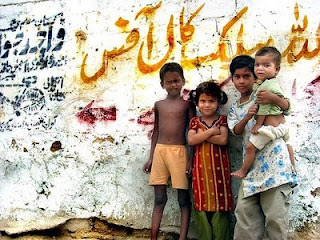
Photo: Children in Jinnah Colony, Karachi, Pakistan. Courtesy of Flickr user NB77. -
Weekly Reading
›The authors of Asia’s Next Challenge: Securing the Region’s Water Future, a report by the Asia Society, argue that population growth, urbanization, and climate change are converging to make water an important security issue in Asia. The authors argue for including water in policy and development discussions, but warn against “securitizing” the issue.
China’s population is rapidly aging while the country is still developing and modernizing, explains China’s Long March to Retirement Reform: The Graying of the Middle Kingdom Revisited, a report by the Global Aging Initiative of the Center for Strategic and International Studies (CSIS). The report recommends steps to ensure that China’s aging citizens are not left without a safety net. Another report by CSIS’s Global Aging Initiative, Latin America’s Aging Challenge: Demographics and Retirement Policy in Brazil, Chile, and Mexico, argues that these countries have a rapidly narrowing window of opportunity to prepare to meet the needs of their aging populations.
According to a study published in the British Journal of Zoology, wild populations of major grazing animals—including giraffes, impala, and wildebeest—in Kenya’s Maasai Mara National Reserve decreased significantly from 1989-2003. “Researchers found the growing human population has diminished the wild animal population by usurping wildlife grazing territory for crop and livestock production to support their families,” reports the International Livestock Research Institute.
On April 22, Bill Butz of the Population Reference Bureau, Paul Ehrlich of Stanford University, and Hania Zlotnik of the UN Population Division discussed world population trends on the Diane Rehm Show. -
Weekly Reading
›“The Arctic could slide into a new era featuring jurisdictional conflicts, increasingly severe clashes over the extraction of natural resources, and the emergence of a new ‘great game’ among the global powers,” argue Paul Berkman and Oran Young, two researchers at the University of California, Santa Barbara, in Science. “However, the environment provides a physical and a conceptual framework to link government interests in the Arctic Ocean, as well as a template for addressing transboundary security risks cooperatively.” In the Washington Times, Paula Dobriansky, former U.S. undersecretary of state for democracy and global affairs, argues that the Antarctic Treaty offers lessons for dealing with competing territorial claims in the Arctic.
An article by Fred Pearce in Yale Environment 360, “Consumption Dwarfs Population As Main Environmental Threat,” has re-energized the debate over population’s contribution to climate change. For more, see Suzanne Petroni’s article “An Ethical Approach to Population and Climate Change” in ECSP Report 13.
Time interviews Laurel Neme, author of Animal Investigators: How the World’s First Wildlife Forensics Lab Is Solving Crimes and Saving Endangered Species, about the illegal wildlife trade. Neme will speak at the Wilson Center on May 20.
Slate’s William Saletan discusses the skewed sex ratio in China. For more on this topic, see Richard Cincotta’s review of Bare Branches: The Security Implications of Asia’s Surplus Male Population.
According to Rose George, author of The Big Necessity: The Unmentionable World of Human Waste and Why It Matters, “If you invest a dollar in sanitation, you save seven dollars in health-care costs.” Audio is available of a recent talk featuring George and ECSP Director Geoff Dabelko.
Time reports on Mexico’s water crisis. (See “Water Stories” for more on water and sanitation in Mexico.) It also features photo slideshows on the politics of water in Central Asia and the global water crisis.
In a paper published in Ecology (subscription required), Kevin Lafferty, a research ecologist for the United States Geological Survey at the University of California Santa Barbara, argues that climate change may not necessarily expand the range of disease vectors, as many scientists have argued. -
Climate Change and “Developed-Country Complacency Syndrome”
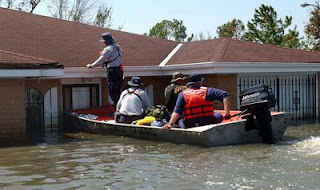
›While it is now widely acknowledged that environmental change, including climate change, could severely undermine security in the developing world, the implications for the developed world are just starting to be discussed. A sort of “developed-country complacency syndrome” has led many to assume that the main security problems for a country like the United States, such as waves of refugees or the need to intervene when other nations face disasters or conflicts, would be imported from abroad. Unfortunately, the United States is likely to face some fairly severe “Made in the USA” problems, as well.
For instance, as the economic stimulus package is rolled out, the United States is entering a historic period of new infrastructure construction. From a security perspective, this could help maintain stability, or it could be a disaster. What might make the difference is assessing how potential sites could be affected by environmental change. Transportation systems, defensive capabilities, agriculture, power generation, water supply, and more are all designed for the specific parameters of their physical environments—or, more often, the physical environments of the Victorian, Depression-era, or post-WWII periods in which they were originally built. That is why unplanned environmental change almost always has negative impacts.
In the case of a change in precipitation patterns, for example, drainage systems, reservoirs, and hydrological installations can all fail not because they were poorly engineered, but because they were engineered for different conditions. We are literally not designed for environmental change.
Current environmental impact assessments look almost exclusively at a structure’s impact on the environment. These assessments must now be expanded to include the other half of the equation: the impact of a changing environment on the structure. These sorts of “dual” assessments are essential. To put it bluntly, there is no point in building a zero-emissions house in a current or soon-to-be flood zone. However, this is exactly the sort of thing that is being proposed in areas of the U.S. Gulf Coast. We can avoid this by requiring these “dual” assessments when applying for insurance, planning permission, and/or government support.
Just as physical infrastructure is poorly prepared to deal with environmental change, so, too, is legal infrastructure. Very few regulations, international laws, and subsidies incorporate the effects of environmental change. At best, this renders them inadequate; at worst, it can create new vulnerabilities.
For instance, the U.S. government’s National Flood Insurance Program (NFIP) can inadvertently contribute to putting people and infrastructure in harm’s way. When private insurers deem areas too risky to be eligible for coverage, the NFIP can step in and insure them, making it possible to build in areas that are current flood zones, as well as areas that may become ones as climate change causes sea levels to rise and storm surges to increase. Already in some areas the same homes have had to be rebuilt multiple times, in part with cash infusions from the NFIP.
There are other examples of developed-world agreements that may cause more damage than they prevent:- Water-sharing agreements, especially those based on a set amount of water, rather than percentage of actual flow, will become problematic as water levels alter dramatically.
- Fisheries-sharing agreements will be thrown into chaos as fish shift to other regions due to climate change and overfishing.
- Hydropower-sharing agreements will be a major problem, both for precipitation-fed systems and glacier regions, where there will be above-average flows as the glaciers melt, followed by droughts once the glaciers disappear.
Two of the things the developed world prides itself on—its physical and legal infrastructures—are both highly vulnerable to environmental change. However, the stimulus packages and the reassessment of global, regional, and national agreements caused by the financial crisis offer a valuable opportunity to ensure that the structures and mechanisms we are counting on to maintain our security do not end up undermining it.
Photo: Members of the Coast Guard Sector Ohio Valley Disaster Response Team and the Miami-Dade Urban Search and Rescue Team mark a house to show it has been searched for survivors of Hurricane Katrina. Hurricane Katrina, which devastated the U.S. Gulf Coast in 2005, revealed the vulnerability of U.S. infrastructure to natural disasters. Climate change could make hurricanes and other natural disasters more frequent and severe. Photo courtesy of Flickr user Tidewater Muse and Petty Officer Robert M. Reed.
Cleo Paskal is an associate fellow in Chatham House’s Energy, Environment, and Development Programme. She is the author of UK National Security and Environmental Change. -
Water’s Role in International Development
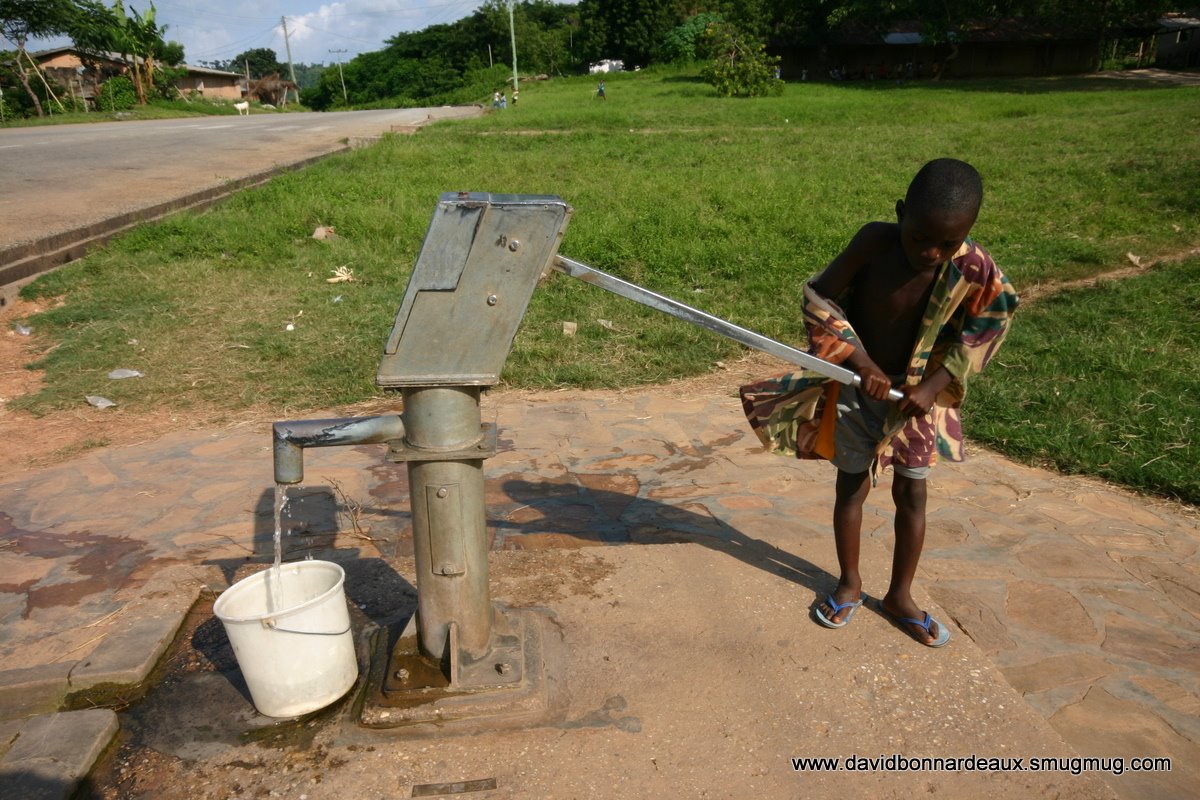
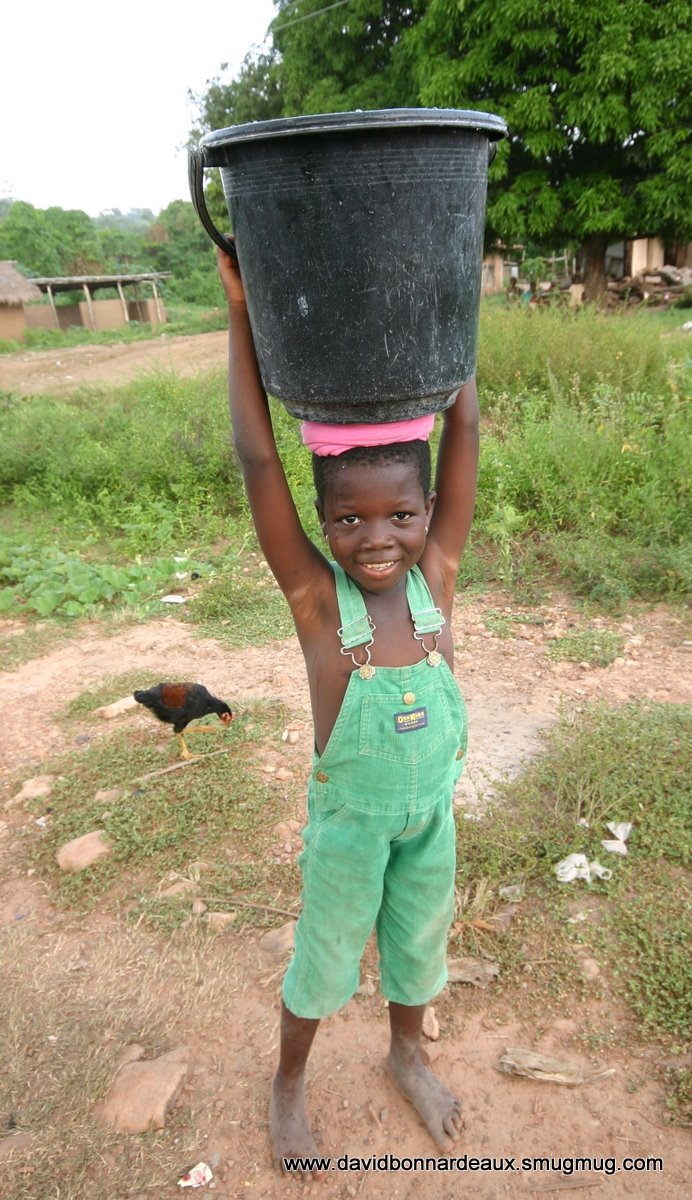
› A mark of a good event is that it generates further debate, questions, and ideas. “Water and International Development: A Dialogue,” a recent discussion at The Johns Hopkins University School for Advanced International Studies, was such an event. Geoff Dabelko, director of the Environment Change and Security Program at the Wilson Center, and Aaron Salzberg, special coordinator for water resources at the U.S. Department of State, went head-to-head to discuss water’s role in international development.
The discussion between Dabelko and Salzberg touched upon many issues I ran into while trying to program Water for the Poor Act funding while working as a natural resources adviser for the Economic Growth Office at the U.S. Agency for International Development (USAID) mission in Ghana. Once we received the funding, there was an intra-office debate among:- People who wanted to make drip-irrigation work we were already funding fit the Water for the Poor Act definition;
- People who thought the funds should be spent on a narrow set of water and sanitation interventions, such as borehole/latrine construction and water purification tablets; and
- People who thought the funds should be spent on the larger-scale water and sanitation infrastructure that Ghana so desperately needs.
USAID mission offices have specific strategic priorities and associated operational plans, which dictate the makeup of the staff employed at any given time. In this case, there was no one water specialist who could take on this important task. I had an M.S. in water management, so I was passed the baton. If the Water for the Poor Act is going to have a significant impact, USAID missions must have the technical capacity to assimilate the funds.
Dabelko and Salzburg’s discussion brought up even more questions for me: How can the United States reconcile its bilateral earmark funding for water with the growing trend toward donor coordination—for instance, under the 2005 Paris Declaration, or, in the case of Ghana, the Multi-Donor Budget Support fund, which encourages donors to contribute direct financial support to the Ghanaian government to implement its Growth and Poverty Reduction Strategy? Is there a need to have water specialists assigned to USAID missions, rather than relying on specialists in Washington, D.C.? How can we make municipal financing mechanisms for infrastructure more attractive to Western funders and host-country governments? Although Dabelko and Salzburg might not have had all the answers to these questions, I’m heartened that they and other water experts are tackling the tough issues.
David Bonnardeaux is a freelance consultant on rural development and natural resource management for the World Bank, USAID, and CARE, among others. He is also an amateur photographer (www.davidbonnardeaux.smugmug.com). His next port of call is Vietnam.
Photos: Top: Boy pumping water, Volta Region, Ghana. Bottom: Girl collecting water from lake, Volta Region, Ghana. Courtesy of David Bonnardeaux.
 Every day it seems the headlines bring new worries about the future of Pakistan. But among the many challenges confronting the nation—including a
  While it is now