

-
Post-Conflict Recovery in Biodiversity Hotspots
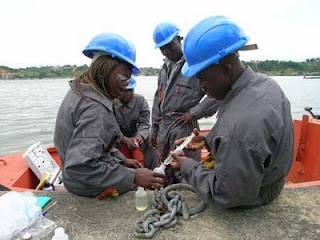
› The prevalence of armed conflict in areas of high biodiversity is alarming, though not entirely surprising. According to “Warfare in Biodiversity Hotspots” (abstract online), which was published earlier this year in Conservation Biology, 80 percent of the major armed conflicts between 1950 and 2000 took place in biodiversity hotspots. While natural resources are rarely the principal causes of conflict, their allocation and ownership are frequently among its drivers.
 -
Weekly Reading
›A study published in Conservation Letters finds that emphasizing the ways the environment benefits the world’s poor “is a substantial improvement over dollar-based, ecosystem-service valuations that undervalue the requirements of the world’s poor” and “offers great hope for reconciling conservation and human development goals.”
NATO offers seven one-minute videos on environmental-security topics.
In Foreign Policy, Stephen Faris argues that melting Himalayan glaciers could make security problems in South and Central Asia even worse.
The Financial Times offers an extended look at environmental migration in Ghana.
The Arctic Climate Change and Security Policy Conference: Final Report and Findings, a report from the Carnegie Endowment for International Peace, maintains that a multilateral process is the best way to minimize tensions over the Arctic. -
Weekly Reading
›The U.S. Global Change Research Program, which integrates federal government research on climate change, released Global Climate Change Impacts in the United States this week. The report examines climate’s likely impacts on various regions of the country.
The Guardian examines ongoing conflicts over natural resources between indigenous people and governments.
In her final dispatch from the Bonn climate negotiations, Population Action International climate director Kathleen Mogelgaard notes the conspicuous absence of demography in international climate discussions.
A webcast is now available of the Johns Hopkins University-Population Reference Bureau symposium “Climate Change and Urban Adaptation: Managing Unavoidable Health Risks in Developing Countries.”
A new policy paper from the World Bank seeks to answer the question, “Do the households in game management areas enjoy higher levels of welfare relative to the conditions they would have been in had the area not been designated as a game management area?”
A Commission on Climate and Tropical Forests, led by John Podesta, president and CEO of the Center for American Progress, and Lincoln Chafee, former Republican senator from Rhode Island, has been formed to advise President Obama on how to reduce tropical deforestation through U.S. climate change policies, reports Mongabay.com. -
Weekly Reading
›In Search of Shelter: Mapping the Effects of Climate Change on Human Migration and Displacement, launched at the climate negotiations this week in Bonn, represents a major step forward in the effort to determine how environmental shocks and stresses precipitated by climate change will compel populations to migrate.
According to Family Planning and Economic Well-Being: New Evidence From Bangladesh, a report from the Population Reference Bureau, “long-term investment in an integrated family planning and maternal and child health (FPMCH) program contributes to improved economic security for families, households, and communities through larger incomes, greater accumulation of wealth, and higher levels of education.”
A YouTube video from the UN Office of the High Commissioner for Refugees (UNHCR) shows how Darfuri refugees are struggling to manage scarce natural resources in refugee camps in Chad.
Facing Global Environmental Change: Environmental, Human, Energy, Food, Health, and Water Security Concepts, the fourth volume of the Hexagon Series on Human and Environmental Security and Peace, was launched at a side event to the 17th Session of the Commission on Sustainable Development.
The Obama Plan for Energy and Climate Security: Conference Proceedings and Final Recommendations lays out the Center for a New American Security’s recommendations to President Obama for achieving his climate and energy goals. -
The Scoop on Development Reform
›The development reform picture became more complicated after a recent speech by Senate Foreign Relations Committee Chairman Senator John Kerry (D-MA) and congressional testimony by Deputy Secretary of State for Management and Resources Jack Lew.
Revamping State and USAID
At a Brookings Institution speech (transcript) on May 21 entitled “Diplomacy and Development in the 21st Century,” Kerry laid out the Senate Foreign Relations Committee’s plan for strengthening the civilian agencies that deal with these issues.
In the short term, Kerry favors the recruitment of more diplomatic and development professionals and a stronger emphasis on their training and education. He also expressed his desire to “untie the hands of our aid workers” by streamlining outdated regulations and rebalancing the relationship between Washington and the field.
“Over the long term, we need to take a close, hard look at exactly what we want our diplomatic and development institutions to achieve,” said Kerry. “We need to make sure that we give those people the resources they need to get where we have decided they must go.”
To meet these goals, he and Senator Richard Lugar (R-IN) will introduce two pieces of legislation: a Foreign Affairs Authorization Act and a foreign aid reform bill, which will serve as precursors to a more comprehensive overhaul of the 1961 Foreign Assistance Act next year, said Kerry.
A Power Grab by State?
On May 13, Lew testified on the FY2010 international affairs budget request (webcast; testimony), outlining five “smart power” funding objectives:
1. Build civilian capacities in State and USAID;
2. Promote long-term development and human security;
3. Enhance strategic multilateral and bilateral partnerships (e.g., with Israel, Egypt, Pakistan, and Afghanistan);
4. Strengthen global security capabilities (e.g., nuclear non-proliferation); and
5. Maintain the resources to respond to urgent humanitarian needs.According to Lew, State’s approach to development will be both “top-down”—strengthening “the ability of governments to support just and capable institutions that meet the basic needs of their populations”—and “bottom-up”—partnering with civic groups to build human capacity to innovate, cooperate, and solve problems.
Lew indicated that State should coordinate multiple agencies’ efforts to address challenging, cross-sectoral problems. He said, “We must be able to look at a country, a function or an objective and be able to identify everything that the U.S. government is doing in that area—not just State.” For instance, he wants the State Department to lead “a whole-of-government process to design and implement a new food strategy.”
Lew’s testimony seems to indicate that State wants to oversee all of development policy, with no apparent role for the National Security Council (NSC). But it is not at all clear that State has the human and financial resources to coordinate all the other agencies involved in development. If State were granted this authority, the organizational implications would be immense.
At the NSC, development issues fall under the purview of Deputy National Security Adviser for International Economic Affairs Michael Froman, but he has many other issues on his agenda, including the G20 and the G8. I would be surprised if the NSC does not see this kind of overall coordination as part of its mandate. But there have been no public reactions to State’s grab for power.
At the same time, both Kerry and Congressman Howard Berman (D-CA), chairman of the House Foreign Affairs Committee, see development reform as a major part of their portfolios. The State Department has strongly opposed Berman’s bill mandating that the administration produce a government-wide “National Development Strategy,” on the grounds that the responsibility for drafting such a document should be given to the State Department, and not (as it is now written) to the President. The future of Berman’s legislation is not clear, but Kerry also has indicated his desire for an overall strategy paper.
USAID Still Seeking Chief
Finally, USAID still lacks a director. The latest rumors in the blogosphere revolve around Dr. Paul Farmer, the renowned physician who founded Partners in Health, a major NGO focusing on global health. Farmer would be the first USAID administrator in recent years with extensive on-the-ground development experience, but I understand he has no experience with Washington bureaucracy (outside, perhaps, of the health arena). Furthermore, he is known more as a charismatic leader than as a manager.
Farmer would be an unconventional choice for running USAID, though there are conflicting opinions on whether he even wants the job. But if he does want it, he should ensure he had a deputy secretary rank, as well as authority over the Millennium Challenge Corporation, the President’s Emergency Plan for AIDS Relief, and other independent development programs. He also would need the funds and staff to completely revamp USAID to meet the challenges of the 21st century.
John W. Sewell is a senior scholar at the Woodrow Wilson Center and the former president of the Overseas Development Council. ECSP published Sewell’s review of Trade, Aid and Security: An Agenda for Peace and Development in ECSP Report 13. -
Weekly Reading
›The International Institute for Sustainable Development has released two reports on climate change and security: Rising Temperatures, Rising Tensions: Climate change and the risk of violent conflict in the Middle East and Climate Change and Security in Africa.
In “The Changing Face of Israel,” a Foreign Policy web exclusive, Richard Cincotta and Eric Kaufmann explain how Israel’s demographics are influencing the country’s politics.
CNN’s Inside Africa reports on a bill in the U.S. Congress that seeks to quell the violence in the Democratic Republic of the Congo by forcing American companies to disclose the sources of their minerals.
Population Action International’s Kathleen Mogelgaard reports from international climate change negotiations in Bonn, Germany, on how climate change disproportionately affects women and the poor.
A Christian Science Monitor op-ed on global demographic trends cites Wilson Center Senior Scholar Martin Walker.
On Grist, Earth Policy Institute Founder Lester Brown explores the massive migration that would be precipitated by even partial melting of the Antarctic and Greenland ice sheets. -
Weekly Reading
›Land grab or development opportunity? Agricultural investment and international land deals in Africa, a study conducted by IIED, FAO, and IFAD, is the first detailed study to examine large land acquisitions in sub-Saharan Africa.
The latest issue of Population and Environment (subscription required) includes articles on land, education, and fertility in Kenya; indigenous women and fertility in the Ecuadorian Amazon; and the impact of chemical exposure on sex ratios in Greece.
A partnership between local villages and the Bonobo Conservation Initiative has led to the establishment of a 1,847 square mile reserve in the Democratic Republic of the Congo, reports Mongabay.
A new article in the Encyclopedia of the Earth lists population growth rates (including births, deaths, and migration) by country, based on CIA data. -
Weekly Reading
›In the June 2009 edition of The Atlantic, 2008 International Reporting Fellow Delphine Shrank explains how conflict in DRC is harming the local ecosystem and livelihoods.
Oxfam International has released a study (Spanish) arguing that rapidly shrinking glaciers in the Andes are disrupting water supplies and leading to conflict in Peru, Bolivia, and Ecuador.
A shortage of clean water is leading to domestic violence in Uganda, report The New Vision and Circle of Blue.
The June 2009 edition of National Geographic includes a special report on food security, agriculture, and population.
“Two decades after its fall, the border between East and West Germany has already become Europe’s biggest nature reserve: an 858-mile ‘ecological treasure trove,’ no longer the Iron Curtain but the Green Belt, and home to more than 600 rare and endangered species of birds, mammals, plants and insects,” reports Tony Paterson for The Independent.
Worldfocus.org’s latest radio show explores the geopolitics of the melting Arctic.
Showing posts from category *Blog Columns.
 The prevalence of armed conflict in areas of high biodiversity is alarming, though not entirely surprising. According to “

