

-
Is the White Ribbon the New Black? Making Maternal Health Fashionable
›
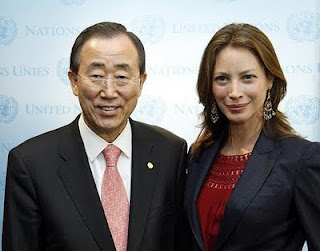
Celebrity philanthropists such as Bono, Angelina Jolie, and George Clooney have shined their star power on global issues like AIDS, genocide, and refugees. In last month’s Vogue, supermodel Christy Turlington turned the light on one of the most overlooked problems: maternal mortality.
-
Weekly Reading
›In an Economist.com debate on population growth between John Seager of Population Connection and Michael Lind of the New America Foundation, Seager argues that rapid population growth is “the source of many of the world’s—especially the poor world’s—woes,” as it accelerates environmental degradation and “undermines both security and development.” On the other hand, Lind counters that “countries are not poor because they have too many people,” and asserts that “technology and increased efficiency have refuted what looks like imminent resource exhaustion.”
In Foreign Policy, David J. Rothkopf contends that actions to mitigate climate change—though necessary to avoid very serious consequences—could subsequently spur trade wars, destabilize petro-states, and exacerbate conflict over water and newly important mineral resources (including lithium).
The International Crisis Group (ICG) reports that “the exploitation of oil has contributed greatly to the deterioration of governance in Chad and to a succession of rebellions and political crises” since construction of the World Bank-financed Chad-Cameroon pipeline was completed in 2003. Chad must reform its management of oil resources in order to avoid further impoverishment and destabilization, ICG advises.
The Royal Society and the Institution of Mechanical Engineers (IME)—both based in the United Kingdom—released independent reports on geoengineering the climate. While calling reduction of greenhouse gas emissions “the safest and most predictable method of moderating climate change,” the Royal Society recommends that governments and international experts look into three techniques with the most potential: CO2 capture from ambient air, enhanced weathering, and land use and afforestation. The IME identified artificial trees, algae-coated buildings, and reflective buildings as the most promising alternatives. “Geo-engineering is no silver bullet, it just buys us time,” IME’s Tim Fox told the Guardian.
In “Securing America’s Future: Enhancing Our National Security by Reducing Oil Dependence and Environmental Damage,” the Center for American Progress (CAP) argues that unless the United States switches to other fuels, it “will become more invested in the volatile Middle East, more dependent on corrupt and unsavory regimes, and more involved with politically unstable countries. In fact, it may be forced to choose between maintaining an effective foreign policy or a consistent energy supply.”
The Chinese government is “drawing up plans to prohibit or restrict exports of rare earth metals that are produced only in China and play a vital role in cutting edge technology, from hybrid cars and catalytic converters, to superconductors, and precision-guided weapons,” The Telegraph relates. The move could send other countries scrambling to find replacement sources.
In studying the vulnerability of South Africa’s agricultural sector to climate change, the International Food Policy Research Institute finds that “the regions most vulnerable to climate change and variability also have a higher capacity to adapt to climate change…[and that] vulnerability to climate change and variability is intrinsically linked with social and economic development.” South African policymakers must “integrate adaptation measures into sustainable development strategies,” the group explains. -
Half the Sky, All the Promise: The Personal is Political in NYT Special Issue
›“The world is awakening to a powerful truth: Women and girls aren’t the problem; they’re the solution,” write Nicholas Kristof and Sheryl WuDunn in the lead article of this Sunday’s The New York Times Magazine.
In this special issue devoted to “Saving the World’s Women,” five articles document global failures and personal horrors, but also offer forward-looking solutions from the individual to the institutional. As the subtitle says—“changing the lives of women and girls in the developing world can change everything”— this vital effort can help us not only improve the lives of women, but meet larger goals including international security, global health, and economic development.
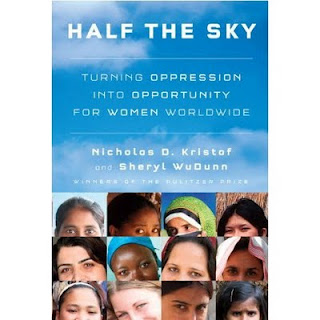
In “The Women’s Crusade,” Pulitzer Prize-winners Kristof and WuDunn, whose new book Half the Sky will be published on September 8, outline the ways in which the world’s women and girls are abused, neglected, and overlooked. They use devastating data to detail how women around the world suffer from lack of education, maternal mortality, sexual violence, trafficking, and economic and political oppression, and then bring these figures to life with women’s personal stories.
They argue that elevating women is not a “soft” issue, but rather has the power to transform economies and address security threats—a point echoed in an interview with Hillary Clinton, in which she calls women and girls “a core factor in our foreign policy.”
“I happen to believe that the transformation of women’s roles is the last great impediment to universal progress,” says Clinton, long an informed and passionate advocate for global women’s issues. She encouraged President Obama to create a new ambassadorship for global women’s issues, and filled the opening with Melanne Verveer, a respected activist and former head of the Vital Voices Global Partnership.
Clinton most strongly emphasizes the connection between women’s issues and national security, calling it “an absolute link”: “If you look at where we are fighting terrorism, there is a connection to groups that are making a stand against modernity, and that is most evident in their treatment of women.” She goes so far as to agree that spending taxpayer money on education and healthcare for girls and women in Pakistan would be more effective than military aid to the country.
“A woman who is safe enough in her own life to invest in her children and see them go to school is not going to have as many children. The resource battles over water and land will be diminished,” she says. “And it’s an issue of how we take hard power and soft power, so called, and use it to advance not just American ends but, in advancing global progress, we are making the world safer for our own children.”
Also in the magazine:
The New York Times’ website adds a slide show of Katy Grannan’s portraits of women in South Asia and Africa, and launches a contest soliciting personal stories from the field. Submit your photos and blog posts to Kristof’s blog by September 19.- Dexter Filkins investigates the acid attacks on girl students in Afghanistan in the horrifyingly vivid storytelling he displayed in his best-seller, The Forever War.
- Lisa Belkin takes note of an emerging generation of female philanthropists using their money to “deliberately and systematically to aid women in need,” spurred by the Hunt sisters’ “Women Moving Millions” campaign.
- Tina Rosenberg describes how sex-selective abortion and inadequate health care for young girls has led to a “daughter deficit” in China and India, where, somewhat paradoxically, “development can worsen, not improve, traditional discrimination.”
- Africa’s first female President, Liberia’s Ellen Johnson-Sirleaf, tells NYT that if women ran the world, it would be “better, safer and more productive.”
To me, such vital voices are the most powerful, proving that the personal is political. The quotes in the lead article from academic studies, local NGO personnel, and women themselves map the way forward:- “When women command greater power, child health and nutrition improves” – Esther Duflo of MIT, on micro-finance.
- “Girls are just as good as boys” – An unidentified man who once beat his wife for not having sons, but changed his mind when a micro-loan turned her into the family breadwinner.
- “Gender inequality hurts economic growth” – Goldman Sachs, Global Economics Paper, 2008
- “I can’t talk about my children’s education when I’m not educated myself … If I educate myself, then I can educate my children” – Terarai Trent, a Zimbabwean woman now completing a PhD in the United States.
-
Weekly Reading
›Christian Aid’s “Growing Pains: The Possibilities and Problems of Biofuels” finds that “huge subsidies and targets in developed countries for boosting the production of fuels from plants such as maize and palm oil are exacerbating environmental and social problems in poor nations.”
Framing the climate change debate in terms of national security could help advance climate legislation in Congress, argues a New York Times editorial, one week after its front-page article on the topic. In letters to the editor, James Morin of Operation FREE calls climate change the “ultimate destabilizer,” and retired Vice Admiral Lee Gunn warned that the “repercussions of these changes are not as far off as one would think.”
Researchers at Purdue University’s Climate Change Research Center found that climate change could deepen poverty, especially in urban areas of developing countries, by increasing food prices. “While those who work in agriculture would have some benefit from higher grains prices, the urban poor would only get the negative effects.” Of the 16 countries studied, “Bangladesh, Mexico and Zambia showed the greatest percentage of the population entering poverty in the wake of extreme drought.”
India’s 2009 State of the Environment Report finds that almost half of the country’s land is environmentally degraded, air pollution is increasing, and biodiversity is decreasing. In addition, the report points out that almost 700 million rural people—more than half the country’s population—are directly dependent on climate-sensitive resources for their subsistence and livelihoods. And furthermore, “the adaptive capacity of dry land farmers, forest dwellers, fisher folk and nomadic shepherds is very low.”
Surveys completed by a Cambodian national indigenous peoples network find that “five million hectares of land belonging to indigenous minority peoples [have] been appropriated for mining and agricultural land concessions in the past five years,” reports the Phnom Penh Post.
The Economic Report on Africa 2009 warns that despite declining food prices, “many African countries continue to suffer from food shortage and food insecurity due to drought, conflicts and rigid supply conditions among other factors.” -
Climate Engineering is Untested and Dangerous
›The famous mathematician John von Neumann called climate engineering a “thoroughly ‘abnormal’ industry,” arguing that large-scale interventions, including solar radiation management, were not necessarily rational undertakings and could have “rather fantastic effects” on a scale difficult to imagine. Tinkering with the Earth’s heat budget or the atmosphere’s general circulation, he said, “will merge each nation’s affairs with those of every other, more thoroughly than the threat of a nuclear or any other war may already have done”—and possibly leading to “forms of climatic warfare as yet unimagined.” -
A Response to Will Rogers’ “Budgeting for Climate”
›I have a few responses to Will Rogers’ thoughtful critique of my report, “Military vs. Climate Security: Mapping the Shift from the Bush Years to the Obama Era.”
Rogers says that “the report could be read as inferring that the Department of Defense (DoD) has an unnecessarily oversized budget”: that’s true. I think a single country that spends 43 percent of the world’s total military budget—more than the next 14 countries put together—and whose spending has nearly doubled since FY 2000 to the highest level in real terms since World War II, could find some ways to provide for the common defense with less money.
-
How Family Planning Meets Development Goals
›“Knowing is not enough; you must act and let your government know that family planning is a right and saves lives,” said Maurice Middleberg of the Global Health Council at a recent event in Chapel Hill.
The other panelists at “How Can Family Planning Efforts Help Us Achieve the Millennium Development Goals?” (Dr. Martha Carlough of UNC, Dr. Ward Cates of Family Health International, and Pape Gaye of IntraHealth International) all provided compelling statistics demonstrating the effectiveness of family planning as an intervention that addresses the Millennium Development Goals (MDGs).
MDGs 4, 5, and 6 – reducing child mortality; improving maternal health; and combating HIV/AIDS, malaria, and other diseases, respectively – all have obvious connections to health and woman’s reproductive health. An unmet need for family planning, which is measured as the percentage of women of reproductive age who desire to space or limit their births but are not using contraception, can undermine the achievement of these goals.
For example, very early motherhood not only increases the risk of dying in childbirth, it also jeopardizes the well-being of surviving mothers—and their children, too. A child born to an adolescent mother has a greater risk of dying in infancy or childhood.
“Contraception is the best-kept secret in HIV prevention,” said Dr. Cates, who cited research that found that “current contraceptive use in sub-Saharan Africa prevents an estimated 577,200 unplanned births to HIV-infected mothers” and thus prevents the birth of an estimated 173,000 HIV-infected infants each year.
Family planning can help meet the other MDGs, including ending poverty and hunger (Goal 1); providing universal primary education (Goal 2); and promoting gender equity (Goal 3). Young mothers frequently miss out on education and socio-economic opportunities. Being able to make their own decisions about family planning and reproductive health can empower women and improve gender equity. When women are given equal opportunities for education, health, and employment, they are more likely to invest in the education and care of their children. This helps them break the cycle of poverty, hunger, and disease.
Although the MDGS don’t include any formal targets for sexual and reproductive health, the UN Millennium Project has stated that the MDGs cannot be achieved in low-income countries without access to sexual and reproductive health services, including family planning. The panelists agreed that family planning is a cost-effective intervention that provides broader positive benefits for development.
But the real strength of their presentations lay in the personal stories behind the statistics. Middleberg closed the discussion with a story about a woman in Latin America who told him that she loves her husband but was afraid of him every time he touched her. Now, after having undergone sterilization, she no longer worries and can love her husband with no fear of becoming pregnant.
A mother of six interviewed in a 2009 news article about the Philippines’ new family planning bill said, “How can one keep on having children? We don’t earn enough to feed them, much less send them to school.” New York Times columnist Nicholas Kristof interviews a Haitian woman with 10 children in a dramatic video interview, “Saving Lives with Family Planning.”
Underlying all of these facts and stories is the belief that one’s health and well-being, including access to family planning, is a right. But as Middleberg said, believing is not enough.
EngenderHealth, an international reproductive health organization working to improve the quality of health care in the world’s poorest communities, is asking Americans to create a video explaining why we should care about international family planning. Contribute your thoughts on YouTube’s Video Volunteers project.
Lisa Basalla, MPH, is a research associate with the Carolina Population Center. She graduated from Case Western Reserve University with a MPH focusing on reproductive and adolescent health. She has worked with Johns Hopkins University’s Center for Communications Programs on its reproductive health knowledge management project as well as a HIV-prevention behavior change communication project in Malawi.
Photo: A billboard promoting family planning in Phnom Pehn, Cambodia. Courtesy flickr user olerousing. -
Weekly Reading
›The Population Reference Bureau’s 2009 World Population Data Sheet shows that global population numbers will reach 7 billion in 2011. Among its key findings, PRB notes that “population growth is one root cause of increases in global greenhouse gas emissions. But the complexity of the mechanisms through which demographic factors affect emissions is not fully taken into consideration in many analyses that influence governments’ climate change mitigation efforts.”
The Guardian reports that U.S. marines have launched an energy audit of American military operations in Afghanistan, the first such assessment to take place in a war zone. “Some 80% of US military casualties in Afghanistan are due to improvised explosive devices (IEDS),” the article elaborates, “and many of those placed in the path of supply convoys.” DoD’s Alan Shaffer recently told ClimateWire, “nearly three-quarters of what convoys move in Afghanistan’s treacherous terrain is fuel or water.”
The Department of State released an inspection of the operations of the Bureau of African Affairs that identifies a rift between U.S. diplomats and the U.S. military’s recently established African Command (AFRICOM). As the Wilson Center’s Steve McDonald told Bloomberg.com, “It got off to a hugely bad start…Part of it was tied up with policies of the Bush era, where our own security concerns far overrode any sensitivities to local considerations.”
T. Paul Shultz of Yale University’s Economic Growth Center evaluates population and health policies, looking specifically at “the causal relationships between economic development, health outcomes, and reproductive behavior.”
Oxfam’s “The Future is Here: Climate Change in the Pacific” includes recommendations for adapting and mitigating climate change in Australia, New Zealand, and the Pacific island nations—a region “where half the population lives within 1.5 kilometers of the sea.”
Showing posts from category *Blog Columns.
 The famous mathematician
  “Knowing is not enough; you must act and let your government know that family planning is a right and saves lives,” said Maurice Middleberg of the Global Health Council at a recent

