

Showing posts from category *Blog Columns.
-
The Youth Bulge Question
›Right now, Rich Cincotta is live on “PRB Discuss Online,” answering the question, “Does a Young Age Structure Thwart Democratic Governments?” He is responding to reader questions like “Do Democratic governments being overcome by poverty and high unemployment rates have a chance to succeed” and “Why do you think the mainstream demography community is so slow or unwilling to pick up the research questions you have pursued?” Read the transcript and Cincotta’s recent article on this topic, “Half a Chance: Youth Bulges and Transitions to Liberal Democracy.”
A new World Bank working paper, “Breaking the Waves? Does Education Mediate the Relationship Between Youth Bulges and Political Violence?” by Bilal Barakat and Henrik Urdal finds “evidence that large, young male population bulges are more likely to increase the risk of conflict in societies where male secondary education is low”–particularly in low and middle-income countries. Mardy Shualy of Foreign Policy’s blog suggests policymakers do the math to compare the costs of secondary education to the economic toll of war and civil conflict. -
Climate-Security Gets “To the Point” Today
›Today’s episode of NPR’s “To the Point” with Warren Olney will focus on “Global Warming and the Geo-Political Map,” seeking to answer the question, “What are the risks to natural resources, immigration, and political stability worldwide?”
As one of the four panelists, ECSP Director Geoff Dabelko will draw on his recent article in the Bulletin of Atomic Scientists and ECSP’s climate-security resources.
Climate security has been heating up the media for the last few months, although most news coverage has been rather thin. That’s understandable, given the complexity of the drivers involved, and the crushing constraints on environmental reporters’ time and budgets these days. But climate security is a politically powerful argument, one which advocates from all over the political spectrum have increasingly adopting, and it deserves a more thorough, thoughtful treatment.
“Come to Attention,” a panel at this year’s SEJ annual conference (audio) moderated by ClimateWire’s Lisa Friedman, delved into some of the finer points of this often oversimplified connection. As part of the panel, Dabelko outlined seven cautions to keep in mind and suggestions for improving coverage of the difficult link.
While Grist’s Robert McClure jokingly called the session “doom and gloom without the sense of humor,” Dabelko ended on a positive note, pointing out that by coming together to battle climate change, countries may build bridges to peace, rather than war–particularly if the militaries cooperate in the fight.
In a recent op-ed, Dabelko and the U.S. Army War College’s Kent Butts argue that climate could be one of the most productive avenues for improving military relations with China, suggesting that “U.S. and Chinese militaries should jointly assess the security implications of climate change that concern both sides: rising sea levels, changing precipitation patterns, uncertain migration scenarios, and instability in resource-rich regions.”
“To the Point” airs live online at 3 PM EST. In the Washington, DC, area listen to it at 10 PM EST tonight on WAMU 88.5. -
If It Bleeds It Leads: Pop-Climate Hits the Blogosphere
›Population and climate change get short shrift in the media—that is, until Rush Limbaugh urges you to commit suicide. It’s a disturbing sign that this extremely complex topic only gets play when the knives come out. And as this summer’s health care circus demonstrates, the blogosphere is often more interested in covering the shouting than the issues at hand.
So what happened? At the Wilson Center last week, the New York Times’ Andrew Revkin (via Skype) mentioned a thought experiment he had put forward in a recent post on his blog: “Should you get credit — if we’re going to become carbon-centric — for having a one-child family when you could have had two or three. And obviously it’s just a thought experiment, but it raises some interesting questions about all this.”
Limbaugh, picking up on a post on CNS.com, a conservative online news outlet, said Revkin and “militant environmentalists, these wackos, have so much in common with the jihad guys.” The furor was reported by a number of news blogs, including NYT’s Paul Krugman, the Guardian, and Politico.
An earlier and more substantial account by Miller-McCune’s Emily Badger deftly hits the highlights, including some historical context from The Nation’s Emily Douglas. While earlier projections assumed population growth would decline following the dissemination of birth control in the West, “that assumption turned out to be false,” said Douglas, because women in developing countries have not received similar access to contraceptives.
Indeed, as Worldwatch Institute’s blog post on the event points out, “an estimated 200 million women who want to avoid pregnancy are risking it anyway because they have inadequate access to contraception and related reproductive health services.”
I’m disheartened that this kerfluffle follows a recent uptick in thoughtful coverage of the population-climate connection. At a standing-room-only panel (audio) on covering population and environment at the most recent SEJ conference, Baltimore Sun reporter Tim Wheeler (video) said that population “has those challenges of so, what do you do about it, how do you deal with it.” But he said it was reporters’ “constant challenge to continue to wrestle with these issues.”
Moving the wrestling match into the center ring is bringing a new focus to the debate, which could be useful, as Suzanne Petroni writes in the ECSP Report: “A careful discussion of the ways in which voluntary family planning can further individual rights, community development, and, to some extent, climate change mitigation, could increase awareness not only of the outsized contribution of developed nations to global emissions, but also of their appropriate role in the global community.”
As Revkin says at the end of his response to Limbaugh: “And of course there’s the reality that explosive population growth in certain places, particularly sub-Saharan Africa, could be blunted without a single draconian measure, many experts say, simply by providing access to family planning for millions of women who already want it, but can’t get it – whether or not someone gets a carbon credit in the process.”
Family planning advocates—who have long been wary of linking contraception to climate mitigation—would mostly agree with that statement, although they would phrase it a little differently. Better reproductive health care is “an end in itself,” with climate mitigation being the “side effect,” rather than the primary goal, Barbara Crossette writes in The Nation.
Population experts cautiously agree there is a link, but warn that quantifying it is not so simple. At a major conference of demographers in Marrakesh, researchers previewed forthcoming research described the potential for emissions “savings” brought by decreases in fertility.
In the near term, it doesn’t look likely that all this attention will lead to policy action at Copenhagen. Population Action International reports that while almost all of the least developed countries’ adaptation plans mention population as a factor which increases their vulnerability to climate change, only a few state that investing in family planning should part of their strategy.
I encourage you to watch the webcast of the event and add your own (thoughtful) comments to the dialogue below. No suicide threats, please. -
Population’s Links to Climate Change
›“Covering Climate: What’s Population Got to Do With It?”—webcast live from the Wilson Center—will analyze the challenges facing science and environmental reporters as they prepare to cover what New York Times reporter Andrew Revkin calls “the story of our time.” Cosponsored by the Society of Environmental Journalists and the International Reporting Project, the panel—including Dennis Dimick of National Geographic and the Nation’s Emily Douglas—will discuss the significant barriers to nuanced reporting, including stovepiped beats, the shrinking news hole, and old-fashioned squeamishness.
However, in the past month, there’s been a veritable baby boom of news coverage on climate change and population. Spurred by three high-profile reports—the study commissioned by the Optimum Population Trust, research in the Bulletin of the WHO, and an editorial in the Lancet—the mainstream media and some key bloggers finally got some condoms in their climate change.
It’s gratifying to finally see this issue pop up in the media, almost a year to the day after the 2008 SEJ conference panel on population and climate change moderated by Constance Holden of Science that attracted a respectable (but not remarkable) audience of 40. The panelists decried the media’s relative silence on the impact of population growth and other demographic dynamics on environmental issues.
NPR’s Steve Curwood pointed out that while it’s “something we don’t talk about at all in America,” U.S. population growth increases emissions faster than developing-country population growth, due to our larger per capita consumption. A lone AP article, “Population growth contributes to emissions growth,” reported on the discussion.
In contrast, a population-climate panel at last week’s SEJ conference drew an overflow crowd of more than 100 people. Former SEJ President Tim Wheeler read off recent headlines demonstrating that the media does mention population. However, he noted that “most of the instances I cited are op-ed opinion pieces, not news coverage or feature stories.” In recent climate coverage, he said, “population gets mentioned as an undercurrent and afterthought; our attention intends to be on the immediate. And it has those challenges of so, what do you do about it, how do you deal with it.” But it is “our constant challenge to continue to wrestle with these issues.”
Here’s a short list of recent coverage:
Associated Press: “Birth control could help combat climate change”
Reuters: “Contraception vital in climate change fight -expert”
Bloomberg: “African Condom Shortage Said to Worsen Climate Impact”
Matt Yglesias: “Population and Climate Change”
The Nation: “Factoring People Into Climate Change”
Inter Press Service: “POPULATION: Where’s Family Planning on Climate Change Radar? Zofeen Ebrahim interviews noted social demographer KAREN HARDEE”
The New Republic’s The Vine: “Abortion: The Third Rail of Climate Policy?”
Treehugger.com: Contraception Five Times Less Expensive Than Low-Carbon Technology in Combating Climate Change
Washington Post: “When It Comes to Pollution, Less (Kids) May Be More”
Inter Press Service: “CLIMATE CHANGE: Rising Seas Demand Better Family Planning”
LA Times Booster Shots blog: “Can condoms combat climate change?”
-
Watch: Nicholas Kristof on Maternal Mortality
›“Although a half million women die each year, that doesn’t get attention, because the victims invariably have three strikes against them: They are poor, they are rural, and they are female,” journalist Nicholas Kristof says in a video interview about his new book, Half the Sky: Turning Oppression into Opportunity for Women Worldwide.
“If men had uteruses and were dying at this rate, every country would have a minister of paternal mortality, the security council would be meeting, this would be a real international priority,” he says.
Recently launched at the Wilson Center, Half the Sky tells the transformational stories of women and girls who are the “face of statistics” on four appalling realities: maternal mortality, sexual violence, and lack of education and economic opportunities.
“So many Americans want to help, but are skeptical,” so Half the Sky offers a “do-it-yourself toolkit,” says Kristof. People “can truly save individual women’s lives out there, and their babies’ lives, that would otherwise die.” -
Weekly Reading
›Climate change is “the biggest global health threat of the 21st century,” says the final report of a year-long commission held by The Lancet and University College London. A Lancet editorial, “Sexual and reproductive health and climate change,” says that rapid population growth “increases the scale of vulnerability to the consequences of climate change” and that meeting the unmet need for contraception “could slow high rates of population growth, thereby reducing demographic pressure on the environment.”
Following the escalation of hostilities in Gaza, the UN Environment Programme’s environmental assessment found that Gaza’s underground water supplies are “in danger of collapse as a result of years of over-use and contamination that have been exacerbated by the recent conflict.” IRIN reports that climate change has led to lower rainfall and “slowed the recharge rate of the aquifer” under Gaza, while “rapid population growth and suburban sprawl” have left “little space for rainwater catchment.”
In “Arctic Climate Feedbacks: Global Implications,” the World Wildlife Fund says that “warming in the Arctic will likely have far-reaching impacts throughout the world, resulting in a sharp increase in harmful greenhouse gases and significant shifts in global weather patterns that could disrupt the lives and livelihoods of hundreds of millions of people.”
The Obama Administration’s Interagency Ocean Policy Task Force Interim Report—now open for a 30-day review and comment period—“proposes a new National Policy that recognizes that America’s stewardship of the ocean, our coasts, and the Great Lakes is intrinsically and intimately linked to environmental sustainability, human health and well-being, national prosperity, adaptation to climate and other environmental change, social justice, foreign policy, and national and homeland security.”
The Economics of Climate Adaptation Working Group estimates that climate risks “could cost nations up to 19 percent of their GDP by 2030, with developing countries most vulnerable,” and warns that the “historic pace of population and GDP growth could put ever more people and value at risk.” However, the group also contends that “between 40 and 68 percent of the loss expected to 2030 in the case locations – under severe climate change scenarios – could be averted through adaptation measures whose economic benefits outweigh their costs.” -
Running on Empty: Pakistan’s Water Crisis
› “Water shortages,” warns South Asia scholar Anatol Lieven, “present the greatest future threat to the viability of Pakistan as a state and a society.
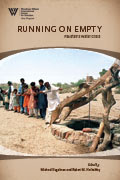
This warning may be overstated, but Pakistan’s water situation is deeply troubling, as described in a new report from the Woodrow Wilson Center’s Asia Program, Running on Empty: Pakistan’s Water Crisis.
Water availability has plummeted from about 5,000 m3 per capita in the early 1950s to less than 1,500 m3 per capita today. As Simi Kamal reports in the first chapter of Running on Empty, Pakistan is expected to become “water-scarce” (below 1,000 m3 per capita) by 2035—though some experts project this could happen in 2020, if not earlier.
In an unstable nation like Pakistan, water shortages can easily become security threats. In April 2009, alarm bells sounded when the Taliban pushed southeast of Swat into the Buner district of the Northwest Frontier Province. Not only is Buner close to Islamabad, it lies just 60 kilometers from the prized Tarbela Dam, which provides Pakistan with billions of cubic meters of precious water for irrigation each year.
Soaked, Salty, Dirty, and Dry
According to Kamal, Pakistan faces significant and widespread water challenges:- Inefficient irrigation.
- Abysmal urban sanitation.
- Catastrophic environmental degradation.
- Lack of water laws to define water rights.
- Lack of a sound policy on large dams.
Women and Water in Rural Pakistan
Rural women and small farmers are particularly affected by Pakistan’s water crisis. Women bear the primary responsibility for obtaining water, but have been traditionally been shut out of government water-planning and decision-making processes. However, government and media initiatives, described by Sarah Halvorson in Running on Empty’s chapter on water and gender, are increasingly highlighting the importance of women’s participation.
Meanwhile, Adrien Couton reports that Islamabad’s water projects mainly benefit large and wealthy farmers—even though Pakistan has approximately four million farms smaller than two hectares.
Pakistan’s Thirsty Cities
With most of Pakistan’s water dedicated to agriculture, less than 10 percent is left for drinking water and sanitation. A quarter of Pakistanis lack access to safe drinking water—and many of them reside in the country’s teeming cities.
Worse, the drinking water that does exist is quickly disappearing. Lahore, which relies on groundwater, faces water table declines of up to 65 feet, as described by Anita Chaudhry and Rabia M. Chaudhry in their chapter on the city.
The scarcity of clean water in the cities—exacerbated by a lack of wastewater treatment—is a leading cause of deadly epidemics. At least 30,000 Karachiites (of whom 20,000 are children) perish each year from unsafe water.
Pakistan Must Act Now To Solve the Water Crisis
Pakistan arguably has the technological and financial resources to provide clean water. So what’s the hold-up? In her chapter on public health, Samia Altaf argues that the problem is the absence of a strong political lobby to advocate for water—and that no one holds Islamabad accountable for fixing the problem.
The report offers more recommendations for addressing Pakistan’s water:- Invest in existing infrastructure and in modest, indigenous technology.
- Strike appropriate balances between centralized and decentralized management.
- Devote more attention to water allocation and distribution on local/individual levels.
- Understand the links between agricultural and urban water pressures.
- Embrace the role of the private sector.
- Conserve by favoring water-saving technology; less water-intensive crops; and water-conserving urban building design.
- Address structural obstacles like systemic inequality and gender discrimination.
- Take immediate action. Tremendous population growth and rapidly melting glaciers in the Himalayas ensure that the crisis will deepen before it eases.
Michael Kugelman is the Wilson Center’s South Asia specialist. He is co-editor, with Robert M. Hathaway, of the recently published Wilson Center book Running on Empty: Pakistan’s Water Crisis, on which this post is based. Much of his work has focused on resource shortages in Pakistan and India. -
Weekly Reading
›The American Security Project (ASP) launched its Climate Security Index, which identifies climate change “a clear and present danger to the national security of the United States,” at an event hosted by George Washington University. ASP warns that “American leaders will face a multitude of tough choices as climate-induced national security threats begin to compete with and crowd out our ability to respond to traditional threats,” reports ClimateWire.
According to “Fewer Emitters, Lower Emissions, Less Cost,” contraception is almost five times cheaper than conventional green technologies as a means of combating climate change. “[E]ach $7 spent on basic family planning (2009 US$) would reduce CO2 emissions by more than one ton,” researchers conclude, while low-carbon technologies would add an extra $25 per ton.
Experts at a recent forum on sexual and reproductive health and development in Berlin also argued for making the population-climate link, although it did not appear in the Call to Action. Helen Clark, administrator of the UN Development Programme (UNDP), said that there is a “virtuous cycle formed by educating women and families in the developing world on the number of children they actually wish to have, improving the health of women and promoting gender equality, reducing poverty and hunger, and mitigating climate change.”
The World Bank has suspended International Finance Corporation (IFC) funding of operations in the palm oil sector over concerns that lending could be causing social and environmental harm, says Mongabay.com. World Bank President Robert Zoellick announced the move in a letter to NGO leaders who argued that IFC-backed palm oil production in Indonesia was fuelling deforestation, land grabbing, and human rights abuses.
In “Urban Poverty and Vulnerability in Kenya,” Oxfam warns that Kenya “is facing a new urban timebomb, with millions of Nairobi residents suffering a daily struggle for food and water as the divide between rich and poor widens.” The group points out that “the price of staple foods such as maize has more than doubled in the past year” and drought has led to an outbreak of cholera “as almost 90% of slum dwellers have no piped clean water.”
“Water and Conflict: Incorporating Peacebuilding into Water Development” from Catholic Relief Services outlines a way for development and human rights practitioners to integrate water and peacebuilding in their projects, drawing on the experiences of CRS and other development organizations, mainly in Central and South America.
 “Water shortages,” warns South Asia scholar Anatol Lieven, “present

