Showing posts from category *Blog Columns.
-
Lessons from the Field: Focusing on Environment, Health, and Development to Address Conflict
› “Even in the hardest moments of conflict there are opportunities for cooperation, and they need to be seized,” said Juan Dumas, senior advisor of Fundación Futuro Latinamericano during the Pathways to Peace: Stories of Environment, Health, and Conflict roundtable event co-hosted by the Wilson Center’s Environmental Change and Security Program and the Fetzer Institute on January 13th.
“Even as you were talking about the conflict potential,” said Aaron Wolf, professor of Geoscience at Oregon State University, “everywhere you looked there were people talking about water uniting together across boundaries and being able to share… [and] people being willing to talk about water when they wont talk about anything else.”
Dumas and Wolf were joined by Gidon Bromberg, co-director of Friends of the Earth Middle East (FoEME); Shewaye Deribe, project coordinator for the Ethio Wetlands and Natural Resources Association (EWNRA); and Joan Regina L. Castro, executive vice president of the PATH Foundation Philippines, Inc. (PFPI) to discuss work that demonstrates the positive impact multi-dimensional development and peacebuilding programs can have on environmental conflict arenas.
Water as an Entry Point“In the academic world, there’s a growing documentation about the coming wars of the 21st century are going to be about water resources,” said Wolf, discussing how water resources are inherently intertwined with the Arab-Israeli and other regional conflicts. His research, however, suggests the opposite. In recent history, he said, cooperation for the resource, not conflict, was observed in nearly two-thirds of the world’s cross-boundary watersheds.
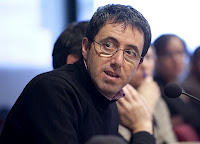
“Water is a wonderful way to have regional dialogue,” he continued, discussing how technical data and modeling are only part of any successful water conflict resolution. “A language that people have in common, and when we talk about water—because it’s connected to everything we do—we end up talking about our shared vision of the future.”“We came out with a vision that is a shared vision,” echoed Bromberg in describing the Good Water Neighbors (GWN) project—a FoEME program seeking to improve water scarcity and quality in the Jordan River watershed by fostering cooperation between Israeli, Palestinian, and Jordanian leaders. “The Jordan office advocates that vision to the Jordanian government, the Israeli office to Israeli government, the Palestinian office to the Palestinian authority. That’s proven to be very effective because it’s the same vision.”
While hesitant to say the program could lead to or be a model for peace in the Middle East, Bromberg did underscore how multi-dimensional methods used in GWN could productively serve future peacebuilding efforts in the region.
“By empowering young people to go out and improve their own water reality with their own hands [through rainwater harvesting and grey water collection] they learn together, and then they build the facilities within their own communities,” said Bromberg. “…Not only does it empower the youths but it helps create peacemakers.”
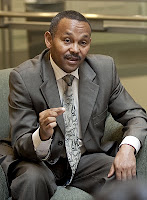
Integrated PHE and Conflict Avoidance“Water is common for all of us because it is the base of our life, of our survival,” said Deribe, linking ENWRA’s integrated population, health, and environment (PHE) wetland restoration program in Ethiopia to the greater discussion. “I think it is a lack of altruism, a lack of mutualistic thinking which leads us to this kind of conflict.”
Castro, pointing to her own PHE experience with PFPI, found that multi-sectoral programs promote improved environmental quality and community stability. In the Philippines, her program targeted local youth, fishermen, and policymakers to promote food security through sustainable resource management, improved medical and family planning services, and expanded livelihood training.
Castro found that a PHE program could continue even after funding ran out. “A project can be sustained and can be owned by the local governments and local communities if they are provided the capacity to be able to continue to implement the programs and that they see the value of the programs that they do,” she said.
Lessons in Conflict Resolution
Funding, said Dumas, is the biggest limiting operating factor for organizations that facilitate dialogue in environmental conflict areas. The ability to travel across Latin America on short notice to help resolve conflict has been extremely beneficial to Dumas’ organization; but in an arena where funders require full proposals with specific outcomes and indicators, such availability over the long-term is “not financially sustainable.”
Dumas did, however, suggest ways to reduce the need for conflict resolution while opening accessibility to funding. He recommended that institutions mainstream environmental considerations into all sectors of decision-making, thereby improving capacity to respond to environmental conflicts within the given population. He also suggested the creation of “early action funds” – pools of money that his and other organizations can use on short notice for dialogue facilitation support. -
Challenges to Covering Population
›“We journalists tend to deal with the immediate crisis,” Tim Wheeler, an environmental reporter with the Baltimore Sun, told an October gathering of the Society of Environmental Journalists in Madison, Wisconsin. Because the effects of population growth largely won’t be felt until the future, the subject is challenging for journalists who, as a whole, “tend not to look down the road too far.”
There are, however, other challenges, ranging from funding to ideology. Falling profits have pushed newspapers into expanding “hyperlocal” coverage at the expense of other stories and editorial boards are reluctant to risk increasingly important readership over a topic that, when brought to its logical conclusion, can enflame sensitivities over immigration and abortion.
On the positive side, Wheeler noted an increase in the number of articles covering intersects of population and the environment. As an example, he pointed to a Baltimore Sun series on the Chesapeake Bay citing growing population as a reason that 25-year efforts to restore the Bay have had a limited impact. Nevertheless, he lamented that the majority of articles covering population were op-ed opinion pieces rather than hard news coverage.
Without knowledge of the population-environment connection, Wheeler says, efforts to reduce our environmental impacts will run into the same problem as those to restore the Chesapeake Bay. “We’re going to wake up . . . after 25 years and say, ‘After all that we’ve done and spent, why haven’t we made greater progress?’” He underscored that, to ensure reductions aren’t outpaced by overall growth in population, issue awareness is essential.Water, Conflict, and Cooperation: Practical Concerns for Water Development Projects
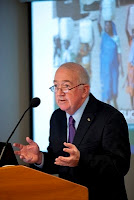
›“Water disputes that can start at the local level—little things—have the potential, in extreme cases, to burgeon into something much bigger,” warned Ken Hackett, president of Catholic Relief Services (CRS), during a discussion at the Woodrow Wilson Center (Webcast) for the launch of CRS’ new publication, Water and Conflict: Incorporating Peacebuilding into Water Development. The report provides guidance to water development practitioners, civil society members, and others striving to incorporate water and peacebuilding into their project frameworks.
In recognition of water’s potential to drive conflict, Hackett—part of a panel featuring Jason Gehrig, Water and Conflict‘s primary author; William Hall, professor of conflict resolution at Georgetown University; and Tjip Walker, team leader of USAID’s conflict management and mitigation office‘s warning and analysis unit—urged those working on water to focus attention on identifying and diffusing areas of emerging disagreement while they are still manageable. “We must, in a proactive way, incorporate peacebuilding methodologies in water and sanitation work,” said Hackett.
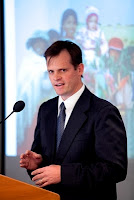
Looking Beyond Tubes and TanksPrior to witnessing violent protests within the Altiplano region of Bolivia, Jason Gehrig assumed that the primary obstacles to successful water development efforts would be found in the technical phase of designing or building delivery systems. Local political developments, however, demonstrated that “we can’t just be looking at development without also looking at the structural issues at play,” said Gherig.
Emphasis on “social infrastructure” and the inclusion of peacebuilding paradigms allows for conflict transformation and the mitigation of future violence through heightened conflict sensitivity by local practitioners. Such understanding and sensitivity to local conflicts and structures, Gehrig asserted, can only be achieved by “listening, winning hearts and minds (beginning with our own) by getting close to the people so that their struggle for life, for dignity, for peace, becomes our own.”
Defining the Role of Environmental Conflict ResolutionWilliam Hall noted that conflict sensitive practices apply several elements of environmental conflict resolution (ECR), such as in-depth social participation, context analysis, stakeholder involvement, and the use of neutral parties.
For Hall, the goal of ECR is not only conflict resolution, but “also how people will be involved.” Adapting a framework design from the International Association for Public Participation, Hall reminded the audience that decision-makers must clearly communicate both the goals of their intervention as well as the degree of public involvement required and desired. These issues are sensitive; Hall emphasized that, once a commitment has been made, it is extremely important “to be true to [one’s promises.]”
In situations such as those included in the CRS report, successful peacebuilding efforts—which result in high-quality agreements and improved working relationships between the affected parties—must include effective engagement of appropriate stakeholders, proper mediation, and high-quality information. While many of these factors may be seen as additional procedural complications and expenses, Hall countered that recent research has shown that, compared to standard methods, agreements reached within an ECR context grant economic and environmental benefits beyond those afforded by alternative processes.
Peacefully Managing the CommonsTjip Walker noted that effective governance of water and other common pool resources, often magnets for mismanagement and contention, should be a pivotal concern for peacebuilders in fragile states. Drawing on research on governance and conflict, Walker explained that countries that are more democratic, and allow for greater social participation, are at a lower risk for violent conflict.
With regard to threats posed by common pool resources, Walker reminded the forum that Elinor Ostrom’s work demonstrates it is possible—providing a “enabling environment” for governance—to manage such resources without exposure to dire consequences. In many cases, however, Ostrom’s requirements for sustainable management are unfortunately difficult to achieve and are further complicated by pre-existing challenges stemming from economic dependencies and political arrangements.
Referring to previous trans-boundary river conflict projects, Walker noted that “most of them have been positive…[which] seems to suggest that we are all in this together.” Successes such as these grant hope for the future, yet also demonstrate a need for negotiated agreements across political boundaries. “Under the right circumstances,” Walker concluded, “we do have the ability to manage these resources effectively in ways that are perceived as generally being effective and legitimate.”
For more information about water, conflict and cooperation, as well as other events and publications under ECSP’s Navigating Peace Initiative, please visit www.wilsoncenter.org/water.
Photo: Courtesy David Hawxhurst, Woodrow Wilson Center.
Human Resources for Maternal Health
›“Pregnancy is not a disease, a woman should not die of pregnancy…it doesn’t need a new drug…it doesn’t need research – we just need skilled workforce at different levels,” argued Seble Frehywot, assistant research professor of Health Policy and Global Health at George Washington University, at the Global Health Initiative’s second event of the Advancing Policy Dialogue on Maternal Health Series.
Research shows that increased access to skilled health workers during pregnancy and delivery, including midwives and other practitioners, can significantly reduce maternal mortality in developing countries. One solution to the current human resource crisis is to expand, and in many cases, acknowledge, the skills and responsibilities of non-physician health workers.
Task-Sharing: Who, What, and How
“There are too many preventable deaths…if we look at the data, quality maternal health services are not available,” argued Frehywot, as she presented the following evidence:
There are four common types, or levels, of task-shifting:- Countries that have the highest maternal mortality rates are those that also have the greatest worker shortage
- In Africa, for every 10,000 births, only 2 physicians and 11 nurses or midwives are present at delivery.
- According to the World Health Organization, there needs to be at least 53 skilled health care workers (nurses, doctors, midwives) per 10,000 births to meet Millennium Goal 5 which seeks to reduce maternal deaths by 75 percent by 2015.
1. Doctors to non-physician health clinicians
“All [task-shifting] needs to be done through a sound regulatory framework…it is very important to match tasks that are needed at the ground level with the competency needed to back it up,” maintained Frehywot. Regulatory issues such as the scope of practice, standard of care, training, licensure, and supervision must be addressed to ensure safe and high-quality treatment. Additionally, political buy-in and commitment from the Ministry of Health, medical universities, and professional councils and associations are necessary for long-term development, argued Frehywot.
2. Health clinicians to registered nurses and midwives
3. Nurses/midwives to community health care workers
4. Community health care workers to expert patients
Policies for scaling-up human resources should start at the district level, as these localized hospitals are geographically closest to the need, argued Frehywot. “If one really wants to decrease the maternal mortality ratios, especially by 2015, this is where most of the people live.”
Applying Task-Shifting in Afghanistan“Maternal mortality ratios in Afghanistan are the second highest in the world,” declared Jeffrey Smith, regional technical director for Asia at Jhpiego. In 2002, when Smith arrived in Afghanistan, there were limited health workers, most with out-of-date skills, and no functional schools for training. “The most important decision made early in the reconstruction [of] Afghanistan was that midwives would be the backbone of the reproductive health workforce and they would be empowered with the skills to perform the tasks necessary for provision of basic emergency obstetric care,” shared Smith.
Making the case for task-shifting, Smith discussed the importance of empowering health workers on the front line so that they may provide services in the most peripheral areas. “Task shifting should not be a temporary fix until we have more doctors,” argued Smith, as this framework disenfranchises a cadre of health workers and fails to build long-term solutions for human resources. Instead, Smith advocated for the “Health Center Intrapartum Care Strategy” that makes midwives the foundation of care and includes strategies for training, staffing, and linkages to the overall health system.
In this post-conflict setting, task-shifting began as an emergency approach. However, it rapidly became a development strategy for professionalizing the workforce and rebuilding the health system. Afghanistan’s Ministry of Public Health was imperative to the success of scaling up midwives as they clearly defined from the beginning what was needed and who would provide care, taking steps to ensure that the midwifery schools maintained legitimacy and received formal accreditation.
“Keep it clinical and keep it local,” shared Smith. The midwifery schools made efforts to recruit individuals from the provincial level, teaching specific life-saving skills applicable in the field. This framework has successfully retained 86% of its graduates, and many of the women report that the program has provided them with a sense of community and ownership.
Building a Sustainable Health Workforce“We invite the maternal health community to take advantage of the incredible momentum that human resources for health is having right now,” shared Pape Gaye, president and CEO of IntraHealth. While there are many issues within the health system that need to be strengthened, Gaye maintained that “we must pick our battles” and advocated for an emphasis on scaling-up the training and availability of midwives.
In order to scale-up midwives for maternal health we must avoid the same old traps, particularly the lack of donor coordination shared Gaye. “If we do a better job of improving coordination we will start solving the problem.” Additionally, Gaye discussed the implications for training generation “Y,” emphasizing the importance of including new technologies available for training, including PDA’s and e-learning courses.
Performance outcomes and training are the two key pillars of effective scale-up, shared Gaye. Task-shifting also requires legal support and the endorsement from medical associations to help legitimize this new health system framework. “This is not simple work; you really need to have a systems approach. What we seek in the end is good integration. Integration across systems, integration across roles, courses, learning processes, and training for maximum adaptability,” shared Gaye.An Island of Peace in a Sea of Conflict: The Jordan River Peace Park
›Saleem Ali filmed this video on his visit to the “peace island” between Jordan and Israel, which Friends of the Earth Middle East (FOEME) is working to convert into an international peace park.
FOEME co-Director Gidon Bromberg will be at the Wilson Center today to discuss the peace park and other FOEME water cooperation initiatives in more detail as a panelist participating in “Pathways to Peace: Stories of Environment, Health, and Conflict,” an event discussing field-based lessons for addressing environment, health, development, and conflict.
Video: Filmed by Saleem H. Ali (University of Vermont, editor of the MIT Press book Peace Parks: Conservation and Conflict Resolution) with commentary by Elizabeth Ya’ari (FOEME), January 2010.The Top 10 Posts of 2009
›1. VIDEO: Peter Gleick on Peak Water
2. Guest Contributor James R. Fleming: Climate Engineering Is Untested and Dangerous
3. Video: Malcolm Potts on Sex and War
4. New UNEP Report Explores Environment’s Links to Conflict, Peacebuilding
5. PODCAST – A Discussion on Climate Change and Security: Arctic Links and U.S. Intelligence Community Responses
6. East Africa Population-Health-Environment Conference Kicks Off in Kigali
7. Food, Water, Energy, Timber, Population: Do Madagascar’s Forests Stand a Chance?
8. Guest Contributor Tod Preston on Pakistan’s Daunting—and Deteriorating—Demographic Challenge
9. VIDEO: Kent Butts on Climate Change, Security, and the U.S. Military
10. Water a National Security Issue, Says Senator Richard DurbinReforming Development: New Year’s Resolutions for Policymakers
›The foreign policy headlines are dominated by terrorism, Iraq and Afghanistan, the Arab-Israeli dispute, and North Korea and Iran’s nuclear weapons.
Under the radar, however, a quiet revolution is going on. Policymakers from the Pentagon to Capitol Hill are proposing ways to modernize development policy to meet the demands of foreign policy in the 21st century.
Development Seeking Its Place Among the Three “D”s—Diplomacy, Development and Defense
Three major efforts launched in 2009 are expected to be completed in 2010:- The State Department’s “Quadrennial Diplomacy and Development Review” of operations at State and USAID is due in Fall 2010; preliminary recommendations are scheduled for this month.
- The White House’s review of global development policy will involve all government agencies with development programs. Headed by National Security Advisor Jim Jones and NEC head Larry Summers, the team will report out in the next few months.
- Congress, which for a long time has paid little attention to these issues, also is making development reform a priority. Both the Senate and the House are writing new legislation to replace the current bill, which was last overhauled in 1961.
A new policy framework is long overdue. Everyone agrees that the Obama administration inherited a system that is broken and must be fixed. But how? I propose seven New Year’s resolutions for policymakers trying to revamp development.
1. Address all the myriad issues that impact American interests and for which development aid could be an important policy tool.
Promoting development is critical to a diverse range of cross-cutting issues:- preventing violent conflicts
- restoring economic growth and dampening financial instability
- expanding global trade
- dealing with global climate change
- dealing with global pandemics and other health challenges
- eliminating absolute poverty
2. Lay out a government-wide “national development strategy” that sets clear goals and objectives for US development policy—and doesn’t just tinker with organizations and budgets.
Development promotion, broadly defined, must be an important part of the solution. But any new strategy must go beyond just reforming the aid program.
While needed, new policies and programs are costly. The sooner they are put into place, however, the lower the long-term costs of not addressing them will be.
3. Include all the parts of the U.S. government that are now engaged in promoting development.
Existing development capacities are spread throughout the executive branch, and, in some cases, the private sector. Currently 25 departments, 25 agencies, and almost 60 offices are involved in making or implementing development policy. There is no central oversight, planning, budgeting, implementation, or evaluation.
There must be a central point within the government that monitors and coordinates all development programs. Past experience indicates that only the White House, with a strong presidential mandate, can effectively pull off this coordination. Many previous attempts at reform have foundered because the executive branch refused to take congressional initiative seriously.
4. Reflect on lessons learned over the past 60 years.- While liberalized trade and economic openness can improve growth, each country must craft its own strategies.
- Growth is important, but it alone will not eliminate poverty. Measures that directly address poverty are important for their own sake, and if done right, will enhance economic growth as well.
- Similarly, good governance and democracy are important for growth, but are also important goals in their own right. Participatory decision-making is critical to program success.
- Conflict, with its high human costs, is not caused by poverty and lack of development, but makes the solution to other problems much more difficult.
- Investments in poor people, and particularly poor women, pay high dividends. Measures increasing access to education and health, redistributing productive assets (credit and land), and supporting small-scale rural and urban enterprises are particularly effective.
The United States is now one of many players in the development game. In fact, in all but a few countries, it is not even the major aid provider. In Southeast Asia, China, Japan, or India are more likely to be the major donors; in Africa, it is the European Union or China.
Furthermore, many nongovernmental funders have joined the field. The Gates Foundation has spent more than $12 billion on its Global Health Program. Ford and other U.S. foundations are seeking to rebuild African universities, and companies like Mars and FedEx are running technical assistance programs. In addition, American private voluntary agencies have raised over $10 billion in private funds—more than some European aid donors.
Trade and private financial transactions dwarf official development assistance (ODA). For instance, remittances from migrants to their home countries are approaching US$300 billion a year, nearly 50 percent more than all ODA. Frankly, trade liberalization and financial stability will have greater impact on development than any increase in ODA.
As a result of these seismic shifts, U.S. development policy needs to be smarter and more strategic, mobilizing new and different ways to engage governments, corporations, universities, foundations, and civil society (as is now being done for with HIV/AIDS).
6. Make fundamental changes to existing aid structures, which have atrophied over the years.
Currently, USAID is not equipped to deal with the challenges of the 21st century. It is considerably understaffed and lacks the necessary technical skills, particularly in agriculture and institution-building. The agency has no capacity to think strategically about the global development environment and lacks a voice at policy tables. Furthermore, new independent development agencies, such as the Millennium Challenge Corporation and PEPFAR, have proliferated
A revamped U.S. aid program needs a strategy that would:- Give responsibility for formulating and implementing development strategies to the user country, thereby transferring ownership and increasing effectiveness. Providers, of course, can then choose whether or not they want to support the country’s strategy.
- Agree on a more rigorous, transparent, performance-based approach to allocating ODA.
- Give equal priority to global problems, regional needs, and country priorities.
A long-term commitment is essential because these significant changes will not be implemented overnight. It will take the next three years of President Obama’s tenure (and perhaps longer) to change long-embedded policies and practices. Remember, the Defense Department was established in 1948, but did not fully integrate the three services until the Goldwater-Nichols Act of 1986—almost 40 years later.
New Year’s resolutions are often broken as the tough work of fulfilling them becomes all too apparent. But breaking these resolutions will adversely affect U.S national interests in the coming decades. As Secretary of State Clinton argued recently, development “is a strategic, economic, and moral imperative – as central to advancing American interests and solving global problems as diplomacy and defense.”
The administration and Congress now have an opportunity to set development policy on a new course. Let’s hope they take it.
John Sewell is a senior scholar at the Woodrow Wilson International Center for Scholars.2010: Worldwide Year of the Census
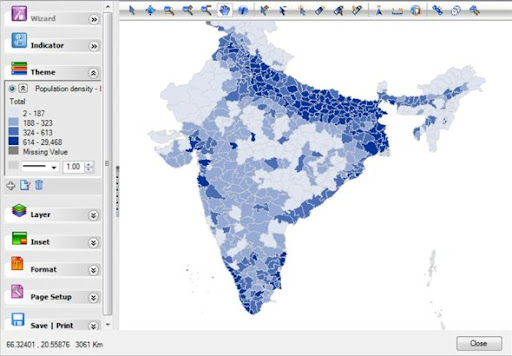
›To kick-off the New Year, we’re highlighting CensusInfo 2010—an initiative to help countries distribute their census data in a format that is free, flexible, and customizable to meet diverse public needs. For us, it’s a new tool to access and visualize census data from around the globe.
The CensusInfo software(the program must be downloaded and installed) allows users to create tables, graphs, and color-coded maps depicting indicators such as population density, fertility rate, and sex ratio. The data’s resolution—national, regional, district, or smaller—is up to the user, but limited by the information reported by each country’s census bureau. When older data is available, users can also view trends over time.
The heart of CensusInfo is data presentation. Robust options include: capacity to import new datasets, compatibility with Google Earth and NASA’s World Wind technologies, and the ability to download visualizations as images, “animated flipbooks,” and videos.
Aside from the relatively steep learning curve to master each of its functions, the software is principally limited by the small number of countries in its database: only 10 countries are included in the software’s pre-installed dataset. That number, however, could increase in the near future.
In what CensusInfo 2010 hopes will be a trend, the Palestinian Central Bureau of Statistics, as of August 2009, became the first National Office of Statistics to independently incorporate its data into CensusInfo. While a powerful piece of software, CensusInfo’s potential rests on whether others follow suit.
Photo Credit: CensusInfo’s output of population density in India.
 “Even in the hardest moments of conflict there are opportunities for cooperation, and they need to be seized,” said
  “In the academic world, there’s a growing documentation about the coming wars of the 21st century are going to be about water resources,” said
  “We came out with a vision that is a shared vision,” echoed
  “Water is common for all of us because it is the base of our life, of our survival,” said
  “Water disputes that can start at the local level—little things—have the potential, in extreme cases, to burgeon into something much bigger,” warned Ken Hackett, president of
  Prior to witnessing violent protests within the Altiplano region of Bolivia, Jason Gehrig assumed that the primary obstacles to successful water development efforts would be found in the technical phase of designing or building delivery systems. Local political developments, however, demonstrated that “we can’t just be looking at development without also looking at the structural issues at play,” said Gherig.
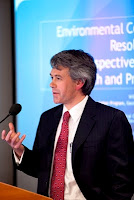 William Hall noted that conflict sensitive practices apply several elements of environmental conflict resolution (
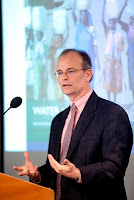 Tjip Walker noted that effective governance of water and other common pool resources, often magnets for mismanagement and contention, should be a pivotal concern for peacebuilders in fragile states. Drawing on research on governance and conflict, Walker explained that countries that are more democratic, and allow for greater social participation, are at a lower risk for violent conflict.
 “Pregnancy is not a disease, a woman should not die of pregnancy…it doesn’t need a new drug…it doesn’t need research – we just need skilled workforce at different levels,” argued Seble Frehywot,
  “
“ “We invite the maternal health community to take advantage of the incredible momentum that human resources for health is having right now,” shared Pape Gaye, president and CEO of IntraHealth. While there are many issues within the health system that need to be strengthened, Gaye maintained that “we must pick our battles” and advocated for an emphasis on scaling-up the training and availability of midwives.