-
GMHC 2010: Maternal Health Realities: Accountability and Behavior Change
›Four days ago a young woman died giving birth in a bustling marketplace in New Delhi. Just steps away from Parliament, this woman was left to die and no emergency care was sent to her – no midwives, nurses, or doctors; just people walking around her accepting the situation as normal and an uncontrollable way of life. But this is Delhi…not a remote tribal village where the nearest health clinic is hours away (on foot).
This juxtaposition lingers on in me as I sit in the plenary session of day two at the Global Maternal Health Conference and listen to Syeda Hameed, member of the Indian Parliament Planning Commission, discuss her recent visit to a remote village where every house has 10 children living in filth, flies, and emptiness.
Although I have been working on such development issues for the last five years I do not work in the field, nor do I visit the developing world on a regular basis. Hearing these stories, coupled with my firsthand experience of witnessing poverty here in Delhi reminds me of the daily reality of those 342,900 women who die every year. This is their way of life and I think it’s poignant that today’s sessions emphasize community based care, family planning, accountability, behavior change, and culture.
“Context, context, context,” said Wendy Graham of IMMPACT at yesterday’s plenary session. I agree, the context of social and cultural norms is an underlying factor that must be taken into consideration when implementing maternal and child health (MNCH) programs. With a background in psychology, I appreciated when Dr. Zulfiqar Bhutta, of Aga Khan University, recognized the toll of poverty on the imagination and the mentality of fatalism.
That is why it is so essential to “ask the people how they feel and bring their voices into the forums where policy decisions are made,” said Hameed. It is also important to hold key players accountable and include men in MNCH activities.
During the side session Male Involvement in Reproductive and Maternal and Newborn Health six field experts (in which half the panelists and audience members were men!) discussed effective methods for increasing male participation in family planning, vasectomies, gender equality, and hospital care.
The key findings from this discussion include:- Targeted interventions that educate men about danger signs and pregnancy complications correlates with behavior change and increased facility births.
- Many young married men feel pressured to prove their fertility. A sample of men was evaluated and those who had increased education and income were more likely to delay first pregnancy.
- Vasectomy is not something men want to talk about with family planning fieldworkers; however, official recognition of the vasectomy benefits by the government did increase referrals.
- Puppet and theater shows that demonstrate gender equity behaviors provide an opportunity for dialogue. Women in this study reported increased gender equity in family planning decision-making.
Originally posted at Maternal Health Task Force, by Calyn Ostrowski of the Woodrow Wilson International Center for Scholars, Coordinator of the Maternal Health Dialogue Series in partnership with the Maternal Health Task Force and UNFPA.
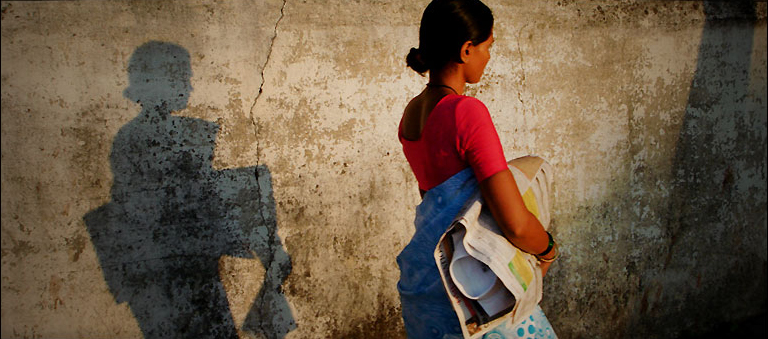
Photo Credit: “Parliament Street” courtesy of flickr user ~FreeBirD®~. -
GMHC 2010: Empowering the Next Generation
›“We do not need new legislation… we need affordable, effective, and scalable solutions,” said Shn Gulamnabi Azad, Minister of Health, India, at the opening ceremony of the first-ever Global Maternal Health Conference in New Delhi. Co-hosted by the Maternal Health Task Force and the Public Health Institute of India, this three-day technical meeting builds upon the momentum of Women Deliver and the G8 summit by bringing together 700 researchers, program managers, advocates, media, and young people to exchange ideas, share data, develop strategies, and identify solutions for reducing maternal mortality.
In order to reduce India’s maternal mortality rates, Azad called for the repositioning of family planning programs to include maternal and child health and not limit the scope of services to population control as historically executed. Improving family planning and maternal health services must also address the reproductive health needs of adolescent girls, and India is currently developing a new ministry that will target gender inequality, poverty, early child marriages, as well as other critical health issues important to young girls such as the dissemination of sanitary napkins.
“Although the legal age of marriage is 18, there are districts in India where 35 percent of the population is married between the ages of 15-18,” said Azad. During the side event “Adolescent Girls: Change Agents for Healthy Mother and Child,” technical experts such as Anil Paranjap of the Indian Institute of Health Management presented evidence that girls who marry between 15-18 are five times more likely to die during childbirth than women in their early 20’s.
“We still have deep-rooted subordination that makes it very difficult for young women to realize their sexual and reproductive health rights,” said Sanam Anwar with the Oman Medical College. Interventions such as the UDAAN project – a private-public partnership between the Center for Development and Population Activities (CEDPA) and the Government of India – demonstrate promising solutions for empowering young people through the use of existing infrastructure. In collaboration with teachers, parents, principals, and students, this project successfully increased leadership skills and improved youth knowledge on menstruation, health, friendship, peer pressure, early marriage, and reproductive health, said Sudipta Mukhopadhyay of CEDPA.
Empowering “young people” to improve maternal health also requires that the community support committed new thinkers and future leaders. The Young Champions of Maternal Health Program is a unique and refreshing group of young professionals from 13 countries dedicated to improving maternal health, and I look forward to learning how this new energy will further the maternal health agenda.
Originally posted at Maternal Health Task Force, by Calyn Ostrowski of the Woodrow Wilson International Center for Scholars, Coordinator of the Maternal Health Dialogue Series in partnership with the Maternal Health Task Force and UNFPA.
Photo Credit: “Indian Girl” courtesy of flickr user Jarek Jarosz. -
‘NSB’ Blogs from the 2010 Global Maternal Health Conference in New Delhi
›The 2010 Global Maternal Health Conference kicked off today, perhaps fittingly, in India – one of the world’s fastest growing nations but one that also faces serious reproductive health challenges. The Wilson Center’s Calyn Ostrowski is in New Delhi for the conference and will be providing updates to The New Security Beat throughout the week.
Those interested can also find a schedule of events and list of participants on the conference website as well as live webcasted events on the main page. Stay tuned!
Photo Credit: “Mumbai, India, November 2009” courtesy of flickr user travelmeasia. -
Climate Change Adaptation and Mitigation in the Agricultural Sector
›“Climate Change and China’s Agricultural Sector: An Overview of Impacts, Adaptation and Mitigation” from the International Centre for Trade and Sustainable Development (ICTSD) explores mitigation and adaptation strategies to avoid the worst effects of climate change in China’s farming sector. The authors, Jinxia Wang, Jikun Huang and Scott Rozelle, point out that, although often overlooked in favor of the industrial sector, a disproportionate amount (greater than 15 percent) of China’s greenhouse gas emissions come from agriculture. Challenges include over-fertilization, high methane levels, water pollution, and water scarcity. Wang, Huan, and Rozelle predict that trade “can and should be used to help China mitigate the impacts of climate change” and programs promoting better calibration of fertilizer dosages and “conservation tilling” practices will help farmers reduce emissions.Also from ICTSD comes another study on climate adaptation and mitigation, this time focusing on the developing world. Globally, agriculture accounts for only 4 percent of GDP but according to the IPCC it also accounts for more than 25 percent of greenhouse gas emissions, making climate adaptation and mitigation in the sector particularly important. “Agricultural Technologies for Climate Change Mitigation and Adaptation in Developing Countries: Policy Options for Innovation and Technology Diffusion” by Travis Lybbert and Daniel Sumner examines some of the more promising innovations that may help those countries most vulnerable to climate change to cope with and minimize risk. The authors suggest that most policies that target economic development and poverty reduction will also naturally lead to improvements in agriculture, accordingly most of their recommendations center around improving market efficiency, communication of technologies and best practices, and investment in research and development. -
Floods, Fire, Landslides, and Drought: The Guardian’s “Weather Crisis 2010”
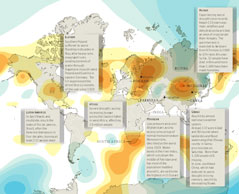
›From the Guardian’s DataBlog comes an excellent overview of some of the extreme weather affecting the globe this summer, from the devastating floods in Pakistan which have inflicted “huge losses” to crops and exacerbated an already tenuous security situation, to the wildfires in Russia which have smothered the capital in dangerous smog and crippled domestic wheat supplies.
“Global temperatures in the first half of the year were the hottest since records began more than a century ago,” writes author and graphic artist Mark McCormick.
The orange areas of the map represent high pressure systems and the blue, low pressure systems, which as explained by Peter Stott of the Met Office, are important indicators of the rare climatic conditions that caused this summer’s abnormal conditions across Eurasia.
The flooding in Pakistan has garnered the most international attention, having now affected more people than the 2004 tsunami, 2010 Haiti earthquake, and 2005 Kashmir earthquake combined. Other highlighted areas of the map include flooding in Poland and Germany, drought in England, mudslides in Latin and South America, record-breaking drought and hunger in West Africa, and flooding and landslides in China, which recently pushed the world’s largest hydroelectric dam to its limit and have now been blamed for more than 1,000 deaths.
Although it does a good job highlighting the frequency and severity of extreme weather events this summer, it’s important to note that the map only covers events in July and August. That leaves out the “1000-year” floods in Tennessee this May as well as the heavy snowfall seen in the Northeast United States and the winter of “white death” in Mongolia earlier this year, which also severely disrupted local and national infrastructure as well as a great many people’s livelihoods.
Sources: Agence France-Presse, BBC, Guardian, National Oceanic and Atmospheric Administration, New York Times, Telegraph, UN Dispatch.
Image Credit: “Weather Crisis 2010” by Mark McCormick, courtesy of Scribd user smfrogers and The Guardian. -
Misguided Projections for Africa’s Fertility
›By assuming that sub-Saharan Africa’s total fertility rate will decrease to 2.5 children per woman by 2050, the most recent population projections issued by the Population Reference Bureau likely continue to underestimate fertility for Africa. Though northern Africa has significantly lowered fertility, sub-Saharan Africa’s TFR is still 5 children per woman. Achieving the levels projected by PRB or the United Nations will largely depend on whether the conditions that led to past fertility declines for other states can be established in sub-Saharan Africa.
Demographers have identified numerous factors associated with fertility decline, including increased education for females, shifting from a rural agricultural economy to an industrial one, and introduction of contraceptive technology. Sub-Saharan Africa is only making slow progress in each of these areas.
Surveying Obstacles to Development
Primary school enrollment is up, but the pace of improvement is declining. Meanwhile, gender gaps persist: Enrollment for boys remains significantly higher than for girls. Girls’ education is associated with lower fertility, partly because education helps women take charge of their fertility and also because education influences employment opportunities. Increased female labor force participation has been shown to increase the cost of having children, and is therefore associated with initial fertility declines.
Disease is one wildcard for Africa that limits the utility of past models of demographic transition in the African context. HIV/AIDS is decimating sub-Saharan Africa’s adult workforce and creating shortages of teachers that will impede future efforts to boost primary school enrollment. According to the United Nations, the number of teachers in sub-Saharan Africa needs to double in the next five years to reach Millennium Development goals.
Development that would shift the region’s economies from agriculture to industry is also lagging. While several West African countries are seeing some gains, the African continent on the whole faces major structural impediments to development. In The Bottom Billion, Paul Collier points out that many of these countries may have “missed the boat” to attract investment and industry that would pull the region out of poverty, partly because the least developed countries are still not cost-competitive enough when compared with current centers of manufacturing, like China.
Finally, there remains a high unmet need for family planning. One in four women aged 15 to 49 who are married or in union –- and who have expressed an interest in using contraceptives — still do not have access to family planning tools. In general, maternal mortality remains high and adolescents in the poorest households are three times more likely to become pregnant and give birth than those in the richest households, according to the most recent UN Millennium Development Goals report.
Sub-Saharan Africa: Off the Radar?
Sub-Saharan Africa suffers from a lack of attention by the international community and lack of political capacity at home. Many countries in the region are plagued by civil strife and poor governance, and developed countries continue to fall short of development assistance pledges. There is not the same sense of urgency today among developed countries about the global population explosion as there once was. Cold War politics and the environmental and feminist movements motivated much of the study of fertility and funding of population programs during the second half of the 20th century. Attention by governments and NGOs sped the fertility transition among many countries.
Today, the world’s wealthiest countries are not concerned primarily with Africa’s problems, but rather are more concerned with their own population decline and with the national security implications of population trends in areas associated with religious extremism. The recession has further hindered the flow of development funds.
Fertility is the most difficult population component to predict, and demographers must draw on the experiences of other regions to inform assessments of Africa’s population patterns. Demographers seem to be overconfident that Africa’s fertility will follow the pattern of recent declines, particularly in Latin America, which were more rapid than Western Europe’s decline due to the diffusion of technology and knowledge.
Once states begin the demographic transition towards lower fertility and mortality, they have tended to continue, with few exceptions. Therefore, most projections for Africa assume the same linear pattern of decline will hold. Yet, the low priority of Africa’s population issues among the world’s wealthiest states, combined with shortfalls in education, development, and contraception, may mean that the demographic transition in Africa will be slower than predicted.
Projections are useful to give us a picture of what the world could look like if meaningful policy changes are made. In the case of sub-Saharan Africa, prospects for these projections are dim.
Jennifer Dabbs Sciubba is the Mellon Environmental Fellow in the Department of International Studies at Rhodes College in Memphis, Tenn. She is also the author of a forthcoming book, The Future Faces of War: Population and National Security.
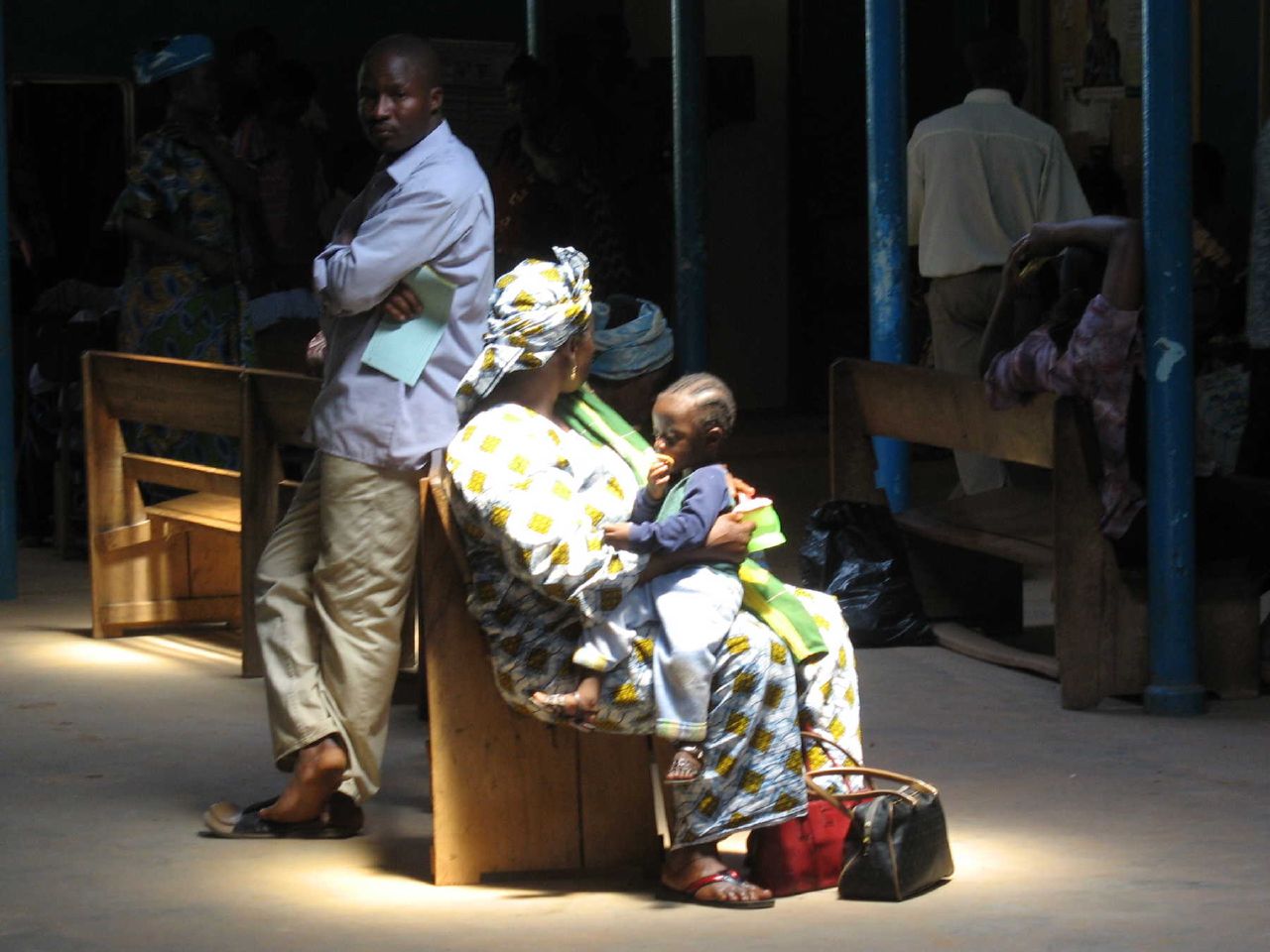
Photo Credit: “Waiting,” ECWA Evangel Hospital, Jos, Nigeria, courtesy of flickr user Mike Blyth. -
How Maternal Mortality and Morbidity Impact Economic Development
›“Investing in women and girls is the right thing to do,” says Mayra Buvinic, sector director of the World Bank’s gender and development group. “It is not only fair for gender equality, but it is smart economics.” But while it may be smart economics, many developing countries fail to address the underlying social causes that impact economic growth, such as poverty and gender inequality. Buvinic was joined by Dr. Nomonde Xundu, health attaché at the Embassy of South Africa in Washington, D.C., and Mary Ellen Stanton, senior maternal health advisor at the U.S. Agency for International Development (USAID), at the sixth meeting of the Advancing Policy Dialogue on Maternal Health Series, which addressed the economic impact of maternal mortality and provided evidence for the need for increased investment in maternal health.
-
Flooded With Food Insecurity in Pakistan
›The floods sweeping across Pakistan have caused widespread destruction, ruined livelihoods, displaced millions, and sparked a food crisis. Food prices have skyrocketed across the country as miles of farmland succumb to the deluge, including 1.5 million hectares in Punjab province, Pakistan’s breadbasket and agricultural heartland.
Food insecurity is now rife across the country — yet even before the floods, millions of Pakistanis struggled to access food. Back in 2008, the UN estimated that 77 million Pakistanis were hungry and 45 million malnourished. And while many developing nations have begun to recover from the global food crisis of 2007-08, Pakistan’s food fortunes have remained miserable. Throughout 2010, Pakistan’s two chief food staples, rice and wheat, have cost 30 to 50 percent times more than they did before the global food crisis. Drought, rampant water shortages, and conflict have intensified food insecurity in Pakistan in recent months.
A new edited book volume published by the Wilson Center’s Asia Program, Hunger Pains: Pakistan’s Food Insecurity, examines the country’s food insecurity. The book has already been the subject of a news story and an editorial in the Pakistani newspaper Dawn. The book, edited by Michael Kugelman and Robert M. Hathaway, is based on the 2009 Wilson Center conference of the same name. It assesses food supply challenges, access issues, governance constraints, social and structural dimensions, gender and regional disparities, and international responses.
The book makes a range of recommendations. These include:- Declare hunger a national security issue. Since some of Pakistan’s most food-insecure regions lie in militant hotbeds, hunger should be linked to defense, and food provision projects should be given ample public funding.
- Diversify the crop mix so that Pakistan’s agricultural economy revolves around more than wheat and rice. The country should accord more resources to crops that are less water-intensive and more nutritious.
- Give schools a central focus in food aid and food distribution. Using schools as a venue for food distribution gives parents powerful incentives to send their children to school.
- Tackle the structural dimensions. Strengthening agricultural institutions, improving infrastructure and storage facilities, and injecting capital into a stagnant farming sector are all key to making Pakistan more food-secure. Yet unless Pakistan deals with poverty, landlessness, and entrenched political interests in agriculture, food insecurity will remain.
Michael Kugelman is program associate with the Asia Program at the Woodrow Wilson International Center for Scholars.
Photo Credit: “Chitarl, Pakistan” where floods damaged the way over Lawari pass and killed five in August 2006. Courtesy of flickr user groundreporter
Showing posts from category *Blog Columns.