Showing posts from category *Blog Columns.
-
Health, Demographics, and the Environment in Southeast Asia
›“Health and Health-Care Systems in Southeast Asia: Diversity and Transitions,” launches a series in The Lancet on health in Southeast Asia. While social, political, and economic development have paved the way for substantial health improvements in some countries, demographic transitions are taking place at among the fastest rates in the world, including reductions in fertility, population aging, and rural-to-urban migration. An epidemiological shift is occurring as well, from infectious to chronic diseases. Rapid urbanization and population movement can not only affect the emergence and spread of new infectious diseases directly, but can also exacerbate environmental changes that indirectly contribute to the burden of waterborne and vector-borne diseases. The series, available early online, addresses these concerns in more detail. Moving forward, the authors advocate for “enhanced regional cooperation in the health sector to share knowledge and rationalize health systems operations, leading to further public health gains for the region’s diverse populations.” In “A Stormy Future for Population Health in Southeast Asia,” author Colin D. Butler responds to the series, stressing that the health of the future generation is dependent on actions today. Environmental change will likely bring sea-level rise that threatens urban centers and food bowls, causing regional food scarcity, exacerbating diseases like dengue fever, increasing the number of extreme weather events, and contributing to resource scarcity throughout the region. With increasing need for sustainable development in the region, Butler concludes that “stronger human factors will be essential to counter the increased physical stresses that seem to be the inevitable destiny of Southeast Asia, largely as a result of the actions of people who have never seen its shores.”
 -
Watch: Geoff Dabelko and John Sewell on Integrating Environment, Development, and Security and the QDDR
›“We all must check our stereotypes of the other communities at the door…we’re not talking about hugging trees and hugging pandas,” said Geoff Dabelko, director of the Wilson Center’s Environmental Change and Security Program, in a panel discussion on Foreign Policy Challenges in the 112th Congress as part of the Wilson Center on the Hill series. Dabelko argued for a more multi-dimensional and integrated approach to addressing environmental issues.
“To tackle these problems, these connections between, say, natural resources, development, and security, it really does require that we have an integrated approach to our analysis [and] an integrated approach to our responses,” Dabelko said.
In dealing with climate change, for example, “a more diversified view would be one where we spend more time trying to understand adaptation,” said Dabelko. “How are we going to deal with the expected impacts of these problems?” he asked.
Dabelko called on policymakers to seek “triple bottom lines,” pointing out that “if you’re worried about climate change, or you’re worried about development, or you’re worried about fragile states, some of the same governance interventions and strong institutions in these fragile or weak states are going be the ones that will get you benefits in these multiple sectors.”
The Political Space
Fortunately, the current political environment is one in which “there is political space for integration,” said Dabelko, as demonstrated by, for example, the Quadrennial Diplomacy and Development Review (QDDR), which Wilson Center Senior Scholar John Sewell addressed in his remarks.
“All of you who are directly or indirectly engaged in Congress are going to be faced with a very important opportunity in the next 12 to 24 months,” Sewell said, “to focus both diplomacy and development on the major challenges that are going to face all of us in the first half of the century.”
Calling the QDDR a “major rethink of both American diplomacy and American development,” Sewell applauded its conceptual alignment, but cautioned that the review leaves many questions unanswered about its implementation.
“The QDDR sets no criteria,” said Sewell. “Are we going to continue to put large sums of money into countries that aren’t developing? Are we going to follow the choice of issues – food, environment, and so on and so forth? It’s a question that is not answered in any of these documents.”
Sewell also pointed to potential clashes over budgeting, USAID/State leadership, and the lack of coordination with other large development agencies, like the World Bank and International Monetary Fund.
For more on Sewell’s analysis of the QDDR, see his recent blog post “Reading the QDDR: Is the Glass Half Full or Half Empty?” -
Ruth Siyage, PHE Champion
Promoting Family Planning and Livelihoods for a Healthy Environment in Uganda
›This PHE Champion profile was produced by the BALANCED Project.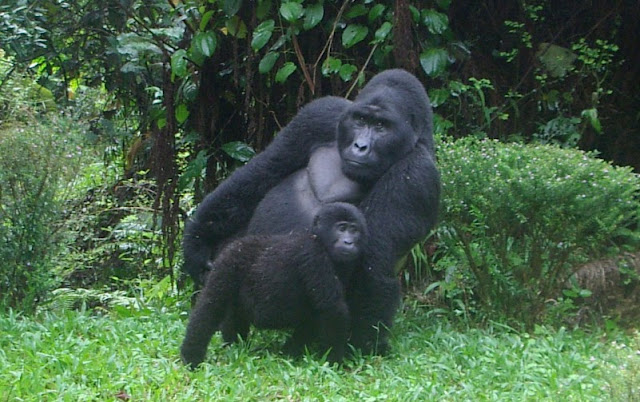
Meet 32 year old Ruth Siyage – a wife, mother, peasant farmer, shop owner, and population, health, and environment (PHE) champion. Ruth, her husband, Siyage Benon, and their three healthy daughters – ages 3, 6, and 11 – live about an hour from Bwindi Impenetrable National Park (BINP) in Uganda’s Kanungu District. The 33,000-hectare BINP is a World Heritage Site known for its exceptional biodiversity – with over 200 species of trees, 100 species of ferns, 350 species of birds, 200 species of butterflies, as well as many endangered species, including the mountain gorilla.
In addition to being a peasant farmer who grows potatoes, millet, beans, and groundnuts to feed her family, Ruth also has a small shop in the nearby trading center where she sells groceries and interacts with most of her friends. Ruth first learned of and embraced the PHE approach through a neighbor and local community volunteer, Mrs. Hope Matsiko – one of 29 PHE volunteers trained by the Conservation Through Public Health (CTPH) programs.
Ruth recalls:Hope used to approach us and tell us about family planning. Others refused to listen, but I took it up. Before, I used to refuse to go to Kajubwe Health Center for services and never got information because it was so far away. However, when Hope, the local volunteer, who is also my neighbor, visited me at home, I got more information about family planning. She also counseled me on the methods I could use, which was best for my health and how to use it. I now use family planning.
As a new champion, Ruth uses several ways to teach her community about family planning and PHE activities. One way is through face-to-face discussions with individuals attending village meetings. She focuses on women she sees often and who she knows have closely-spaced pregnancies. Recently, three of these women started using modern contraceptives.Ruth also spreads her PHE messages through her work with the local women’s association, Kishanda Bakyara Twebiseho (Kishanda Women Livelihoods Association), as an active member of a local church, and as a local village council member. In the council, she is in charge of teaching about agriculture and the environment – a perfect opportunity to share her PHE messages about the linkages between population, health, and the environment. Ruth is a great model of the benefits of taking a PHE approach, with her well-spaced pregnancies – which have helped ensure her own reproductive health and that of her three daughters – and her teaching of others, from what she now knows about the need to keep ourselves and our environment healthy to the impacts of each on the other.
Ruth says she believes that through a PHE approach much can be done and has been done:By teaching people about safe water use, I believe that we can stop diarrhea diseases. And by teaching about sanitation, we can help prevent diseases such as malaria, tuberculosis, and worms. Now my neighbors seldom get sick. We have a fairly healthy life. When we are not sick, we do not have to sell our goats and land to buy medicine. And when we plan our families, we are better able to care for and educate our children. Through our community sensitization, people now even understand the importance of gorilla conservation.
Ruth is especially appreciative of the CTPH program, which first taught her about and then turned her into an advocate for the integrated PHE approach.
This PHE Champion profile was produced by the BALANCED Project. A PDF version can be downloaded from the PHE Toolkit. PHE Champion profiles highlight people working on the ground to improve health and conservation in areas where biodiversity is critically endangered.
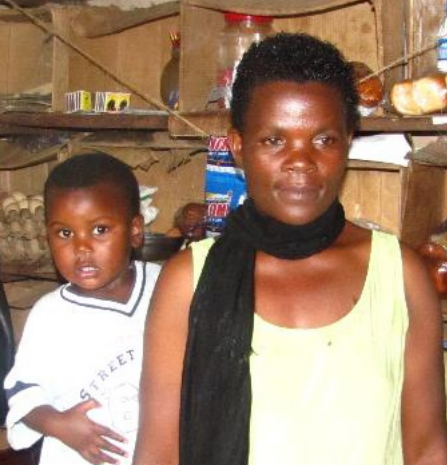
Photo Credit: Silverback mountain gorilla named Mwirima with a juvenille gorilla from the Rusguguar group near Bwindi Impenetrable National Park, and Ruth and her son in their shop in rural Uganda, courtesy of CTPH. -
Civilian Power in a Complex, Uncertain World
›Leading Through Civilian Power: The First Quadrennial Diplomacy and Development Review (QDDR) initiates an encouraging process of rethinking and restructuring that is long overdue. It explicitly links itself to the 2010 National Security Strategy and echoes the latter’s commitment to “national renewal and global leadership.” It refers briefly to the obvious companion document, the Quadrennial Defense Review, although it resists engaging with some key aspects.
-
Can Women Help Make Peace Agreements Sustainable?
›The role of women in civil society and their involvement in peace negotiations has been notable, though women have often been overlooked as mediators in peace talks.
On January 20, the Wilson Center’s Middle East Program and the Institute for Inclusive Security (IIS) hosted a meeting titled “Can Women Help Make Peace Agreements Sustainable?” with Luz Mendez, member of the Advisory Council of the Global Fund for Women, Guatemala; Jacques Paul Klein, former United Nations Secretary General’s special representative and coordinator of United Nations operations, Liberia; Alice Nderitu, National Cohesion and Integration Commission, Kenya; and Suaad Allami, director, Sadr City Women’s Center and Legal Clinic, Iraq. Carla Koppell, director of the Institute for Inclusive Security, moderated the event.
Mendez recounted her experiences at the negotiating table during the peace process that ended a 36-year war in Guatemala. She described the shift in that process when the United Nations went from observer to mediator once participants realized the original format was not producing results. Mendez emphasized the challenges she faced when trying to address women’s rights concerns in talks, being the only woman present for four years of the five-year process. She also described the satisfaction she felt when the UN moderator consulted her on the inclusion of particular women’s rights provisions. Mendez also highlighted the ongoing challenges in Guatemala, such as weak implementation mechanisms for the accords, the ubiquity of femicide, and the persistence of socioeconomic grievances.
Klein, who served the UN aiding victims in Bosnia-Herzegovina and Liberia, denounced the violence and hatred that often erupts when a state is too weak to implement rule of law and is unable to turn its human capital into a source of strength. He described the prevalence of human trafficking witnessed throughout his career and the programs implemented to rescue kidnapped and exploited women. He concluded by emphasizing the responsibility and ability that each individual has to foster tolerance and take action against violence and repression.
Nderitu reviewed the origins of ethnic tensions in Kenya, which erupted into violence following elections in 2007-2008, as well as the role of women in the subsequent peace negotiations. She referred to the Kenya National Dialogue and Reconciliation agreements mediated by Kofi Annan, which involved women throughout the peace process. These agreements focused on ending violence and the humanitarian crises while also addressing longstanding issues such as poverty, inequality, and unemployment.
Allami described the rise of the conservative movement in Iraq since the fall of Saddam Hussein, which has effectively limited women’s rights and freedoms codified in the existing Iraqi personal status law. She stated that coalition forces in Iraq helped to limit this trend, but the situation was still contentious because Iraqi leadership tends to not work with women’s groups even though women are mandated to comprise no less than 25 percent of parliament. Allami indicated that female leadership is ultimately weakened if the general female population’s rights are repressed. She also discussed the commitment the international community and the United States have made to Iraqi women.
Koppell concluded by discussing how there are plenty of models throughout the world where women in civil society have been brought into negotiations and peacemaking; policymakers can no longer justify the exclusion of women by claiming there are no proven strategies of inclusion.
Sara Girgis is an intern with the Middle East Program at the Wilson Center.
Photo Credit: “070905-A-5406P-024,” courtesy of flickr user The U.S. Army. Sgt. Yasser Ahmed, a soldier from the Iraqi Army’s 3rd Battalion, 1st Brigade, 11th Infantry Division, talks with a local woman during a patrol in the Graya’at area of Baghdad’s Adhamiyah District Sep. 5. -
Demographic Trends and Policy Implications in Northeast Asia
›Japan, the People’s Republic of China, Taiwan, and Korea are all aging societies. On February 26, the Wilson Center’s Asia Program hosted an event to consider issues related to demographic change in Northeast Asia. What will be the effect of aging on economic output in these countries? Can welfare states established for much younger populations in developed economies survive the stress of demographic change, or will governments in Northeast Asia need to radically rethink the provision of care to the elderly? Can immigration reform alleviate many of the problems associated with more elderly populations in Northeast Asia? And will current demographic shifts foster more benign or more belligerent interstate relations in the region?
At the event, Harvard University School of Public Health research associate Jocelyn Finlay noted that demographic trends are often overlooked in explaining economic growth in Japan, South Korea, and Taiwan between 1960 and 2000. Demographers estimate that decreases in infant mortality and adult fertility levels, which resulted in an increase of workers relative to dependents, accounted for up to a third of economic growth in these countries during this period. As the age cohort born after 1945 enters into retirement, however, the increase in dependents relative to new workers will be a contributing factor to sluggish growth. Finlay mentioned that pro-natalism and pro-immigration policies, and policies that encourage women and the elderly to participate in the workplace, could help to mitigate the effects of an aging society on economic growth but noted that such policies were all difficult to implement.
These difficulties were examined in further detail by Ito Peng, professor of sociology at the University of Toronto. Peng noted that East Asian democracies have traditionally maintained very lean welfare states, relying instead on private institutions such as extended families to carry much of the burden of, for example, care for the elderly. However, public provision of care for the aged is increasing in these countries, where the nuclear family has become the norm. Governments must actively pursue strategies to increase the number of workers and therefore income tax revenues to pay for the resulting increases in public spending.
However, policies intended to expand the tax base often have unintended consequences. For example, encouraging people to have larger families often has the effect of forcing mothers to stay at home to care for their children, depriving the labor force of a productive worker in the short term. To address this problem, Japan and South Korea have increased the level of public childcare provision. However Peng believes that there needs to be greater integration between the private and public spheres to make Northeast Asian workplaces, still a sphere of male dominance, friendlier to working mothers. Companies that insist on significant overtime duties could, for example, find ways to let working parents maintain a work-life balance that allows them to personally care for their children. Northeast Asian countries can also institute pro-immigration policies to bring more young workers from abroad. However, sustained immigration policies are also difficult in nations, like Japan and South Korea, without a history of accepting newcomers.
For Richard Cincotta, demographer-in-residence at the Stimson Center and consultant for the Wilson Center’s Environmental Change and Security Program, demographic change will be a major factor in determining the way states in Northeast Asia approach security. To illustrate the relationship between demography and security, Cincotta noted that Japan’s militarist period in the 1930s and 1940s occurred when its population was younger, more ambitious, and more energetic. With older societies, countries in Northeast Asia will be able to recruit fewer males for the military, meaning their foreign policies may shift more towards caution.
The exception, however, is China, where the number of potential male recruits far outnumbers those of its neighbors. This means that Japan, South Korea, and Taiwan will come under more pressure to intensify the use of human capital by promoting more professionalized and better equipped militaries. They will also have incentives to resolve any differences with their key ally, the United States, as well as among each other. Cincotta suggested that we may be seeing the start of a new type of Cold War, where Pacific Northeast Asian states cooperate to check a potential Chinese regional hegemon.
Bryce Wakefield is a program associate with the Asia Program at the Woodrow Wilson Center.
Photo Credit: “Mouth wide open,” courtesy of flickr user Azzazello. -
Eliya Zulu on Population Growth, Family Planning, and Urbanization in Africa
›“The whole push for population control or to stabilize populations in Africa in the ’70s and the ’80s mostly came out of the West,” said Eliya Zulu of the African Institute for Development Policy (AFIDEP) in this interview with ECSP. Then new research brought to light the fact that many women in Africa actually wanted to control their fertility themselves, but they didn’t have access to family planning.
“It kind of put the African leaders who really didn’t want to talk anything about fertility control and so on in a fix,” Zulu said. “Because all of sudden now it was the African women themselves who are saying we need these services – it was not an imposition from the West.”
Based in Nairobi, Kenya, Zulu said that part of what he does at AFIDEP is “try to get African countries to think about the future.” Current economic growth in parts of Africa simply can’t match population growth, but improving access to family planning and child/maternal health infrastructure can greatly reduce fertility rates – and quickly.
“The question for Africa is: Are we going to be ready? And we need to prepare,” said Zulu. “For that to happen it’s not just about saying ‘let’s have fewer children.’ I think we also need to do this from a social developmental perspective where we also look at ways in which we can improve the quality of the population, empower women, invest in education, and so on.”
Four Factors of Success
There are several factors that are critical for successful family planning and child/maternal health efforts, said Zulu: strong political leadership, sustained commitment over time, financial investment (research has shown that over 90 percent of women in sub-Saharan Africa cannot afford contraceptives), and strong accountability mechanisms for monitoring performance of programs and use of resources.
“There are a number of countries that have shown that, even with the limited resources that Africa has, that with all the problems that Africa has, if you really emphasize those four factors that I mentioned, you can actually achieve very, very positive results,” Zulu said.
Rapid Urbanization and the Growth of Urban Poverty
Rapid urbanization is one of Africa’s biggest challenges, said Zulu. “Africa is the least urbanized region of the world now, but it’s growing at the highest rate.” If you look at historical examples from the West and Asia, “urbanization is supposed to be a good thing; urbanization has been a driver of economic development,” he said, but “the major characteristic of urbanization in Africa has been the rapid growth of urban poverty.”
“If the economies are not going to develop the capacity to absorb this population and create enough jobs for them, there’s going to be chaos, because you can’t have all these young people without having jobs for them,” said Zulu. “The challenge for many African governments is how to have sustainable urbanization and how to transform our cities into agents of development.”
The “Pop Audio” series is also available as podcasts on iTunes. -
A Dialogue on Managing the Planet
›“Collectively, the impact of humanity on the way the planet works is enormous and headed in disturbing directions,” said George Mason University professor Thomas Lovejoy in January at the first in a monthly series, “Managing the Planet,” led jointly by George Mason University and the Woodrow Wilson Center. The series will focus on how to take “environmental management to the scale of the entire planet,” as climate change, increasing energy consumption, and population growth place increasing stress on natural resources. We need to “chart a better course for the human future,” said Lovejoy.
Joining Lovejoy at the kickoff meeting were Dennis Dimick, executive environment editor at National Geographic, and Professor Molly Jahn of the University of Wisconsin-Madison. [Video Below]
Signs From Earth
“The entire human enterprise is based on the assumption of a stable climate,” said Lovejoy. The “most dramatic part of the story” in recent decades has been the melting of ice in the Arctic and in the mountain ranges of tropical zones. At current rates, tropical glaciers will completely disappear within the next 15 years. Though scientists predicted it would last until at least 2015, Bolivia’s Chacaltaya glacier – once renowned as the world’s highest elevation ski area – was reduced to a “few lumps of ice” in 2009, according to the BBC.
Glacial melt has raised water temperatures, altered species migrations, and threatened water supplies, coastal ecosystems, and the communities that depend on them, said Lovejoy. Higher ocean temperatures also cause the “fundamental partnership” between coral reefs and algae to break down, and “the Technicolor world essentially goes black and white,” he said.
Ocean acidification, fresh water shortages, melting glaciers, pollution, forest fires, and a “vast whipsaw” of temperature and weather extremes are just some of the effects human consumption has had on the planet, said Dimick. “It’s a sign from the Earth. It is telling us, ‘not all is well.’”
Finding Balance
As the world’s population nears seven billion this year, “we have one planet, yet we live like we live on four,” said Dimick. National Geographic’s new series “Population 7 Billion” seeks to answer the questions, he said, of “how do we find balance? How do we find ways to lower the intensity of our demands on an Earth that is telling us it is strained?”
Finding solutions to these challenges will require us to “look forward and confront the future,” said Dimick. “We need to rethink our whole global energy system,” he said, and “rethink our basic premise about what we need, as opposed to what we want.”
The global emissions limit of 450 parts per million (ppm) of carbon – the level needed to achieve the two-degree warming limit agreed upon at Cancun and Copenhagen – “is probably too high,” said Lovejoy. Most scientists agree that 350 ppm is a safer level; however, the world is already at “390 and climbing,” he noted, and global temperatures are projected to rise two degrees Celsius by 2035. If we want global warming to stop at two degrees, carbon emissions will need to stop growing by 2016, he said.
Figuring Out “Plan B”
“We have a problem that is presenting itself in a whole host of ways, with urgency that cannot be denied or dismissed,” said Jahn. “The way we do agriculture is a very significant contributor” to that problem, she said. Today, in the United States, “we waste 40 percent of the food we grow,” she said.
“Plan A…was about maximizing productivity at all costs,” said Jahn. “It looks like we may need another plan.” But figuring out “Plan B” will require steps by both policy and science communities. “We still have enormous gaps in our understanding towards even the basic science platform upon which these very important decisions about ways forward lie,” she said.
Managing the planet must begin with managing data so that we can “transition between data, information, and knowledge, and march this information out to…those making decisions that matter,” said Jahn. The information management structure that developed in the medical sciences and led to the creation of the National Library of Medicine is a useful model for managing the planet, she argued. “Personalized medicine” for the planet would allow people to use data to make better decisions about who should be doing what and where.
Using and expanding the knowledge base is a crucial step towards bringing together the science and policy communities on an international scale in search of solutions to managing the planet. “If we work together, we can change the world,” said Dimick.
Sources: 350 Science, BBC, Earth System Research Laboratory, United Nations Environment Program, United Nations Framework Convention on Climate Change.
Photo Credit: “Sun Over Earth (NASA, International Space Station, 07/21/03),” courtesy of flickr user NASA’s Marshall Space Flight Center.