-
Five Questions for Population, Health, and Environment Projects in Ethiopia
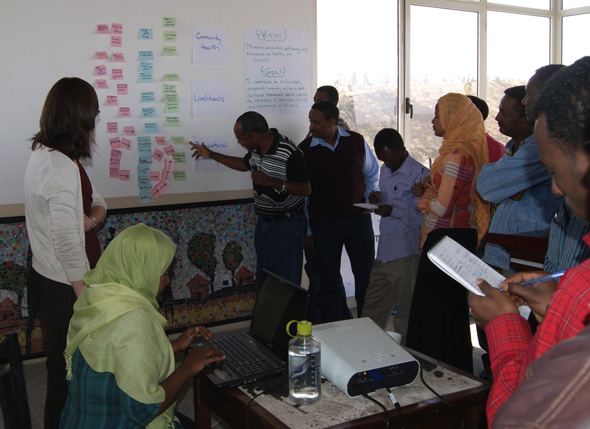
›
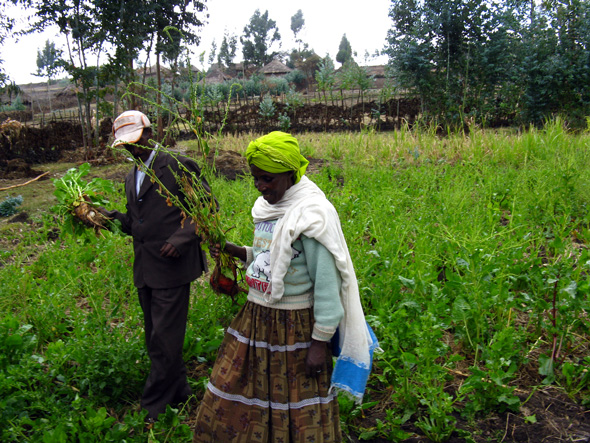
Since the integrated population, health, and environment (PHE) approach is relatively new in international development, donors, partners, and implementers want to know how it’s improving people’s lives. In the PHE community, we believe that combining efforts to address natural resource management, reproductive health, and livelihoods is making a difference in places where rapid population growth combines with poverty and environment degradation. But to know for sure and be able to convince others, we need to have data to support those beliefs.
-
Stronger Evidence Base Needed to Demonstrate Added Value of PHE
›
It is well known that public health issues that affect the world’s most vulnerable populations – food insecurity, maternal and child health, water- and sanitation-related disease, and resource scarcity – are inextricably linked. Where these linkages are strongest, experience on the ground has shown that community-based integrated approaches to development provide more effective and sustainable solutions over vertical, sector-based programs. But so far, there are very few comprehensive evaluations providing strong quantitative evidence of this advantage.
-
Tapping the Potential of Displaced Young People in Urban Settings
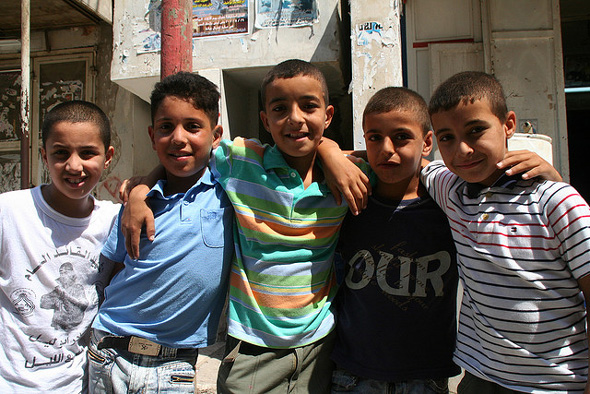
›“When young people claim their right to education and health – including sexual and reproductive health – they increase their opportunities to become a powerful force for economic development and positive change,” said Nicole Gaertner, of UN Refugee Agency and the U.S. Department of State, quoting Secretary of State Hilary Clinton at the Wilson Center on December 13. [Video Below]
-
Africa’s Urban Youth Cohort, and Women’s Health in Forest Communities
›As recently discussed by the National Intelligence Council, sub-Saharan Africa is home to both the most rapidly growing populations in the world and its fastest expanding cities. Save the Children’s recent report, Voices From Urban Africa: The Impact of Urban Growth on Children, explores the challenges faced by the continent’s youngest age cohort, revealing what forces are driving children and families to migrate to urban areas and the poverty many are experiencing upon getting there. In response to the report’s findings, the authors recommend training and deploying more health care workers, facilitating public-private dialogue to identify long-term water and sanitation solutions, improving access to jobs and skills training, expanding access to early childhood care, and strengthening the education system to ensure widespread attendance. Compiled from 1,050 interviews, the report is unique for its first-hand accounts of the daily lives of children, their families, and community members. -
2012’s Top Posts on the Environment, Demography, Development, and Security
›If 2011 was the year of political demography, then 2012 was perhaps when the full intersection of natural resource management, population dynamics, development, and security came into focus. The U.S. drought; global food price spikes; the return of famine in the Sahel and Horn of Africa; continued unrest in youthful countries across the Middle East; the Rio+20 and London Family Planning summits; new oil and mineral development in unstable countries; and increasingly more noticeable climate change around the world – all were big stories that brought the intersection of these issues to the forefront.
-
‘Dialogue’ Discusses Hurricane Sandy and Climate Change Perceptions in the U.S.
›Did Hurricane Sandy change the discussion about climate change in the United States? In this latest episode of the Wilson Center’s Dialogue program, Senior Wilson Center Advisor and Ohio University Professor Geoff Dabelko joins host John Milewski to discuss the potential impact of Sandy on climate policy and dialogue in the United States with Darryl Fears (The Washington Post) and Bob Deans (Natural Resources Defense Council).
-
The Challenges of the 21st-Century City (Policy Brief)
›The Wilson Center Policy Briefs are a series of short analyses of critical global issues facing the next administration that will run until inauguration day.
We live in a world that is different from that inhabited by our ancestors in many profound ways. Among the most important changes is that, for the first time, almost half of the world’s people live in cities. According to the United Nations, in 2008 the global urban population surpassed half of the world’s population of 6.7 billion compared with 13 percent a century ago and 3 percent a century before that. This trend will require profound changes in the way the U.S. government addresses everything from development policy to international security.
-
Beyond Carbon Credits: TIST Combines Reforestation, Health, and Livelihood Efforts
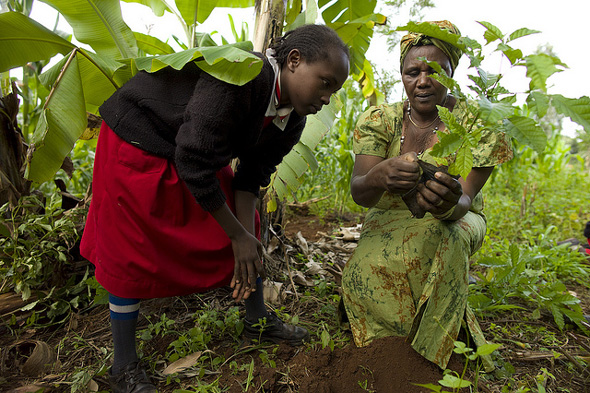
›Carbon offsets have fallen in and out of favor since they were established with the Kyoto Protocol in 1997. Critics say they allow wealthy organizations to placate consumers and claim their products are “green” without making any real, lasting changes. But, if the scheme works properly, some action is supposed to be taken somewhere, so what is it like at one of these credit-producing organizations?
Showing posts from category *Blog Columns.