-
Tracking This Year’s Extreme Weather
›“Over the past several months, extreme weather and climate events seemed to have become the norm rather than the exception,” writes Kelly Levin for the World Resources Institute (WRI). Indeed, records have been broken around the world as countries experience unprecedented heat, drought, flooding, or other types of severe weather. And people are starting to take notice. A number of recent stories try to make sense of this wild weather and what, if anything, it has to do with climate change.
-
Modeling Demographic Dividends, Fertility, and Income in Developing Countries
› The poorest households gain the least when countries reap the demographic dividend, according to a preliminary draft of a new study by four Harvard School of Public Health researchers. In “Microeconomic Foundations of the Demographic Dividend,” authors David Bloom, David Canning, Günther Fink, and Jocelyn Finlay write that 18 years of Demographic Health Surveys (DHSs) from 60 developing countries show that while declining fertility rates and dependency ratios can lead to rising incomes on a nationwide level, sub-nationally those trends occur unevenly and mostly benefit wealthier households. Poorer households, meanwhile, are likelier to see slower fertility declines, delaying the economic gains that can result from demographic transitions, and increasing inequality. Importantly, the authors emphasize that the study reflects “the early stages of the demographic transition”; long-term economic effects of fertility decline, they write, “remain ambiguous.”
-
Al Jazeera Maps Water Flashpoints Around the World
›Historically, the concept of “water wars” – inter-state wars fought solely over water – has been fairly unsubstantiated. But continued population growth, accelerating development, and environmental changes are making water more scarce and in turn increasing the chances of related tensions and violence. To illustrate the growing role water plays in tensions around the world, Al Jazeera has put together a map linked to a series of stories they’ve done on water “flashpoints.”
-
The Challenges and Benefits of Addressing Young Adolescent Reproductive Health
›There are 1.2 billion adolescents (ages 10 to 19) in the world today, accounting for 17 percent of the global population. They are the largest youth cohort in history, and 90 percent live in the developing world. Within that broad age group, very young adolescents (ages 10 to 14) often fall through the cracks of international development work, especially when it comes to health, and reproductive health in particular.
-
Counting the World: UNFPA Highlights the Challenges of Census-Taking
›The United Nations biannual population projections are some of the most (if not the most) widely used numbers in demography. Researchers and policymakers alike rely on the figures to plan for present and future challenges. But few consider the story behind the statistics. Where does the data come from? The United Nations Population Fund (UNFPA) recently released a short documentary on conducting censuses in challenging environments, with a spotlight on Indonesia, Chad, the Palestinian Territories, Belarus, and Bolivia.
-
Regulating the Resource Curse: U.S. Adopts International Transparency Rules for Oil Industry
›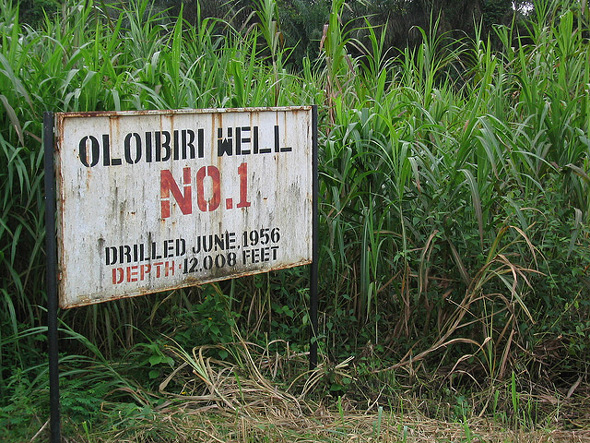
It’s not often that a change in accounting rules could reduce the probability of war. But that’s exactly what happened at the U.S. Securities and Exchange Commission (SEC) last month.
-
Jill Hagey, Behind the Numbers
Sahel Drought: Putting Malnutrition in the News
›The original version of this article, by Jill Hagey, appeared on the Population Reference Bureau’s Behind the Numbers blog.
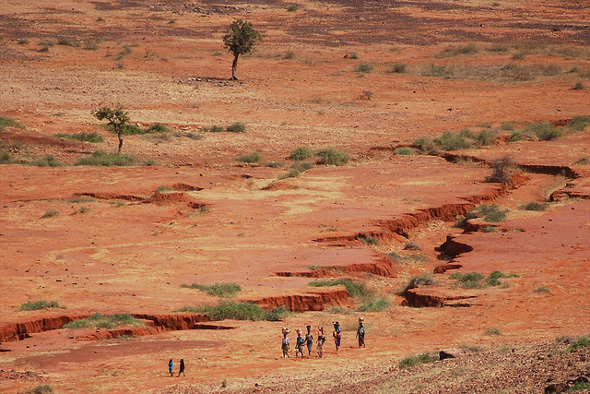
Over the past few months, the Sahel drought has sparked attention of news media and concerned citizens around the world. Throughout this media blitz, I have been struck by the sharp contrast between this coverage and how the devastating effects of malnutrition are usually portrayed. Malnutrition is often overlooked in favor of more “newsworthy” diseases, and it takes a crisis to focus our attention on this public health issue. Yet an emergency such as this drought – affecting more than 18 million people, including nearly 2 million children – is difficult to ignore.
-
Top 10 Posts for August 2012
›August is a slow month in DC, but not so on New Security Beat: 8 of the top 10 last month (measured by unique pageviews) were new posts. Laurie Mazur’s discussion of inequality, population, and sustainability took the top spot followed by a look at what’s new in the Population Reference Bureau’s latest data sheet; Kate Diamond’s feature on Mongolia’s climate and development challenges; a discussion on the naming of the Failed States Index; a summary of the National Intelligence Council’s extensive series on aging; and two reactions to Iran’s surprising shift on family planning.
Showing posts from category *Blog Columns.