-
Sarah Crowe, UNICEF
Ethiopia Set to Achieve Millennium Development Goals in Child Mortality
›For a country that once made headlines for famine, poverty, and war, Ethiopia is gaining a reputation as a development leader on the African continent. In just over 10 years, the country has slashed child mortality rates by half, rising in global rank from 146 in 2000 to 68 in 2012. More money is being spent on health care, poverty levels and fertility rates are down, and twice as many children are in school.
-
To Build Peace, Confront Afghanistan’s Natural Resource Paradox
›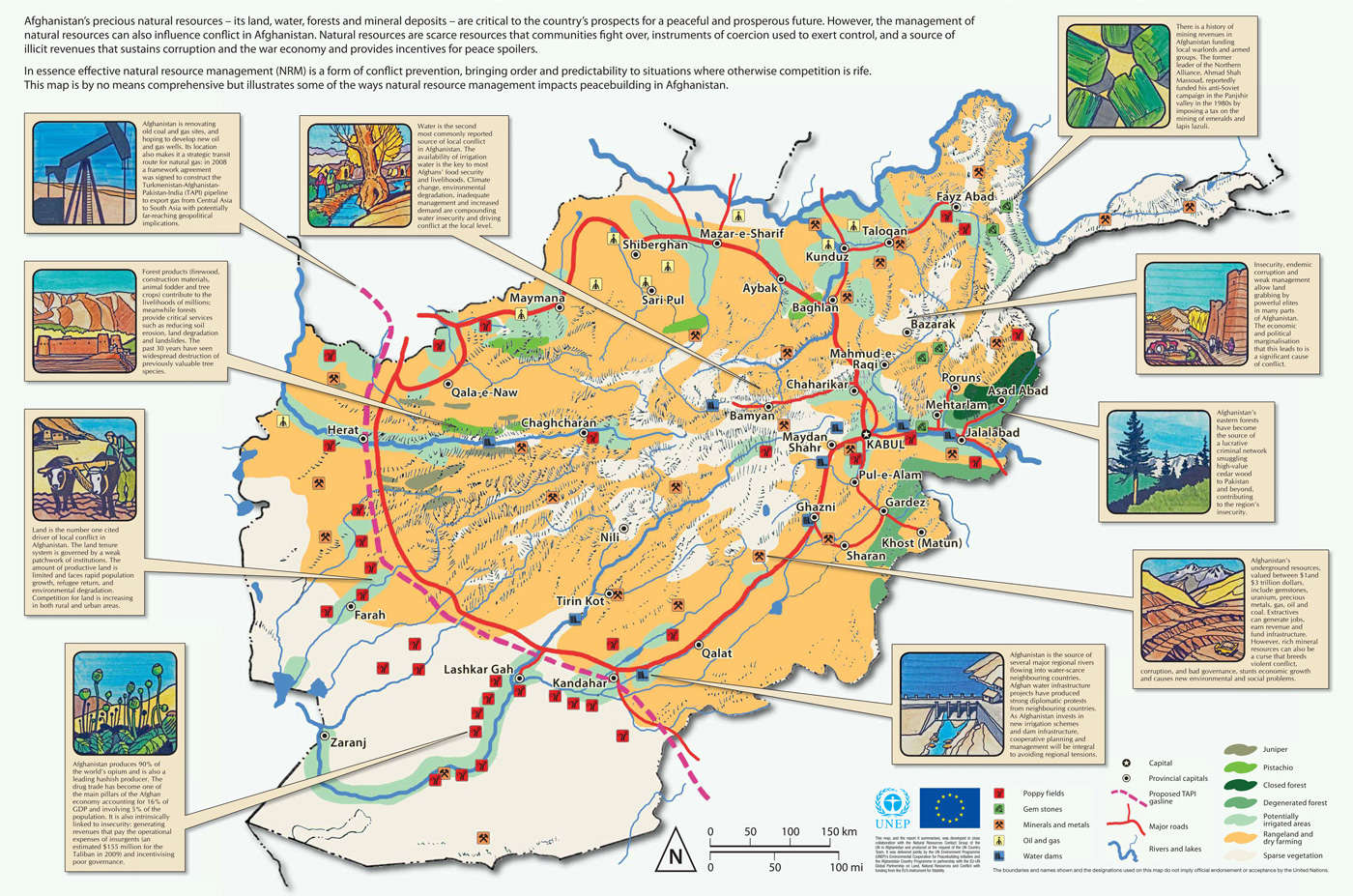
There’s a popular saying in Afghanistan reflecting the value of water: “Let Kabul be without gold, but not without snow.”
Living in a refugee camp across the border in Pakistan during the Soviet occupation, my father, who worked as a doctor in Samangan, Bamyan, Kunar, and Balkh provinces, used to tell me about the importance of our country’s natural wealth. He was optimistic that it was Afghanistan’s land, water, forests, and minerals that would help the country re-emerge as a strong nation. However, he also knew that the mismanagement of our natural resources is partly to blame for the instability, insecurity, and vulnerability that have gripped our country for so many years. This is the paradox of the natural resource wealth in Afghanistan.
-
Why Do Climate Changes Lead to Conflict? Provocative New Study Leaves Questions
›
In August, Solomon Hsiang, Marshall Burke, and Edward Miguel published a provocative piece in Science in which they sought to demonstrate a correlation between climate extremes and violence across a range of time periods, countries, and different levels of conflict. It’s a massive undertaking and one that predictably has evoked some criticism – some of it warranted.
-
Development vs. Conservation: Global Trends in the Battle Over Oil in Ecuador’s Yasuní Rainforest
›Ecuador, the OPEC member with the smallest amount of proven oil reserves, has gained outsized attention in the debate over the future of oil extraction in recent days and may well play a decisive role in the outcome of the global tension between economic development and environmental conservation.
-
Geoff Dabelko on Avoiding Conflict From Climate Adaptation
›
Although major global action remains stymied in many respects, policymakers around the world are increasingly at least recognizing the need to increase resilience to the effects of climate change. But are the consequences from hastily implemented initiatives being adequately considered? Perhaps not.
-
Top 10 Posts for August 2013
›August brought new blood to the blog: 7 of the 10 most popular posts (by unique pageviews) last month were new. ECSP Director Roger-Mark De Souza appeared in a documentary about climate change adaptation in Trinidad and Tobago; the China Environment Forum’s Susan Chan Shifflett posted a stunning photo essay of her trip to the Wuhai City coal complex; and we had two stories on India’s climate change challenges, including one from a visiting West Point cadet. Meanwhile, Elizabeth Leahy Madsen and Kathleen Mogelgaard continued their analyses of recent demographic surveys, examining faster-than-expected growth in “Feed the Future” focus countries and why the demographic transition has stalled in sub-Saharan Africa.
-
Harvesting Peace: Food Security, Conflict, and Cooperation
›Since 2008 – a year in which rapid increases in the global prices for major grains helped to trigger outbreaks of civil unrest in more than 40 countries – scholars and policymakers have paid increased attention to the potential influence of global food prices on social and political instability. Since that time, spiking prices have periodically sparked public protests and governments have struggled to respond.
-
DOD’s Daniel Chiu: Climate, Energy Concerns Emblematic of Future Security Challenges
›
Factoring in the costs of fuel in operations, both in terms of the monetary and battlefield effect, is a relatively new development for the U.S. military. “Our view was, when we were at war, we would bear those costs,” says U.S. Deputy Assistant Secretary of Defense for Strategy Daniel Chiu in this week’s podcast. “However, as we have started to appreciate the nature of the kinds of military challenges we face, we’ve realized this is not a sustainable approach.”
Showing posts from category *Blog Columns.