-
Scenario Planning for Development: It’s About Time
›
Scenario planning has a long history. The RAND Corporation employed it heavily in planning for potential U.S. responses to nuclear war and 16th century Spanish Jesuit theologians pointed to the idea as proof of free will. But in many respects this powerful set of methodological tools for managing complexity and uncertainty remains underused, especially beyond the defense, intelligence, and business communities.
-
From Gaza to the Euphrates, Alarm Bells for Mideast Water Resources
› The board of the United Nations’ lead organization on trade and development, called UNCTAD, released an assessment of Gaza’s development challenges during their annual meeting in Geneva this month and the news is not good. In 2012, the UN warned that a “herculean” development effort would be to keep pace with Gaza’s rapid population growth. Since then, more fighting with Israel has made things worse, particularly with regard to water and food security. Ninety-five percent of the water from Gaza’s coastal aquifer is unsafe for drinking without treatment, the report says. Contamination and over-extraction may even render it unusable by next year and damage may be irreversible if not addressed in the next five years.
 -
Pakistan’s Maternal and Child Health Problems “Huge Stumbling Block” to Development, Long-Term Security
›In the long term, improving maternal and child health is as critical to national security as any problem in Pakistan today, said a panel of experts including Minister of National Health Services Saira Afzal Tarar at the Wilson Center on September 9.
-
Top 10 Posts for August 2015
›The war in Darfur, which has in turns captivated the world’s attention and been ignored, is still on. In one of last month’s most-read articles, Brendan Bromwich writes that this is in part because of a flawed, simplified narrative about whether the conflict is primarily about politics or natural resources. It’s both, he writes, and without addressing this complexity, the peace process will not be successful.
-
Tracking the Energy Titans: Hidden Trends in the United States, China, and Canada [Infographic]
›Back in high school physics we learned the first law of thermodynamics: Energy within a closed system must remain constant. In other words, the total amount of energy cannot increase or decrease without some sort of outside interference.
-
Beginning With the End in Mind: Midterm Results From an Integrated Development Project in Lake Victoria Basin
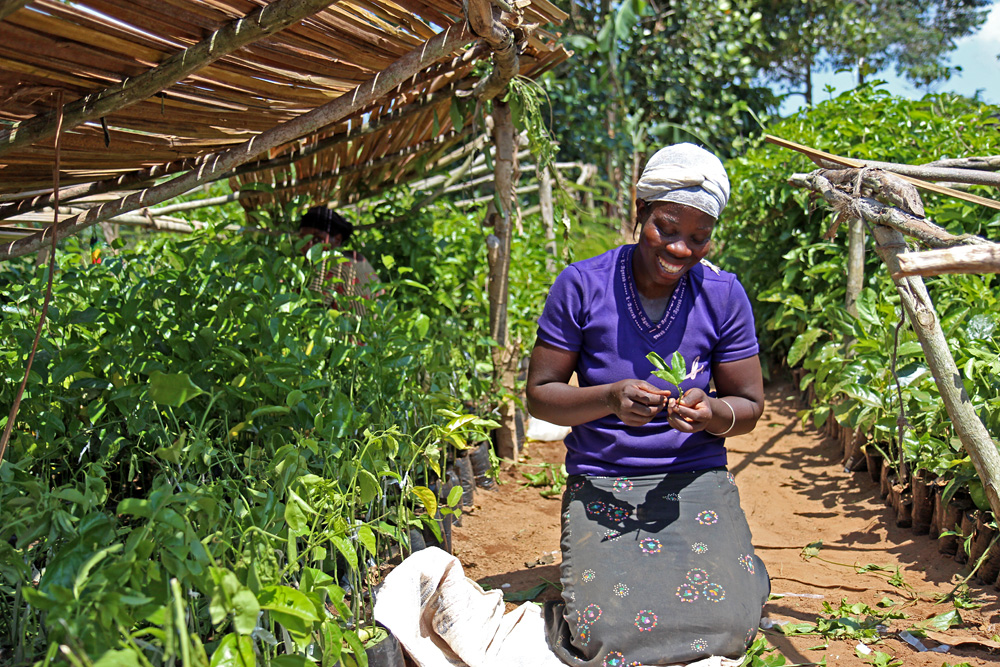
›More than 80 percent of the estimated 42 million people living in Central Africa’s Lake Victoria Basin depend on fishing or farming for survival. Given this overwhelming reliance on natural resources, the lake’s deteriorating condition – driven by climate change, agriculture, pollution, deforestation, overfishing, and industrialization – has far-reaching implications.
-
Examining Women’s Inclusion in Peace and Conservation Efforts
›Some of the world’s most crucial ecosystems can also be found in the most conflicted areas. The most progressive peace agreements in these circumstances sometimes include conservation protections, but fewer still include women – and that’s a an article in Peace Review by Conservation International’s Brittany Ajroud, Kame Westerman, and Janet Edmond. -
Red Cross: Water Continues to Be Used as Weapon of War in Syria
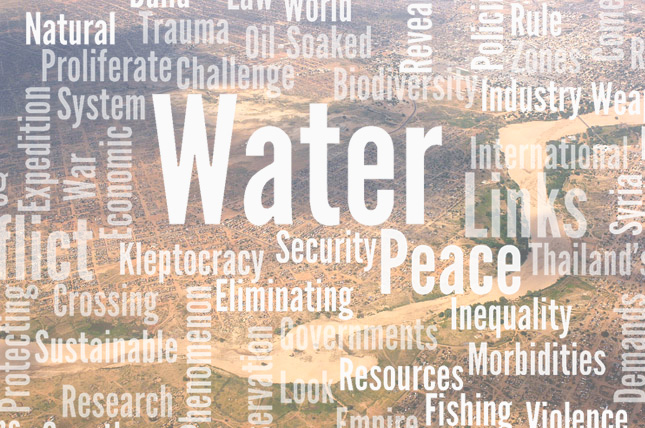
›Water is being used as a weapon of war on one of Syria’s deadliest battlegrounds, says the International Committee of the Red Cross (ICRC) and its local affiliate, the Syrian Arab Crescent, in a new video.
Showing posts from category *Blog Columns.