-
A Warmer Arctic Presents Challenges and Opportunities
›As Arctic ice melts, we can physically see glaciers retreating. But what we can’t yet see is the exact effect climate change will have on the environment, humans, economies, and national security. Less ice for longer periods each year will likely bring opportunities and related challenges as Arctic and non-Arctic states jockey for position.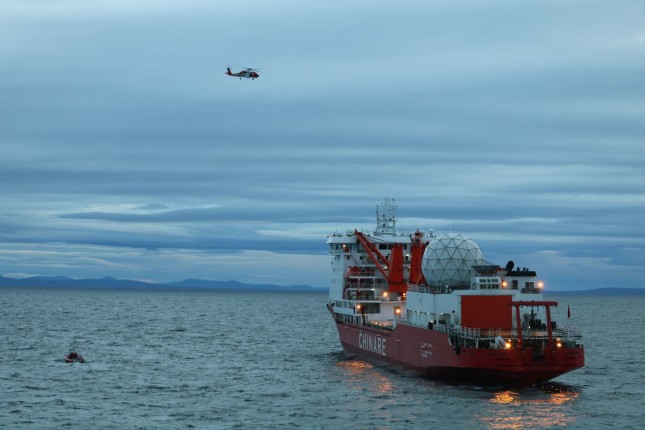
-
How Much Does It Cost to Save a Mother’s Life?
›
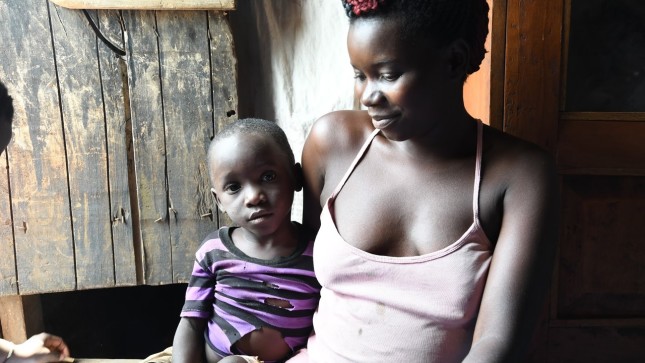
Calls to action, strategy development, and multiple initiatives over the last decade have made clear how important it is to end preventable maternal and perinatal deaths. But we still don’t have a comprehensive understanding of how much saving these mothers and newborns, and preventing stillbirths will cost.
-
Can Big Multinational Retailers Save Our Planet?
›As we move past another Earth Day, environmentalists may be forgiven for assuming that little has changed. The best available evidence points to a rapidly changing climate, declining biodiversity, and fisheries on the verge of collapse. To further complicate matters, the political will to reverse these trends is being stymied by a surge of anti-environmental populism in America, Brazil and elsewhere. When coupled with the continued harvesting of natural resources by big multinational corporations, it is easy to see why environmentalists are crying into their organic kale and quinoa bowls.
-
To Mitigate Climate-Fragility Risks, Build Preventative Capacity in Fragile States
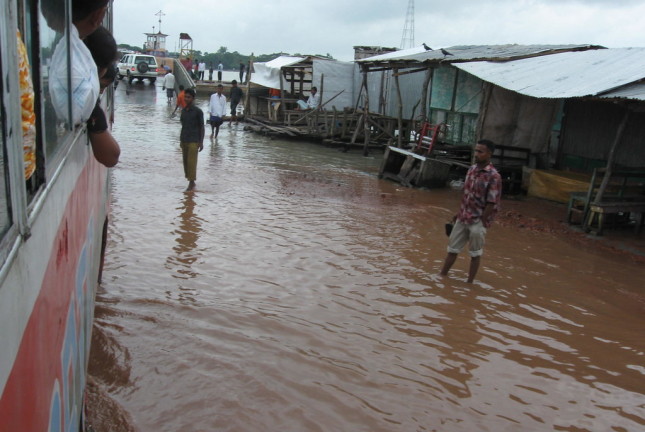
›“When states face fragility and climate risks simultaneously, the risks and challenges are compounded,” according to The Intersection of Global Fragility and Climate Risks, a new global report commissioned by USAID, which was presented during a recent USAID Adaptation Community Meeting webcast. States facing major climate hazards, such as flooding, drought, and sea level rise, will be forced to contend with the cost of humanitarian and adaptation responses to mitigate the physical and livelihood risks threatening their populations. Fragile states struggling with issues of legitimacy in the social, economic, political, and security spheres may become overwhelmed by the process and cost of redirecting limited resources to address climate-induced disasters.
-
ICPD at 25: Unfinished Business Points to Unmet Needs
›“The ICPD (International Conference on Population and Development) Programme of Action is a promise. A promise that was made 25 years ago to young people, the intention of which was to give young people hope—hope that their rights, their needs, and their demands would be met,” said Kobe Smith, Vice President of the Youth Advocacy Movement at International Planned Parenthood Federation/ Western Hemisphere Region, at a recent Wilson Center event. This year marks the 25th anniversary of ICPD in Cairo.
-
From Farm to Table to Landfills? Seeking Solutions to China’s Food Waste Dilemma
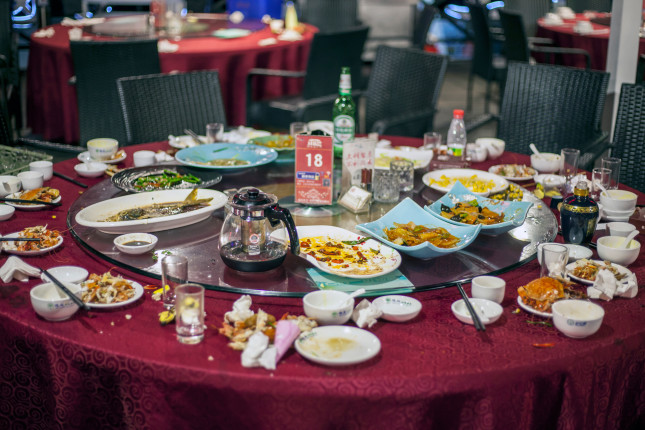
›In a giant building filled with dark and humid rooms, some 2 billion cockroaches are scampering around piles of food. This is not a scene out of a horror film, but an innovative business venture to help Jinan, a “small” city of 9 million in northeast China, deal with its overfull food waste. Jinan produces more than 6,000 tons of solid waste each day, and like most Chinese cities, 50 to 70 percent of it is food waste. To divert more organic waste from landfills, the municipal government partnered with the Zhangqiu District Food Waste Processing Center to use cockroaches to dispose of the 60 tons of food waste daily from district restaurants and companies as well as households in 40 waste-sorting pilot villages. The company is highly profitable as it gets the food waste for free from the city; and city then gives subsidies for each ton of food waste processed. The company also sells some 2,433 tons of dead cockroaches each year as animal feed additives. However, the small six-legged workers only devour some 100 tons of food waste per day even with expansion plans for two new factories, a mere 1.6 percent of the city’s total waste. Cockroaches alone cannot conquer the city’s food waste challenge.
-
The Care Knot: Untangling Women’s Rights and Responsibilities
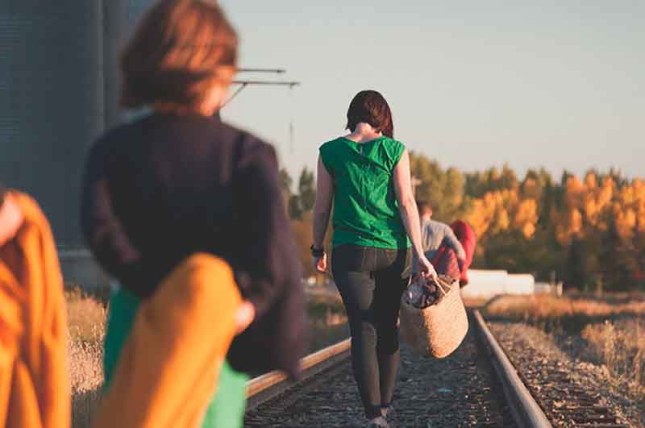
›“We were all working mothers,” writes American journalist Megan Stack in her recent New Yorker piece about raising two children in India. The women who helped shape her thinking and cleared the way for her writing were migrants who left their own children behind to lovingly care for hers. “We spun webs of compromise and sacrifice and cash, and it all revolved around me—my work, my money, my imagined utopias of one-on-one fair trade that were never quite achieved,” she writes.
-
Fostering Citizen Enforcement and Rule of Law Could Cut Down Illegal Logging
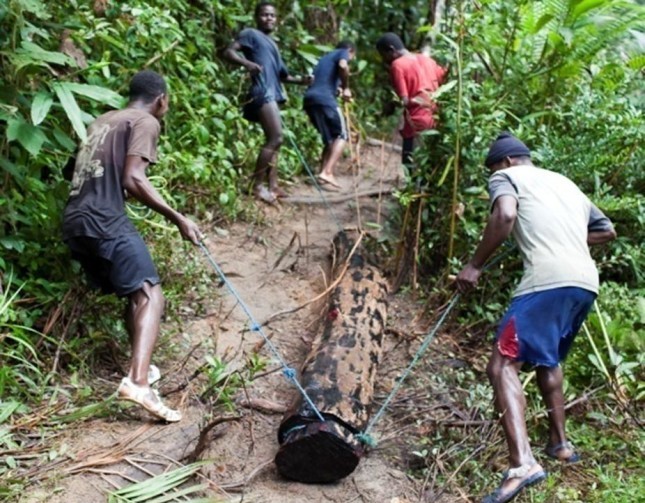
›“The trade in illegal timber products—those harvested and exported in contravention of the law of the producer country—is entangled in corruption, conflict, insecure land rights, and poor governance,” said Sandra Nichols Thiam, Senior Attorney of the Environmental Law Institute. She moderated a panel titled “Citizen Enforcement in the Forestry Sector” hosted by the Environmental Law Institute that explored illegal logging within the forest sector. Illegal harvesting of timber accounts for roughly 50 percent to 90 percent of forest activities in major producing countries within the Amazon Basin, Central Africa and Southeast Asia, said Thiam. This illegal timber trade is estimated to be worth from $30 billion to 100 billion dollars annually. Dismantling this extensive illegal enterprise would help promote biodiversity conservation, climate mitigation, human rights and sustainable development.
Showing posts from category *Blog Columns.