• woodrow wilson center
  • ecsp

New Security Beat

Subscribe:
  • rss
  • mail-to
  • Who We Are
  • Topics
    • Population
    • Environment
    • Security
    • Health
    • Development
  • Columns
    • China Environment Forum
    • Choke Point
    • Dot-Mom
    • Friday Podcasts
    • Navigating the Poles
    • Reading Radar
  • Multimedia
    • Water Stories (Podcast Series)
    • Backdraft (Podcast Series)
    • Tracking the Energy Titans (Interactive)
  • Films
    • Water, Conflict, and Peacebuilding (Animated Short)
    • Paving the Way (Ethiopia)
    • Broken Landscape (India)
    • Scaling the Mountain (Nepal)
    • Healthy People, Healthy Environment (Tanzania)
  • Publications
  • Events
  • Contact Us

NewSecurityBeat

The blog of the Wilson Center's Environmental Change and Security Program
Showing posts from category Guest Contributor.
  • Climate War in the Sahel? Pastoral Insecurity in West Africa Is Not What It Seems

    ›
    Guest Contributor  //  November 30, 2020  //  By Leif Brottem

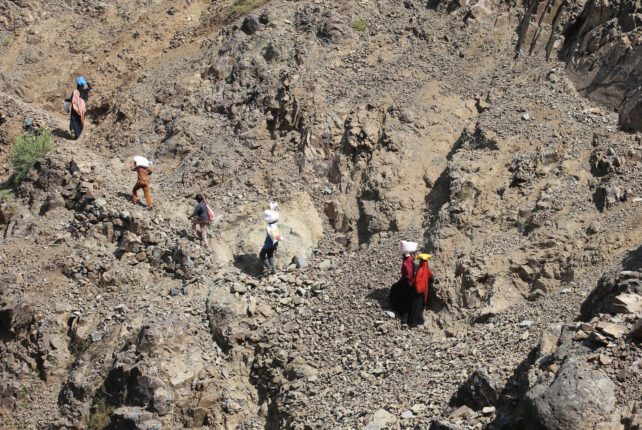
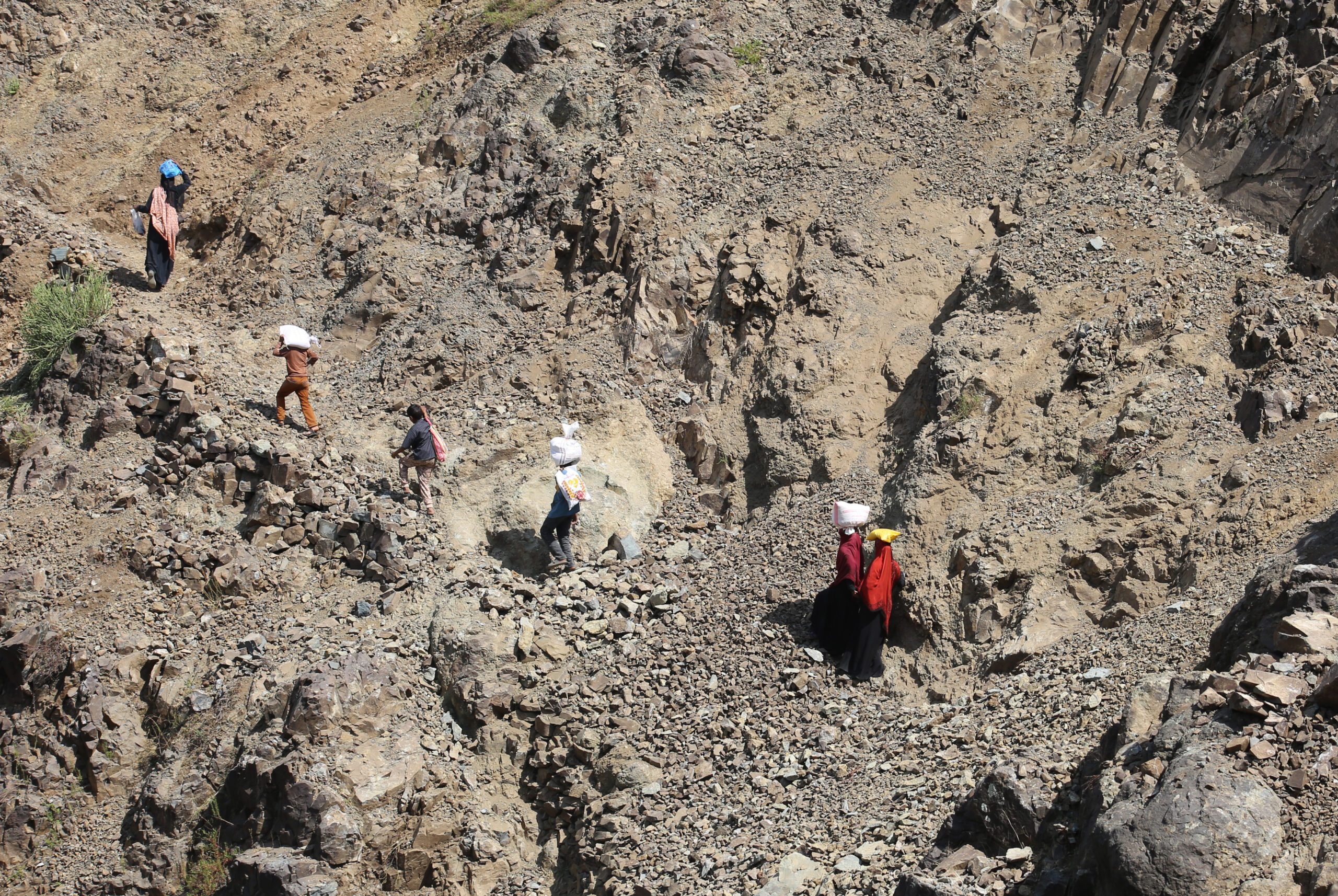
    As violence in Mali and Burkina Faso reached a ten-year high this year, the West African Sahel appears to be experiencing the perfect storm of climate stress, resource degradation, and violent extremism. At the center of that storm, one finds livestock herders—pastoralists—who are both vulnerable to environmental changes in the region, and historically marginalized from politics. Conflict in the region looks like a harbinger of the climate wars to come—but is it really? In research produced for Search for Common Ground, Andrew McDonnell and I found that while competition for land and water resources has increased dramatically across the region, violence associated with pastoralism emerges from a much more complex set of factors. Not surprisingly, the decisive conflict variable is governance.

    MORE
  • Reducing the Risk of Pandemic Disease Threats Through Multisectoral Action

    ›
    Covid-19  //  Guest Contributor  //  November 24, 2020  //  By Dara Carr
    shutterstock_1700761093

    “No single individual, discipline, sector or ministry can preempt and solve complex health problems.”

    — Rwanda One Health Steering Committee1

    The COVID-19 pandemic underscores the importance of multisectoral action to contain and mitigate the effects of the virus. Presently, during crisis conditions or “war time,” in the language of outbreak experts, multisectoral efforts—including actions traversing health, education, labor, finance and other sectors—are readily apparent. But when policymakers perceive crises have passed, during so-called “peacetime,” governance structures that enable multisectoral collaboration tend to diminish or languish.

    MORE
  • A Tale of Two Transitions: Education, Urbanization, and the U.S. Presidential Election

    ›
    Guest Contributor  //  November 23, 2020  //  By Richard Cincotta

    Rather than delve into issue opinion polling, or assess presidential campaign strategies, political demographers assume that political change is the predictable product of a set of mutually reinforcing social, economic, and demographic transitions, which can be tracked using data. But is this true in a country like the United States that has been in the advanced stages of these development transitions for decades? If these transitions are as important as demographers believe, could their variation among the 50 states explain the outcome of the recent U.S. presidential election? If so, what could they tell us about America’s electoral future?

    MORE
  • U.S., Mexico Sign Rio Grande Water Agreement

    ›
    Guest Contributor  //  November 10, 2020  //  By Brett Walton
    3964131789_e22466f080_k

    This article originally appeared on Circle of Blue.

    U.S. and Mexican officials settled a water dispute that had been simmering for several months and led to protests by Mexican farmers concerned about water access.

    MORE
  • It’s Time for Scenario Planners and Enterprise Risk Managers to Join Forces

    ›
    Covid-19  //  Guest Contributor  //  November 9, 2020  //  By Steven Gale
    shutterstock_1010299336

    Scenario planning—a powerful method for communicating and examining uncertainty—is once again in vogue as a result of the COVID-19 pandemic. Despite the growing interest in this approach, however, its use is still limited, deployed predominately by the intelligence, business, and military communities.

    MORE
  • Why Securing Youth Land Rights Matter for Agriculture-Led Growth in Africa

    ›
    Guest Contributor  //  November 5, 2020  //  By Tizai Mauto
    47819635721_5825de4d10_c

    Africa’s “youth bulge” represents both an enormous challenge and a tantalizing opportunity for the continent. With over 60 percent of Africans under the age of 35, governments are under increasing pressure to grasp the “demographic dividend” youth represent to boost agricultural productivity, enhance food security, and expand economic opportunities for young men and women. Each year, about 10-12 million young Africans aged 15-24 enter the labor market, but only 3.1 million formal wage jobs are generated, pushing millions of youth into low paying and precarious informal employment.

    MORE
  • Integrate Gender When Designing Climate Policy

    ›
    Guest Contributor  //  November 2, 2020  //  By Mara Dolan & Jessica Olson
    shutterstock_1773660173

    The team of people tasked with coordinating the global climate change negotiations for the 26th UN Climate Change Conference (COP26) in 2021, we recently learned, consists entirely of men. While not surprising to many feminists in this space, this blatant disregard of gender diversity and women’s perspectives in climate policy is all too common. And it reflects broader ignorance of how gender and climate change intersect.

    MORE
  • Why Secondary Cities Deserve More Attention

    ›
    Guest Contributor  //  October 26, 2020  //  By Gad Perry, Melinda Laituri & Laura Cline
    shutterstock_505152016

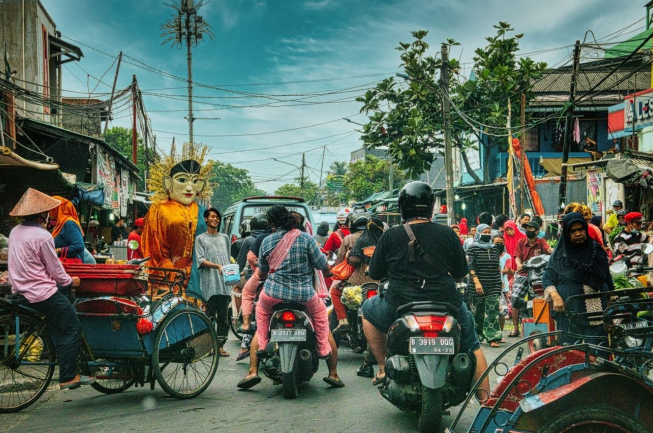
    Mention London, Rome, or New York, and people immediately conjure up Big Ben, the Colosseum, the Statue of Liberty. Beijing, Cairo, Mumbai? Check. They’ve heard of them. Megacities, the ones with lots of history, lots of people, and an oversized impact on the economy and culture, tend to be well-known. 

    Fewer people may know much about Addis Ababa, Dhaka, Lagos, or São Paulo — yet many would recognize the names. But who knows or has been to Darkhan, Mongolia or Santa Fe, Argentina or Boké-Kamsar in Guinea?

    MORE
Newer Posts   Older Posts
View full site

Join the Conversation

  • RSS
  • subscribe
  • facebook
  • G+
  • twitter
  • iTunes
  • podomatic
  • youtube
Tweets by NewSecurityBeat

Trending Stories

  • unfccclogo1
  • Pop at COP: Population and Family Planning at the UN Climate Negotiations

Featured Media

Backdraft Podcast

play Backdraft
Podcasts

More »

What You're Saying

  • Volunteers,At,The,Lagos,Food,Bank,Initiative,Outreach,To,Ikotun, Pan-African Response to COVID-19: New Forms of Environmental Peacebuilding Emerge
    Rashida Salifu: Great piece 👍🏾 Africa as a continent has suffered this unfortunate pandemic.But it has also...
  • A desert road near Kuqa An Unholy Trinity: Xinjiang’s Unhealthy Relationship With Coal, Water, and the Quest for Development
    Ismail: It is more historically accurate to refer to Xinjiang as East Turkistan.
  • shutterstock_1779654803 Leverage COVID-19 Data Collection Networks for Environmental Peacebuilding
    Carsten Pran: Thanks for reading! It will be interesting to see how society adapts to droves of new information in...

What We’re Reading

  • Rising rates of food instability in Latin America threaten women and Venezuelan migrants
  • Treetop sensors help Indonesia eavesdrop on forests to cut logging
  • 'Seat at the table': Women's land rights seen as key to climate fight
  • A Surprise in Africa: Air Pollution Falls as Economies Rise
  • Himalayan glacier disaster highlights climate change risks
More »
  • woodrow
  • ecsp
  • RSS Feed
  • YouTube
  • Twitter
  • Facebook
  • Home
  • Who We Are
  • Publications
  • Events
  • Wilson Center
  • Contact Us
  • Print Friendly Page

© Copyright 2007-2021. Environmental Change and Security Program.

Woodrow Wilson International Center for Scholars. All rights reserved.

Developed by Vico Rock Media

Environmental Change and Security Program

Woodrow Wilson International Center for Scholars

Ronald Reagan Building and International Trade Center

  • One Woodrow Wilson Plaza
  • 1300 Pennsylvania Ave., NW
  • Washington, DC 20004-3027

T 202-691-4000