• woodrow wilson center
  • ecsp

New Security Beat

Subscribe:
  • rss
  • mail-to
  • Who We Are
  • Topics
    • Population
    • Environment
    • Security
    • Health
    • Development
  • Columns
    • China Environment Forum
    • Choke Point
    • Dot-Mom
    • Friday Podcasts
    • Navigating the Poles
    • Reading Radar
  • Multimedia
    • Water Stories (Podcast Series)
    • Backdraft (Podcast Series)
    • Tracking the Energy Titans (Interactive)
  • Films
    • Water, Conflict, and Peacebuilding (Animated Short)
    • Paving the Way (Ethiopia)
    • Broken Landscape (India)
    • Scaling the Mountain (Nepal)
    • Healthy People, Healthy Environment (Tanzania)
  • Publications
  • Events
  • Contact Us

NewSecurityBeat

The blog of the Wilson Center's Environmental Change and Security Program
Showing posts from category From the Wilson Center.
  • Harvesting Peace: Food Security, Conflict, and Cooperation

    ›
    From the Wilson Center  //  Guest Contributor  //  September 3, 2013  //  By Emmy Simmons

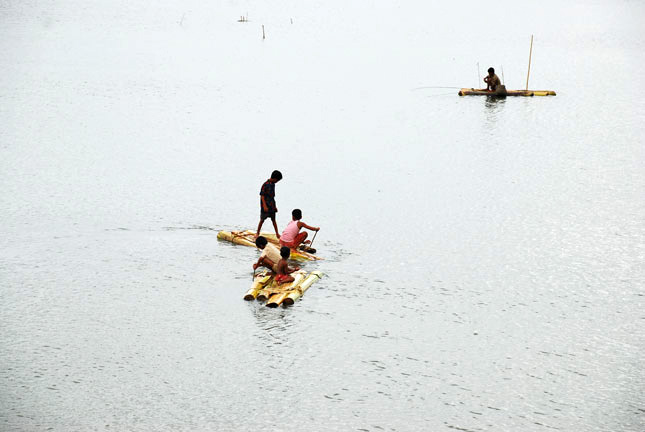
    ‘Harvesting Peace: Food Security, Conflict, and Cooperation’ is Issue 3 of ECSP Report 14.

    Since 2008 – a year in which rapid increases in the global prices for major grains helped to trigger outbreaks of civil unrest in more than 40 countries – scholars and policymakers have paid increased attention to the potential influence of global food prices on social and political instability. Since that time, spiking prices have periodically sparked public protests and governments have struggled to respond.

    MORE
  • A Season for Motherhood: The Role of Family Planning in Improving Maternal Health

    ›
    Dot-Mom  //  From the Wilson Center  //  August 28, 2013  //  By Swara Salih

    Ensuring access to family planning is not only a matter of human rights, but can also play a key role in protecting the health of mothers and children. Maternal health experts and program directors met at the Wilson Center on July 31 to discuss the role family planning takes in women’s health in developing countries, what successes family planning programs worldwide have had so far, and what can be done to expand services. Sarah Craven, chief of the UN Population Fund’s Washington office, moderated the event.

    MORE
  • Coastal Resource Management, Family Planning Integration Build Resilience in Madagascar and The Gambia

    ›
    From the Wilson Center  //  August 26, 2013  //  By Jacob Glass
    Oyster Harvesters in The Gambia

    Growing awareness of the connected challenges of natural resource management, economic growth, and human health has encouraged more integrated models of international development. The experience of two organizations – TRY Oyster Women’s Association, based in The Gambia, and Blue Ventures, based in Madagascar – demonstrates the success of a community-based approach to building resilience, enabling communities to bounce back from adversity and establish a long-term basis for development. [Video Below]

    MORE
  • In Afghanistan, Women’s Health May Be Marker for Taliban Resurgence [Part Two]

    ›
    Dot-Mom  //  From the Wilson Center  //  July 26, 2013  //  By Swara Salih
    Afghanistan Beyond the Headlines Part 2

    “Afghanistan Beyond the Headlines” was a half-day event at the Wilson Center on the country’s unique demography, the plight of women and girls, and prospects for the future. Read part one here.

    Afghanistan’s youth, including more than seven million girls currently in school, are leading the call for new leadership, but many Afghans fear the chilling effect of a resurgent Taliban, said panelists at the Wilson Center during the second half of “Afghanistan Beyond the Headlines.” As the United States prepares to withdraw its forces over the next year, a halt in the country’s progress on women’s health may be the first sign of backsliding on many of the gains made over the last decade. [Video Below]

    MORE
  • Afghanistan’s Youth and the Risks of Taliban Return [Part One]

    ›
    Dot-Mom  //  From the Wilson Center  //  July 25, 2013  //  By Jacob Glass
    Afghanistan Beyond the Headlines Part 1

    As the United States approaches its 2014 deadline for military withdrawal from Afghanistan, one often overshadowed aspect of the conflict is the hard-won progress made by previously marginalized segments of the Afghan population, particularly women, girls, and young people.[Video Below]

    MORE
  • From Ethiopia to Egypt, Girls’ Education Programs Combat Child Marriage

    ›
    Dot-Mom  //  From the Wilson Center  //  July 22, 2013  //  By Swara Salih
    Child brides in Darfur

    According to the UN Population Fund, more than 140 million girls will become child brides between 2011 and 2020 – an estimated 14.2 million young girls marrying too young every year or 39,000 daily. The majority of these girls do not receive access to education or reproductive health services. [Video Below]

    MORE
  • Reproductive Health Organizations Embrace Cross-Sectoral Partnerships in Africa

    ›
    From the Wilson Center  //  July 18, 2013  //  By Swara Salih
    Kenyan mother and child

    “The places in the world where the environment is most fragile, women’s health is most fragile,” said Leila Darabi, director of global communications for the Planned Parenthood Federation of America, at the Wilson Center. “The negative impacts on the environment tend to affect women the most. Women are the people who are planting kitchen gardens, women are traditional healers, and so they often feel the impact first when those things are degraded.”

    MORE
  • Woman-Centered Maternity Care, Family Planning, and HIV: Principles for Rights-Based Integration

    ›
    Dot-Mom  //  From the Wilson Center  //  July 15, 2013  //  By Jacob Glass
    African-Maternity-Ward

    Despite increases in the availability of maternal health care across Nigeria, maternal mortality rates remain high, averaging 630 per 100,000 live births in 2010, compared to the world average of 210. “This is data we are not proud of,” said Philippa Momah, board director of Nigeria’s White Ribbon Alliance, at the Wilson Center. “We believe that one of the issues is the way health care providers treat our women. This may be causing a 20 percent drop-out rate in the health care system.” [Video Below]

    MORE
Newer Posts   Older Posts
View full site

Join the Conversation

  • RSS
  • subscribe
  • facebook
  • G+
  • twitter
  • iTunes
  • podomatic
  • youtube
Tweets by NewSecurityBeat

Trending Stories

  • unfccclogo1
  • Pop at COP: Population and Family Planning at the UN Climate Negotiations

Featured Media

Backdraft Podcast

play Backdraft
Podcasts

More »

What You're Saying

  • Volunteers,At,The,Lagos,Food,Bank,Initiative,Outreach,To,Ikotun, Pan-African Response to COVID-19: New Forms of Environmental Peacebuilding Emerge
    Rashida Salifu: Great piece 👍🏾 Africa as a continent has suffered this unfortunate pandemic.But it has also...
  • A desert road near Kuqa An Unholy Trinity: Xinjiang’s Unhealthy Relationship With Coal, Water, and the Quest for Development
    Ismail: It is more historically accurate to refer to Xinjiang as East Turkistan.
  • shutterstock_1779654803 Leverage COVID-19 Data Collection Networks for Environmental Peacebuilding
    Carsten Pran: Thanks for reading! It will be interesting to see how society adapts to droves of new information in...

What We’re Reading

  • Rising rates of food instability in Latin America threaten women and Venezuelan migrants
  • Treetop sensors help Indonesia eavesdrop on forests to cut logging
  • 'Seat at the table': Women's land rights seen as key to climate fight
  • A Surprise in Africa: Air Pollution Falls as Economies Rise
  • Himalayan glacier disaster highlights climate change risks
More »
  • woodrow
  • ecsp
  • RSS Feed
  • YouTube
  • Twitter
  • Facebook
  • Home
  • Who We Are
  • Publications
  • Events
  • Wilson Center
  • Contact Us
  • Print Friendly Page

© Copyright 2007-2021. Environmental Change and Security Program.

Woodrow Wilson International Center for Scholars. All rights reserved.

Developed by Vico Rock Media

Environmental Change and Security Program

Woodrow Wilson International Center for Scholars

Ronald Reagan Building and International Trade Center

  • One Woodrow Wilson Plaza
  • 1300 Pennsylvania Ave., NW
  • Washington, DC 20004-3027

T 202-691-4000