-
COVID-19’s Pregnancy Paradox: Greater Disease Risk but Lower Vaccine Priority
›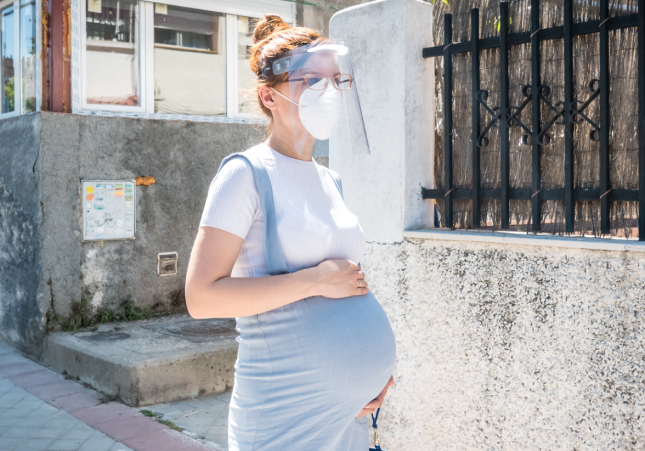
“Greater attention to pregnant patients as a unique population at higher risk of SARS-CoV-2 infection sequelae, is critical to preventing maternal and neonatal morbidity and mortality,” write the authors of a study in the American Journal of Obstetrics and Gynecology examining morbidity and mortality among pregnant women with COVID-19 in Washington state. The study found “markedly higher” hospitalization and fatality rates among this group compared with similarly-aged non-pregnant individuals.
-
Reviving Culture Through First Nations Midwifery
› “It’s more than just clinical care. It’s cultural. It’s connection to country. It’s connection to land. It’s all of those things that are important to the woman and family, kinship, babies,” says Mel Briggs, a First Nations midwife in Australia, speaking about the importance of Aboriginal midwifery in this week’s Friday Podcast. Like her great-grandmother, Briggs followed the call to midwifery and finds joy in helping women and families “create really healthy, chunky, fat babies.”
 -
Turning Applause into Action: Investing in Women Leaders in Nursing and Midwifery
›“Midwives and nurses contribute to the health of women, families, communities, and society at large, but the impact of their care goes much further… Their care is transformational,” said Diene Keita, Deputy Executive Director for Programmes at UNFPA. She spoke at a recent event hosted by Women in Global Health, which virtually convened nurses and midwives from around the world to celebrate 100 outstanding women nurse and midwife leaders from over 50 countries. The event occurred in honor of the Year of the Nurse and the Midwife, as designated by the World Health Organization (WHO). The list of 100 leaders is the first global recognition of its kind and commemorates women’s unique stories of resilience, leadership, and hard work.
-
Native American Midwives Help Navajo Families Thrive
›When Navajo Midwife Nicolle Gonzales talks with Native American women about birth, there’s a sense something is missing, she said in this week’s Friday Podcast. “But,” she said, “we don’t know what it is.” Gonzales grew up and remains on a Navajo Reservation in New Mexico. She became a midwife and founded the Changing Woman Initiative (CWI) to address unmet maternal health care needs in her community. She is of the Tl’aashchi’I, Red Bottom clan, born for Tachii’nii, Red Running into the Water clan, Hashk’aa hadzohi, Yucca fruit-strung-out-in-a line clan, and Naasht’ezhi dine’e, Zuni clan. -
Early Interventions in Men’s and Boys’ Health and Well-Being Have Lifelong Effects
›“How do we incorporate more men into the work that we’re doing?” said Dominick Shattuck, Director of Monitoring, Evaluation, and Learning for Breakthrough ACTION at Johns Hopkins Center for Communication Programs (CCP), at a recent event hosted by the MenEngage Alliance. The event focused on interventions to meaningfully engage men and boys in health programming, and how “life course theory” can help determine the best timing for male engagement.
-
In Humanitarian Settings, Addressing Gender-Based Violence is Paramount
›“One hundred thirty-seven women are killed by a family member every day,” said Beth Schlachter, Executive Director of Family Planning 2020. “That’s a staggering statistic.” She spoke at a recent Wilson Center event about gender-based violence (GBV) in conflict and humanitarian settings in partnership with CARE, the International Rescue Committee (IRC), Save the Children, and the Women’s Refugee Commission. The event was a part of a Wilson Center series recognizing the United Nation’s “16 Days of Activism Against Gender-Based Violence” and commemorated our friend and colleague, Jennifer Schlecht.
-
COVID-19 Adds to Challenges of Curbing Child Marriage
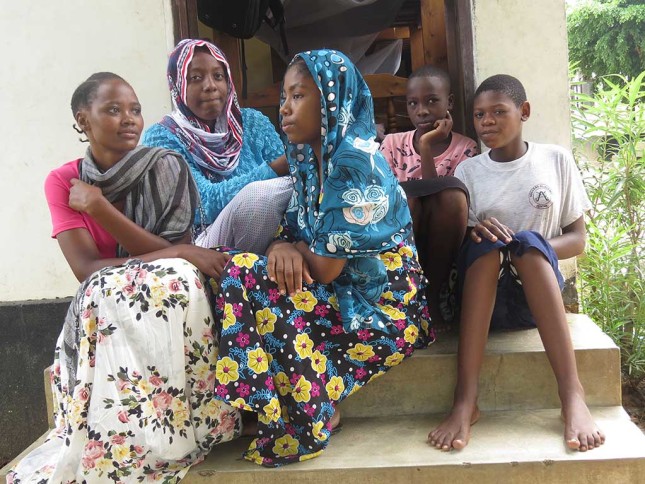
›When Mwanahamisi Abdallah’s mother announced plans to marry her off to a stranger, the 14-year-old Tanzanian girl burst into tears. She had no desire to marry—especially after learning the man already had three wives. Remembering advice from a teacher, she phoned authorities to intervene. They blocked the wedding and eventually delivered Mwanahamisi from her village in southeastern Lindi region to a girls’ shelter in Dar es Salaam.
-
What Does a Biden-Harris White House Mean for Women and Girls? Everything.
›The significance of the Biden-Harris administration for the world’s women and girls cannot be overstated. The current status of women and girls is grim. The COVID-19 pandemic and four years of dangerous policies designed to strip women and girls of their reproductive and economic autonomy and punish them—first for their biology, and second for their gender—have slowed and even reversed decades of progress toward gender equity. Systemic racism and policies meant to further exclude and disenfranchise minority communities have targeted women of color with tragic results.
Showing posts from category Dot-Mom.
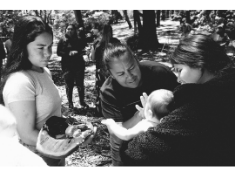 “It’s more than just clinical care. It’s cultural. It’s connection to country. It’s connection to land. It’s all of those things that are important to the woman and family, kinship, babies,” says Mel Briggs, a First Nations midwife in Australia, speaking about
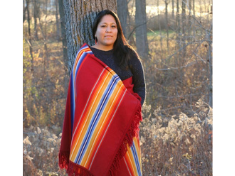 When Navajo Midwife Nicolle Gonzales talks with Native American women about birth, there’s a sense something is missing, she said in this week’s Friday Podcast. “But,” she said, “we don’t know what it is.” Gonzales grew up and remains on a Navajo Reservation in New Mexico. She became a midwife and founded the