-
Planning for Complex Risks: Environmental Change, Energy Security, and the Minerva Initiative
›
2012 witnessed a remarkable number and extremity of environmental conditions, from Hurricane Sandy and the U.S. drought to wildfires in Siberia and drought-driven blackouts in India. Arctic sea ice melted to its furthest extent in recent history. The energy landscape continued to change as well, from the launch of the U.S. Navy’s Great Green Fleet to the first liquefied natural gas shipments across the Arctic. As President Obama clearly stated in his second inaugural address, climate change is heightening both our risks and the need to respond, but tying together all of these issues is a highly complex endeavor.
-
Beyond Carbon Credits: TIST Combines Reforestation, Health, and Livelihood Efforts
›
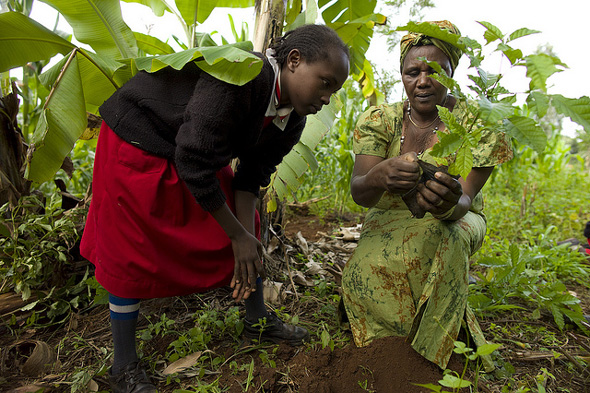
Carbon offsets have fallen in and out of favor since they were established with the Kyoto Protocol in 1997. Critics say they allow wealthy organizations to placate consumers and claim their products are “green” without making any real, lasting changes. But, if the scheme works properly, some action is supposed to be taken somewhere, so what is it like at one of these credit-producing organizations?
-
CCAPS Looks to Map Climate-Related Aid in Africa
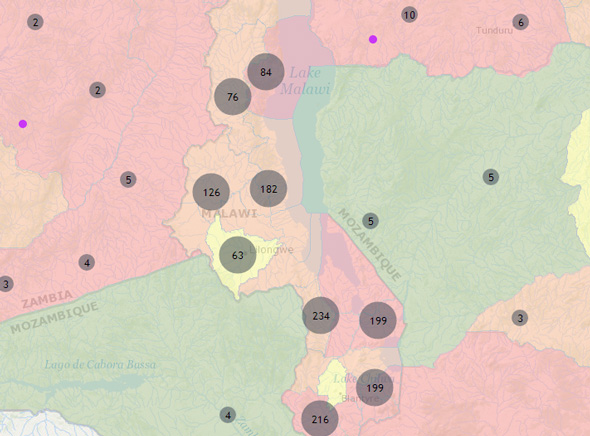
›Adapting to the effects of climate change is increasingly becoming an important component of many international development efforts. But how that integration occurs and what it looks like is an open question. To help answer that, the Climate Change and African Political Stability Program (CCAPS) at the University of Texas at Austin recently released a new database that for the first time tracks all the climate-related aid in one country – Malawi.
-
Edna Wangui on East Africa’s Changing Pastoralists
›November 20, 2012 // By Carolyn LamereThe fault line between nomadic pastoralists and sedentary agriculturalists in sub-Saharan Africa has emerged as one of the most dominant stories of climate-related conflict. But according to Edna Wangui, a professor at Ohio University who studies communities in Kenya and Tanzania, pastoralism is different from many people’s perceptions.
-
What Next? Finding Ways to Integrate Population and Reproductive Health Into Climate Change Adaptation
›November 12, 2012 // By Kathleen MogelgaardThe size, composition, and spatial distribution of human populations are constantly changing, and in some areas of the world, they’re changing very rapidly. Related trends in fertility and reproductive health are also in flux. These changes will affect how people experience climate change, both individually and societally.
-
Michael D. Lemonick, Climate Central
Surprise Geoengineering Test Goes Forward Off Coast of Canada
›November 2, 2012 // By Wilson Center StaffThe original version of this article, by Michael D. Lemonick, appeared on Climate Central.
Harvard’s David Keith calls it the “goofy Goldfinger scenario” – a rogue nation, or even an individual, would conduct an unsupervised geoengineering experiment – and he confidently predicted in a story I wrote last month that it would never happen.
-
Kathleen Mogelgaard on How Malawi Shows the Importance of Considering Population, Food, and Climate Together
›October 24, 2012 // By Carolyn LamereQuantifying the role population plays in food security is “an incredibly powerful piece of information,” said Kathleen Mogelgaard in an interview with ECSP. Malawi is a case in point.
Mogelgaard saw the connections between food, population, and climate change firsthand on a recent trip to the southeast African country, whose population of 15 million is largely dependent on subsistence, rain-fed agriculture. “One in five children in Malawi is currently undernourished,” Mogelgaard said, and climate change paints a bleak picture for the future.
-
As Urbanization Accelerates, Policymakers Face Integration Hurdles
›August 31, 2012 // By Blair A. RubleThe challenges for cities in the coming century will be many, but accounting for swelling numbers of new residents – due to more open avenues of communication and flows of goods, economic opportunity, population growth, and potential climate change-induced displacement – is perhaps the biggest.
Showing posts from category adaptation.