• woodrow wilson center
  • ecsp

New Security Beat

Subscribe:
  • rss
  • mail-to
  • Who We Are
  • Topics
    • Population
    • Environment
    • Security
    • Health
    • Development
  • Columns
    • China Environment Forum
    • Choke Point
    • Dot-Mom
    • Friday Podcasts
    • Navigating the Poles
    • Reading Radar
  • Multimedia
    • Water Stories (Podcast Series)
    • Backdraft (Podcast Series)
    • Tracking the Energy Titans (Interactive)
  • Films
    • Water, Conflict, and Peacebuilding (Animated Short)
    • Paving the Way (Ethiopia)
    • Broken Landscape (India)
    • Scaling the Mountain (Nepal)
    • Healthy People, Healthy Environment (Tanzania)
  • Publications
  • Events
  • Contact Us

NewSecurityBeat

The blog of the Wilson Center's Environmental Change and Security Program
Showing posts from category adaptation.
  • “No Precedent in Human History”: Ruth Greenspan Bell on Why Climate Change Demands More Than the UNFCCC

    ›
    Friday Podcasts  //  June 19, 2015  //  By Carley Chavara
    bell-small

    The stakes are high for the UN climate conference in Paris later this year, so high in fact, some scholars feel it’s foolish to be putting all our eggs in one basket.

    MORE
  • Adapting to Global Change: Climate Displacement, Mega-Disasters, and the Next Generation of Leaders

    ›
    From the Wilson Center  //  June 16, 2015  //  By Theo Wilson
    050102-N-9593M-040

    The world is more connected than ever before, but also more complex. Big, transnational trends like climate change, urbanization, and migration are changing the calculus of geopolitics, while local-level inequalities persist. “[Change] seems to be spinning around us so fast,” said John Hempelmann, president of the Henry M. Jackson Foundation, which honors the legacy of the late senator from Washington State. How can today’s and tomorrow’s leaders adjust to global trends? [Video Below]

    MORE
  • Alice Thomas: Climate Change Effects and Responses Profoundly Undermine Human Rights

    ›
    Friday Podcasts  //  June 12, 2015  //  By Linnea Bennett
    Thomas-small

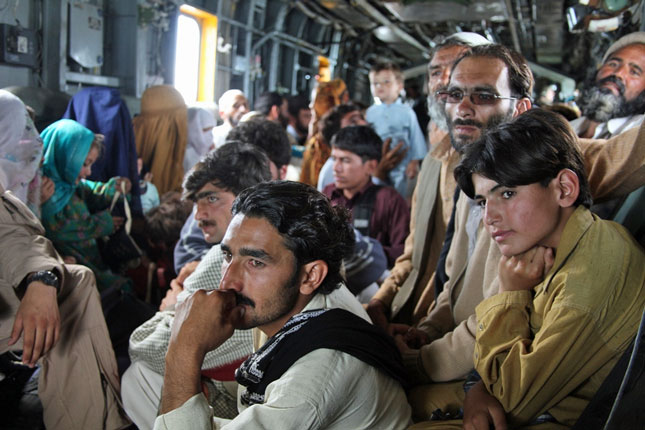
    After Typhoon Haiyan ripped across the Philippines in 2014 leveling nearly every building in sight, 4 million people – mostly poor and from coastal regions – were displaced. In response, the government set up “no build” zones in vulnerable areas and worked to move people to new land. But many of the newly relocated people discovered this land came with no access to water, electricity, or other services.

    MORE
  • Adaptation, Resistance, or Subversion: How Will Water Politics Be Affected by Climate Change?

    ›
    Guest Contributor  //  June 9, 2015  //  By Anders Jägerskog, Anton Earle & Ashok Swain
    bachaxiang

    One of the primary ways climate change is expected to affect international relations is through water. There are more than 270 bodies of water that cross over international boundaries, and various methodologies have identified several dozen that are particularly at risk for tension or conflict. So how is climate change affecting transboundary water politics? Are governments and institutions taking the threat seriously? A few years back, a group of researchers decided to focus on this question.

    MORE
  • USAID’s Sylvia Cabus on the Sahel: “We Help Farmers…and Their Husbands”

    ›
    Friday Podcasts  //  May 22, 2015  //  By Carley Chavara
    cabus

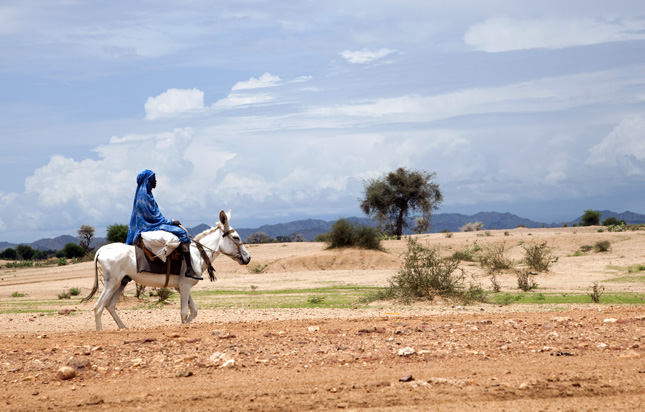
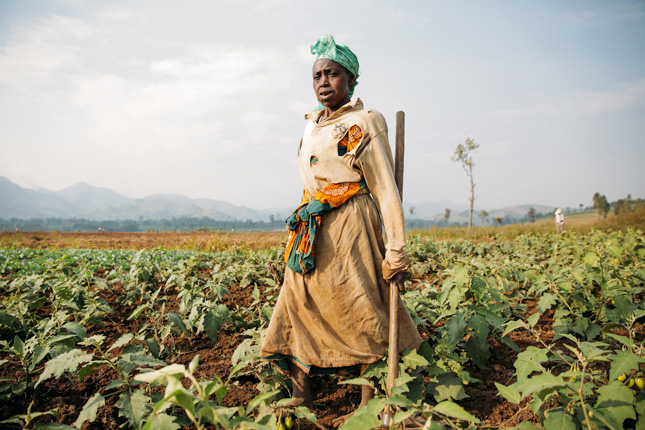
    In the Sahel, one of the most food-stressed regions of the world, “women bear the brunt in terms of coping mechanisms that are employed at the community level,” says Sylvia Cabus, gender advisor for USAID’s Bureau for Food Security, in this week’s podcast.

    MORE
  • Looking Beyond 2015: Promoting Years of Sustainability by Responding to Megatrends

    ›
    From the Wilson Center  //  May 20, 2015  //  By Carley Chavara
    hong-kong

    2015 is a major test for the international system. The Sustainable Development Goals are expected to be adopted in New York in September and expectations for the UN Climate Summit in Paris are higher than perhaps any other time. “It is a critical year,” said Alan Hecht, director for sustainable development for the U.S. Environmental Protection Agency, “but our challenge is years of sustainable development. How do we take actions today, how do we prepare for the future in such a way that we will achieve a more sustainable outcome?” [Video Below]

    MORE
  • Roger-Mark De Souza Talks Global Population Dynamics on ‘Radio Times’

    ›
    On the Beat  //  May 7, 2015  //  By Linnea Bennett
    urban pop

    From aging populations in East Asia, Europe, and the United States to youth in sub-Saharan Africa, changing demographics have implications for the entire global community, said Roger-Mark De Souza, director of population, environmental security, and resilience at the Wilson Center in an April 20 interview for WHYY’s Radio Times in Philadelphia.

    MORE
  • Building Climate Resilience in Conflict-Affected States: A Neglected Agenda

    ›
    Guest Contributor  //  April 27, 2015  //  By Grace Keyes
    nepal-terraces

    Climate change adaptation and mitigation efforts face many obstacles in fragile and conflict-affected societies. Instead of writing off these situations, however, International Alert’s Janani Vivekananda, Janpeter Schilling, and Dan Smith suggest approaching aid and development differently to proactively build resilience and simultaneously advance climate, development, and peacebuilding goals.

    MORE
Newer Posts   Older Posts
View full site

Join the Conversation

  • RSS
  • subscribe
  • facebook
  • G+
  • twitter
  • iTunes
  • podomatic
  • youtube
Tweets by NewSecurityBeat

Trending Stories

  • unfccclogo1
  • Pop at COP: Population and Family Planning at the UN Climate Negotiations

Featured Media

Backdraft Podcast

play Backdraft
Podcasts

More »

What You're Saying

  • Volunteers,At,The,Lagos,Food,Bank,Initiative,Outreach,To,Ikotun, Pan-African Response to COVID-19: New Forms of Environmental Peacebuilding Emerge
    Rashida Salifu: Great piece 👍🏾 Africa as a continent has suffered this unfortunate pandemic.But it has also...
  • A desert road near Kuqa An Unholy Trinity: Xinjiang’s Unhealthy Relationship With Coal, Water, and the Quest for Development
    Ismail: It is more historically accurate to refer to Xinjiang as East Turkistan.
  • shutterstock_1779654803 Leverage COVID-19 Data Collection Networks for Environmental Peacebuilding
    Carsten Pran: Thanks for reading! It will be interesting to see how society adapts to droves of new information in...

What We’re Reading

  • Rising rates of food instability in Latin America threaten women and Venezuelan migrants
  • Treetop sensors help Indonesia eavesdrop on forests to cut logging
  • 'Seat at the table': Women's land rights seen as key to climate fight
  • A Surprise in Africa: Air Pollution Falls as Economies Rise
  • Himalayan glacier disaster highlights climate change risks
More »
  • woodrow
  • ecsp
  • RSS Feed
  • YouTube
  • Twitter
  • Facebook
  • Home
  • Who We Are
  • Publications
  • Events
  • Wilson Center
  • Contact Us
  • Print Friendly Page

© Copyright 2007-2021. Environmental Change and Security Program.

Woodrow Wilson International Center for Scholars. All rights reserved.

Developed by Vico Rock Media

Environmental Change and Security Program

Woodrow Wilson International Center for Scholars

Ronald Reagan Building and International Trade Center

  • One Woodrow Wilson Plaza
  • 1300 Pennsylvania Ave., NW
  • Washington, DC 20004-3027

T 202-691-4000