

-
From Basket Case to Test Case: Bangladesh as a “Weak Power” Climate Leader
›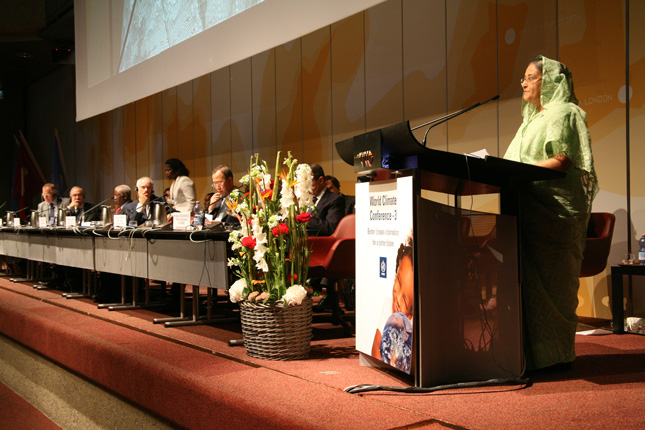
In 2015, Bangladesh’s Prime Minister Sheikh Hasina received the United Nations Champion of the Earth award for her “outstanding leadership on the frontline of climate change.” One of the world’s most populated countries, Bangladesh is also one of the least developed and most vulnerable to climate change. While Bangladesh is well-known for the natural calamities that regularly leave millions of people homeless and displaced, far fewer know that it is also one of the most proactive countries in the fields of disaster risk reduction (DRR) and climate adaptation, as well as a leading voice among the poorest countries in climate negotiations.
-
Observing Earth: Using Satellite Data for International Development
›
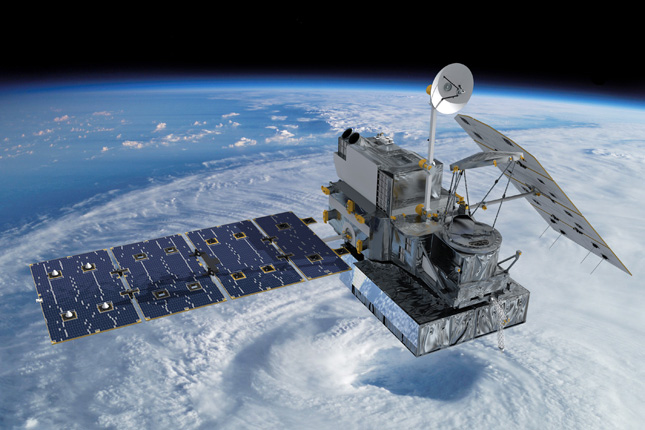
“Interest in earth observation—and in particular, the value to what we do in development internationally—has never been higher,” said Jenny Frankel-Reed, adaptation team lead at the U.S. Agency for International Development (USAID). Frankel-Reed spoke at the Wilson Center’s recent panel discussion of the earth observation data program known as SERVIR, which included insights from USAID’s soon-to-be-released evaluation of the program.
-
To Fight Global Water Stress, U.S. Foreign Policy Will Need New Strategic Tools
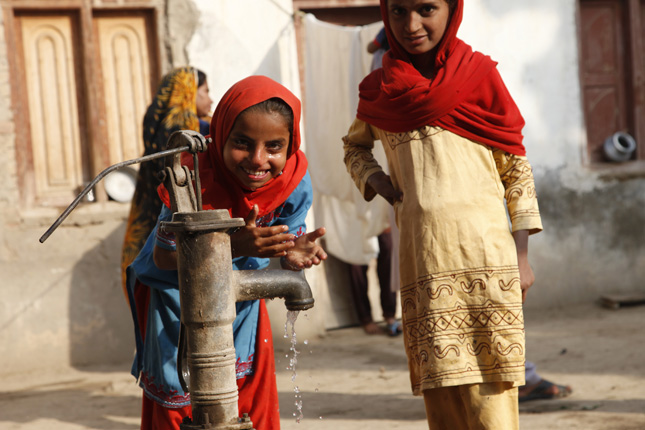
›Capable of upending rural livelihoods, compromising institutions of governance, and inducing new patterns of migration and crime, global water stress has emerged as one of the principal threats to U.S. national security, said David Reed, senior policy advisor at the World Wildlife Fund (WWF) and editor of WWF’s new book, Water, Security and U.S. Foreign Policy, on June 27 at the Wilson Center. Four defense and development leaders – retired U.S. Marine Corps General James L. Jones; Paula Dobrianksy, vice chairwoman of the National Executive Committee of the U.S. Water Partnership; retired U.S. Navy Admiral Lee Gunn, vice chairman of the CNA Military Advisory Board; and Kristalina Georgieva, chief executive of the World Bank – joined Reed for a panel discussion of water’s central role in global stability and prosperity.
-
Planning to Move: Relocating Coastal Communities in the United States
›Sea-level rise will put approximately 13 million coastal Americans at risk of displacement by 2100, but the first to move will be the most vulnerable communities. In Reaching Higher Ground: Avenues to Secure and Manage New Land for Communities Displaced by Climate Change, Wilson Center Global Fellow Maxine Burkett and her coauthors look at Native American communities on the frontlines of climate change as a model for how vulnerable coastal communities can successfully relocate. Currently, there is no central mechanism within the federal government for relocating communities displaced by climate change. Federally recognized Native American communities have historically coexisted alongside the United States government as sovereign entities, and their many avenues – legal, policy, and corporate – to acquire land could provide a starting point for addressing this imminent challenge. The authors identify tools communities can use to secure new homes and preserve their ownership of evacuated lands. -
People not Polar Bears: National Security and the Changing Climate
›“If we really cared about the polar bears, we would have done something,” quipped retired U.S. Navy Rear Admiral David Titley, who gave an Environmental Research and Education Distinguished Lecture at the National Science Foundation on June 27, 2017. Titley framed climate change in terms of U.S. national security interests, focusing on infrastructure, the changing Arctic, and how environmental factors can exacerbate conflict.
-
Sponge City: Solutions for China’s Thirsty and Flooded Cities
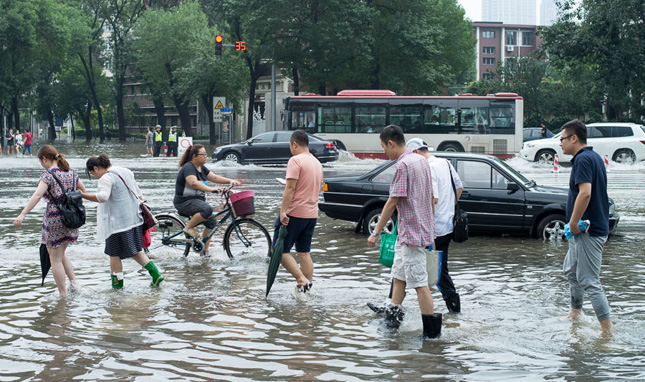
›On Wednesday, June 21, 2017, authorities in Beijing, Tianjin, and Hebei warned residents to prepare for a storm that could trigger flooding and possibly landslides. Flood warnings have become all too common in China: In 2013, more than 230 Chinese cities experienced floods. But Mother Nature is not entirely to blame; the cities’ outdated drainage systems are quickly overwhelmed and sprawling concrete gives stormwater runoff no place to go.
-
Understanding Loss and Damage from Climate Change
›The idea of an insurance pool to address damage from rising sea levels started in 1991 as mere whispers, but by 2015 it grew to become Article 8 of the Paris Agreement. In Climate Change Loss and Damage, Julia Kreienkamp and Lisa Vanhala explore the history of loss and damage in international negotiations and the prospect of its future. One of the more contentious topics in climate negotiations, loss and damage confronts the culpability of wealthy states for the unavoidable consequences of climate change in more vulnerable, non-Western countries. According to Kreienkamp and Vanhala, “the urgency of the issue for developing countries will rise in inverse proportion to how much action is undertaken to mitigate and adapt to climate change.” -
Patrick D. Nunn, The Conversation
Sidelining God: Why Secular Climate Projects in the Pacific Islands are Failing
›July 7, 2017 // By Wilson Center StaffUnless you are cocooned in a tourist bubble, it is hardly possible to miss God when you visit the Pacific Islands. In every village and on every main street there seems to be a church or temple, packed to bursting point on holy days. It is testament to the considerable influence of spirituality on the way people live in the Pacific.
Showing posts from category adaptation.
 Sea-level rise will put approximately 13 million coastal Americans at risk of displacement by 2100, but the first to move will be the most vulnerable communities. In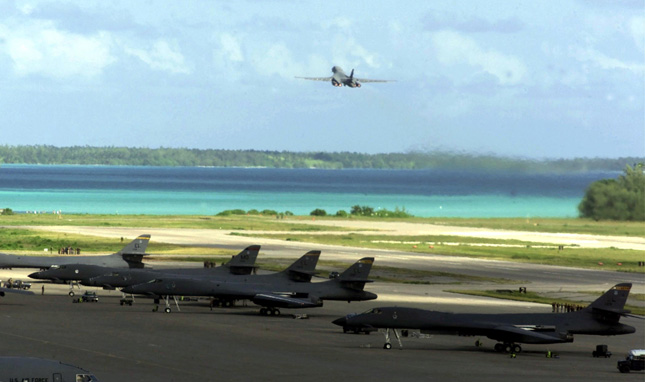
 The idea of an insurance pool to address damage from rising sea levels started in 1991 as mere whispers, but by 2015 it grew to become Article 8 of the


