-
When Climate Change Meets Positive Peace
›
Climate change is being increasingly framed as a security issue—a “threat multiplier” that can amplify the risks of breakdowns in peacefulness. Yet, even extreme climate hazards do not always lead to higher levels of violence.
-
To Mitigate Climate-Fragility Risks, Build Preventative Capacity in Fragile States
›
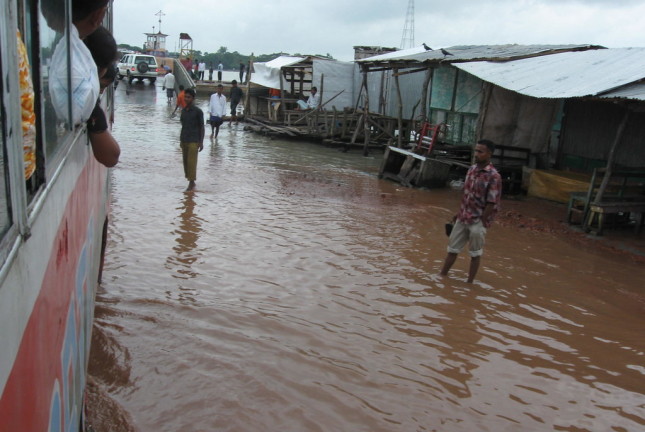
“When states face fragility and climate risks simultaneously, the risks and challenges are compounded,” according to The Intersection of Global Fragility and Climate Risks, a new global report commissioned by USAID, which was presented during a recent USAID Adaptation Community Meeting webcast. States facing major climate hazards, such as flooding, drought, and sea level rise, will be forced to contend with the cost of humanitarian and adaptation responses to mitigate the physical and livelihood risks threatening their populations. Fragile states struggling with issues of legitimacy in the social, economic, political, and security spheres may become overwhelmed by the process and cost of redirecting limited resources to address climate-induced disasters.
-
Snow and Ice Melt Patterns Help Predict Water Supply for Major Asian River Basins
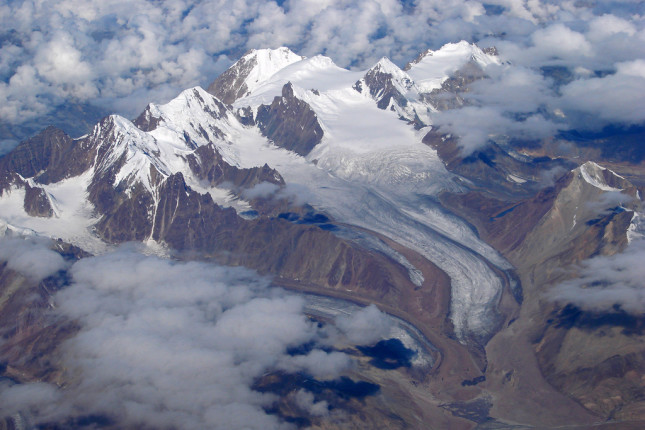
›“For the longest time we thought that water was forever renewable and that it would always be there,” said Gloria Steele, Acting Assistant Administrator for Asia with USAID, at a recent Wilson Center event on water security in High Asia. “We now know that is not the case, and we need to protect it and manage it effectively.”
-
More than Just a BRI Greenwash: Green Bonds Pushing Climate-Friendly Investment
›From the cultural hub of Lahore down to the bustling ports of Karachi, smog is king in Pakistan, with citizens enduring unhealthy air quality for much of the year. The smog, generated mostly by crop and garbage burning and diesel emissions from furnaces and cars, could get worse by the end of this year when Pakistan opens five new Chinese-built coal power plants, funded by a $6.8 billion venture under the China-Pakistan Economic Corridor (CPEC) initiative. These five plants are just the beginning of the Pakistan government’s planned 7,560 MW expansion in coal power, which are CPEC-energy priority projects. “It’s a perfect storm for a pollution crisis,” said Michael Kugelman of the Wilson Center’s Asia Program. “The poor will continue to burn a variety of polluting materials to produce fuel, and now you’re also going to be introducing dirty coal into the mix. Combine that with crop burning in the countrywide and car exhaust fumes in rapidly growing cities, and you’ve got a really smoggy mess on your hands—and in your lungs.”
-
Stormy Weather: Human Security Should Include Freedom from Hazard Impacts
›It is imperative that countries adopt a human security approach to achieve “freedom from hazard impacts”—nationally through a scientific disaster risk reduction strategy and internationally through climate diplomacy.
-
Resilient Cities Need to Support the Informal Economy: Millions of Overlooked Working Poor
›For this World Cities Day, the UN’s theme calls for “building sustainable and resilient cities.” Cities across the Global South are assessing their physical preparedness against future shocks. Can cities that leave out—or often push out—poor workers claim resiliency? These moves are, in fact, weakening any preparedness. The foundations of truly sustainable and resilient cities lie in their residents’ abilities and agency.
-
Mothers of Invention: New Podcast from Mary Robinson and Maeve Higgins
›Mary Robinson, the first female president of Ireland, and Maeve Higgins, Irish comic, have teamed up to talk climate change with pioneering women leaders from around the world. In the coming weeks, their new podcast, Mothers of Invention, will feature an African politician, an Indian scientist, a Native American activist, and many more.
-
Water Security in a New Age of Nationalism
›The idea of a “new middle” or “third way”—a blend of neo-liberal economic doctrines and social policies that was supposed to overcome the dichotomy between mixed economy and free market paradigms—more or less dominated U.S. and European politics for the last two decades. But today, this centrist consensus has been upended by a wave of populist, nationalist parties. Many have won over their electorates by questioning the benefits of free trade and globalization (as well as the international institutions that espouse them), while pursuing expansionary domestic economic policies.
Showing posts from category adaptation.