-
Andrew Freedman, Climate Central
Typhoon Haiyan Foretells Challenges for U.S. Military in Warming World
›November 14, 2013 // By Wilson Center Staff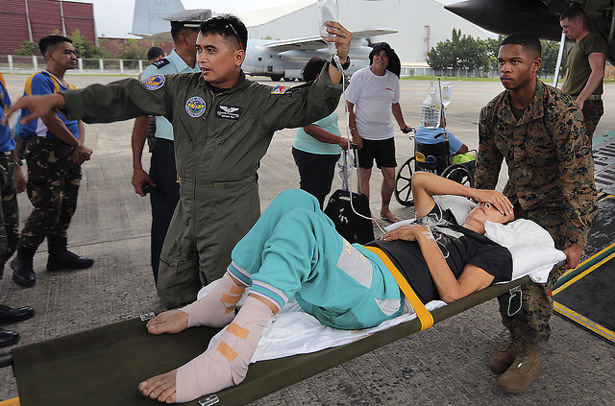
Super Typhoon Haiyan left the central Philippines in ruins, with a staggering death toll that could climb well above 10,000. The U.S. military is leading the international response to the devastation, along with international aid agencies. The Pentagon has dispatched an aircraft carrier and five other Navy ships, plus a separate group of at least 90 marines and specially trained humanitarian relief teams to the area.
-
10 Steps for Expanding the Population, Health, and Environment Approach
›
As their five-year funding cycle for supporting integrated population, health, and environment (PHE) programs around the world came to a close this fall, leaders from BALANCED Project – Building Actors and Leaders for Advancing Community Excellence in Development – came together at the Wilson Center to discuss lessons learned, best practices, and new ideas for the future.
-
BALANCED Project Final Survey Results in Tanzania and Philippines
›The BALANCED Project just completed a five year run of supporting population, health, and environment (PHE) projects in South Asia and East Africa, and recent survey results indicate that the project has helped to increase access to family planning and cultivate more environmental awareness in several ecologically vulnerable areas.
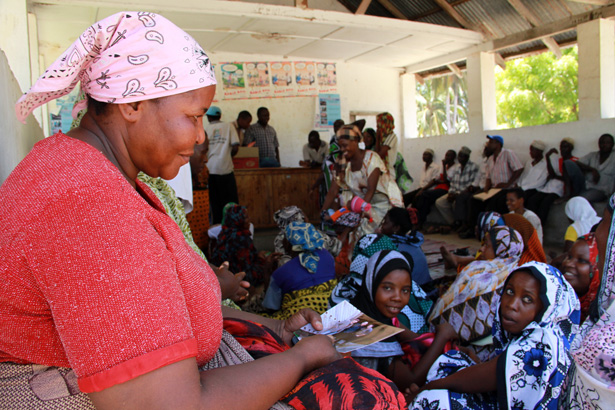
The BALANCED initiative in Tanzania’s Saadani National Park, “the only terrestrial park in the country with a contiguous marine area,” released the results of a 2012 progress survey on its efforts to create community champions for sustainable natural resource management and family planning awareness. Compared to the last survey in 2009, they found increased family planning awareness, higher contraceptive distribution and usage, and improved discussion and acceptance of contraceptive use from male partners. BALANCED-trained community-based distributors provided contraception to “31 percent of all pill users and 21 percent of all condom users.” Survey results also show a greater community awareness of the impact of individual and collective actions on the surrounding biosphere. The report calls for the continued training of community-based distributors and PHE “champions,” along with outreach to the private sector in order to ensure training and distribution can continue without the permanent presence of the BALANCED Project. -
Five Years of Population, Health, and Environment Programs: What Works and What’s Next?
›More than 20 percent of the world’s population live in ecological hotspots, places rich in biodiversity but often lacking basic government services. Population, health, and environment – or PHE – programs address compounding stresses in these areas by helping to meet people’s needs for basic health services, including reproductive health care; promoting food security and poverty reduction; and teaching sustainable natural resource management. [Video Below]
-
Religion and Reproductive Rights: Looking For Common Ground
›More than 84 percent of the 2010 world population – 5.8 billion people – consider themselves religiously affiliated, according to a recent study. Religious leaders can therefore have significant influence across a broad range of social, economic, and political issues. Perhaps nowhere is that influence felt more strongly than in debates about reproductive health and rights, and perhaps nowhere are the consequences so large than in poor and marginalized communities.
-
Measuring Community Resilience: Implications for Development Aid
›A staggering amount of development dollars – one in three, in fact – are lost due to natural disasters and crises. Certain communities are less affected than others by such disasters; they are more resilient. Knowing where vulnerability and strength exist and how to bolster them could help avoid these losses. Yet, today, very little data exists to help development practitioners understand which adaptive capacities are lagging in a given community.
-
Joan Castro on Engaging Youth to Create Change in the Philippines
›“Exposing young people to information about PHE [population, health, and environment] and food security dynamics can be a powerful tool to steer their interests and commitment to care for the environment and become sexually responsible individuals,” says PATH Foundation Philippines, Inc. (PFPI)’s Joan Castro in this week’s podcast.
PFPI’s Youth EMPOWER project has trained close to 300 “youth peer educators” in the southern Philippines to promote environmentally sustainable livelihoods, clean up the environment, raise awareness of reproductive health, and encourage participation in local government.
-
Facing the Future: Empowering Youth to Protect Their Health and Environment in Ghana and the Philippines
›In the Philippines, there are health and development programs that specifically target children, senior citizens, and adults, said Joan Castro, but adolescents are underserved. Nineteen percent of the population is between the ages of 15 and 19, but “they can’t even go to health centers to get the family planning commodities [they desire],” she said. [Video Below]
Showing posts from category Philippines.