-
Eric Holthaus, Ensia
New Rainfall Data: “Now, We Can Accurately Identify How Horrible Things Are”
›April 28, 2016 // By Wilson Center Staff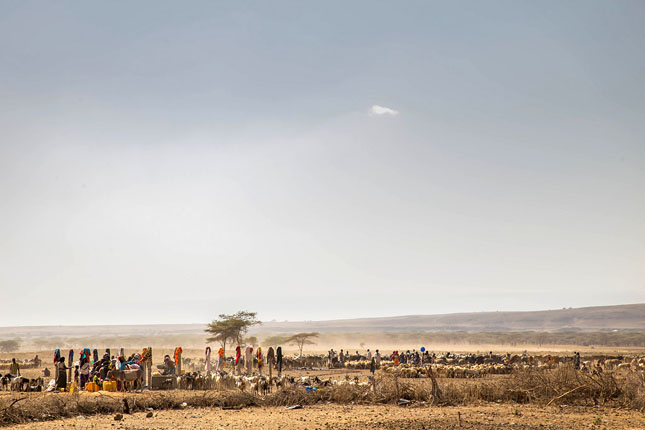
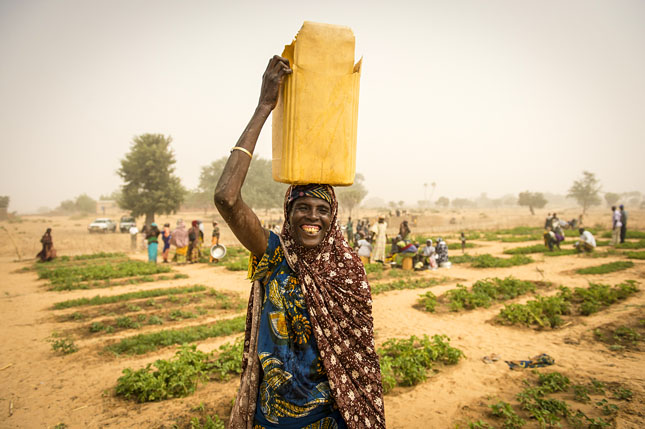
People in developed countries rarely think of weather in life-or-death terms. But millions in the developing world have no choice but to do so. The global rich have stable governments, savings accounts, insurance, and more to fall back on when disaster strikes. People in poorer countries don’t, so they’re often faced with tough decisions in times of drought: Sell the only ox for food and plow by hand next year? Take the kids out of school and put them to work chopping firewood for extra cash? Abandon the farm and family to look for work in the city?
-
Pathways to Resilience: Evidence on Links Between Conflict Management, Natural Resources, and Food Security
›
In 2015, the NGO Mercy Corps released some surprising findings from conflict management programs in the Horn of Africa. Interventions from 2013 to 2015 focused on building community-level cooperation, strengthening institutions, and enhancing resilience. The results indicate that natural resource management can be a key governance pillar to build around and that such cooperation can strengthen household resilience to climate and food security shocks. [Video Below]
-
Culture and Rights: The Struggle From Within to End Female Genital Cutting
›Ashraf and Shazia use the word “guilt” often.* Their voices tremble as they rewind to the day when they read an article in an Indian magazine, Manorama, that opened their eyes to the reality of khatna – the practice of female genital mutilation among their community. “We felt guilt – immense, powerful guilt – when we realized that this was not needed, that we didn’t need to put our elder daughter through this,” the parents say. “We had no idea this was just going on, prevalent, generation after generation.”
-
An Update on Kenya’s Dwindling Lake Turkana as Ethiopian Dam Begins Operation
›A four-part video series produced by the Kenya Broadcasting Corporation (KBC) and supported by the Fund for Investigative Journalism gives an update on the beleaguered communities of Lake Turkana, the world’s largest desert lake that supplies vital ecosystem services and livelihoods to 300,000 people in northwestern Kenya. The lake is fed entirely by the Omo River, flowing south from Ethiopia, but a newly completed upstream dam has raised questions about the future.
-
Lessons From Africa’s Great Lakes on How Conservation Orgs Can Address Migration
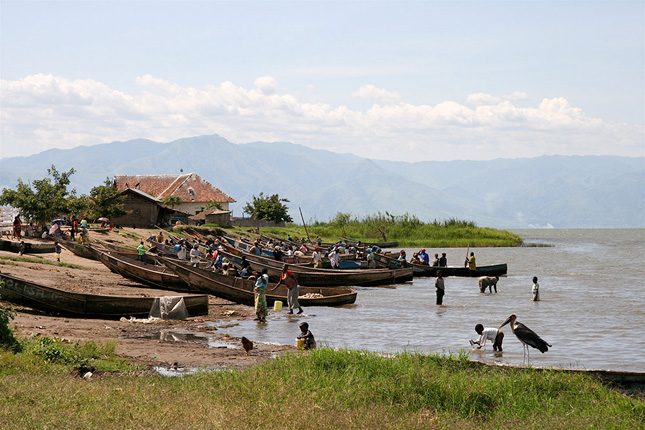
›Migration is an important strategy for coping with environmental variability and change, but it can also place additional stress on ecosystems. Policymakers and practitioners are not always fully aware of these threats, nor fully prepared to manage them through appropriate interventions. Conservation professionals in the field therefore have a key role to play in reducing the harmful impacts that migration can have on the environment, and in mitigating any tensions that may emerge between migrant and host communities.
-
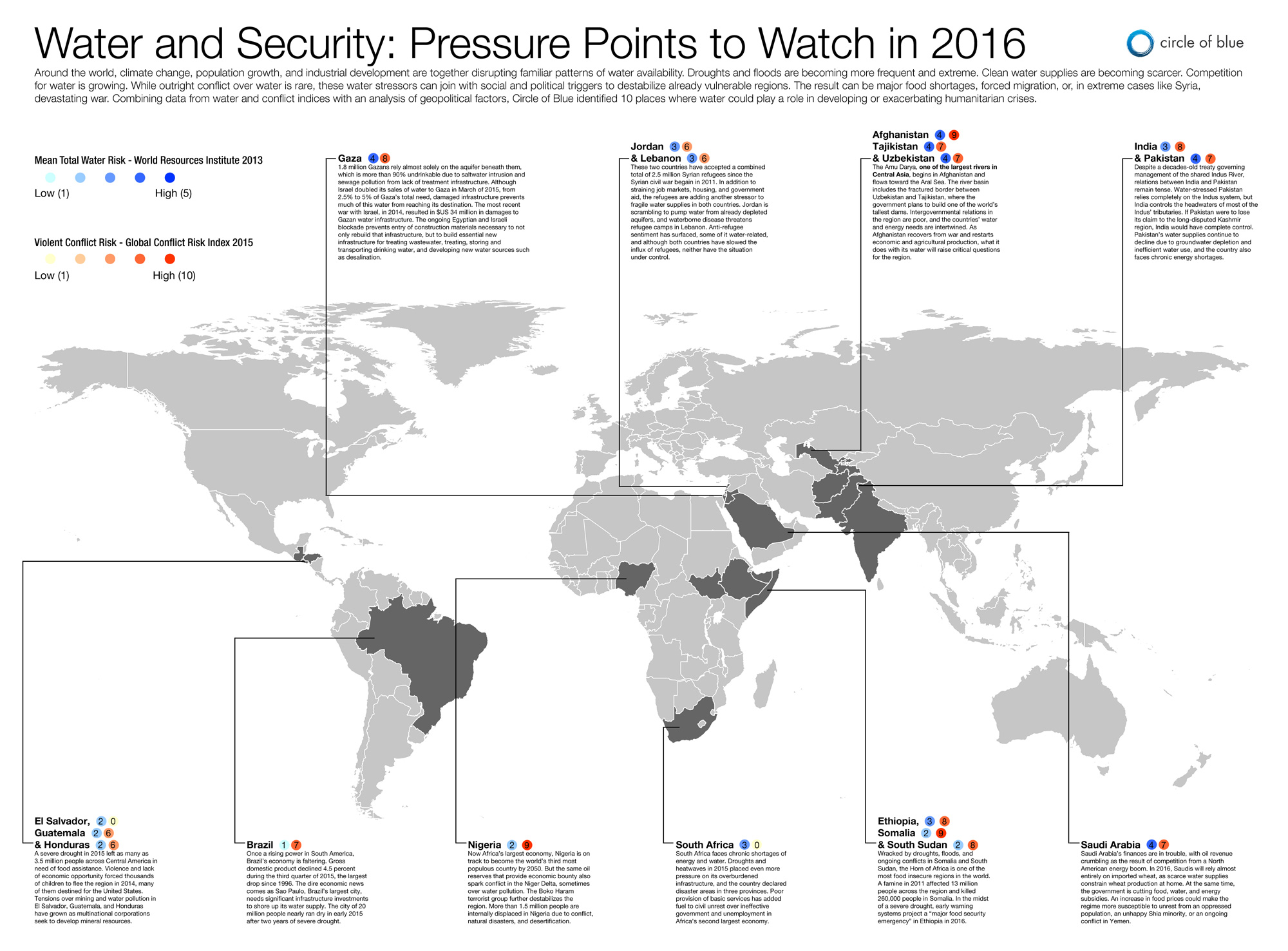
Water and Security Hotspots to Watch in 2016 [Infographic]
›The ongoing violence in Syria exhibits the potential for water problems – a historic drought, in this case – to exacerbate existing social and political problems and contribute to humanitarian crises. In a recently released infographic, Circle of Blue combined data from the European Commission Joint Research Center’s Global Conflict Risk Index and the World Resources Institute’s Aqueduct Water Risk Atlas to identify 10 hotspots around the world where water “could play a role in developing or exacerbating humanitarian crises” in 2016.
-
Climate Change, Disasters, and Security: Unconventional Approaches to Building Stability
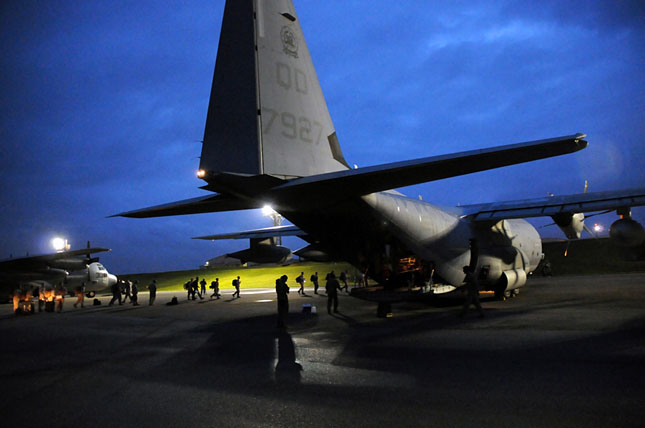
›It is “not sufficient to look at history for lessons on how we should prepare for and prevent future security risks in a climate change world,” said Swathi Veeravalli, research scientist at the U.S. Army Corps of Engineers’ Geospatial Research Laboratory, at the Wilson Center on January 14. Climate change and the extreme weather events it brings pose an “unprecedented” threat to human security. [Video Below]
-
Missing the Big Picture in Challenging Africa’s “Land Grab” Narrative
›Who walks away from fertile agricultural land available to lease for as little as $1 per year per hectare? Recent reports indicate international investors are doing just that across sub-Saharan Africa.
Showing posts from category Ethiopia.