-
New UN Population Projections Released: Pockets of High Fertility Drive Overall Increase
›June 26, 2013 // By Elizabeth Leahy Madsen
October 31, 2011, was notable not only for the annual ritual of candy and costumes, but also for its designation by the United Nations as the date when global population reached seven billion. Although just an estimate – demographers are not able to count individuals in real time on such a large scale – the event was an important opportunity to present population trends to the media and public dialogue. Several babies born that day were named the “seven billionth;” in Russia, where various incentives have been implemented to try to boost an ultra-low fertility rate, Vladimir Putin visited a maternity ward to greet one of them.
-
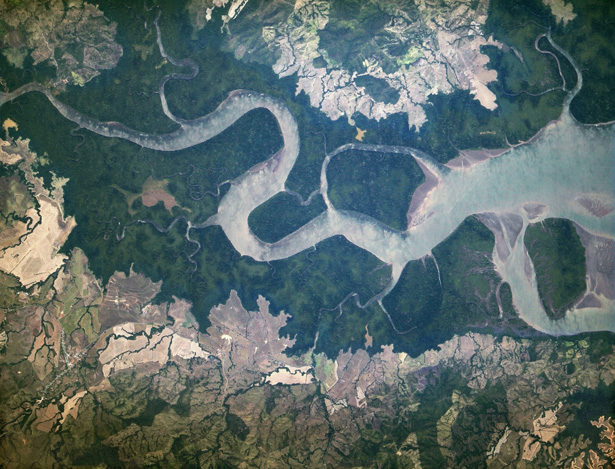
What Does It Take to Cooperate? Transboundary Water Management Around the World
›
Water is the foundation of human society and will become even more critical as population growth, development, and climate change put pressure on already-shrinking water resources in the years ahead. But will this scarcity fuel conflict between countries with shared waters, as some have predicted, or will it create more impetus for cooperation?
-
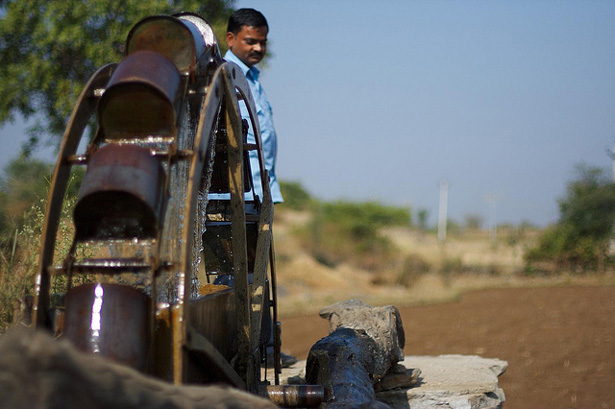
‘National Geographic’ Reports on “Water Grabbers” From Mali to India
›Much ink has been spilled on the growing trend of global land grabs – land purchased en masse in developing countries like Ethiopia by foreigners mainly for agricultural export. But along with land, investors often also gain the right to use local water, and sometimes with little consideration for local livelihoods. Fred Pearce recently looked into these “water grabs” in a series for National Geographic.
-
Child Mortality in the Developing World: Hans Rosling Crosses the “River of Myths” Once More
›“The world my father told me about 50 years ago was a divided world,” says Hans Rosling, famed Swedish statistician and development expert, in a new video. Standing in the middle of one of his trademark graphs of development indicators, his body neatly splitting the data, he gestures: “In many people’s minds, the world still looks like this: developing and developed.”
“But it’s a myth,” he continues, “because the world has improved immensely in the last 50 years.”
-
Measuring Sustainable Development in Ethiopia’s Guraghe Zone
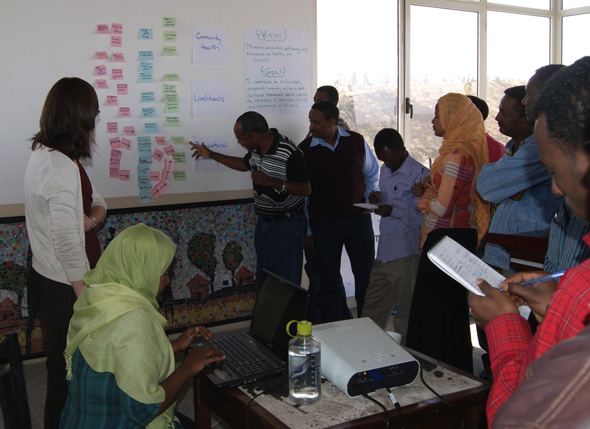
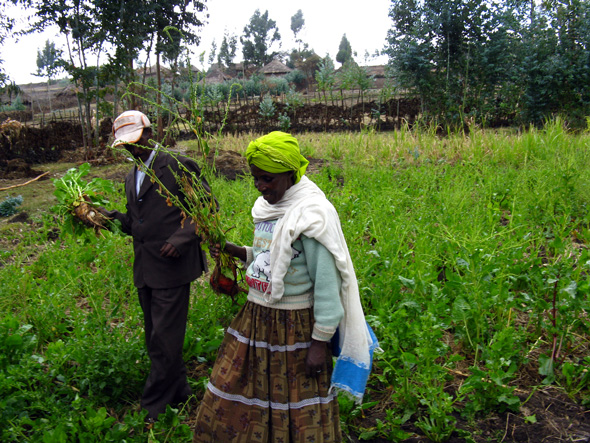
›Despite progress over the years, Ethiopia’s Guraghe zone, located in the Southern Nations, Nationalities, and People’s Region, faces many development challenges. As senior monitoring and evaluation officer in the Guraghe People’s Self-help Development Organization (GPSDO), I have been working in this region for more than five years trying to reduce poverty and improve socio-economic development. The organization as a whole has been here for more than 50.
-
Five Questions for Population, Health, and Environment Projects in Ethiopia
›Since the integrated population, health, and environment (PHE) approach is relatively new in international development, donors, partners, and implementers want to know how it’s improving people’s lives. In the PHE community, we believe that combining efforts to address natural resource management, reproductive health, and livelihoods is making a difference in places where rapid population growth combines with poverty and environment degradation. But to know for sure and be able to convince others, we need to have data to support those beliefs.
-
Stronger Evidence Base Needed to Demonstrate Added Value of PHE
›It is well known that public health issues that affect the world’s most vulnerable populations – food insecurity, maternal and child health, water- and sanitation-related disease, and resource scarcity – are inextricably linked. Where these linkages are strongest, experience on the ground has shown that community-based integrated approaches to development provide more effective and sustainable solutions over vertical, sector-based programs. But so far, there are very few comprehensive evaluations providing strong quantitative evidence of this advantage.
-
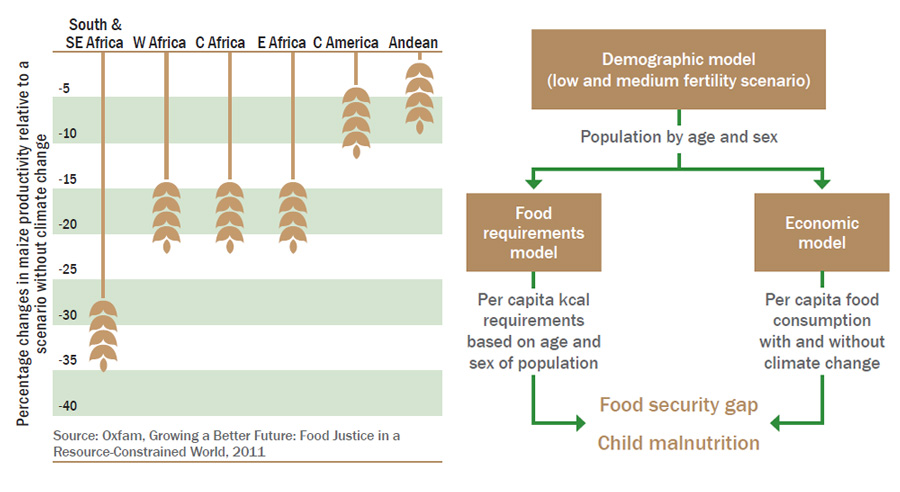
Can Family Planning Save Millions From Malnutrition in a Warming World?
›As the effects of climate change become increasingly apparent, existing poverty and human security challenges are being compounded. Among them, food security is one of the most pressing, especially in the developing world.
Based on a model developed by researchers at Futures Group, a pilot project in Ethiopia reveals that a lower fertility track for some countries could help compensate for the negative effects of climate change on agricultural yields. The study, conducted by MEASURE Evaluation and funded by USAID and The David and Lucile Packard Foundation, suggests incorporating family planning into existing climate change adaptation strategies.
Showing posts from category Ethiopia.