-
Planning for Complex Risks: Environmental Change, Energy Security, and the Minerva Initiative
›
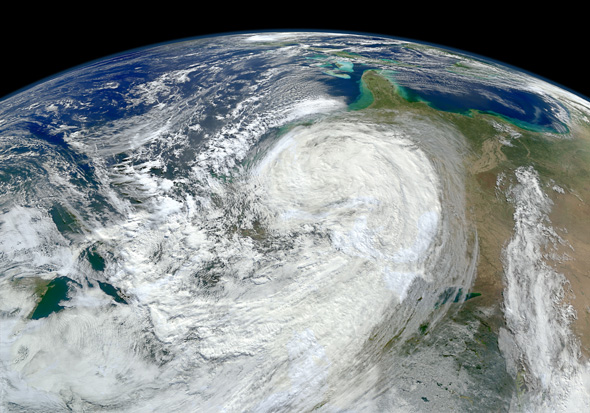
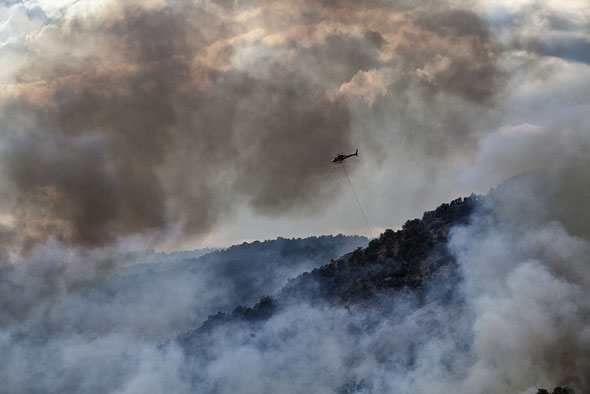
2012 witnessed a remarkable number and extremity of environmental conditions, from Hurricane Sandy and the U.S. drought to wildfires in Siberia and drought-driven blackouts in India. Arctic sea ice melted to its furthest extent in recent history. The energy landscape continued to change as well, from the launch of the U.S. Navy’s Great Green Fleet to the first liquefied natural gas shipments across the Arctic. As President Obama clearly stated in his second inaugural address, climate change is heightening both our risks and the need to respond, but tying together all of these issues is a highly complex endeavor.
-
National Research Council Produces Climate and Security Analysis at Request of U.S. Intelligence Community
›
The CIA may have shut down its dedicated climate change center earlier this year, but a recently released report sponsored by the intelligence community reaffirms the deep connection between climate change and national security. New threats to U.S. national security – like increased food and water insecurity and more natural disasters requiring humanitarian assistance – have emerged as climate change creates unprecedented changes in the global environment.
-
Michael Klare on the Race for What’s Left
›Around the world, as the most easily accessible natural resources are depleted, states are beginning to turn to more remote reserves to meet their needs and the shift may spark international tensions or even conflict, said Hampshire College professor Michael Klare in a recent interview with ECSP. “I worry very much about this growing global competition for the remaining resources in those parts of the world,” he said.
-
Inside U.S. Climate Security Policy: Geoff Dabelko Interviewed by ISN
›August 20, 2012 // By Kate DiamondClimate change “has been thought of in many quarters as something that affects folks ‘over there,’ and not as much domestically, and I think that’s a mistake,” said ECSP’s Geoff Dabelko in a recent podcast with the Zurich-based International Relations and Security Network. “I think folks are coming to a realization that there are very high economic, political, and ultimately security stakes for the United States.”
-
Digging for Crumbs: Michael Klare on the Global Scramble for the World’s Last Resources
›May 25, 2012 // By Stuart KentYale Environment 360 has a good interview up with Hampshire College Professor Michael Klare about the thinking behind his recent book, The Race for What’s Left: The Global Scramble for the World’s Last Resources. According to Klare, increased scarcity and a surging global appetite for natural resources have led us into an unprecedented period of exploitation where maintaining a supply of crucial resources means exploiting ever more remote, fragile, and dangerous regions of the globe (Afghanistan and the Arctic, for example).
Touching on everything from Canada’s tar sands and “fracking” in the United States, to rare earth minerals and agricultural land grabs, Klare explains the security implications of this newest resource “scramble” and his hopes for future solutions.
We’ve excerpted the first question and answer of the interview, by Diane Toomey, below, but the complete discussion is worth a read.Yale Environment 360: You make the point that when it comes to the age-old competition for raw materials, we’re in an unprecedented age. How so?
Continue reading on Yale Environment 360.
Michael Klare: I do believe that’s the case. Humans have been struggling to gain control of vital resources since the beginning of time, but I think we’re in a new era because we’re running out of places to go. Humans have constantly moved to new areas, to new continents, when they’ve run out of things in their home territory. But there aren’t any more new continents to go to. We’re going now to the last places left on earth that haven’t been exploited: the Arctic, the deep oceans, the inner jungles in Africa, Afghanistan. There are very few places left that haven’t been fully tapped, so this is humanity’s last chance to exploit the earth, and after this there’s nowhere else to go.
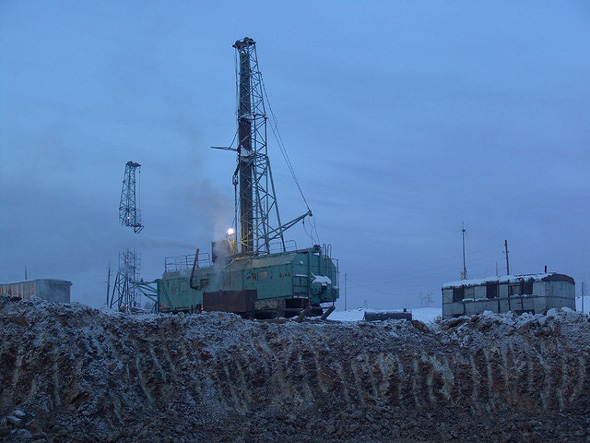
Photo Credit: Drilling in Siberia, courtesy of flickr user MOBmole. -
Responses to JPR Climate and Conflict Special Issue: Steve Lonergan (University of Victoria)
›The relationship between climate change and conflict has been discussed for over two decades but most of the evidence of the link between the two has been anecdotal, drawing on extreme climate scenarios. The authors featured in the January special issue of the Journal of Peace Research devoted to climate change and conflict are therefore to be commended for their detailed investigations into a possible causal relationship between the two.
-
Integration, Communication Across Sectors a Must, Say Speakers at 2012 NCSE Environment and Security Conference (Updated)
›February 23, 2012 // By Wilson Center StaffECSP staff were among the more than 1,000 attendees discussing non-traditional security issues at the 12th National Conference on Science, Policy, and the Environment last month at the Ronald Reagan Building. Our own Geoff Dabelko spoke on the opening plenary (above) and we collected other excerpts below, though they’re only a small slice of the conference. Find our full coverage by following the NCSE tag, see the full agenda on environmentalsecurity.org, and follow the conversation on Twitter (#NCSEconf).
Climate, Energy, Food, Water, and Health
At the conference’s lead-off plenary, Jeff Seabright (Vice President, The Coca-Cola Company), Daniel Gerstein (Deputy Under Secretary for Science and Technology, U.S. Department of Homeland Security), Rosamond Naylor (Director, Stanford’s Center on Food Security and Environment), and our ECSP’s Geoff Dabelko highlighted the challenges and opportunities of addressing the diverse yet interconnected issues of climate, energy, food, water, and health.
“We need to embrace diversity regardless of the complexity,” said Dabelko, and “abandon our stereotypes and get out of our stovepipes.” Government agencies, academics, and NGOs must be open to using different tools and work together to capture synergies. “If we know everyone in the room, we are not getting out enough,” he said.
“We have to be concerned with every level – national, state, tribal, regional, down to the individual,” said Gerstein. DHS recognizes that climate change affects all of its efforts, and has established three main areas of focus: Arctic impacts; severe weather; and critical infrastructure and key resources.
For Coca-Cola, “managing the complex relationship among [food, water, and energy] is going to be the challenge of the 21st century, said Seabright, who noted that the business community is “seeing a steady increase in the internalization of these issues into business,” including as part of companies’ competitive advantages and strategies.
Similarly, we must offer opportunities and not just threats, said Dabelko, such as exploring climate adaptation’s potential as a tool for peacebuilding rather than simply focusing on climate’s links to conflict. We need to “find ways to define and measure success that embrace the connections among climate, water, and energy, and does not try to pretend they aren’t connected in the real world,” he said.
Communicating Across Sectors: Difficult But Necessary
Next, Sherri Goodman (Executive Director, CNA Military Advisory Board), Nancy Sutley (Chair, White House Council on Environmental Quality), Rear Admiral Neil Morisetti (Climate and Energy Security Envoy, UK Ministry of Defence), and Susan Avery (Director, Woods Hole Oceanographic Institute) called on governments, militaries, and institutions to move away from traditional, vertically segmented responsibilities to address today’s environmental and security challenges.
“We live in an interdependent, connected world,” Morisetti said, but communicating that is a challenge. Militaries are likely to have new, broader missions, including conflict prevention, he said, which makes communications all the more important.
Science is moving from reductive to integrated outlooks to better address larger, systems-wide challenges, said Avery, but communicating results of this research to the public, and across and between disciplines, is difficult.
Confronting these communication and education challenges, particularly the difficulties of conveying the probability of various risks, is a key focus of the Council on Environmental Quality, said Sutley. “We confront the challenge of risk communication every day and it’s not limited to climate change,” she said.Challenging Conventional Wisdom on Climate and Conflict
The common argument is that climate change will lead to scarcity – less arable land, water, rain, etc. – and scarcity will lead to conflict, said Kate Marvel (Lawrence Livermore National Lab). But the link between scarcity and conflict is not that clear. It’s “very important to treat models as tools, not as magic balls,” she said. Developing better diagnostics to test models will help researchers and observers sort out which ones are best.
Kaitlin Shilling (Stanford University) called on the environmental security community to move beyond simple causal pathways towards finding solutions. After all, rolling back climate change is not an option at this point, she said; to find solutions, therefore, we need more detailed analysis of the pathways to violence.
The most common types of climate-conflict correlations are not likely to directly involve the state, said Cullen Hendrix (College of William and Mary). Traditional inter-state wars (think “water wars”) or even civil wars are much less likely than threats to human security (e.g., post-elections violence in Kenya) and community security (e.g., tribal raiding in South Sudan). For this reason, the biggest breakthroughs in understanding climate and conflict links will likely come from better interactions between social and physical scientists, he said.
Because the many unique factors leading to conflict vary from place to place, a better way to assess climate-conflict risk might be mapping human vulnerability to climate change rather than predicting conflict risk in a given place, said Justin Mankin (Stanford University). While human reactions are very difficult to predict, vulnerability is easier to quantify.
Yu Hongyuan (Shanghai Institute for International Studies) compared the concerns of U.S. and Chinese officials on climate change. Polling results, he said, show Chinese officials are most concerned with maintaining access to resources, while American policymakers focus on climate change’s effects on global governance and how it will impact responses to natural disasters, new conflicts, and humanitarian crises. Given the centrality of these two countries to international climate negotiations, Yu said he hoped the “same issues, different values” gulf might be bridged by better understanding each side’s priorities.
Schuyler Null, Lauren Herzer, and Meaghan Parker contributed to this article.
Video Credit: Lyle Birkey/NCSE; photo credit: Sean Peoples/Wilson Center. -
The U.S. Military, Climate Change, and Maritime Boundaries
›The Defense Science Board, which advices the U.S. military on scientific and technical matters, writes in a recent task force report that the most immediate and destabilizing effects of climate change will impact U.S. security indirectly, through American reliance on already-vulnerable states that are “vital” sources of fuel and minerals or key partners in combatting terrorism. The report singles out three specific themes as particularly important to responding to near-term climate-driven threats and adapting to climate change’s long-term impacts: providing “better and more credible information [about climate change] to decision makers,” improving water management, and building better local adaptation capacity, particularly in African nations. Ultimately, the report concludes that the most effective, most efficient way the United States can respond to climate change is not militarily but “through anticipatory and preventative actions using primarily indigenous resources.”In “Maritime Boundary Disputes in East Asia: Lessons for the Arctic,” published in International Studies Perspectives, James Manicom writes that as climate change makes access and exploration easier, there are lessons to be learned from East Asian states’ handling of maritime disputes for Arctic nations. Manicom finds that simply because a state may be party to the UN Convention on the Law of the Sea (UNCLOS), disputes over boundaries and “over the methods used to settle disputes” persist. Domestic identity politics also can and do affect the extent to which a state attempts to exert influence over disputed areas – a noteworthy conclusion given growing rhetoric in Arctic states over the national importance of disputed territories. Finally, Manicom points out that, while “high expectations of resource wealth” may fuel disputes and “political tension,” those expectations do not inevitably doom competing states to conflict over resources.
Showing posts from category Arctic.