-
BALANCED Project Final Survey Results in Tanzania and Philippines
›The BALANCED Project just completed a five year run of supporting population, health, and environment (PHE) projects in South Asia and East Africa, and recent survey results indicate that the project has helped to increase access to family planning and cultivate more environmental awareness in several ecologically vulnerable areas.
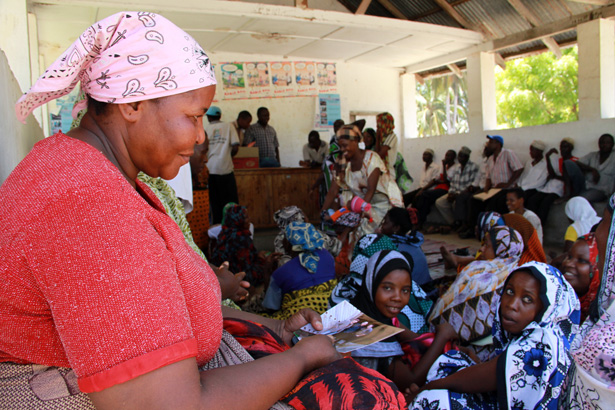
 The BALANCED initiative in Tanzania’s Saadani National Park, “the only terrestrial park in the country with a contiguous marine area,” released the results of a 2012 progress survey on its efforts to create community champions for sustainable natural resource management and family planning awareness. Compared to the last survey in 2009, they found increased family planning awareness, higher contraceptive distribution and usage, and improved discussion and acceptance of contraceptive use from male partners. BALANCED-trained community-based distributors provided contraception to “31 percent of all pill users and 21 percent of all condom users.” Survey results also show a greater community awareness of the impact of individual and collective actions on the surrounding biosphere. The report calls for the continued training of community-based distributors and PHE “champions,” along with outreach to the private sector in order to ensure training and distribution can continue without the permanent presence of the BALANCED Project.
 -
From Octopus Conservation to Disaster Relief: Vik Mohan on PHE in Madagascar
›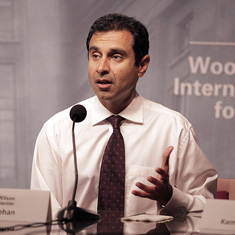
When Tropical Cyclone Haruna struck in February 2013, leaving thousands without shelter and tens of thousands without water, it was a test for Blue Ventures’ integrated approach to development in southwest Madagascar. According to Dr. Vik Mohan, they passed.
“By the time the first aid organization arrived just to collect information, we had distributed to 17 villages already,” Mohan says in this week’s podcast. “We were the mouthpiece of the community, and because of our infrastructure on the ground, because of our good relationships with the community, we were able to procure and disseminate supplies that the community needed.”
-
Five Years of Population, Health, and Environment Programs: What Works and What’s Next?
›More than 20 percent of the world’s population live in ecological hotspots, places rich in biodiversity but often lacking basic government services. Population, health, and environment – or PHE – programs address compounding stresses in these areas by helping to meet people’s needs for basic health services, including reproductive health care; promoting food security and poverty reduction; and teaching sustainable natural resource management. [Video Below]
-
Complicated Causality: Edward Carr on Food Security and Conflict
›
“It seems to me the food security linkage suffers from the same problem that an awful lot of the environment and conflict literature suffers from: There are more negative cases than positive cases,” says Edward Carr in this week’s podcast. “In other words, you have a lot of cases where there is a [food] price spike and no violence or no conflict.”
-
Sarah Crowe, UNICEF
Ethiopia Set to Achieve Millennium Development Goals in Child Mortality
›For a country that once made headlines for famine, poverty, and war, Ethiopia is gaining a reputation as a development leader on the African continent. In just over 10 years, the country has slashed child mortality rates by half, rising in global rank from 146 in 2000 to 68 in 2012. More money is being spent on health care, poverty levels and fertility rates are down, and twice as many children are in school.
-
Why Do Climate Changes Lead to Conflict? Provocative New Study Leaves Questions
›In August, Solomon Hsiang, Marshall Burke, and Edward Miguel published a provocative piece in Science in which they sought to demonstrate a correlation between climate extremes and violence across a range of time periods, countries, and different levels of conflict. It’s a massive undertaking and one that predictably has evoked some criticism – some of it warranted.
-
Susan Moran, Ensia
Beans May Be Key to Feeding the Future
›September 11, 2013 // By Wilson Center StaffThe original version of this article, by Susan Moran, appeared on Ensia.
Lean and towering at 6 feet 5 inches, Ken Giller blends right into the rows of climbing beanstalks he is examining on this blisteringly hot spring day in Buhoro, a village in northern Rwanda. Local farmers who have been growing various varieties of beans bred for high yields and other desirable traits proudly show him their plots on the terraced hillside.
-
For Fast-Growing Countries, Should Aging Be a Concern? Planning for the Second Demographic Dividend
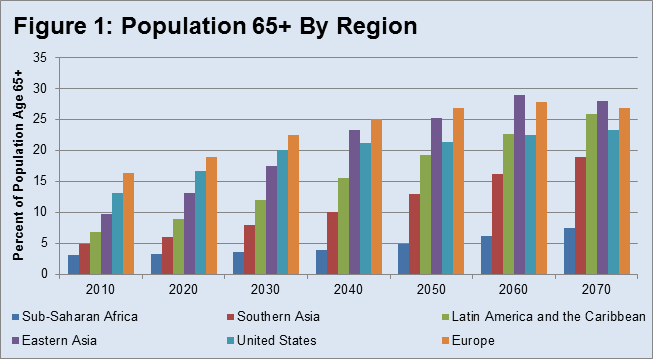
›September 10, 2013 // By Elizabeth Leahy MadsenPopulation aging and decline are frequently described as a threat to countries’ economic development and social stability. Evocative language, such as “demographic winter” and “graying of the great powers,” portrays the serious consequences that many observers envision as fertility and growth rates decline and the elderly comprise a greater percentage of the population. These concerns reach around the globe, including in Africa, which has the lowest percentage of elderly among the world’s major regions.
Showing posts from category Africa.