-
To End Fistula by 2030, First Strengthen the Healthcare Workforce
› When childbirth takes place without skilled birth attendants or adequate emergency obstetric care, a woman may suffer from obstetric fistula. Women with fistula live with uncontrollable urinary and/or fecal incontinence, because a hole has formed between the birth canal and bladder or rectum. They have usually survived prolonged/obstructed labor, often lost their child to stillbirth, and frequently face severe social isolation and stigma. There are also now more and more women suffering from iatrogenic fistula caused by injuries during pelvic surgery, especially obstetric or gynecological surgery. Between 1 million and 2 million women currently need fistula repair, with thousands of new cases each year. However, most fistulas can be treated, enabling women to resume healthy, productive lives in their communities. Recognizing this, the United Nations has issued a call to end fistula by 2030.
 -
Fisheries Management: A Possible Venue for Navigating Fisheries Conflicts in the Indian Ocean
›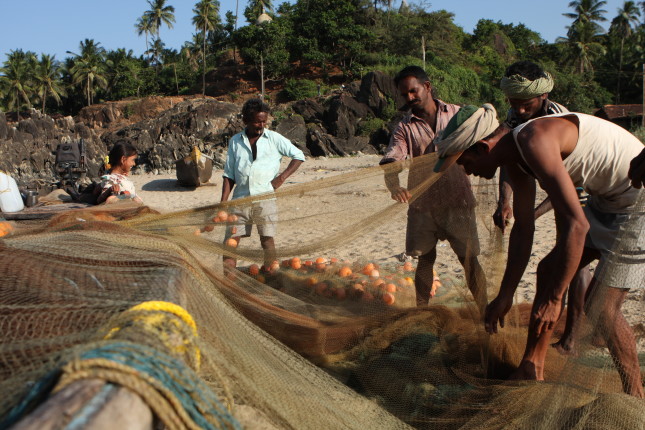
A significant increase in fisheries-related conflicts in the Indian Ocean since 2000 is heightening regional tensions. These conflicts have ranged from purely verbal and diplomatic disputes to armed attacks on fishing vessels by coast guards and navies. These disputes are most often low-intensity, but constitute true “wild card” scenarios in which competing powers’ navies reach the brink of engagement due to the actions of third parties that they neither command nor control.
-
Population, Climate, and Politics—A New Phase is Emerging
›For some time, it has been clear that a global population imbalance is emerging. High income countries, including nearly all of the Americas, Europe, and most of East and parts of South and Southeast Asia, have seen a dramatic, sustained fall in fertility. Already, this is resulting in shrinking labor forces and the oldest mean age populations seen in history. At the same time, the low income countries and even some lower middle-income countries—mainly in Africa but also in Central America, the Middle East, and parts of South and Southeast Asia—continue to have relatively high fertility. This is now, and even more in the coming decades, producing fast-growing labor forces and relatively young populations. -
To Address Security in Africa, Focus on the Citizen: Ambassador Phillip Carter III on the Connections between Development and Security
›To address the security challenges facing Sub-Saharan Africa we need to shift the focus from a concept of state security to one of citizen security, says Ambassador Phillip Carter III (ret.), former Ambassador to the Ivory Coast and the Republic of Guinea, in this week’s Friday Podcast. “Our current strategy of a military response to terrorist organizations or criminal networks is inadequate at best, and probably unsustainable at worst,” says Carter. “To me, the greatest security threat in Africa is poor or bad governance.” -
Foresight for Action | Ecosystem Degradation, Transnational Migration, and Political Instability: Three Main Tipping Points for East Africa
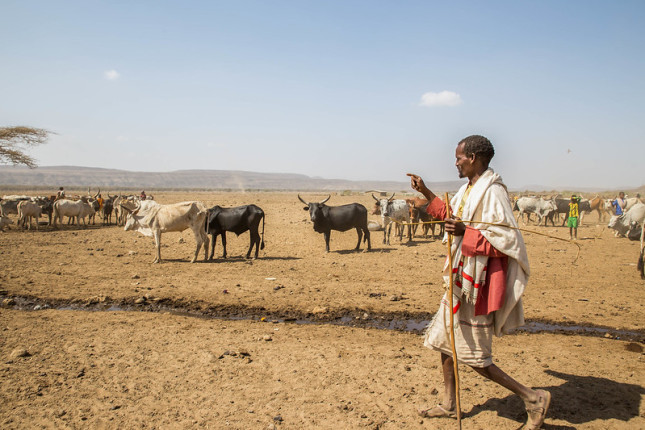
›The Horn of Africa faces critical security and climate risks. Persistent droughts have precipitated the onset of food insecurity and waterborne disease, while heavy rain events such as Cyclone Sagar have caused widespread flooding, mudslides, and wind damage. These challenges are increasing in severity against a backdrop of changing demographic trends—including rapid population growth, increased migration, and urbanization—and power struggles both within and between countries in the region.
-
Investing in Women’s Empowerment Essential to Achieving Peace, Security in Africa
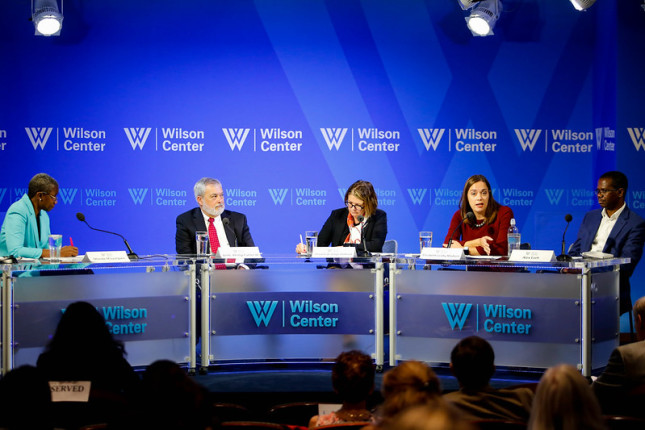
›Africa in Transition // From the Wilson Center // November 14, 2019 // By Brigitte Hugh & Deekshita RamanarayananA country can achieve sustainable peace and security only if women are included, said Monde Muyangwa, Director of the Wilson Center’s Africa Program at a recent Wilson Center event on the role of women in promoting peace and security in Africa. “And I would argue that part of the challenges that we face on the African continent, the insecurity that we face in parts of the African continent,” she said, “is precisely because not all segments of society are included.”
-
Nile River Water Supply Forecasts May Reduce the Chance of Conflict
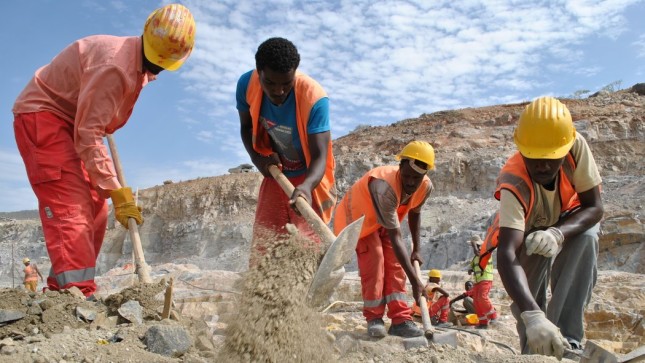
›Rising tensions between Egypt and Ethiopia over construction of the Grand Ethiopian Renaissance Dam (GERD) have led to speculation that there could be a war over water. When completed, the dam will be the largest in Africa. And it will give Ethiopia control over the Blue Nile River, a major source of Egypt’s water.
-
Transforming Africa: Women and Young People Will Drive Progress
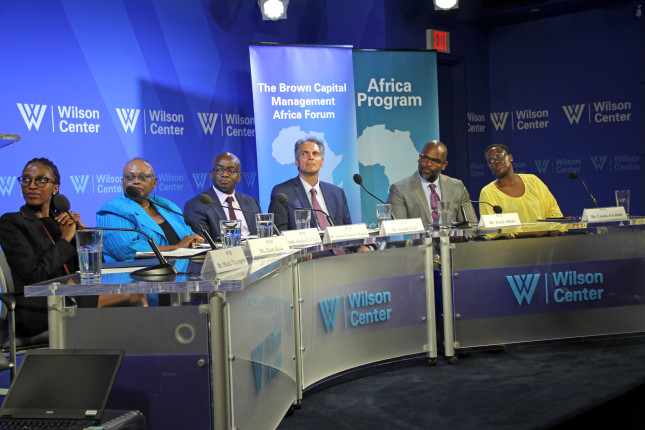
›“Too often in the United States, the narrative that we hear about Africa is one of poverty, war, and ineffective or failed states. It is a crisis, a place best engaged through aid packages and humanitarian assistance,” said Keith Lee, President and Chief Operating Officer of Brown Capital Management at a recent Wilson Center event hosted by the Africa Program. “This has never been the entire story, and today more than ever, Africa is undergoing enormous transformations that challenge this narrative,” Lee said.
Showing posts from category Africa.
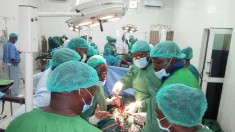 When childbirth takes place without skilled birth attendants or adequate emergency obstetric care, a woman may suffer from obstetric fistula. Women with fistula live with uncontrollable urinary and/or fecal incontinence, because a hole has formed between the birth canal and bladder or rectum. They have usually survived prolonged/obstructed labor, often lost their child to stillbirth, and frequently face severe social isolation and stigma. There are also now more and more women suffering from iatrogenic fistula caused by injuries during pelvic surgery, especially obstetric or gynecological surgery. Between 1 million and 2 million women currently need fistula repair, with thousands of new cases each year. However, most fistulas can be treated, enabling women to resume
 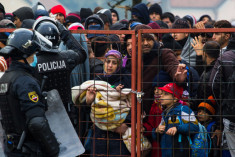 For some time, it has been clear that a global population imbalance is emerging. High income countries, including nearly all of the Americas, Europe, and most of East and parts of South and Southeast Asia, have seen a dramatic, sustained fall in fertility. Already, this is resulting in shrinking labor forces and the oldest mean age populations seen in history. At the same time, the low income countries and even some lower middle-income countries—mainly in Africa but also in Central America, the Middle East, and parts of South and Southeast Asia—continue to have relatively high fertility. This is now, and even more in the coming decades, producing fast-growing labor forces and relatively young populations.
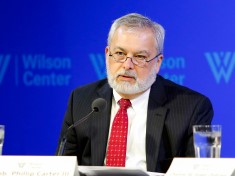 To address the security challenges facing Sub-Saharan Africa we need to shift the focus from a concept of state security to one of citizen security, says Ambassador Phillip Carter III (ret.), former Ambassador to the Ivory Coast and the Republic of Guinea, in this week’s Friday Podcast. “Our current strategy of a military response to terrorist organizations or criminal networks is inadequate at best, and probably unsustainable at worst,” says Carter. “To me, the greatest security threat in Africa is poor or bad governance.”