

-
Water’s Role in International Development
› A mark of a good event is that it generates further debate, questions, and ideas. “Water and International Development: A Dialogue,” a recent discussion at The Johns Hopkins University School for Advanced International Studies, was such an event. Geoff Dabelko, director of the Environment Change and Security Program at the Wilson Center, and Aaron Salzberg, special coordinator for water resources at the U.S. Department of State, went head-to-head to discuss water’s role in international development.
The discussion between Dabelko and Salzberg touched upon many issues I ran into while trying to program Water for the Poor Act funding while working as a natural resources adviser for the Economic Growth Office at the U.S. Agency for International Development (USAID) mission in Ghana. Once we received the funding, there was an intra-office debate among:- People who wanted to make drip-irrigation work we were already funding fit the Water for the Poor Act definition;
- People who thought the funds should be spent on a narrow set of water and sanitation interventions, such as borehole/latrine construction and water purification tablets; and
- People who thought the funds should be spent on the larger-scale water and sanitation infrastructure that Ghana so desperately needs.
USAID mission offices have specific strategic priorities and associated operational plans, which dictate the makeup of the staff employed at any given time. In this case, there was no one water specialist who could take on this important task. I had an M.S. in water management, so I was passed the baton. If the Water for the Poor Act is going to have a significant impact, USAID missions must have the technical capacity to assimilate the funds.
Dabelko and Salzburg’s discussion brought up even more questions for me: How can the United States reconcile its bilateral earmark funding for water with the growing trend toward donor coordination—for instance, under the 2005 Paris Declaration, or, in the case of Ghana, the Multi-Donor Budget Support fund, which encourages donors to contribute direct financial support to the Ghanaian government to implement its Growth and Poverty Reduction Strategy? Is there a need to have water specialists assigned to USAID missions, rather than relying on specialists in Washington, D.C.? How can we make municipal financing mechanisms for infrastructure more attractive to Western funders and host-country governments? Although Dabelko and Salzburg might not have had all the answers to these questions, I’m heartened that they and other water experts are tackling the tough issues.
David Bonnardeaux is a freelance consultant on rural development and natural resource management for the World Bank, USAID, and CARE, among others. He is also an amateur photographer (www.davidbonnardeaux.smugmug.com). His next port of call is Vietnam.
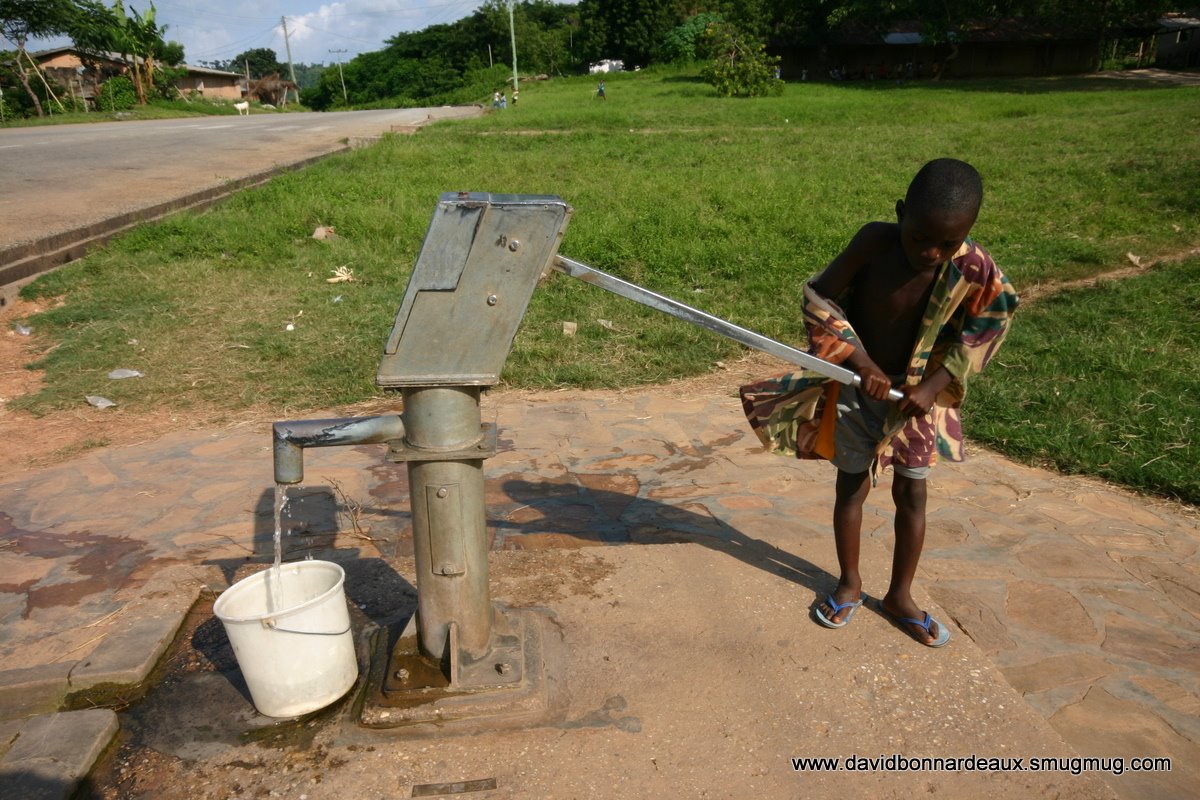
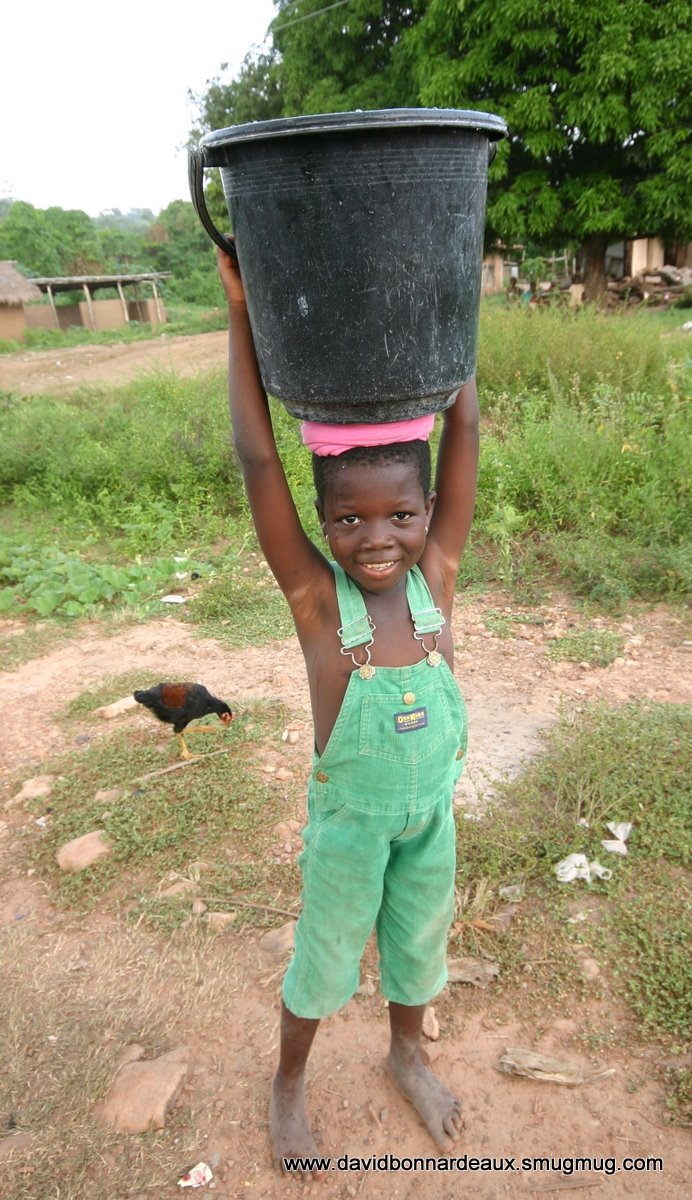
Photos: Top: Boy pumping water, Volta Region, Ghana. Bottom: Girl collecting water from lake, Volta Region, Ghana. Courtesy of David Bonnardeaux. -
At the Fifth World Water Forum, Africa Steps Up
›A record-breaking 28,000 people, including five heads of state, participated in the Fifth World Water Forum in Istanbul, Turkey, last month. I was there, too, excited to be discussing this year’s theme, “Bridging Divides for Water.” Much of the conversation centered on how to bridge the remaining divides in meeting the Millennium Development Goals (MDGs)—especially MDG 7, which aims to halve the proportion of people without sustainable access to safe drinking water and basic sanitation by 2015.
While notable progress has been made in many regions of the world, such as China and India, other areas, particularly sub-Saharan Africa, lag woefully behind. According to the most recent numbers (2006) by UNICEF and the World Health Organization, only 31 percent of the population in sub-Saharan Africa has access to sanitation, and there are 38 sub-Saharan African countries where sanitation coverage is less than 50 percent. Access to improved drinking water sources has increased to 64 percent across the region; however, increases in coverage are not keeping pace with population growth, and the current rate of provision is not adequate to meet the MDG drinking-water target.
The Fifth World Water Forum, however, marked a hopeful new development. For the first time, the region of the world with the most serious water challenges, Africa, used the Forum to announce an internally driven water and sanitation agenda with a united voice. With support from the African Development Bank, the African Union and the African Ministerial Conference on Water (AMCOW) unveiled a plan to implement existing political commitments to water and sanitation. An “Africa Regional Paper” informed by the First African Water Week, held in Tunis in March 2008, presents African perspectives on each of the themes of the Forum (global change and risk management; advancing human development and the MDGs; managing and protecting water resources; governance and management; finance; education, knowledge, and capacity development), with a key message of delivering on existing commitments. In response to this agenda, the G8 countries announced increased aid to Africa’s water sector.
The desire to solve the world’s water crisis has generated many reports and frameworks over the years, including the Brundtland Commission’s report “Our Common Future” and the World Water Forum process itself. But perhaps nothing is as effective as a proactive, united stance from sub-Saharan Africans themselves, which could go a long way toward ensuring aid is used appropriately and efficiently. The fact that South Africa will host the Sixth World Water Forum in March 2012 should provide another impetus for meeting water and sanitation targets on the continent.
Hope Herron is an environmental scientist with Tetra Tech, Inc. She is currently researching water security issues in the context of the new U.S. Africa Command and U.S. defense, diplomacy, and development frameworks.
Photo: A Sudanese girl fills a water jug at a pump. Courtesy of Flickr user Water for Sudan. -
‘60 Minutes’ Gives Community-Conservation Programs Short Shrift
›April 1, 2009 // By Rachel Weisshaar60 Minutes correspondent Bob Simon recently reported on how African herders are poisoning lions, which sometimes kill herders’ livestock, with Furadan, a highly lethal pesticide (video; transcript). Today, there are only 30,000 lions in Africa, down from 200,000 twenty years ago.
Although Simon did mention “the Lion Guardians, a group of reformed Maasai warriors who keep track of collared lions and warn herders when the lions get too close to their cattle,” he failed to highlight other, more comprehensive community conservation programs in the area, such as the Il Ngwesi Group Ranch. I mention Il Ngwesi in particular because its health and conservation programs coordinator, Kuntai Karmushu, actually appears in the 60 Minutes segment, alongside Mengistu Sekeret.The Il Ngwesi ranch has successfully used a multisectoral approach to protect wildlife and promote rural development. Eighty percent of the ranch’s 16,000 hectares are devoted to conservation efforts, including a very successful ecotourism endeavor that Karmushu calls “the Il Ngwesi backbone.” Il Ngwesi’s ecotourism enterprise—which employs community members, is run sustainably by the community, and directs revenue back into the community—has enjoyed steadily increasing revenue since 1999.“The amount of tourism that’s here is not sufficient to offset the cost of these people living with wildlife,” says Tom Hill, an American philanthropist who has set up a fund to compensate Masaai for livestock losses due to lions, in return for not killing the lions. But Il Ngwesi proves that with a comprehensive approach and local buy-in, conservation can be a smart investment for local people. The ranch’s profits are used for education programs, HIV/AIDS awareness efforts, conservation and security improvements, and infrastructure development. The community participates in spending decisions, which Karmushu says is “one of the key things” driving the ranch’s success. In 2002, it won the UN Environment Programme’s Equator Initiative Prize, which recognizes outstanding local efforts for poverty reduction and biodiversity conservation in the tropics.
ECSP’s website has more on the Il Ngwesi Group Ranch and other successful community conservation projects in East Africa, including video, PowerPoint presentations, and transcripts.
Photo: Kuntai Karmushu. Courtesy of the Wilson Center and Heidi Fancher. -
Weekly Reading
›The BBC has produced an excellent multimedia package (including articles, videos, and a narrated slideshow) on the controversial Gibe III dam in Ethiopia, which could threaten the livelihoods of nearly 500,000 people.
According to New Directions for Integrating Environment and Development in East Africa, the following activities are successfully promoting sustainable, integrated development in the region: “community-based management of natural resources for local livelihoods; natural resource-based businesses that benefit communities and the environment, including markets for environmental services; integrating population issues into development activities; connecting initiatives within landscapes; promoting integrated approaches in the formal policy process; and policy research and networks for advocacy.”
Flamingoes, giraffes, buffaloes, and other wildlife are at risk from forest fires in Kenya, according to the BBC. Police believe some of the fires were set deliberately by people opposed to relocated away from protected areas.
The Center for American Progress (CAP) has released two new reports on Afghanistan. Swords and Ploughshares: Sustainable Security in Afghanistan Requires Sweeping U.S. Policy Overhaul describes a three-day simulation conducted by CAP and argues that sweeping U.S. foreign-assistance reform is essential to stabilizing Afghanistan. Sustainable Security in Afghanistan: Crafting an Effective and Responsible Strategy for the Forgotten Front sets forth short-, medium-, and long-term policy goals for Afghanistan.
The UN Population Division has raised its low population projection for 2050, reports Ben Block on Worldchanging. The revision in the estimate was largely due to a rise in births in Europe and the United States. -
In Uganda, First Trip for Journalists Bolsters International Reporting
›March 24, 2009 // By Will RogersU.S. journalists “are by and large dying for the opportunity to go overseas and learn about a whole range of issues, from refugees to human rights,” but often lack the support of their editors—the “gatekeepers”—to do so, said Louise Lief, deputy director of the International Reporting Project (IRP), at a February 26, 2009, event, “Reporting From Uganda: U.S. Media Cover Health, Environment, and Security.” Leif was joined by Paul Hendrie, department editor at Congressional Quarterly (CQ); David Rocks, senior editor at BusinessWeek; and Ben de La Cruz, a staff video journalist at The Washington Post, to discuss the recent IRP Gatekeeper trip to Uganda.
President Museveni’s Surprising Views
“One of the advantages of these trips is when you go with a critical mass of 12 very senior editors…you can often get in to see the head of state,” said Leif, describing the group’s sit-down interview with President Yoweri Museveni of Uganda. One “big surprise for me was President Museveni’s views on population,” which he did not consider a challenge, said Lief, despite the country’s high total fertility rate of 6.7 children per woman.
She was heartened that the country’s poor infrastructure, including bad roads and unreliable electricity, did not deter Ugandan children from obtaining an education. “All along the road in brightly colored clothing there were thousands and thousands of children,” she said. “Some of them were walking for kilometers, but they were going to school.”
Organic Farmers Fight DDT in Uganda
“These things that we deal with in Washington every day have a real impact in the real world,” said CQ’s Paul Hendrie. He wrote a story on the Ugandan debate over using the pesticide DDT to combat the country’s significant malaria problem. “As one expert put it to me, ‘Farmers love DDT because it kills everything,’ and that’s why it was so popular”—and why it was banned in the United States.
“Uganda has developed an industry, a fledgling industry, of certified organic farmers. They’re the leading organic exporter in Africa and thirteenth in the world,” explained Hendrie. Farmers are concerned “that if traces of DDT are found in these products, they’ll be shut out of markets, especially in Europe, their biggest market.”
“It’s kind of ironic then that in Uganda now, today, the fight against the use of DDT is not being so much led by environmentalists as by farmers, and specifically organic farmers,” Hendrie noted.
Investigating Uganda’s Economy“In a developing country, what is it that moves people, that makes the economy grow?” BusinessWeek’s David Rocks wondered before visiting Uganda.
“One of the companies that struck me was Kiwi Shoe Polish,” he said. Many people keep their shoes “for 10 or 15 years, so you have to keep them shined and polished and in good shape in order to use them.” But Chinese companies have begun counterfeiting the polish, causing Kiwi’s sales to plummet 50 percent in the last year. “It’s the poorest of the poor who are getting ripped off,” he said.
“I think that there is a lot of room for interesting economic and business stories to be done from Africa,” said Rocks, who is a senior editor at the magazine. “I hope to get my people to do more and more of that.”
Seeds of Peace in the IDP Camps
“The focus of my reporting was basically on security issues in the north, in the Gulu region, where there’s been a 20-year civil war,” said Ben de la Cruz, who filmed several videos for The Washington Post documenting the dangers of life in Uganda’s internally displaced persons (IDP) camps. In the online multimedia presentation “Seeds of Peace,” IDPs tell their wrenching stories, and peace mediator (and former Wilson Center Scholar) Betty Bigombe provides historical and political context on Uganda’s civil war.
“Despite the two years of relative peace, lots of people are still living in the camps and are afraid to leave,” de la Cruz explained. “There’s a huge fear factor because of Joseph Kony’s rebels—even though they had a ceasefire, they’re always afraid he’s going to come back.”Photos: From top to bottom: Louis Lief, Paul Hendrie, David Rocks, and Ben de la Cruz. Courtesy of Dave Hawxhurst and the Woodrow Wilson Center.
-
Weekly Reading
›The UN Population Division updated its population predictions through 2050 this week, and global population is now expected to surpass 9 billion by 2050, with most of this growth occurring in developing countries. Andrew Revkin of the New York Times reflected on the findings on his Dot Earth blog.
Although many of Rwanda’s national development policies recognize the links between population, health, environment, and poverty, actually implementing cross-sectoral collaboration remains challenging. A new policy brief from the Population Reference Bureau examines prospects for—and progress in—integrating these sectors. For more on population, health, and environment in Rwanda, read Rachel Weisshaar’s from-the-field dispatches on the New Security Beat.
“Population growth, climate change and demand for greater food and energy supplies are squeezing global water supplies, according to a new U.N. report,” says the New York Times/Greenwire. The report, Water in a Changing World, will be officially launched at the World Water Forum in Istanbul on March 16, 2009.
Karen Hardee and Kimberly Rovin discuss how population affects Ethiopia’s ability to adapt to climate change and increase its citizens’ food security in an article for peopleandplanet.net.
The Canadian Broadcasting Company’s The Current examines the global politics of water in a season-long series entitled “Watershed.” Recent episodes have highlighted desalination in Israel, collapsing fisheries in Nova Scotia, and Karachi’s black market in water. -
Specialty Coffee Project Brings Jolt of Attention to Agriculture, Health in Rural Rwanda
›March 9, 2009 // By Rachel WeisshaarA landlocked, impoverished, densely populated country, Rwanda faces steep challenges in the quest to improve the quality of life of its people, who are mostly small-scale farmers. One solution promoted by the Sustaining Partnerships to enhance Rural Enterprise and Agribusiness Development (SPREAD) project, which I visited last month with the leaders of the East Africa Population-Health-Environment (PHE) Network, is helping farmers produce higher-quality crops, which can be sold for premium prices on international markets. In this way, farmers can increase their income by producing better crops, rather than producing more—since in Rwanda, there isn’t any more land to go around.
Coffee is Rwanda’s primary export, so SPREAD focuses its efforts there, although it also targets other high-value crops like chili peppers. SPREAD helps organize farmers into cooperatives with their own bylaws and elected leaders; for instance, the highly successful Maraba cooperative includes 1,400 farmers and their families. Agricultural extension agents show farmers techniques for raising the quality of their coffee. One innovation SPREAD has introduced is coffee bikes, which are specially designed eight-speed mountain bikes that can carry up to 300 kg of coffee cherries. SPREAD found that coffee transported to processing stations on the bikes scored 3.5 SCAA quality points higher than coffee transported by foot or truck, due to shorter average times between harvesting and processing.
SPREAD has provided the impetus for the construction of 120 coffee washing stations (CWS) during the past several years, and has also set up three CWS support centers, which assist with quality control. Washing coffee before and after fermentation is key to preserving its quality. SPREAD has made sure to incorporate a number of environmental initiatives into coffee growing and processing, including mulching coffee trees and digging trenches around them to prevent erosion on Rwanda’s steep hillsides; purchasing new water-efficient coffee-washing machines; filtering the CWS wastewater before releasing it into the river; and using vermiculture (worms) to process coffee pulp and mucilage into organic fertilizer. As SPREAD’s Jean Marie Irakabaho put it, growing coffee without caring for the land is like milking a cow without feeding it.
SPREAD has incorporated family planning (FP) and health initiatives into its agricultural work. The same coffee extension workers who teach farmers how to improve the quality of their coffee have been trained to deliver basic health and FP messages and products to them. Working closely with the district government and local health center, SPREAD staff focus primarily on improving maternal and child health; FP; HIV/AIDS prevention, testing, and treatment; and water, sanitation, and hygiene. A weekly radio program, “Imbere Heza” (“Bright Future”), integrates coffee-growing and health information.
SPREAD, which is funded by the U.S. Agency for International Development and led by the Norman Borlaug Institute for International Agriculture at Texas A&M; University, knows it won’t be around forever, so it is striving to make its improvements to Rwandan livelihoods permanent. It created the Rwanda Small Holder Specialty Coffee Company (RWASHOSCCO), a cooperative-owned company that helps cooperatives market and export their coffee. Specialty Rwandan coffee can now be found in online stores like Land of a Thousand Hills Coffee and Allegro Coffee, as well as in cafes around the world. At the East Africa PHE Network workshop, our coffee breaks featured wonderful coffee from the Maraba cooperative. I encourage all coffee connoisseurs to taste for themselves the delicious results of sustained investment in the livelihoods, agriculture, environment, and health of Rwanda’s coffee farmers!
Rachel Weisshaar attended the meeting of the East Africa PHE Network in Kigali, Rwanda. See previous posts on the New Security Beat: “Rwanda: More Than Mountain Gorillas,” “East Africa PHE Network: Translating Strong Results Into Informed Policies,” and “East Africa Population-Health-Environment Conference Kicks Off in Kigali.”
Photo: Jean Marie Irakabaho (left), chief agronomist and coffee research coordinator at SPREAD, shows the beds where worms are being raised to digest coffee pulp and mucilage, while local children look on. Courtesy of Rachel Weisshaar. -
Reading Radar — A Weekly Roundup
›February 27, 2009 // By Wilson Center StaffA new study published in Conservation Biology (abstract) calculates that more than 80 percent of major armed conflicts from 1950-2000 have taken place in one of the world’s 34 biodiversity hotspots. “The fact that so many conflicts have occurred in areas of high biodiversity loss and natural resource degradation warrants much further investigation as to the underlying causes, and strongly highlights the importance of these areas for global security,” says coauthor Russell A. Mittermeier. He and lead author Thor Hansen argue that protecting nature during war can help recovery, and call for integrating conservation “into military, reconstruction and humanitarian programs in the world’s conflict zones.”
The Bixby Forum, “World in 2050: A Scientific Investigation of the Impact of Global Population Changes on a Divided Planet” included panels on population’s links to war, climate change, and the environment. Malcolm Potts, the chair of the University of California, Berkeley’s Bixby Center for Population Health and Sustainability recently spoke at the Wilson Center about his latest book, Sex and War.
In Troubled Waters: Climate Change, Hydropolitics, and Transboundary Resources from the Henry L. Stimson Center, experts from South Asia, Southeast Asia, and the Middle East “examine the environmental dangers and policy dilemmas confronting the sustainable management of shared water resources in a warming world”—including the potential for conflict. In the concluding chapter, David Micheli finds that climate change is unlikely to lead to full-scale “water wars,” but warns that “rising climatic stresses on common waters will put new and perhaps unprecedented strains on cooperative governance institutions at the local, national, and international levels.”
Rampant logging fueled Cambodia’s decades-long civil war. Now a new report from transparency watchdogs Global Witness, Country for Sale, claims that the country’s emerging oil and mineral sectors may pose a similar threat. Says Gavin Hayman, “The same political elite that pillaged the country’s timber resources has now gained control of its mineral and petroleum wealth. Unless this is changed, there is a real risk that the opportunity to lift a whole generation out of poverty will be squandered.”
Thirty-three countries have been named “highly vulnerable” to the impact of climate change on their fisheries by a new study published in Fish and Fisheries. In these countries, two-thirds of which are in tropical Africa, fish accounts for 27 percent or more of daily protein intake, compared to 13 percent in non-vulnerable nations. InterPress examines the impact of acidification and rising surface temperatures on the fish stocks of coastal South Africa.
Photo: Fish-dependent people of Bangladesh could see their coastal catch reduced as a result of predicted increases in the frequency and intensity of tropical storms. Bangladesh is one of the nations identified as highly dependent on fisheries along with Cambodia, DR Congo, Madagascar, Sierra Leone, Tanzania, and Uganda. Photo credit: Mark Prein, courtesy of WorldFish Center.
Showing posts from category Africa.
 A record-breaking 28,000 people, including five heads of state, participated in the
  The Il Ngwesi ranch has successfully used a multisectoral approach to protect wildlife and promote rural development. Eighty percent of the ranch’s 16,000 hectares are devoted to conservation efforts, including a very successful ecotourism endeavor that Karmushu calls “the Il Ngwesi backbone.” Il Ngwesi’s ecotourism enterprise—which employs community members, is run sustainably by the community, and directs revenue back into the community—has enjoyed steadily increasing revenue since 1999.
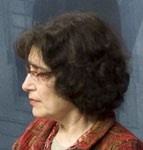 U.S. journalists “are by and large dying for the opportunity to go overseas and learn about a whole range of issues, from refugees to human rights,” but often lack the support of their editors—the “gatekeepers”—to do so, said Louise Lief, deputy director of the International Reporting Project (IRP), at a February 26, 2009, event, “
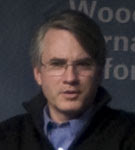 “In a developing country, what is it that moves people, that makes the economy grow?” BusinessWeek’s David Rocks wondered before visiting Uganda.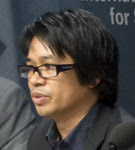
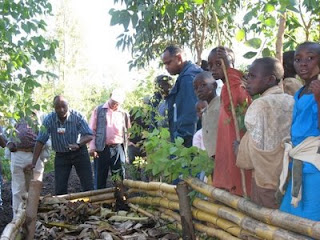 A landlocked, impoverished, densely populated country, Rwanda faces steep challenges in the quest to improve the quality of life of its people, who are mostly small-scale farmers. One solution promoted by the Sustaining Partnerships to enhance Rural Enterprise and Agribusiness Development (


