-
America’s AI Gamble: How Big Tech is Trading Climate for Hype
December 11, 2025 By Angel Lopez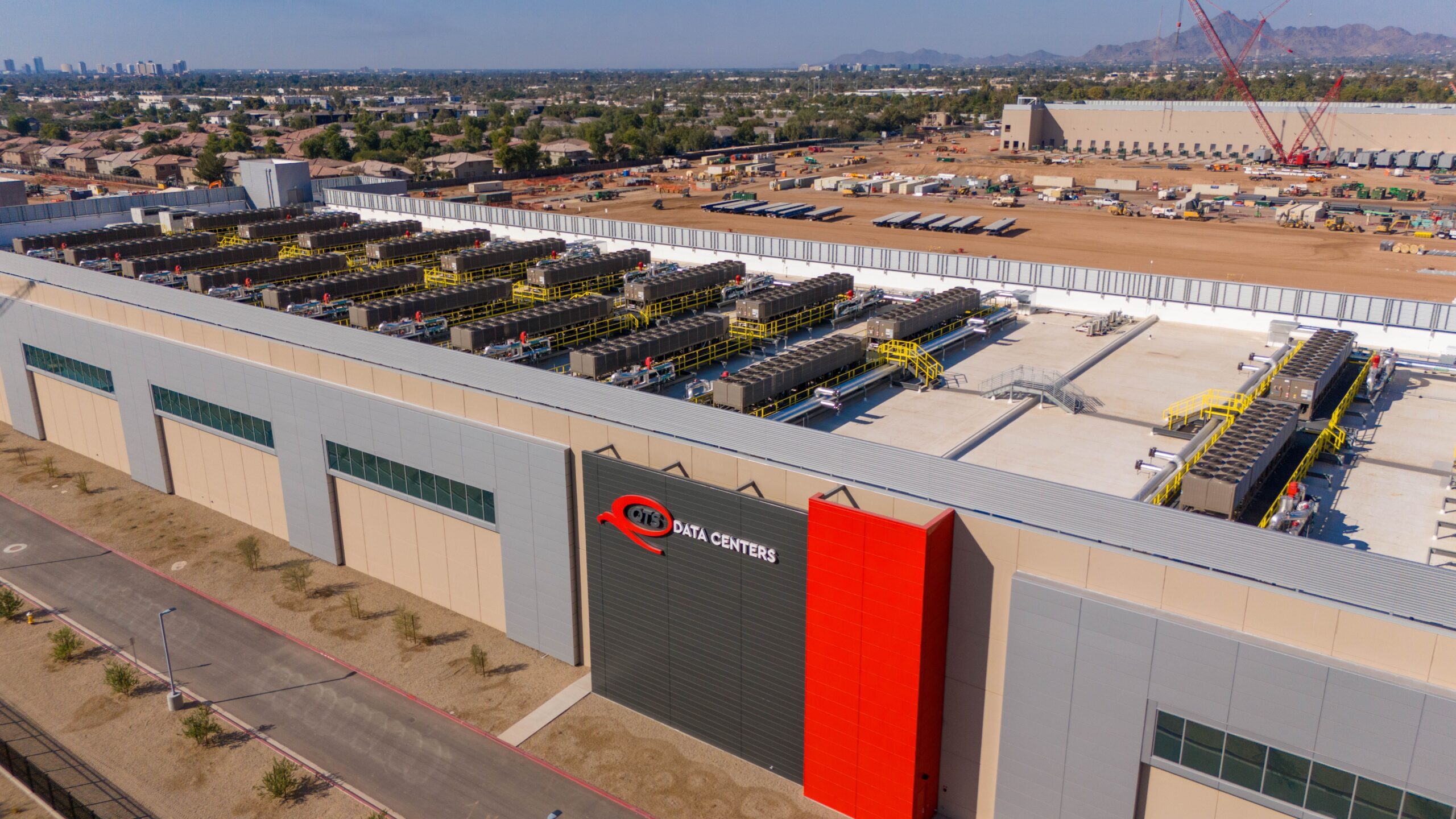
A majority of Americans now say they are more concerned than excited about encountering AI in their daily lives. The implications of this sentiment are beginning to dawn on Wall Street investors, who are starting to worry about a potential mismatch between investor enthusiasm and consumer reality.
At the heart of concerns over an AI bubble is the industry’s massive spending spree on semiconductors and data centers, which is estimated to reach $3 trillion by 2028. Increasingly financed by debt, with expenses growing exponentially, inflated demand, and unrealistic revenue projections, analysts now wonder if AI investments will make investors whole again over the long term, or if immense levels of speculation have distorted markets.
Nonetheless, massive data center projects are still moving ahead—accompanied by a need for electricity that is projected to account for 8.6% of all US electricity demand by 2035. In pushing forward on this path, the Trump administration has deployed the same scenario to revive the coal industry: offering subsidies and rolling back regulations while simultaneously cutting funds for competing sources of energy such as solar and wind.
Whether AI is a bubble or not, In picking future winners and losers means that the administration also increases the likelihood that this investment spree will reshape the grid for the worse. By underwriting that industry’s gamble with a plan that ignores external health and environmental costs, the White House is turning the quest for the energy needed for a tech boom into a long-term liability.
Virginia’s Energy Landscape and Big Tech’s Role
The commonwealth of Virginia illustrates how these concerns about an energy reorientation are playing out right now. Virginia is home to the world’s largest data center cluster, and in recent years this industry has consumed more than a quarter of the state’s electricity.
Virginia’s legislature passed the Virginia Clean Economy Act in 2020—a measure that called upon its utility companies to provide 100% renewable energy by 2045, Yet in recent months, its government pivoted to approve a plan to add 5.9 GW of new gas-fired generation by 2029 to cope with growing demand from data centers.
This decision raised concerns about Virginia’s overall emissions trajectory, given that the commonwealth already has the highest CO2 emissions attributable to data centers (30.08 metric tons) and coastal communities threatened by warming temperatures and rising sea levels. Approval of this new measure also comes in spite of progress that Virginia previously had made by adding over 8,000 GWh of solar in the last decade. It is a development that highlights the setbacks that come with the AI boom’s data center buildout.
Adding to this reversal of a positive energy trend is White House’s $8 billion cut to clean energy projects that included initiatives in the commonwealth. Included in these cuts was $60 million for wind projects in Norfolk and Portsmouth, as well as $156 million to expand solar power.
Worse yet was that a 2.6 GWh Coastal Virginia Offshore Wind project that was nearing completion also was at risk in these cuts, until Virginia Gov. Glenn Youngkin and US House Speaker Mike Johnson made a rare break with the White House and publicly pushed back on the threat. While a much-needed project in a state where only 1% of power comes from wind survived cancellation, it did not escape untouched. Subsequent tariffs levied by the administration are expected to add $690 million to its final cost.
The reality of more data centers under this evolving energy landscape has led an increasing number of local groups to oppose new projects in Virginia, citing electricity and safety concerns. Yet even as domestic groups push back, Big Tech has continued building and operating data centers abroad in an effort to work around U.S. grid capacity. In the process, companies have increasingly failed to meet their own global emission reduction goals and have relied on fossil fuels, thus raising concerns over power outages and threats to health in numerous developing countries.
Resurgent Coal, Clean Energy Cuts, and Rising Health Risks
As clean energy projects battle to survive, White House officials have announced $625 million for coal plant refurbishments. Virginia’s Clover coal plant has been exempted from the mercury and soot pollution regulations passed last year by the EPA. Adding to concerns is that the plant’s retirement has already been postponed by 20 years by its owner, Dominion Energy, which argued its operation was necessary to meet growing energy demand from data centers. Two other coal plants that provide power to Virginia which are located in Maryland also have been asked to delay their retirements. (These plants are not subject to the Virginia Clean Economy Act.)
Extending the lifespan of coal plants also entails emerging costs to public health, as exemptions from the mercury and air toxic standards have also been granted to 60 other coal plants. These plants are spread across the country, with 61% of them located in census tracts that already suffer high exposure to toxic chemicals.
Fears that these exemptions may become permanent are growing. The Trump administration’s EPA has proposed repealing these regulations, arguing that stricter health quality standards were uneconomical.
The loss to public health is tangible. When the EPA finalized these mercury and air toxics regulations under the Biden administration in 2024, officials predicted that the regulations would prevent the release of 1,000 pounds of mercury (which has been found to impede brain development) and 770 tons of fine particulate matter into the air by 2028.
An Honest All-Of-The-Above Strategy
If America wants to be serious about energy dominance (and if the nation is in an energy crisis), then it only makes sense to use every measure at the nation’s disposal, including wind and solar energy.
What does not help is to politicize the energy industry by employing a selective strategy. The momentum generated by Big Tech’s voracious call for energy should be met with a real all-of-the-above approach that includes emerging industries, and will allow the country to engage in a serious technological competition.
The power needs of the next decade are real. Answering that challenge by doubling down on coal while stifling renewables will lead to consequences that promise to outlast any crash. And if the AI bubble is real, the fallout from its collapse won’t be a financial crisis alone. These choices will deepen ongoing environmental and health costs that were entirely avoidable, and will amount to a self-inflicted vulnerability.
If the AI boom really is a story about innovation, then meeting its hefty power demands also demands new solutions, and not merely a relapse into last century’s fuel.
Angel Lopez is a Henry Luce Fellow based in Taipei, where he researches energy security and climate resilience.
Sources: Biogenic Solutions Consulting, Bloomberg, Center for Progressive Reform, Dominion Energy, Environment America, Environmental Defense Fund, Environmental Protection Agency, National Institute of Health, NPR, PBS, Pew Research Center, Politico, Reuters, Tech Policy Press, The Economist, The New York Times, U.S. Department of Energy, Utility Dive, Virginia Department of Energy, Virginia Mercury, VPM
Photo Credits: Licensed by Adobe Stock.
 A Publication of the Stimson Center.